
Last updated October 9, 2026
Free visual inspection and a written scope of work before any mitigation begins - photos, moisture readings, and drying logs go in your claim file
The scope we write is the scope we bill. Anything new gets shown to you, in writing, before we touch it.
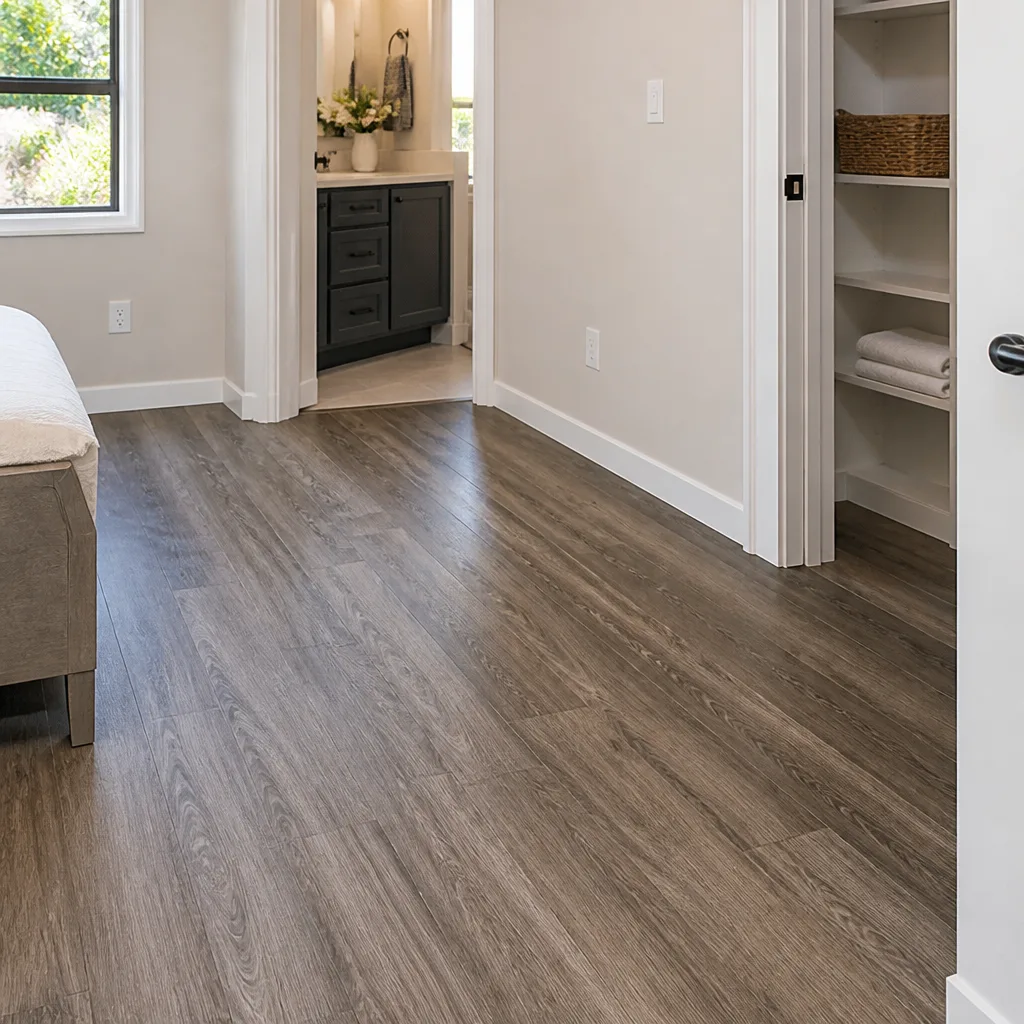
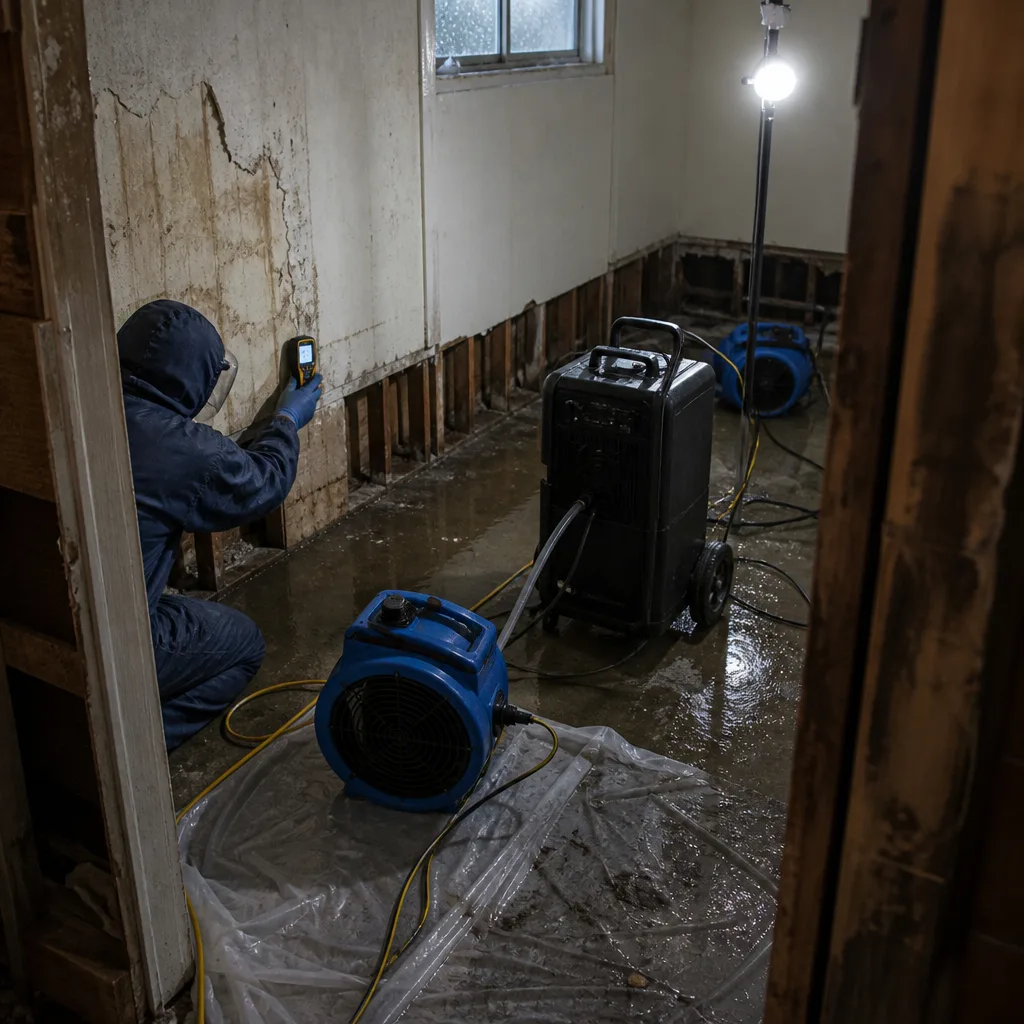 Before
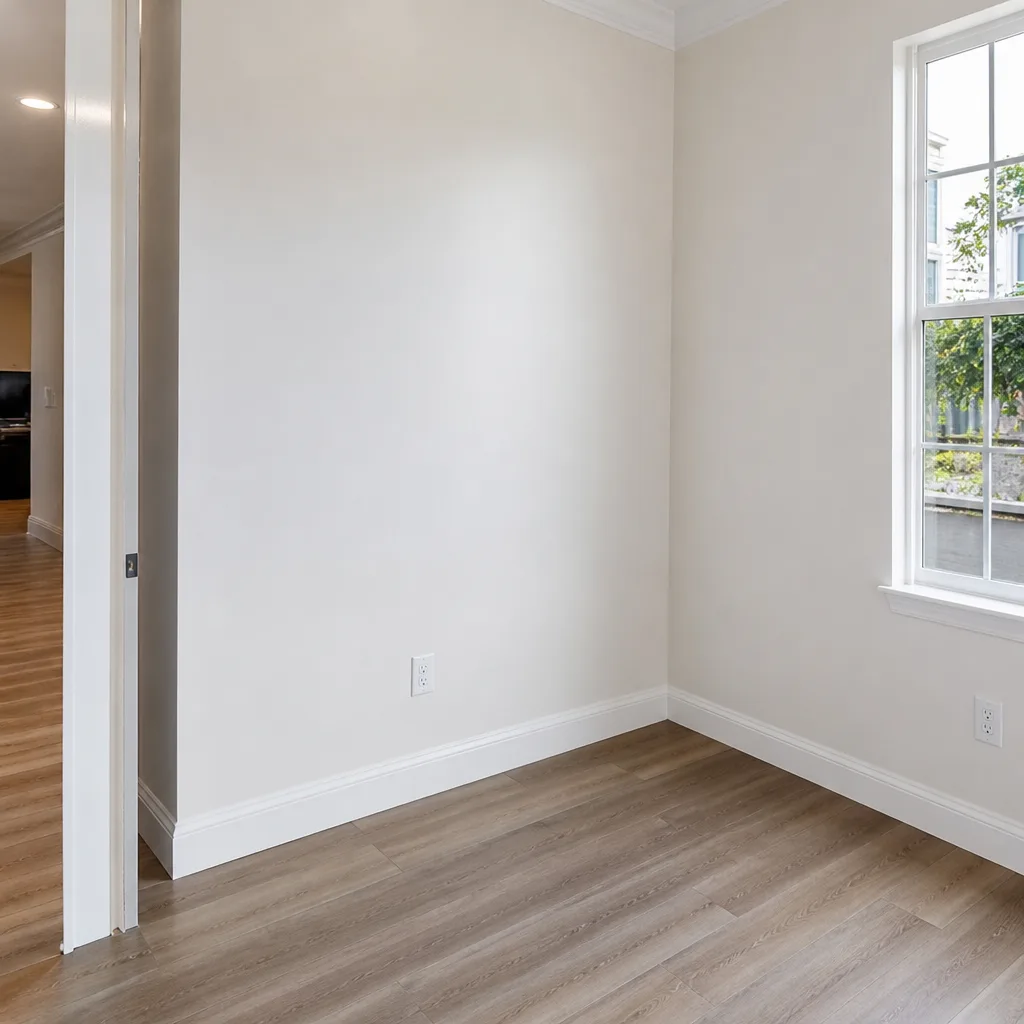 After
After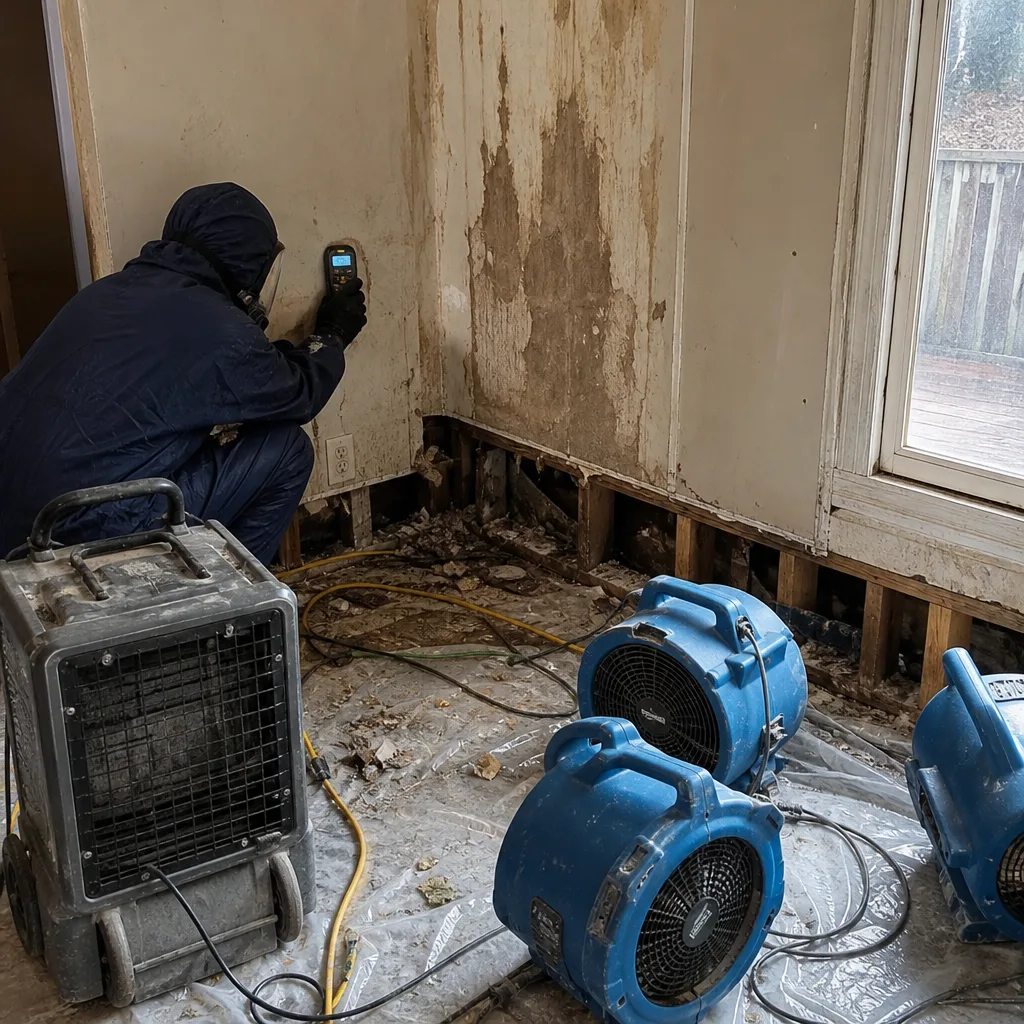 Before
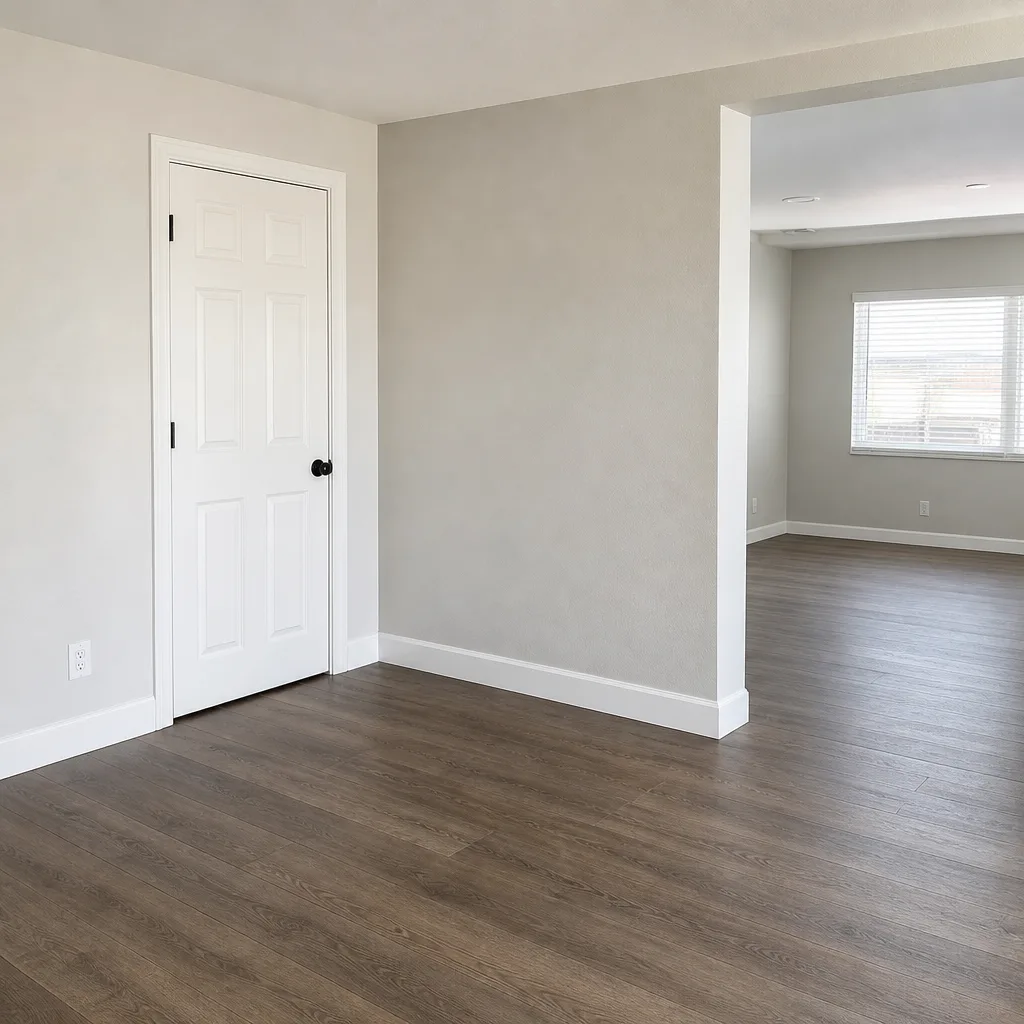 After
After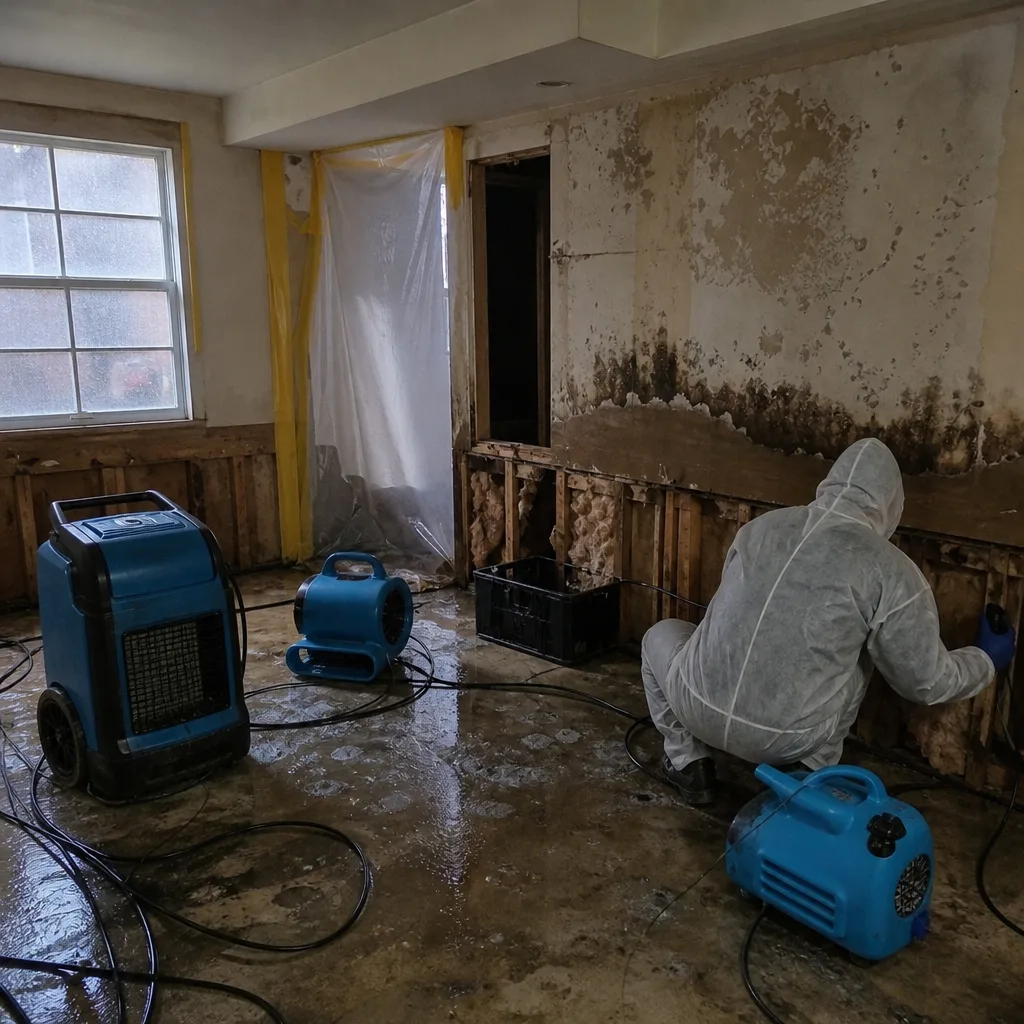 Before
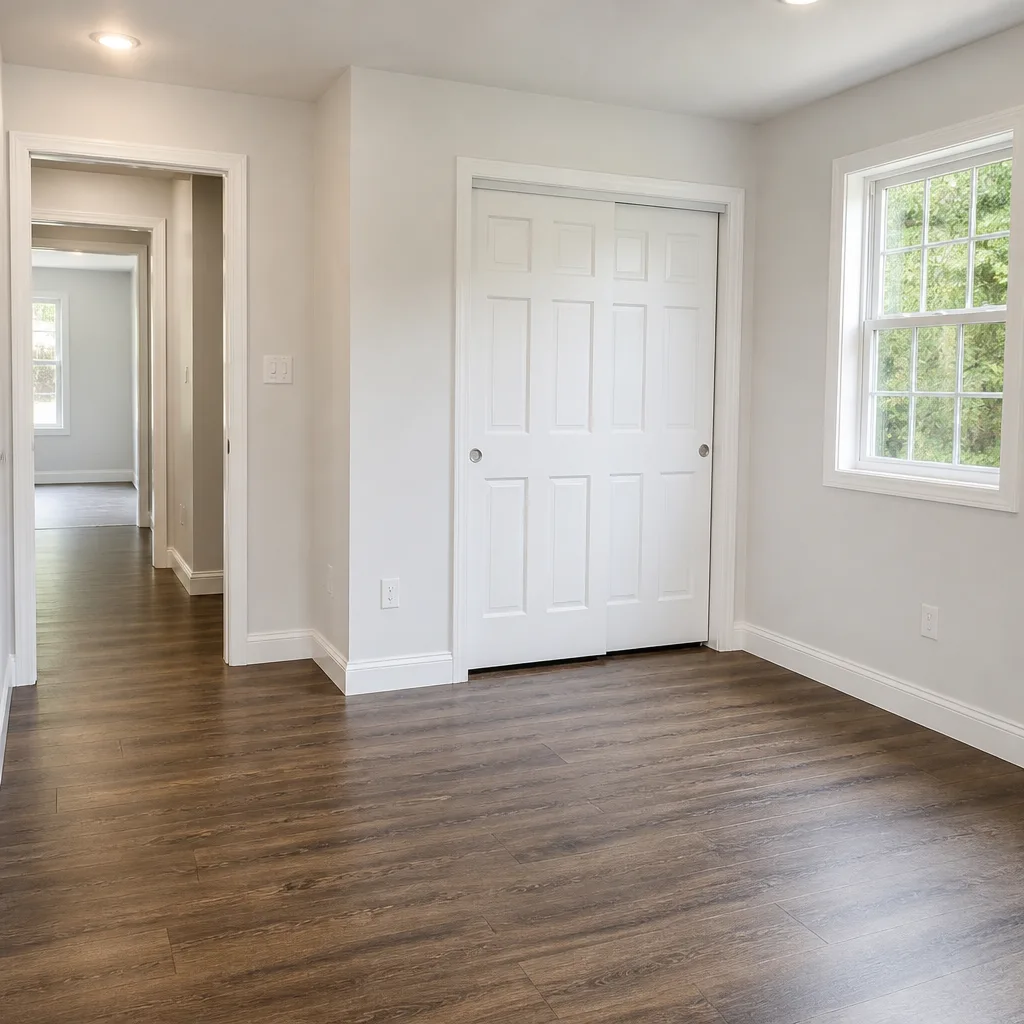 After
AfterThe Complete Water Damage Restoration Guide for Los Angeles Homeowners
A 1960s Westside bungalow and a 2010 Valencia stucco tract home can both flood from a burst supply line, but the hidden damage each one hides afterward is completely different, and treating them the same way is how mold ends up behind your walls six weeks later. Los Angeles homes carry a specific set of water damage risks: aging cast-iron drains in mid-century construction, stucco exteriors that trap moisture invisibly behind the paper, and a hard-water supply that eats appliance hoses from the inside out. This guide walks through what actually happens when water invades an LA home, what you should do in the first hour, what a legitimate restoration estimate should itemize, and how to keep a bad situation from becoming a six-figure claim. We’ll cover the real water sources, the drying science, the insurance documentation requirements, and the specific construction quirks that make LA homes different from places that show up in generic online guides.
Quick Answer
Our Water Damage Restoration services in Los Angeles mean removing standing water, drying the structure back to its pre-loss moisture content, treating for microbial growth, and repairing what can’t be saved. A legitimate LA restoration company should give you a written price before any work starts, document everything with photos for your insurance claim, and follow IICRC drying standards rather than guessing. Costs in the LA metro typically range from $3,000 to $12,000 for a standard room flood, and from $12,000 to $45,000 when multiple rooms, stucco walls, or subfloor framing are involved. Most importantly, the first 48 hours determine whether you’ll need a simple dry-out or full mold remediation down the line.
Table of Contents
- Why LA Homes Flood the Way They Do
- The First Hour: What to Do Before Anyone Arrives
- How Drying Actually Works in an LA House
- The Stucco Problem Nobody in Other Cities Has to Think About
- Hard Water, Santa Anas, and the LA-Specific Risk Stack
- What Your Insurance Adjuster Needs to See (and What They Don’t)
- What a Legitimate Restoration Estimate in LA Should Itemize
- The Restoration Timeline: Day by Day
Why LA Homes Flood the Way They Do
Every city has a flood signature. In Houston it’s hurricane storm surge and clay soil heaving. In Chicago it’s frozen pipe bursts in February. In Los Angeles, we get three distinct water damage patterns, and two of them are invisible until the moment they fail.
First, the plumbing. Los Angeles grew in a massive residential boom between 1945 and 1980, which means a huge share of our housing stock has galvanized steel supply lines that were never designed to last this long. Those pipes rust from the inside out under LA’s hard municipal water, and when a galvanized line goes, it doesn’t leak, it splits. The second pattern is appliance and fixture failure. LA water is hard, typically running 10 to 18 grains per gallon depending on the supply zone, and that mineral scale sits inside washing machine hoses, water heater connections, and dishwasher supply lines. A rubber washing machine hose in a Los Angeles home often fails five to seven years earlier than the same hose in a soft-water city. We’ve pulled hoses that looked swollen like balloons from internal scale pressure alone.
Third, and this one surprises people: drainage. Los Angeles still has tens of thousands of homes with original cast-iron waste lines, especially in West Hills, Northridge, the Valley, and older parts of the Westside. Cast iron fails from the top down, rusting through at the top of the pipe where moisture and sewage gas sit, not from blockage. The first sign is often a persistent sewer smell under the house, then slow drains, then a full collapse that sends wastewater into the crawlspace. None of these are rains. These are mid-century Los Angeles plumbing realities, and generic restoration guides from places like Phoenix or Denver never mention them.
The First Hour: What to Do Before Anyone Arrives
Step-by-step: the first 60 minutes
- Shut off the water source. If it’s a burst supply line, turn the main water shutoff at the street or house. If it’s a drain backup, stop using all water in the house immediately.
- Kill the electricity at the breaker. Water and energized wiring in a wall cavity or crawlspace is a genuine electrocution risk. Shut off breakers for affected rooms or the whole panel if the water is high.
- Move what you can. Furniture, rugs, electronics, and anything sitting on the floor goes up and out. Every hour an upholstered sofa sits in water adds hundreds of dollars to the loss.
- Take photos before anything is moved or removed. Walk the room and photograph baseboards, flooring seams, standing water, anything touched. Your insurance documentation trail starts now, not when a restoration crew arrives.
- Start calling. You want a restoration company that answers with a live person and can give you an arrival window you can track. Wendell Water Damage Restoration takes calls 24/7 at (940) 466-4354 with a live voice, not a phone tree.
Do not use a Shop-Vac on sewage or black water. Do not pull back carpet yourself if the loss is more than a few square feet, because you’ll spread contaminated water into uncontaminated areas and make the remediation more expensive. Do not open walls with a hammer. You’re not helping; you’re making scope-of-work decisions that should be made with a written plan.
How Drying Actually Works in an LA House
The restoration industry runs on a process called psychrometric drying. The word sounds complicated. In plain terms it means tracking the air’s moisture level, the material’s moisture level, and the temperature so we know when your home is truly dry, not just surface-dry. Surface-dry is what a homeowner feels by touch. Truly dry is a moisture reading from a meter that says the drywall, the framing, and the subfloor are all back in the safe range.
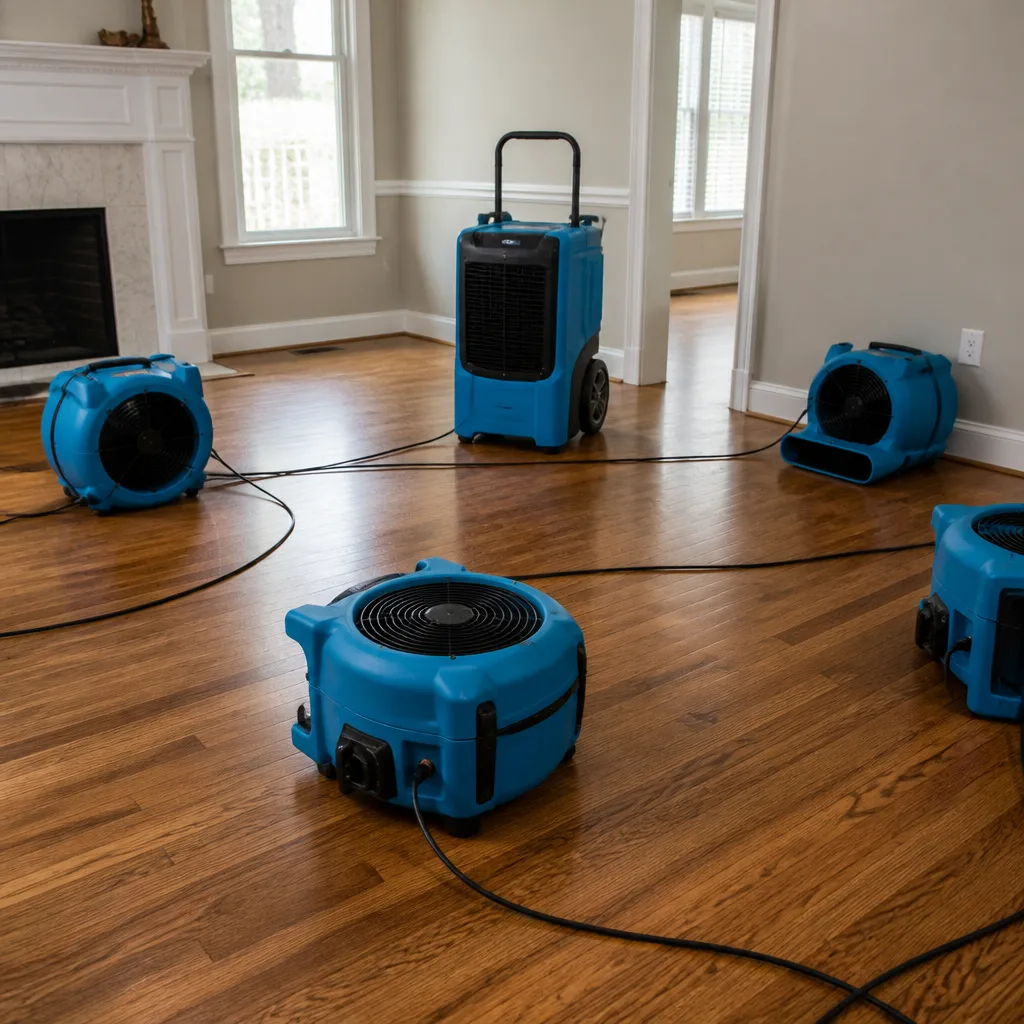
In a Los Angeles home, psychrometric drying moves differently depending on what the house is built from. Drywall wicks water and dries predictably. Plaster over lath, common in pre-1960 LA houses, holds water in the wood lath strips behind the plaster, and drywall-only drying charts will read false-clear on the finished wall surface while the lath inside is still saturated. The equipment matters here. We run Dri-Eaz and Phoenix dehumidifiers alongside B-Air air movers with the system sized to the cubic footage of the affected space, not the square footage. An undersized dehumidifier in inland heat can actually accelerate surface drying while trapping moisture deeper in the wall, which is exactly how mold starts. The science isn’t in how many fans you set up; it’s in whether the moisture is being physically removed from the structure, not just redistributed.
And then there’s the California climate nuance. Los Angeles is mostly dry, and that dryness works against you in a specific way. When ambient humidity is low, moisture evaporates from wall surfaces fast and meters on the face of a wall read dry before the wall is actually dry at depth. A restoration company that doesn’t take penetrating moisture readings, or that doesn’t leave equipment running because the surface “feels dry,” is packing up too early. We see this most often in Santa Clarita, the Valley, and the Inland Empire corridors where the ambient humidity rarely breaks 40 percent. Dry air masks deep moisture.
The Stucco Problem Nobody in Other Cities Has to Think About
In most of the country, residential walls are siding over a vapor barrier over sheathing. Water intrusion shows up visibly within days. In Los Angeles, a large share of homes are stucco over framing, and stucco hides water for weeks. Stucco is porous. It absorbs water. It holds water against the felt or paper underneath, and if the flashing around windows, doors, or rooflines is even slightly off, water gets behind the stucco and sits there invisibly.
What that means for restoration: a flood against a stucco exterior wall doesn’t behave like a flood against a drywall interior partition. The water wicks into the stucco from the bottom, travels up through the plaster, and saturates the building paper and the framing behind it. Standard drying timelines based on gypsum wallboard don’t apply. The drying chamber needs to include the exterior wall cavity, and the restoration company needs to know how to read a stucco wall, not just how to put a fan in a room. That’s a genuinely specialized skill, and it’s why lath-and-plaster and stucco homes in Los Angeles so often develop mold six to eight weeks after a “successful” water remediation. The mold wasn’t from the flood. It was from the drying job stopping at surface-dry.
Hard Water, Santa Anas, and the LA-Specific Risk Stack
Three environmental factors stack every water event in Los Angeles differently than they do in other cities, and they’re almost never discussed in online guides or our Damage Restoration Emergency Preparedness Guide for Los Angeles Homes.
Hard water is the slow one. Los Angeles draws from the Metropolitan Water District blend of Colorado River water and State Water Project, and that water carries dissolved minerals that deposit as scale on the inside of pipes and hoses. The scale doesn’t just clog; it creates rough interior surfaces that accelerate corrosion on metal and microfractures on rubber and plastic. Supply lines that would last 20 years in a soft-water market routinely fail in 12 to 14 in LA. That’s not a guess; it’s a wear pattern we can read in the way a hose fails.
The Santa Ana winds are the fast one. During Santa Ana events, relative humidity can drop into the single digits for days. That super-dry air pulls moisture out of a building’s envelope dramatically, and it makes moisture meters read deceptively low on exposed surfaces. A restoration company that trusts a surface meter during a Santa Ana event without penetrating readings into drywall and framing will call the job done early. The house reabsorbs moisture from deeper layers hours later, and the homeowner is left with a “completed” restoration that’s still wet.
Hillside pressure is the LA geography one. Homes in the hillsides and canyon neighborhoods, from Mount Washington to Pacific Palisades to the hills above Burbank, sit on varying water pressure zones. The elevation changes require pressure regulators, and when a regulator fails, the pressure spike can exceed 150 psi on a system designed for 60 to 80. That spike doesn’t just burst a pipe; it bursts the weakest connection in the system, often behind a wall or under a slab. Water damage from pressure-surge failures in hillside LA homes tends to be bigger, deeper, and harder to find than a pinhole leak in a flat-ground tract home.
What Your Insurance Adjuster Needs to See (and What They Don’t)
The California Department of Insurance doesn’t dictate drying equipment, but it absolutely governs what a restoration company must document for a valid water damage claim. Here’s what a legitimate LA restoration should be producing, in writing and in photos, for your claim file.
Your adjuster needs a scope of work. That’s a line-item list of what was damaged, what was removed, what needs drying, and what needs repair. Generic “water extraction, dry-out, and repair” doesn’t satisfy a California adjuster. The estimate needs to itemize square footage, affected materials, day-by-day drying logs, and photos that correspond to each line item. Your adjuster also needs a moisture map. That’s a document showing initial moisture readings, daily drying readings, and final readings demonstrating the structure reached dry standard. If a restoration company can’t produce a moisture map after the job, they didn’t do one, and your claim for additional interior repairs will be harder to substantiate.
Here’s the part that’s less obvious: what your adjuster does NOT need is a verbal summary. “We dried everything out, it’s fine now” carries zero weight in an insurance file. What carries weight is a day-by-day log with actual meter readings, photos showing equipment placement and daily progress, and a written report signed by the technician. The Water Damage Restoration in Los Angeles process that actually pays out cleanly to the homeowner is the one that produces paper from hour one. We’ve had homeowners tell us their adjuster approved supplementary payments within days because the moisture map and the daily log made the claim mechanically undeniable.
What a Legitimate Restoration Estimate in LA Should Itemize
You should know what a restoration estimate looks like before you ever need one. A legitimate Los Angeles restoration estimate will break down roughly like this.
Water extraction: this line item covers removing standing water, typically priced by the hour for the extraction crew and equipment, or by square footage of affected area. In LA, expect $150 to $400 per hour for extraction including equipment, or $4 to $8 per square foot of affected area.
Content manipulation and pack-out: moving furniture, rugs, and contents out of the affected zone. Some companies roll this into labor. Some itemize it. Either way it should show up somewhere.
Drying equipment and monitoring: this covers dehumidifiers, air movers, and daily monitoring visits. Legitimate companies charge $150 to $300 per day for a standard room setup, and that includes the technician coming back to read meters and rotate equipment. A flat “equipment setup fee” with no monitoring linked to it is a red flag.
Demolition and disposal: removing wet drywall, baseboards, carpet pad, and unsalvageable materials. In LA, demolition of waterlogged materials runs $3 to $7 per square foot of removed material, with dump fees separate.
Antimicrobial treatment: applying EPA-registered antimicrobial to affected structural cavities. This is standard on Category 2 and Category 3 water losses and should be itemized by square footage.
Structural drying penetration: in stucco or lath-and-plaster homes, this line item covers opening wall cavities for directed air movement. It’s not demolition; it’s strategic venting, and in LA it’s often the difference between a clean dry-out and mold six weeks later.
Red flags: an estimate that says only “water removal and dry” with one number and no line items. An estimate that charges for “mold remediation” on a Category 1 clean-water loss before any testing. An estimate that refuses to put the price in writing before work starts. A legitimate company has no problem writing the price down. Wendell’s entire operating model is built on that: a written price before any work starts, a digital invoice texted so you can pay from a link, and the number on the screen is the number you pay. If a company won’t do that, that’s the reddest flag there is.
The Restoration Timeline: Day by Day
Here’s what a standard single-room water loss in a Los Angeles home looks like from day one to done.
Day 1 – Emergency response. Extraction happens first. Standing water comes out, and the restoration company places dehumidifiers and air movers sized to the room’s cubic footage. The technician takes initial moisture readings and photographs everything. You should have a written scope and a live arrival time before the crew even walks in the door.
Days 2 through 4 – Active drying. Equipment runs. Technician returns daily to read meters, log moisture levels, and rotate fans. In a standard drywall interior, this phase usually runs three to four days. In a stucco or lath-and-plaster home, or in a crawlspace-heavy Valley house, it can run five to seven.
Day 4 to 7 – Dry standard confirmation. Final penetrating readings confirm the structure hit dry standard. The equipment comes out. You get a written drying log and moisture map for your insurance file.
Weeks 2 to 4 – Reconstruction. Replacing drywall, baseboards, and flooring happens after the structure is confirmed dry, never before. Any company that starts hanging new drywall before the moisture map shows dry standard is building you a future mold problem.
For emergency response Los Angeles homeowners can reach Wendell Water Damage Restoration home any hour of the day or night, and for the cleanup phase, our Water Damage Repair in Los Angeles and Mold Remediation in Los Angeles services pick up right where the dry-out ends.
Common Mistakes to Avoid
- Waiting to call because it’s “not that bad.” Water wicks up drywall at roughly an inch per hour in the first 24 hours. By hour 48, a small leak has become a wall cavity problem. Call when you see it.
- Using a household fan and hoping for the best. A box fan moves air; it doesn’t dehumidify. You’ll dry the surface and trap moisture behind the baseboard, which is precisely how mold gets established in Los Angeles homes.
- Not photographing before cleanup starts. Once the wet carpet pad is out and the drywall is cut, the evidence of the loss is gone. Photos from before any work begins are the foundation of a clean insurance claim.
- Accepting a verbal estimate. In California, a restoration job without a written scope before work starts is how homeowners end up with surprise charges at the end. Get the price on paper or a screen first.
- Letting a restoration company skip the moisture map. If they can’t show you daily meter readings from day one to day done, they didn’t actually verify the structure is dry. Surface-dry is not dry enough.
- Rebuilding before the dry standard is confirmed. Hanging new drywall over a damp frame is building in a moisture sandwich. Six weeks later you’ll be calling a mold company, and the repair is now twice as expensive.
- Using a contractor who won’t talk to your adjuster. The documentation burden in California is heavy enough that a restoration company that won’t communicate with your insurance adjuster in writing is quietly shifting that burden to you.
When to Call a Professional
Call a professional restoration company any time water has touched drywall, flooring, cabinetry, or a crawlspace, and any time the water source is anything other than a clean supply line. Gray water from washing machines or dishwashers carries biological contamination. Black water from sewage backups carries pathogens that require Category 3 protocol, full containment, and professional-grade antimicrobial treatment. If the affected area is larger than a bath towel, if the water came from a drain, if there’s any chance water got under flooring or behind baseboards, or if your home is stucco or lath-and-plaster construction, the DIY window closed the moment the water stopped being clean. Wendell Water Damage Restoration offers free estimates in Los Angeles, call (940) 466-4354, and a live person answers 24/7, not a voicemail.
Frequently Asked Questions
A standard single-room water loss in Los Angeles typically runs $3,000 to $8,000 for extraction, drying, and minor repair, with most homeowners in the $4,000 to $6,000 range. Multi-room losses, stucco wall involvement, or subfloor damage push costs to $12,000 to $45,000. The price depends on the water category, the affected square footage, and whether the structure is drywall or stucco/lath-and-plaster. Call (940) 466-4354 for an exact written quote, estimates are free.
Most California homeowners policies cover sudden and accidental water damage, including burst supply lines and appliance failures, minus your deductible. Gradual leaks, long-term seepage, and flood damage from groundwater or storm surge are generally not covered unless you carry a separate flood policy. A documented moisture map and daily drying log from your restoration company makes the claim substantially easier to approve.
Wendell Water Damage Restoration dispatches same-day in the Los Angeles metro, with a live technician arrival time you can track rather than a vague four-hour window. The first 48 hours matter most for preventing mold and secondary damage, so emergency response is designed around getting extraction equipment running within hours, not days.
If the water is cleaned up and the structure is dried to standard within 48 hours, mold remediation is usually not needed. If water sat for more than two days, or if the drying job stopped at surface-dry, mold spores in the wall cavity can establish within a week and remediation becomes necessary. The deciding factor is whether the structural moisture was actually removed, not whether the surface feels dry.
Stucco absorbs water and holds it against the building paper and framing behind it, hiding moisture for weeks longer than drywall. Drying a stucco wall requires penetrating moisture readings and often directed air into wall cavities, and the drying timeline runs longer than standard drywall charts. Most Los Angeles homes built before 1970 are stucco or lath-and-plaster, which is why so many LA water losses need a more careful dry-out than a generic procedural job.
A legitimate restoration company in Los Angeles should communicate with your adjuster directly, in writing, with photos, moisture maps, and the itemized scope of work the California Department of Insurance expects. Wendell handles the documentation trail and adjuster coordination so you’re not the one translating technical drying data into insurance language.
The Bottom Line
Los Angeles water damage isn’t a generic problem, and it doesn’t have a generic fix. The stucco walls, the hard water, the aging cast-iron drains, and the Santa Ana dryness all change how a home floods, how it dries, and how likely it is to develop mold afterward. The single most important move you can make is to get a restoration company that writes the price down before work starts, produces a moisture map that proves the house is actually dry, and documents everything for your insurance claim. For more guides & resources, visit our blog. Wendell Water Damage Restoration does all three, and has been serving Los Angeles since 2006 under the 365-Day Done Right Promise: if it’s not done right, we make it right, in writing, on every single job. Call (940) 466-4354 and a live person answers, 24/7.
Written by Blake Sorensen, Owner at Wendell Water Damage Restoration, serving Los Angeles since 2006.