
Last updated October 9, 2026
Free visual inspection and a written scope of work before any mitigation begins - photos, moisture readings, and drying logs go in your claim file
The scope we write is the scope we bill. Anything new gets shown to you, in writing, before we touch it.
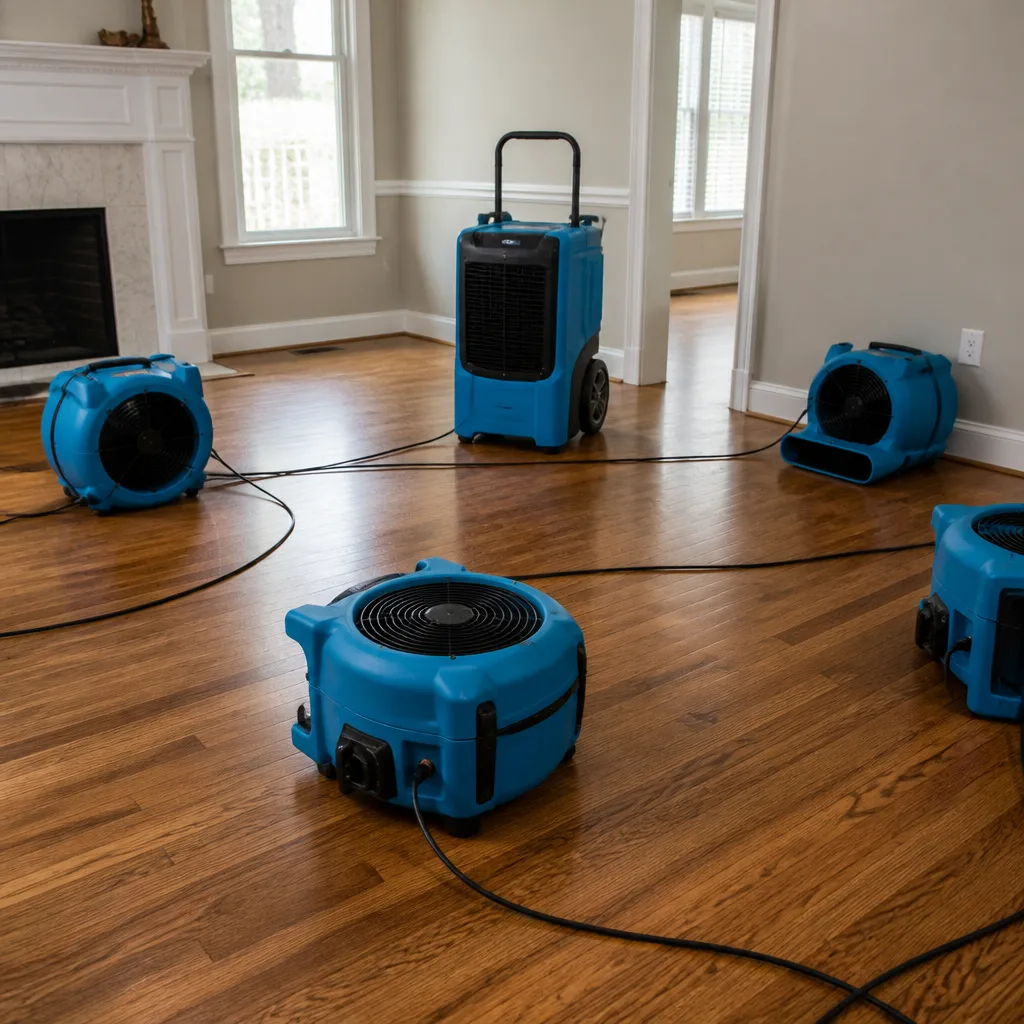
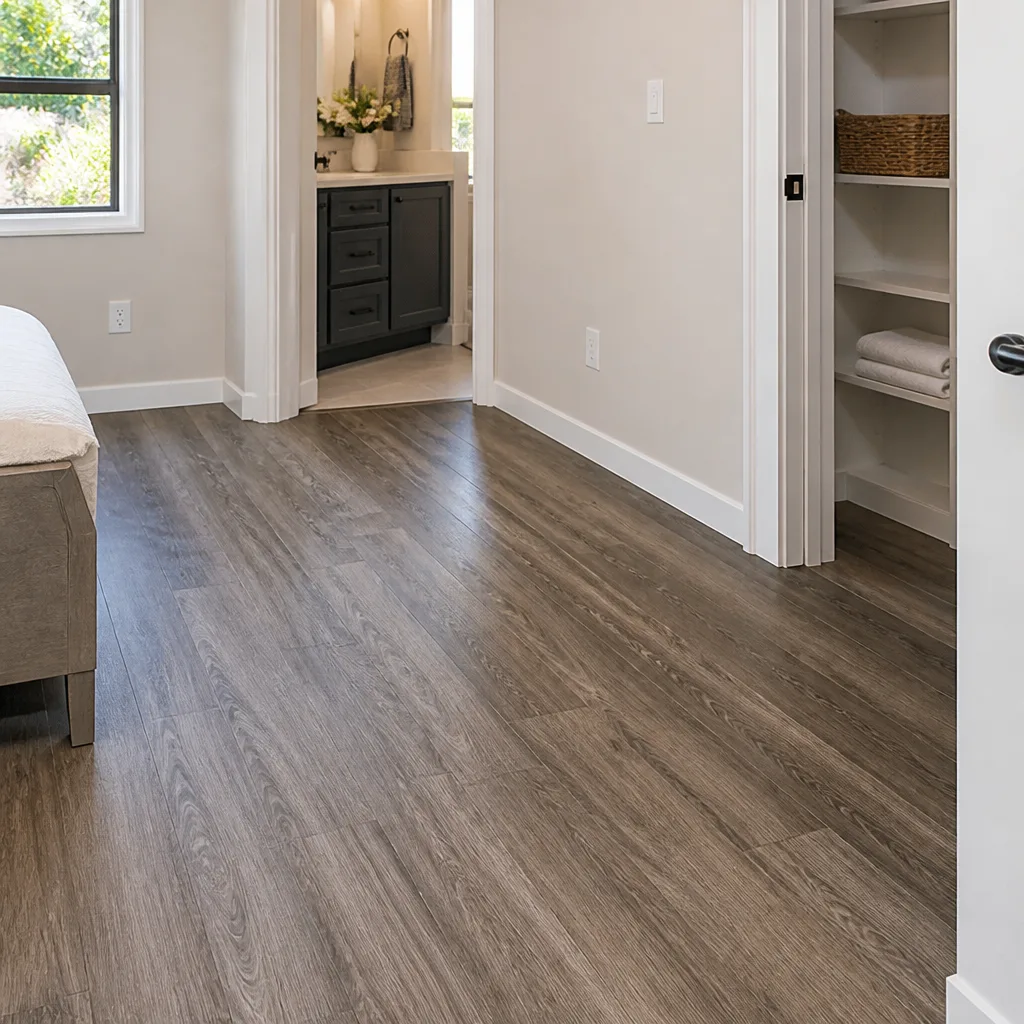

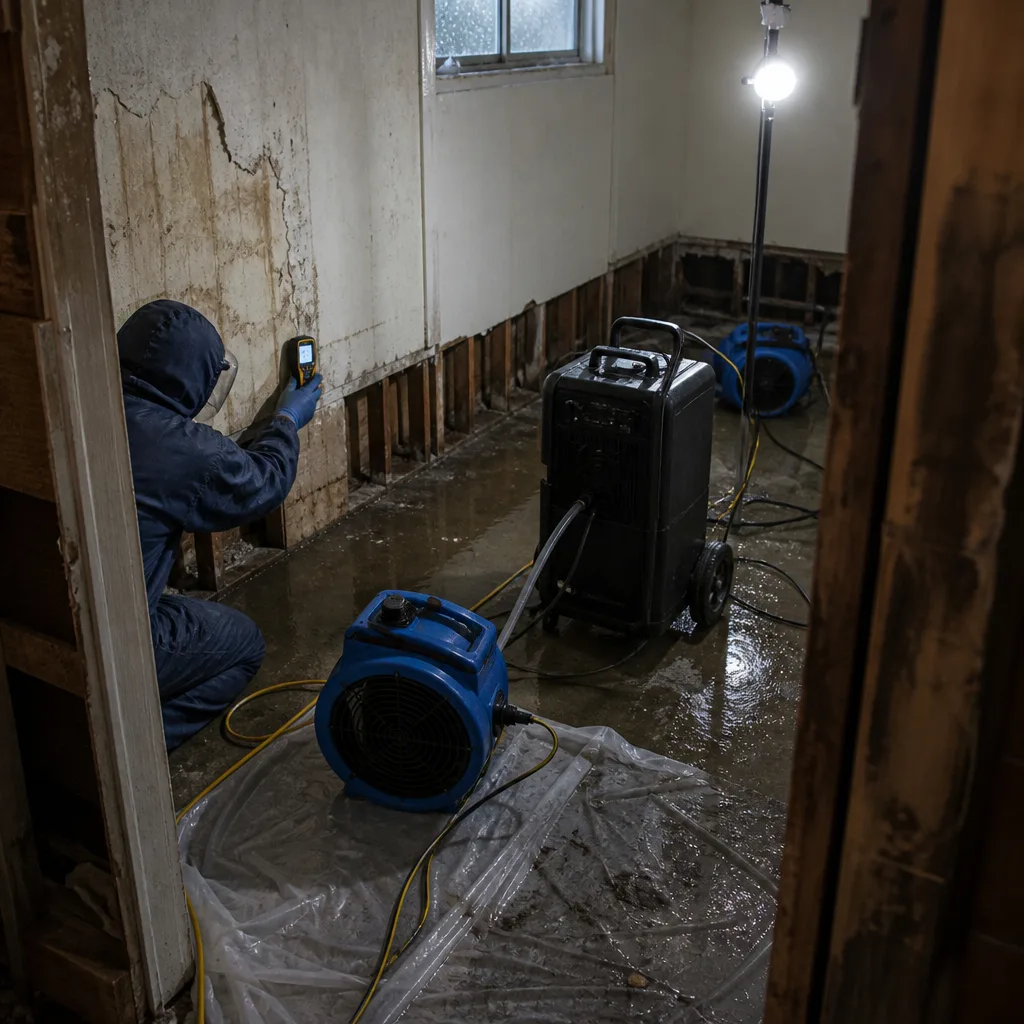 Before
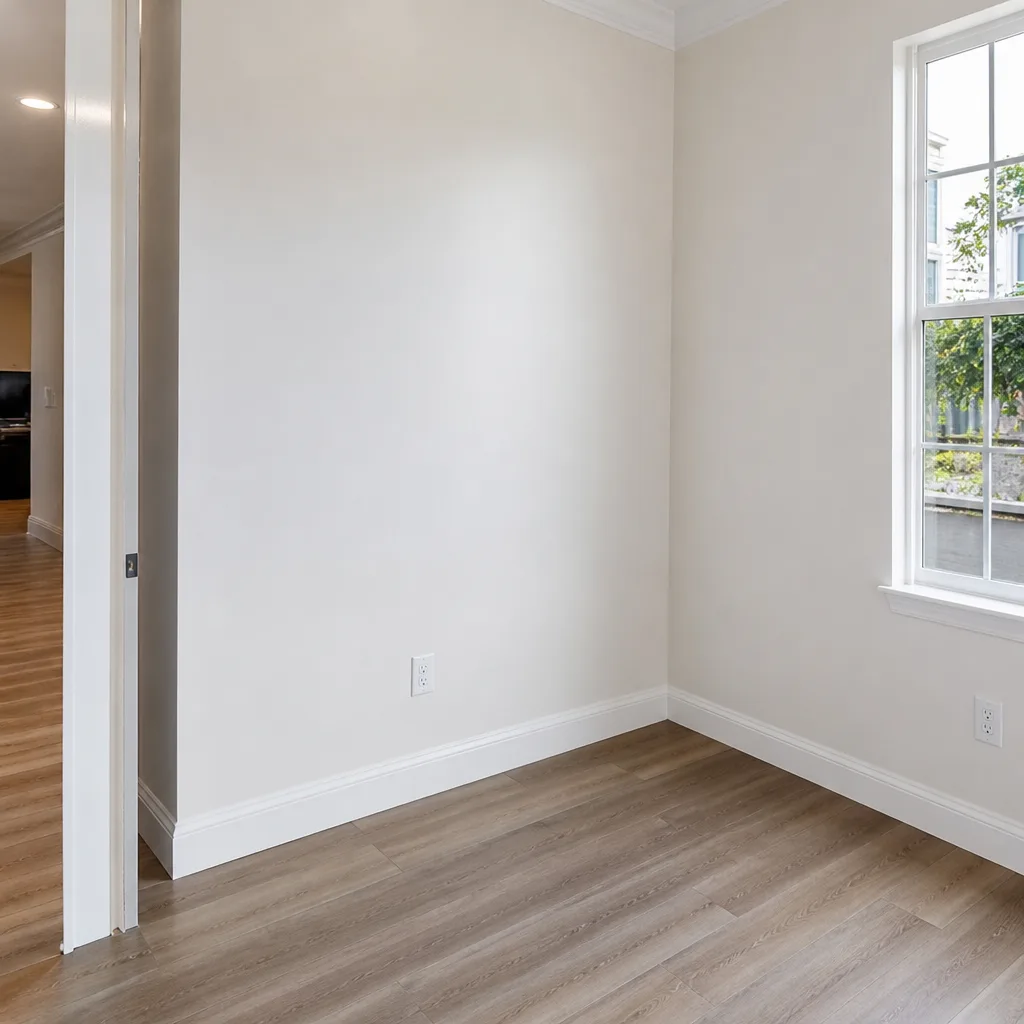 After
After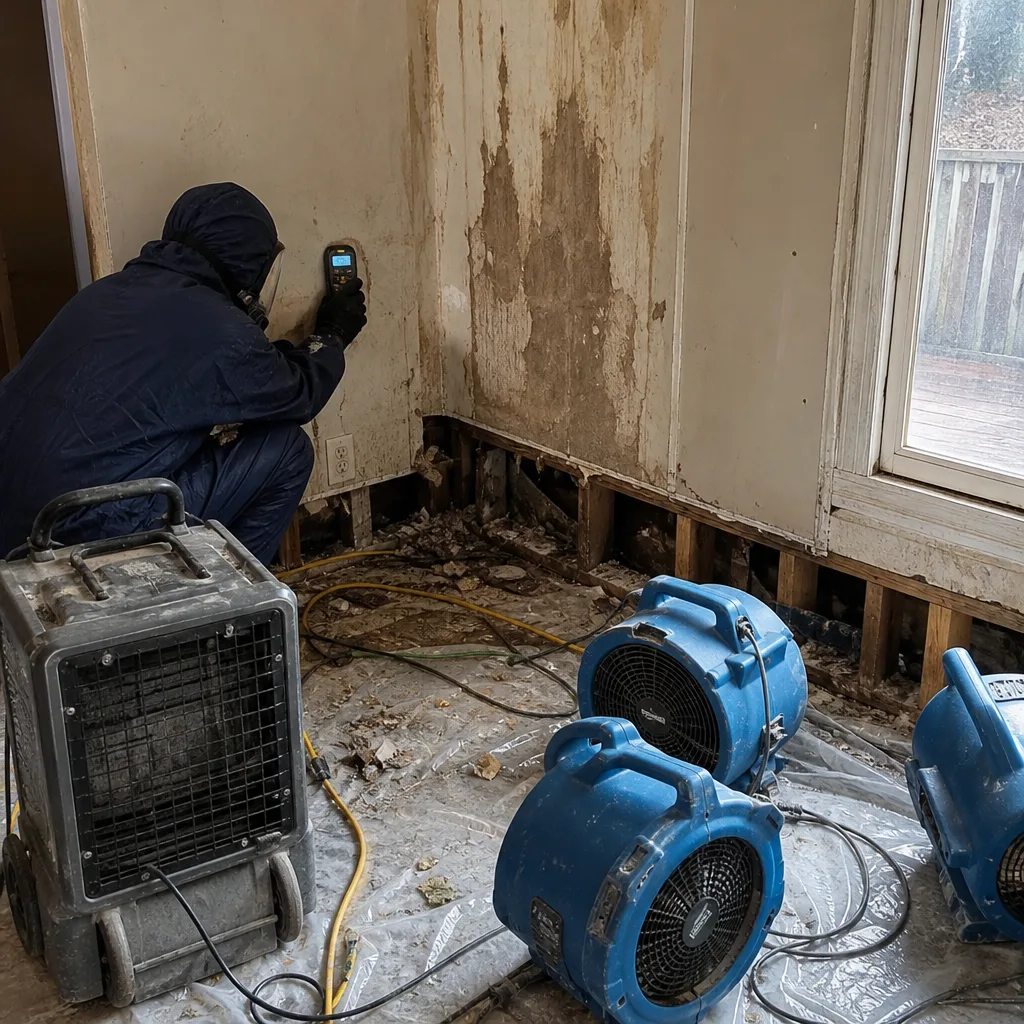 Before
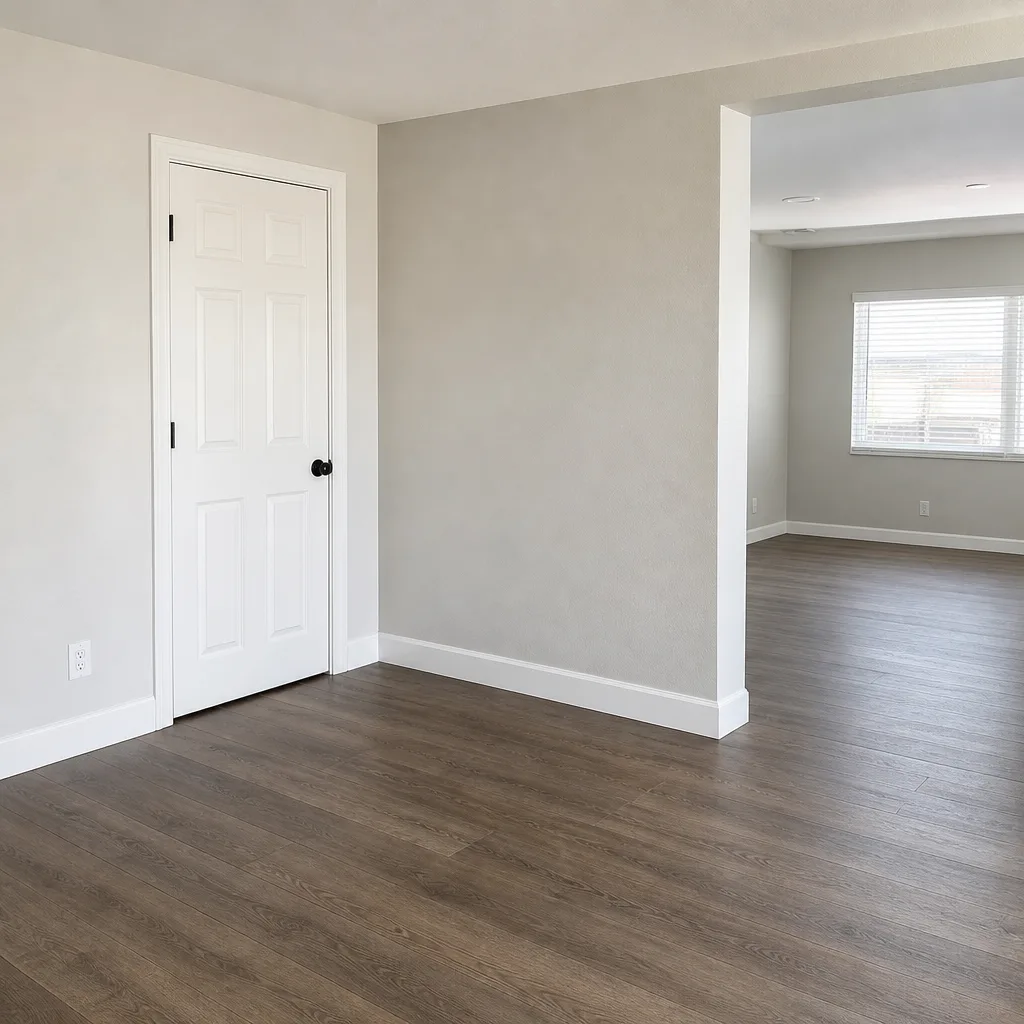 After
After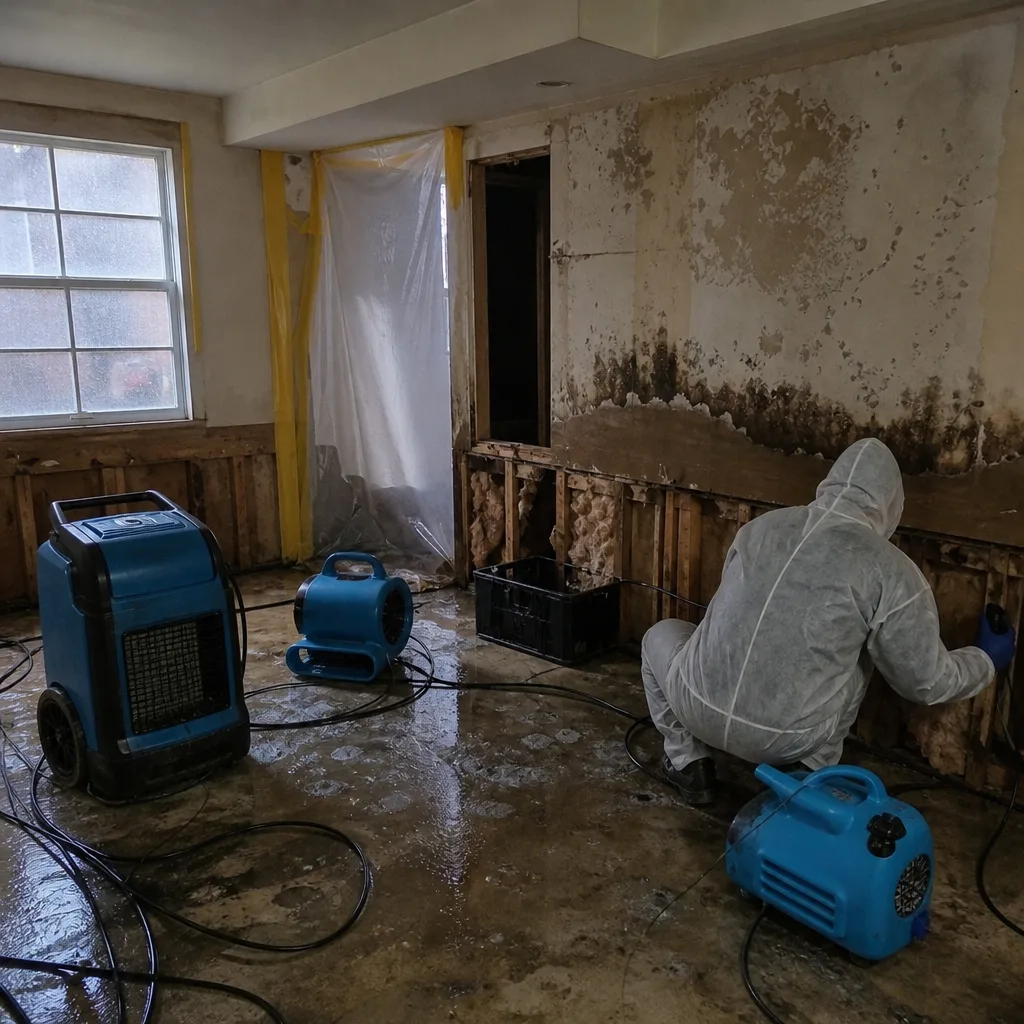 Before
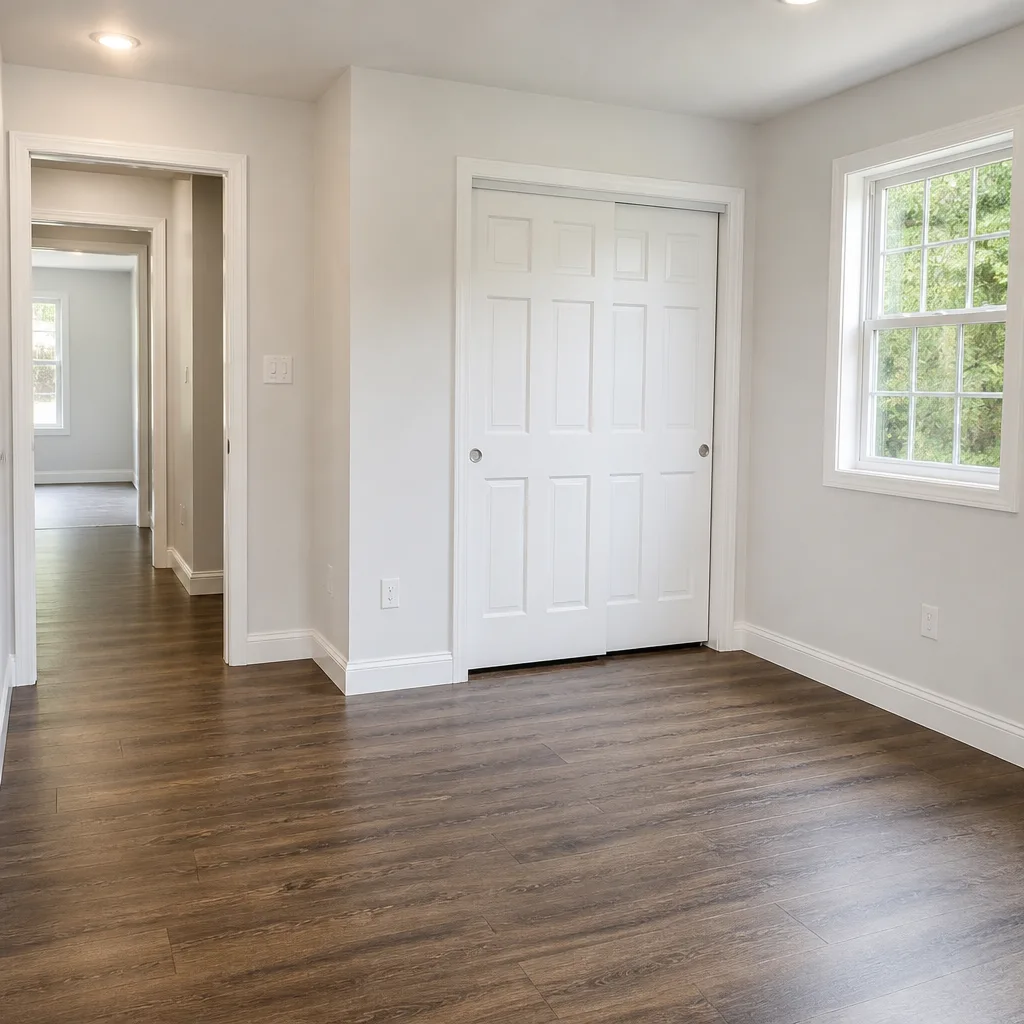 After
AfterThe Complete Water Damage Repair Guide for Los Angeles Homeowners
Los Angeles gets less than 15 inches of rain in a typical year, which makes it easy to believe water damage is someone else’s problem. That assumption is exactly what costs LA homeowners thousands. The real threat here isn’t storms rolling in off the Pacific. It’s the city’s own infrastructure: slab leaks in post-war tract homes, aging galvanized supply lines behind stucco walls, and hillside drainage failures that quietly channel water into foundations for months before anyone notices. This guide covers what actually causes water damage in Los Angeles, how to spot it before it spreads, what repairs cost, and when a moisture meter matters more than whether the floor feels dry. For a deeper dive, see The Complete Water Damage Restoration Guide for Los Angeles Homeowners.
Quick Answer
Our Water Damage Repair services in Los Angeles typically cost between $1,200 and $4,500 for a contained leak with professional drying, while slab leaks and supply-line failures commonly run $4,000 to $12,000 once flooring, drywall, and structural drying are included. The most important step is a professional moisture assessment using calibrated meters, because LA’s dry air evaporates surface water quickly while trapping elevated moisture inside walls and subfloors where mold establishes within 48 to 72 hours. A licensed restoration contractor can provide a written scope and price before any demolition starts, and we recommend you insist on it.
Table of Contents
- Why LA Water Damage Looks Different Than the Rest of the Country
- The Low-Humidity Paradox: Why “Feels Dry” Is a Trap
- IICRC Water Damage Classes 1 Through 4, Explained in Plain English
- Los Angeles Permitting: When Repair Work Needs a City Permit
- What a California Licensed Contractor’s Written Estimate Must Include
- How Professional Drying Actually Works: Psychrometrics and Equipment
- What Water Damage Repair Costs in Los Angeles, by Scenario
- Insurance in California: What to Say, What to Document, Who Talks to the Adjuster
Why LA Water Damage Looks Different Than the Rest of the Country
Most national water damage guides open with flooding and storm surge. In Los Angeles, those events are rare. What we see instead, week after week, is a pattern tied directly to the city’s building history and geography.
Los Angeles water damage breaks down by neighborhood type in ways that are fairly predictable once you know what to look for:
- Slab leaks in mid-century flatland homes. Neighborhoods like the San Fernando Valley, Westchester, and large parts of the South Bay are dense with homes built between 1945 and 1970. Many have copper supply lines running through or beneath concrete slab foundations. Over decades, the copper reacts with the alkaline soil and develops pinhole leaks. Water then travels up through the slab, wicking into flooring, baseboards, and drywall from below. There’s often no visible source, just a warm spot on the tile, a spike in the water bill, or the sound of running water when nothing is on.
- Roof and drainage intrusion in hillside properties. Homes in Silver Lake, Echo Park, Mount Washington, and the Hollywood Hills sit on slopes where drainage is everything. When a hillside retaining wall fails, a French drain clogs, or a roof flashing separates during Santa Ana winds, water follows gravity into foundation walls and crawl spaces. Hillside water damage rarely announces itself with a puddle. It shows up as efflorescence on foundation concrete, a musty odor in a lower-level room, or paint bubbling on a wall that faces the slope.
- Supply-line failures in older multi-unit buildings. Los Angeles has thousands of apartment buildings and condos built before 1978 with original galvanized steel pipes. Galvanized lines corrode from the inside out, narrowing over time until a joint fails or the pipe splits. When a fourth-floor supply line bursts, water travels straight down through floors and walls, affecting multiple units at once. In these buildings, the repair conversation almost always involves the HOA, the property manager, and multiple insurance carriers.
The common thread: Los Angeles water damage is usually slow, hidden, and already weeks or months old by the time it’s discovered. That changes the repair approach significantly, which is exactly what we’ll cover next.
The Low-Humidity Paradox: Why “Feels Dry” Is a Trap
Here’s a scenario we’ve seen repeatedly in Los Angeles homes. A supply line leaks behind a kitchen wall for three days before the homeowner notices a small water stain on the baseboard. They shut off the water, point a fan at the wall overnight, and by morning the surface feels dry to the touch. They decide the problem is solved.
Here’s what actually happened. Los Angeles relative humidity often sits between 20% and 40%, especially during late summer and fall. That dry air pulls moisture from the surface of the drywall and flooring quickly. But the framing behind the wall, the insulation, and the subfloor beneath the tile retain that moisture at elevated levels. The surface evaporation creates a false sense of resolution while the structural materials stay wet enough to support mold growth.
This is where a calibrated moisture meter changes the conversation. A professional restoration technician doesn’t ask whether the wall feels dry. They take comparative readings between the affected area and a known-dry reference point in the same room. If the affected drywall reads 25% moisture content and the unaffected area reads 8%, the wall is wet, no matter how it feels.
What this means for you as a homeowner: if you’ve had any leak that went undiscovered for more than 24 hours, a professional moisture assessment is the single most valuable step you can take. It costs far less than the mold remediation you’d need six weeks later if the moisture was left to sit.
IICRC Water Damage Classes 1 Through 4, Explained in Plain English
The IICRC, which stands for the Institute of Inspection, Cleaning and Restoration Certification, publishes the standards that restoration contractors use to classify water damage. The class tells a technician how aggressive the drying strategy needs to be. Understanding these classes helps you evaluate any estimate you receive.
Class 1: Minimal absorption. Only a small area is wet, the water contacted low-porosity materials (concrete, tile, vinyl), and little moisture has wicked into drywall or insulation. These are the small, contained leaks caught quickly. Drying time is typically 1 to 3 days.
Class 2: Significant absorption. Water has wicked up drywall, into carpet padding, or into structural wood. The affected area is larger, and the materials are holding moisture. This is the most common class we see in LA slab leaks and supply-line failures. Drying time is usually 3 to 5 days with professional equipment.
Class 3: Greatest absorption, overhead. Water has come from above, saturating ceilings, walls, insulation, and flooring across a large area. This happens when an upstairs supply line bursts or a roof leak goes unaddressed. Class 3 almost always involves demolition of wet drywall and insulation before drying can begin.
Class 4: Deep-hold drying required. Water has been trapped in low-evaporation materials: hardwood, plaster, brick, concrete, or stone. Class 4 requires specialized drying techniques, often including desiccant dehumidifiers and injection drying systems. A burst pipe inside a lath-and-plaster wall in a 1920s Spanish-style home, for instance, is almost always Class 4.
Why this matters for insurance: in California, the damage class is documented in the drying log and becomes part of the claim file. A Class 3 or Class 4 loss triggers more scrutiny from the adjuster because the scope and cost are larger. Having a restoration contractor who documents moisture readings, drying goals, and daily equipment logs in writing protects you when the claim is reviewed. The Water Damage Repair in Los Angeles process we follow includes daily moisture logs on every drying job, which gives you documentation to share directly with your carrier.
Los Angeles Permitting: When Repair Work Needs a City Permit
Not every water damage repair requires a permit, but the lines in Los Angeles are specific and worth knowing. The Los Angeles Department of Building and Safety (LADBS) typically requires permits when the repair involves structural changes, not cosmetic finishes.
Here’s the practical breakdown:
- No permit needed: Removing wet drywall, drying the structure, replacing insulation, repainting, replacing baseboards, installing new carpet or laminate. These are finish-level repairs and fall under routine maintenance.
- Permit likely required: Replacing wall studs, floor joists, or any load-bearing framing. If water damage has compromised the structural integrity of a wall or floor system, LADBS considers that a structural repair.
- Permit required: Any work involving the foundation, including slab leak repairs that require cutting into the slab, post-tension slab repairs, or foundation bolting. Los Angeles is in a seismic zone, and foundation work is heavily regulated.
- Electrical and plumbing permits: If water damage affected wiring or plumbing that needs replacement, the electrician or plumber pulls their own trade permit. The restoration contractor coordinates this, but the trade permit is issued to the licensed trade professional.
The risk of unpermitted repairs shows up when you sell. Los Angeles home buyers and their inspectors are increasingly diligent about pulling LADBS records, and an unpermitted structural repair can become a negotiation point or a deal-breaker. A qualified restoration contractor knows when to flag permitting and will say so in the written scope before work begins. That conversation should happen before demolition, not after.
What a California Licensed Contractor’s Written Estimate Must Include
California law is specific about what a licensed contractor must put in writing before starting residential work. For Los Angeles homeowners, this is your first line of defense against a price that changes at the door.
Under the California Contractors State License Board (CSLB) rules, a home improvement contract must include, in writing:
- The contractor’s name, business address, and CSLB license number
- A detailed description of the work to be performed, including materials and quantities where applicable
- The total contract price, or a clear description of how the price is calculated if a fixed price isn’t possible due to hidden conditions
- A payment schedule that does not exceed 10% of the total cost or $1,000, whichever is less, as a down payment
- The approximate start date and estimated completion date
- A notice of the contractor’s obligation to obtain permits if required
- Change order procedures for any scope changes mid-project
At Wendell Water Damage Restoration, we put the price in writing before any work starts, on every single job. That’s not a marketing line; it’s the way our estimates are structured. The number on the digital invoice you receive by text is the number you pay. If hidden conditions change the scope during demolition, that requires a written change order you approve before additional work proceeds. No verbal agreements, no surprises.
Blake Sorensen, our owner, has built this policy into how we operate from day one. The Wendell Water Damage Restoration home process is built around the Relay Visibility Guarantee: you know who is coming, when they’ll be there, and exactly what it costs before a tool is lifted.
In our experience working Los Angeles claims, the homeowners who get in trouble are the ones who accepted a verbal estimate and a handshake. California law protects you, but you have to actually require the written contract. If a contractor hesitates to put the price in writing, that’s your signal to call someone else.
How Professional Drying Actually Works: Psychrometrics and Equipment
Psychrometric drying is the science of controlling air temperature, humidity, and airflow to pull moisture out of building materials. The word sounds clinical, but the concept is straightforward: water moves from wet materials into drier air. A restoration technician’s job is to manage the conditions so that transfer happens as quickly as possible without damaging the structure.
The equipment you’ll see on a professional drying job includes:
- High-volume air movers. These direct airflow across wet surfaces, accelerating evaporation. Brands like Dri-Eaz and Phoenix are industry standards because their air movers move large volumes of air at low amp draw, which means they can run continuously without tripping circuits.
- Dehumidifiers. These pull moisture out of the air so it can accept more water from the building materials. In Los Angeles, where ambient humidity is already low, a desiccant dehumidifier is sometimes used for Class 4 losses to drive humidity down faster than a refrigerant dehumidifier can.
- Injection drying systems. For water trapped in wall cavities or under hardwood, an injection system pushes dry air directly into the void. This is how a Class 4 loss gets dried without tearing out every wall. Equipment from Injectidry and XPOWER is common on these jobs.
- Moisture meters and thermal imaging. The technician checks daily moisture readings against a dry standard and adjusts equipment placement accordingly. The goal is to document, in writing, that materials have reached their drying goal before equipment is removed.
The IICRC and RIA set the standards for how these systems are deployed. The IFA provides additional guidance on forensic documentation. When a job is done to these standards, you get a drying log that shows the moisture readings day by day. That log is your proof the job was done right, and it’s especially valuable if an insurance adjuster questions the scope of the drying equipment.
The Water Damage Restoration in Los Angeles service we provide includes that documentation on every single job, photo updates sent by text, and a final walkthrough with before-and-after photos so you know exactly what was done.
What Water Damage Repair Costs in Los Angeles, by Scenario
Los Angeles pricing for water damage repair is driven by the class of damage, the type of materials affected, and the speed of response. For a detailed breakdown, see our Damage Restoration Cost Breakdown: The Los Angeles Homeowner’s Reference for 2026. Here are realistic ranges based on what we see in the field:
- Contained leak, quick response (Class 1): $800 to $1,800. A small supply-line leak under a sink, caught within hours, with limited drying and no demolition. The drying equipment runs 2 to 3 days, and the repair is mostly cosmetic.
- Slab leak with floor and wall damage (Class 2): $3,500 to $8,000. Includes leak detection, slab access repair, wet floor removal, drywall drying or replacement, and full structural drying. The insurance factor here varies: slab leak repairs often require a separate plumbing claim from the water damage claim.
- Upper-floor supply line burst, multi-room damage (Class 3): $8,000 to $18,000. This is the scenario where water has run through ceilings and walls for hours. Demolition, structural drying, and reconstruction all factor in. In multi-unit buildings, costs multiply per affected unit.
- Hillside drainage failure with foundation intrusion: $10,000 to $30,000+, depending on whether the foundation itself requires repair. In Los Angeles hillside zones, drainage correction (French drains, retention walls, regrading) is often required in addition to the interior restoration, and the permit process can add weeks to the timeline.
These are ballpark figures, not quotes. Your exact situation depends on the class of water, the materials affected, and how quickly the drying begins. What we can tell you with certainty: the faster the response, the lower the total cost, because Class 1 water becomes Class 2 or 3 when it’s left to sit.
Call (940) 466-4354 and we’ll walk you through a realistic range for your specific situation before anyone schedules a visit. A written estimate is free, and the number we put in writing is the number you pay.
Insurance in California: What to Say, What to Document, Who Talks to the Adjuster
Water damage claims in California have become more complicated as carriers have tightened underwriting and raised deductibles. The homeowners we work with have the best outcomes when they understand three things from the start.
First, what you say in the initial call matters. When you report the claim, describe the event accurately: “a supply line failed behind the kitchen wall and water ran into the living room” is a covered sudden-event description. “There’s been moisture in the walls for months” is a maintenance issue and may not be covered. Be truthful, but be specific about how and when the water was discovered. Sudden and accidental damage is covered by a standard HO-3 policy. Gradual leakage over time is typically excluded.
Second, documentation wins claims. Take photos before anything is moved or removed. Use your phone’s time stamp or take a screenshot of the photo with the date visible. Photograph the source of the water, the affected rooms, the water line on the drywall, and any visible damage to flooring or contents. The restoration contractor should be documenting moisture readings, the drying equipment list, and daily progress logs. A contractor who provides photo documentation throughout the job gives you leverage when the adjuster reviews the claim.
Third, you don’t have to handle the adjuster alone. A restoration contractor who regularly works Los Angeles claims knows how to communicate with adjusters in the language they use: IICRC class determinations, drying goals, daily moisture logs, and scope justifications. We coordinate directly with your insurance carrier, and we document everything in writing so the claim file is complete.
The Mold Remediation in Los Angeles question often comes up during the claims process, especially when water sat for more than 48 hours. If elevated moisture led to microbial growth, that remediation is a separate scope and should be documented as such. A contractor who understands the distinction between water damage restoration and mold remediation will structure the work correctly from the start, which protects your claim and your home.
Common Mistakes to Avoid
- Trusting the “feels dry” test. Los Angeles air pulls surface moisture fast. A moisture meter reading is the only reliable way to confirm structural materials are actually dry. If you skip it, you’re rolling the dice on mold.
- Waiting to report the claim. California policies have no strict reporting deadline in the way some states do, but delayed claims look suspicious to adjusters, and the damage worsens while you wait. Report the loss the day you discover it.
- Accepting a verbal estimate. Under California law, you have a right to a written contract with a detailed scope and price. If a contractor won’t put it in writing, walk away.
- Using a residential fan and a wet-vac for a slab leak. A box fan moves surface air. It does not dehumidify, it does not dry wall cavities, and it does not document anything. Slab leaks require professional drying with a drying log.
- Ignoring hillside drainage after a repair. A hillside home that floods once will flood again if the drainage issue isn’t corrected. Repairing the interior without fixing the drainage is a double expense waiting to happen.
- Assuming insurance covers everything. Deductibles apply, and gradual leaks are often excluded. Know your policy’s water damage language before you assume the claim will be approved.
- Not asking about the warranty. A repair without a written warranty is a repair you may pay for twice. Whatever contractor you choose, get the guarantee in writing.
When to Call a Professional
Call a professional restoration contractor the moment you discover any of these: water seeping up through the floor or slab, a water stain spreading on a ceiling or wall, a musty odor that appeared suddenly, a water bill spike you can’t explain, or visible mold on any surface. These are the signs that water has been moving through your home long enough to require more than a mop. Water damage accelerates by the hour, and every hour of delay adds cost to the final repair bill. For more guides & resources, visit our blog. Wendell Water Damage Restoration offers free estimates in Los Angeles, and our technicians arrive with a live arrival time you can track, a written price before any work starts, and before-and-after photo updates by text. Call (940) 466-4354 to talk to a live person right now, 24/7.
Frequently Asked Questions
A live person answers our phones 24/7, and we dispatch technicians to Los Angeles addresses the same day you call, with a live arrival time you can track on your phone. In a water damage emergency, same-day response is standard for us, not an upsell.
Sudden and accidental water damage, like a burst supply line or an appliance overflow, is typically covered by a standard California HO-3 homeowners policy, while gradual leaks and maintenance issues are often excluded. We work directly with your adjuster and document everything in writing so your claim file is complete and defensible.
It depends on the class of water, the materials affected, and how long the water sat; a professional moisture assessment gives you a definitive answer instead of a guess. If structural materials are above their drying standard, cleaning alone will leave moisture trapped in walls and subfloors where mold establishes within 48 to 72 hours.
You can, but you don’t have to; we coordinate directly with insurance adjusters using IICRC class determinations, daily moisture logs, and written scopes, which is the fastest path to an approved claim. The documentation we provide gives the adjuster exactly what they need to justify the scope, which keeps your claim moving.
If your repair isn’t done right, we make it right, for a full year from the date of completion, and that guarantee is stated in writing on every single job. If the repair fails within that year, we return and fix it at no charge, and a free second visit is included in the written guarantee we provide on every repair.
No; water damage repair addresses the source of the water and dries the structure, while mold remediation removes established microbial growth and addresses the conditions that allowed it to grow. A thorough water damage restoration prevents mold, but if mold has already established, you need a remediation scope handled by a contractor who does both.
Most Los Angeles water damage repairs fall between $1,200 and $12,000 depending on the class of damage, the materials affected, and how quickly the drying begins, with slab leaks and multi-room supply-line failures at the higher end of that range. Call (940) 466-4354 for an exact quote after a site assessment; estimates are free and the price is put in writing before any work starts.
The Bottom Line
Water damage in Los Angeles rarely announces itself. It moves through slab foundations, behind stucco, and down hillside drainage channels, hidden by a dry climate that masks the evidence until mold has already established. The repair process works best when you move fast, require written documentation, and insist on professional drying standards. Los Angeles homeowners who treat water damage as a structural issue rather than a cleanup task end up with lower total costs, stronger insurance claims, and homes that hold their value when it’s time to sell. If you’re looking for a Water Damage Repair in Los Angeles company that puts the price in writing before any work starts, we’re ready when you are.
Written by Blake Sorensen, Owner at Wendell Water Damage Restoration, serving Los Angeles since 2006.