
Last updated October 9, 2026
Free visual inspection and a written scope of work before any mitigation begins - photos, moisture readings, and drying logs go in your claim file
The scope we write is the scope we bill. Anything new gets shown to you, in writing, before we touch it.
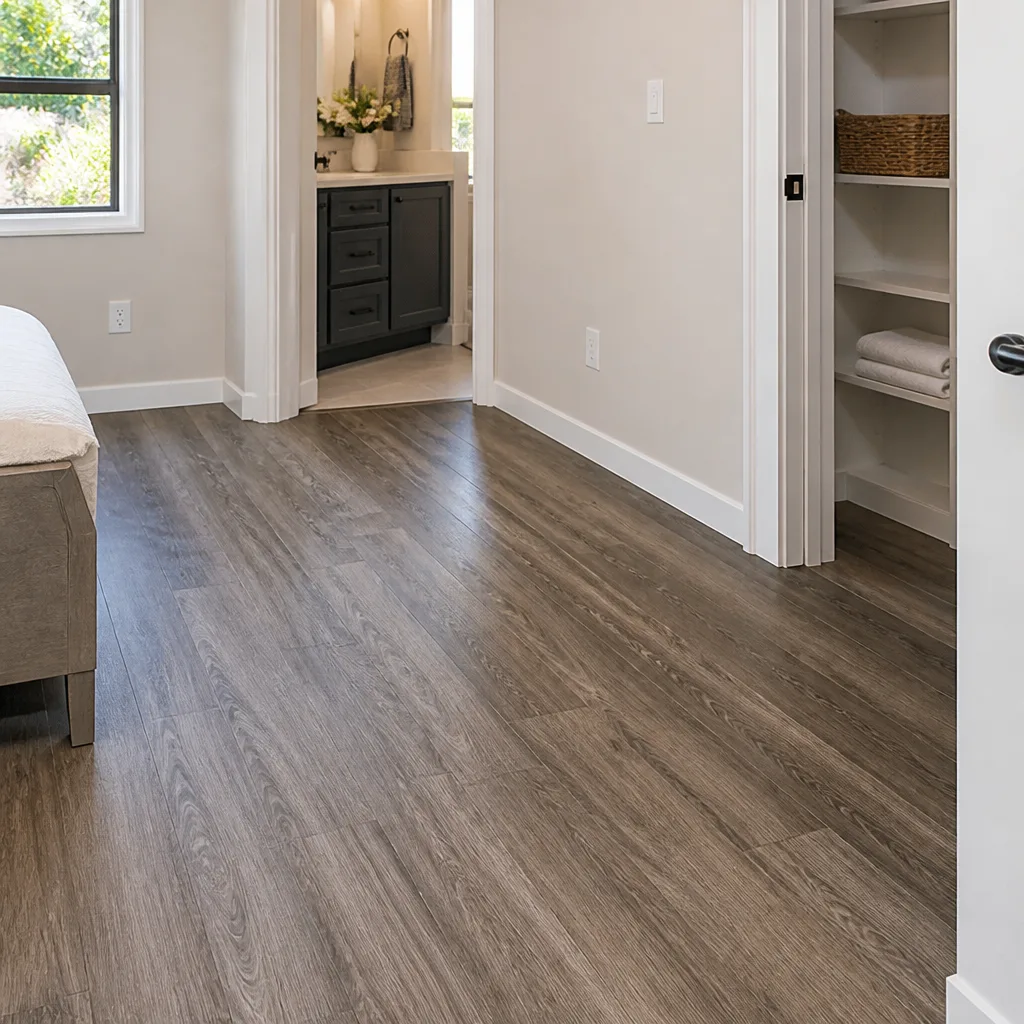
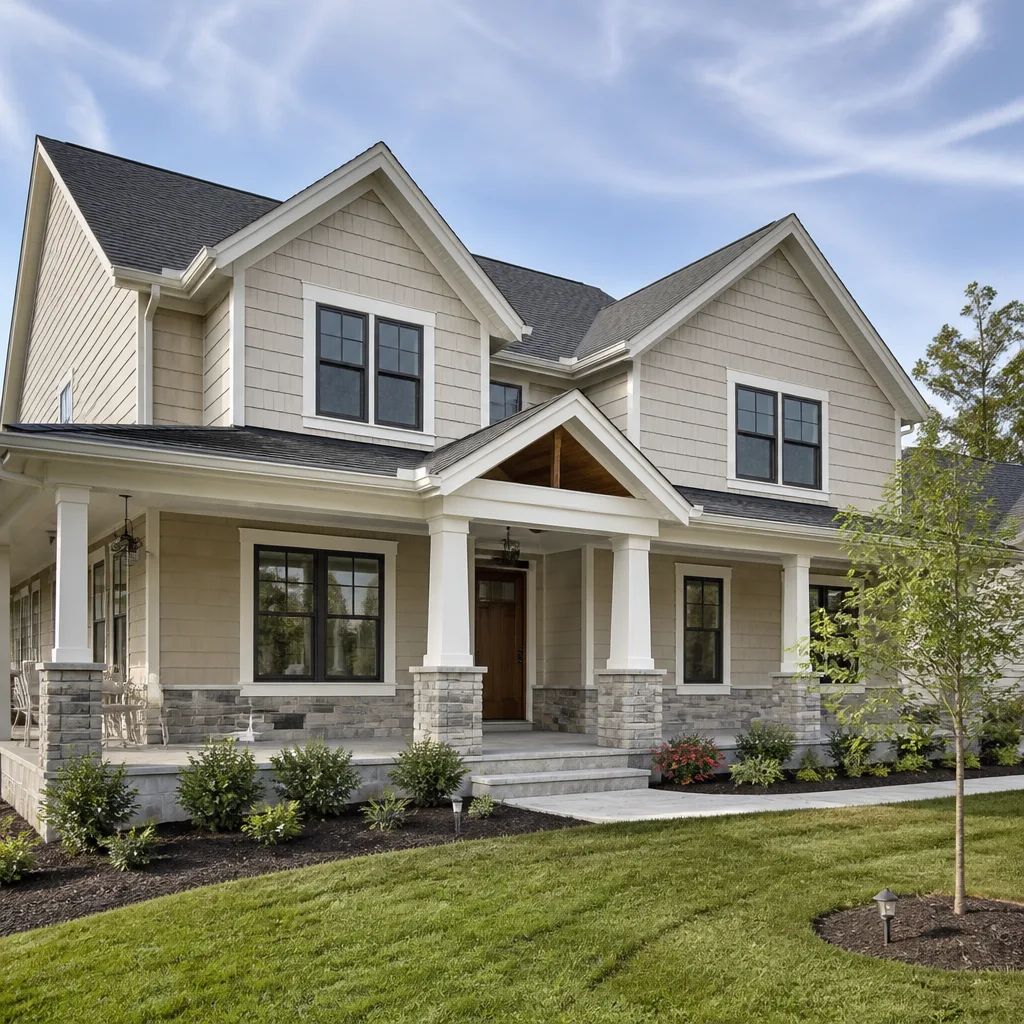
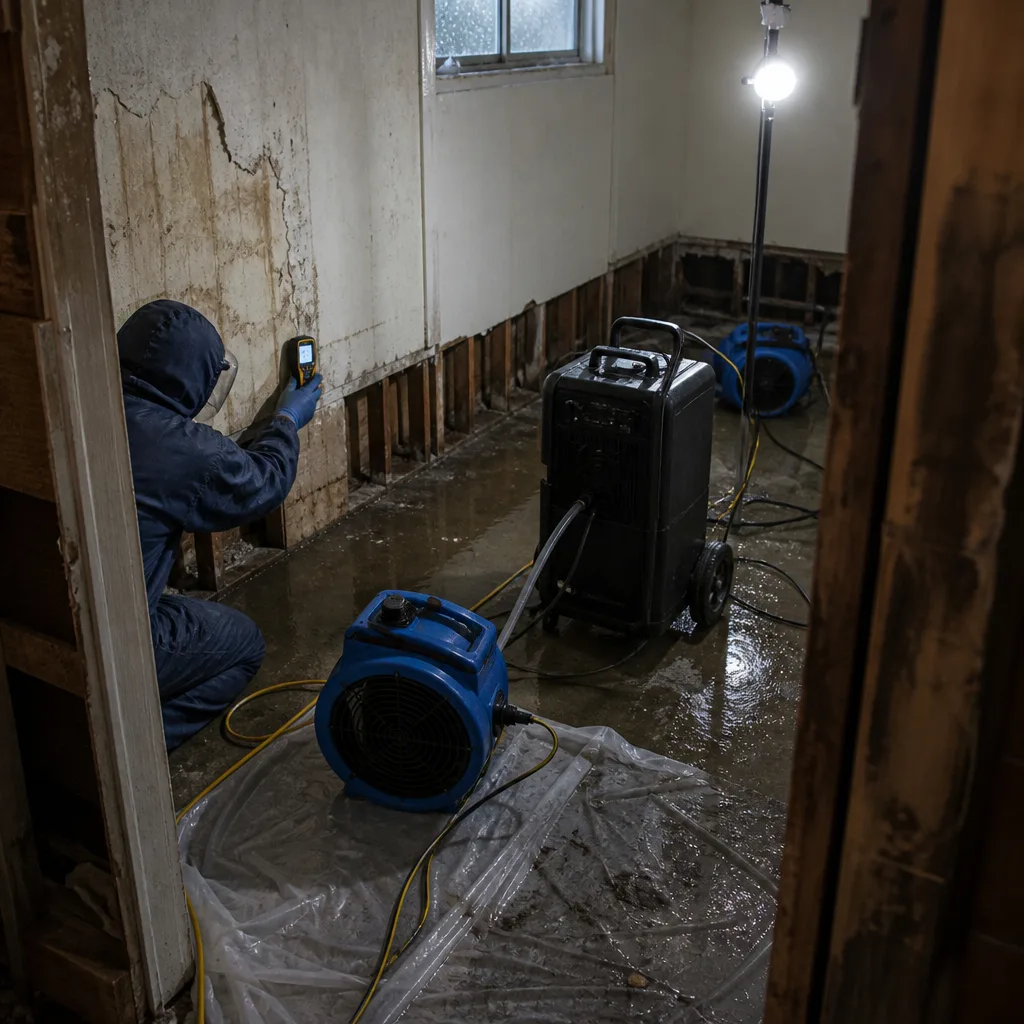 Before
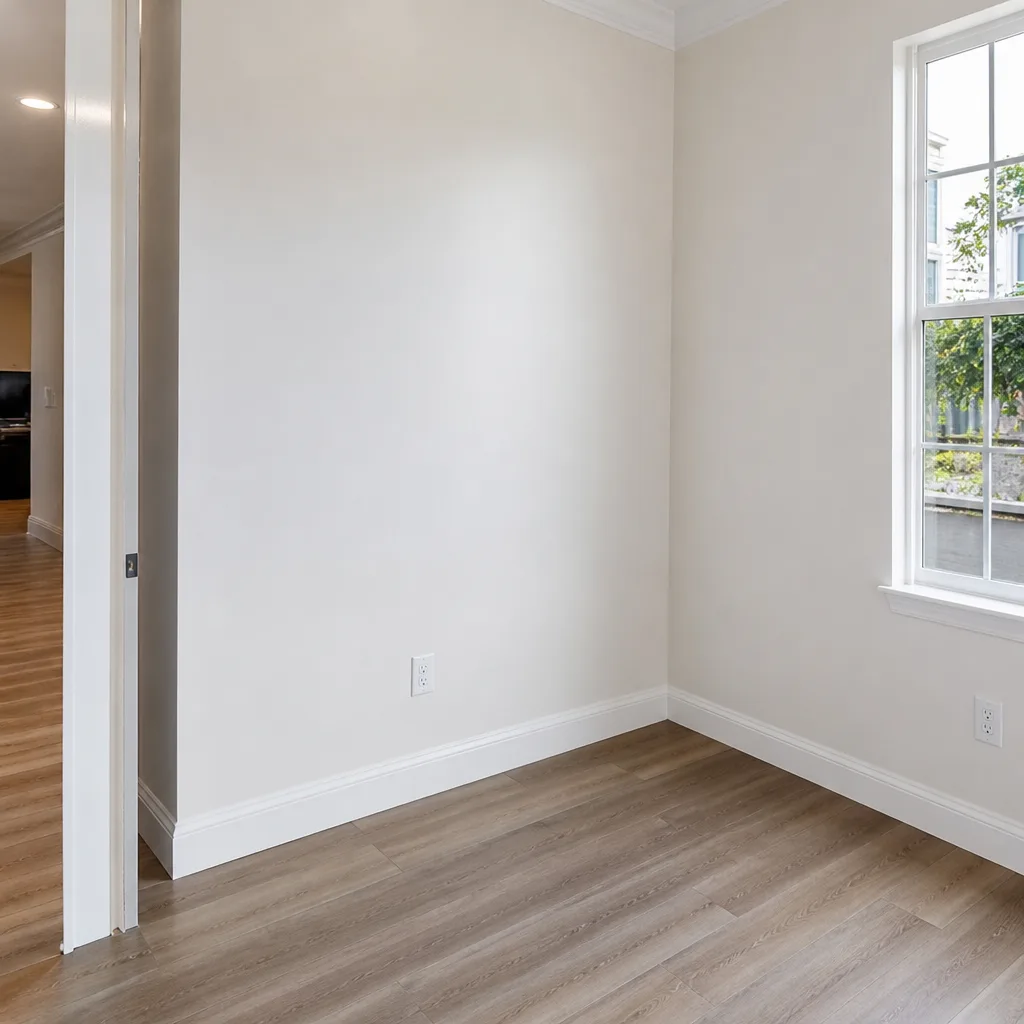 After
After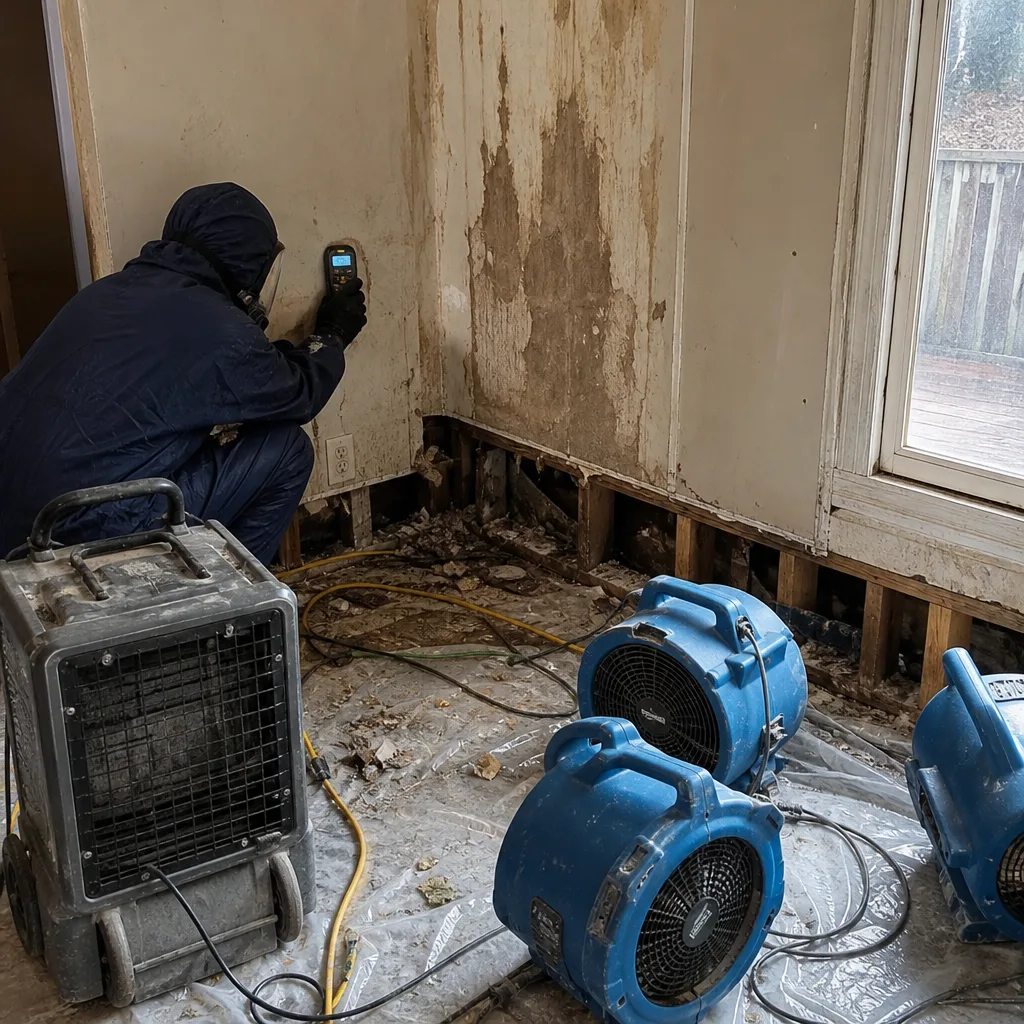 Before
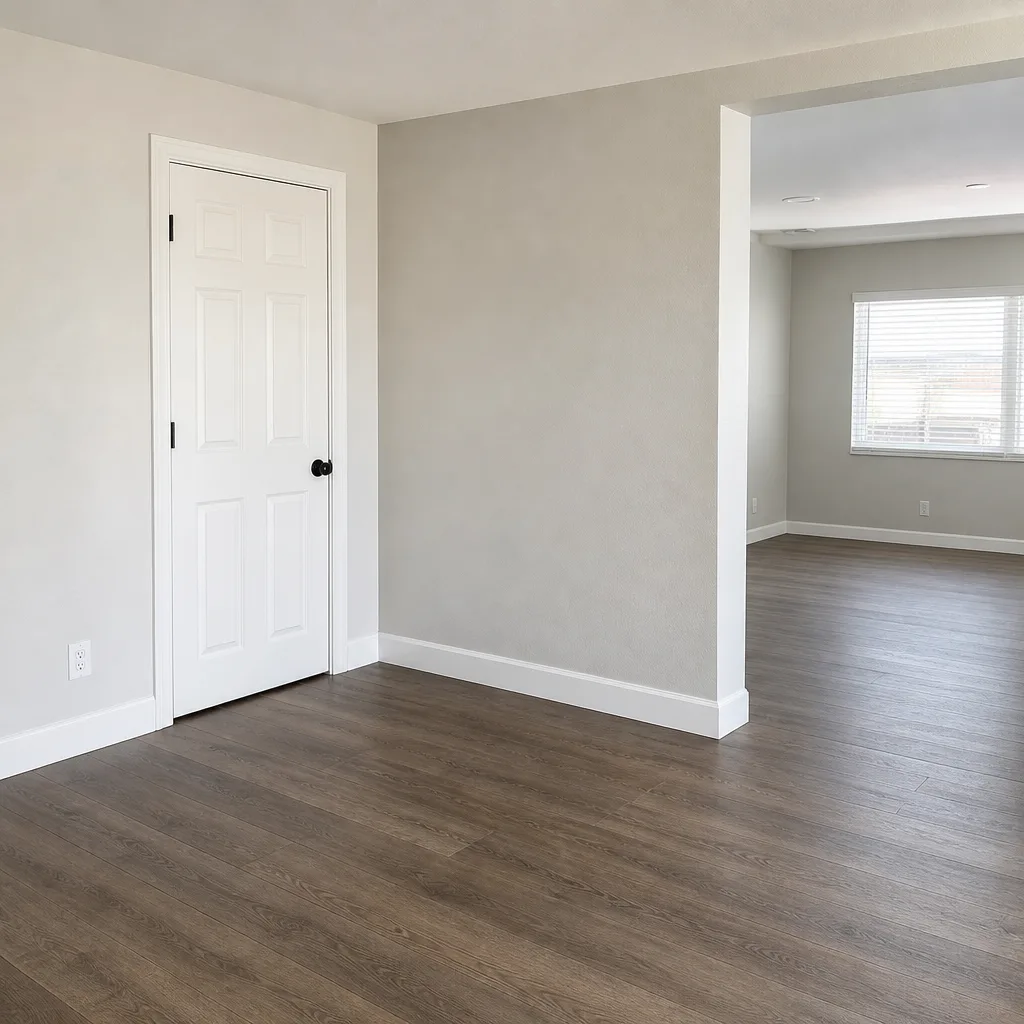 After
After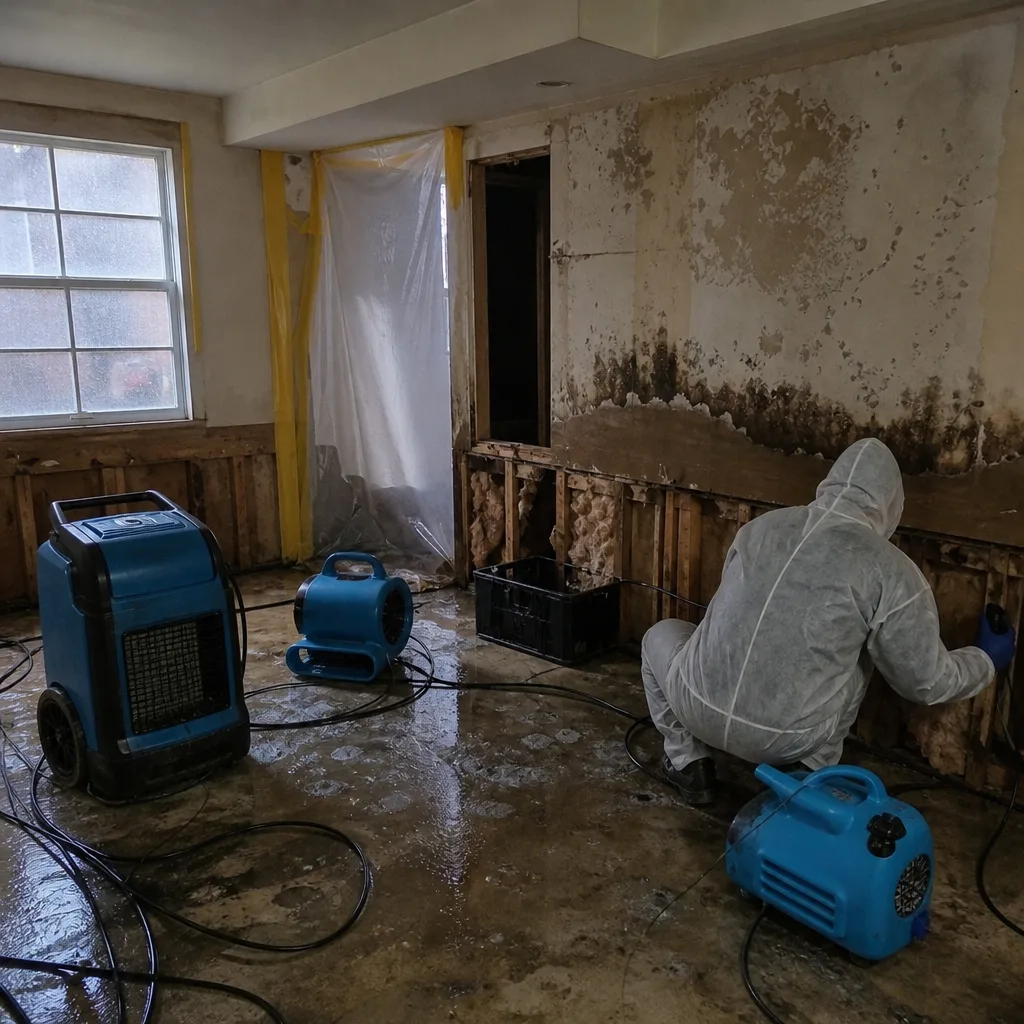 Before
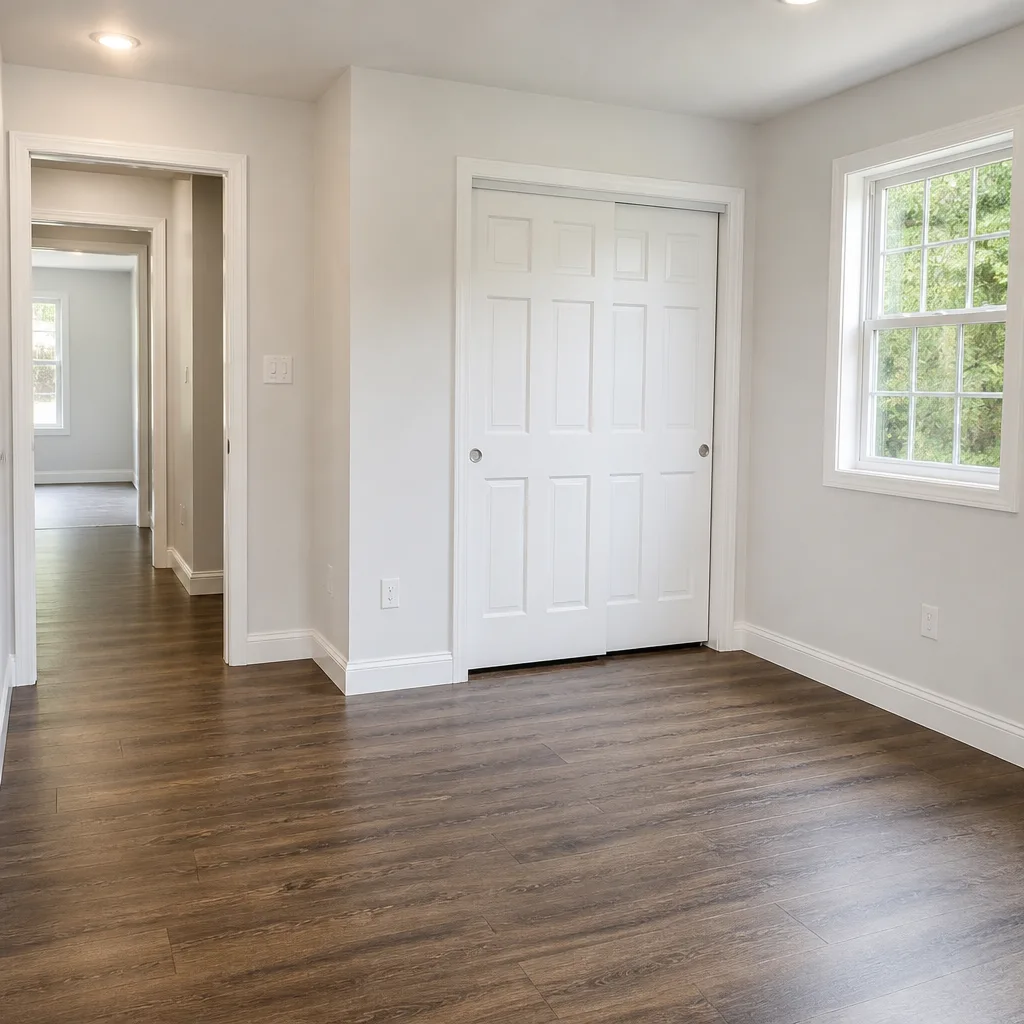 After
AfterThe Complete Mold Remediation Guide for Los Angeles Homeowners
Los Angeles gets about 15 inches of rain a year, less than London, and yet mold claims in LA are driven less by rain and more by the fact that beach-adjacent homes sit in 80% relative humidity for four months while homeowners assume their dry climate protects them. This guide walks through the LA-specific conditions that create mold, the remediation process that actually resolves them, and what a legitimate written scope of work should include before anyone tapes up plastic sheeting. If you own a home in Los Angeles and have spotted discoloration, smelled must, or just want to know what you’re dealing with, this is written for you.
Quick Answer
Mold remediation in Los Angeles typically costs between $1,500 and $6,500 for contained areas under 100 square feet, with full-home remediation running $10,000 to $30,000 or more depending on the moisture source and how far the growth has spread. The process follows IICRC S520 protocol: contain the area, run negative air pressure, remove affected materials, HEPA vacuum every surface, apply antimicrobial treatment, and verify clearance with post-remediation testing. The most important thing to understand is that mold is a moisture problem, not a stain problem: if the water source isn’t fixed first, the mold returns within weeks.
Table of Contents
- The LA Mold Paradox: Why a Dry City Has a Mold Problem
- Coastal vs. Inland: The Two Different Mold Risks in Los Angeles
- What California Law (SB 655 and AB 284) Requires for Mold Disclosure
- The Stucco Problem: Why LA’s Signature Siding Hides Mold
- The IICRC S520 Mold Remediation Protocol, Step by Step
- What a Written Scope of Work Should Include Before Any Containment Goes Up
- What Mold Remediation Costs in Los Angeles
- Will Insurance Cover Mold Remediation?
The LA Mold Paradox: Why a Dry City Has a Mold Problem
Los Angeles averages 15 inches of rain annually, most of it falling between December and March. That number makes homeowners complacent. They think mold is a Seattle problem, a Florida problem, a New Orleans problem. What they miss is that mold doesn’t need rain. It needs moisture, organic material, and time. Los Angeles delivers all three.
The first factor is the marine layer. From May through August, coastal neighborhoods sit under a persistent fog bank that keeps relative humidity between 70% and 85% for hours every night and morning. That’s the same humidity range you’d find in a bathroom after a hot shower, except it’s outside, pressing against your walls. Homes built before modern moisture barriers absorb that humidity slowly, season after season.
The second factor is Los Angeles’ aging building stock. A huge portion of the city’s single-family homes were built between 1920 and 1980, before California’s building code required continuous vapor barriers, rainscreens, or properly flashed stucco assemblies. These homes rely on plaster and wood framing to breathe in ways that made sense when summers were milder and marine-layer nights were shorter. Today, with longer humidity seasons and more extreme temperature swings, those same assemblies trap moisture where it shouldn’t be.
The third factor is human. Los Angeles homeowners run sprinklers year-round, often with drip lines running too close to the foundation. They plant landscaping within inches of stucco walls. They close windows and run AC during heat waves, creating stale indoor air that never fully dries out. In our experience, at least half the mold issues we see in Los Angeles trace back not to a leak, but to chronic low-level moisture that accumulated over two or three seasons without anyone noticing.
Coastal vs. Inland: The Two Different Mold Risks in Los Angeles
Los Angeles isn’t one climate. It’s at least three, and they produce completely different mold triggers.
Coastal LA: Santa Monica, Venice, Marina del Rey, Playa del Rey, the South Bay, and San Pedro. These neighborhoods sit in the marine layer’s direct path. Homes here experience 70%+ relative humidity for four to five months straight, every night and morning, from late spring through early fall. Mold in these neighborhoods often appears on north-facing walls, inside closets with exterior walls, behind furniture pressed against those walls, and in attics with poor ventilation. The growth is usually slow and diffuse. Homeowners often find it as a light dusting on shoes in a closet or a musty smell in a bedroom wardrobe. Condensation on windows facing the ocean is a warning sign.
Inland LA: The San Fernando Valley, Glendale, Pasadena, Burbank, and the eastern foothills. These areas are hotter and drier, but they have their own mold triggers. The main one is air conditioning. Inland Valley homes run AC continuously from June through October. When the system is oversized, undersized, or has dirty coils and a clogged condensate drain, it creates localized humidity pockets inside walls and ceilings where cold air meets warm air. The second trigger is snowmelt from the San Gabriels creating high groundwater in specific pockets of Pasadena and La Cañada, especially in older basement-adjacent construction. And the third is roof leaks from the heavy, concentrated rain events that hit the foothills harder than the coast.
Mid-city and central LA: Koreatown, Mid-Wilshire, West Adams, and Historic South Central. These neighborhoods face a combination of both: enough ocean influence to raise ambient humidity, enough inland heat to drive AC condensation, and a large concentration of 1920s and 1930s stucco homes with original moisture barriers that are now failing. Mold issues here often show up as ceiling stains under flat roofs, which are common in Spanish Revival and Mediterranean-style construction across central LA.
What California Law (SB 655 and AB 284) Requires for Mold Disclosure
California is one of the only states with explicit statutory language about mold and habitability. Two laws matter to any Los Angeles homeowner: SB 655 and AB 284, both of which amended the California Civil Code to define mold as a condition that can make a home substandard.
SB 655 (the Toxic Mold Protection Act, originally SB 732, amended and updated). This law directs the California Department of Public Health to establish permissible mold exposure limits and set standards for mold assessment and remediation. Practically, it means landlords and property managers in Los Angeles have a legal duty to address visible mold when it affects habitability, even if they don’t want to spend the money.
AB 284 (amendments to Civil Code Section 1941.7 and related sections). This law defines “mold” in the context of rental housing and requires that a rental unit be considered substandard if visible mold growth is present in quantities that exceed normal exposure levels or would pose a health risk to a reasonable tenant. It also requires sellers of residential property to disclose known mold issues on the Transfer Disclosure Statement (TDS), which is standard in every California real estate transaction.
What this means practically for a Los Angeles homeowner:
- If you’re a landlord, you cannot ignore a tenant’s mold complaint and hope it goes away. The law treats visible mold as a habitability issue, and tenants can pursue repair-and-deduct remedies or withhold rent in specific circumstances.
- If you’re selling, you must check the “mold” box on the TDS if you know or suspect mold, even if you’ve remediated it. Failure to disclose opens you to post-sale litigation, which is common in LA real estate disputes.
- If you’re buying, request the seller’s TDS mold disclosure and ask specifically about past water damage, leak history, and any remediation performed. Don’t rely on a standard home inspection to catch hidden mold; inspectors are not mold assessors and are legally limited in what they can open or disturb.
- If you’re a tenant in Los Angeles, document visible mold with photos, notify your landlord in writing, and know that the city’s Rent Stabilization Ordinance and county health department both take mold complaints seriously.
The Stucco Problem: Why LA’s Signature Siding Hides Mold
Stucco covers more Los Angeles homes than any other exterior material. It’s the defining look of Spanish Revival, Mediterranean, and mid-century California architecture. It’s also the single biggest reason mold goes undetected in LA homes until the damage is extensive.
Stucco is a cement-based plaster applied in multiple coats over a lath or mesh. It’s durable, fire-resistant, and looks beautiful. But it’s porous. Water gets in through hairline cracks, around window and door flashings, at the roofline, and where stucco meets wood trim or foundation. Once water gets behind the stucco, it sits against the building paper and framing, slowly wetting the wood sheathing and studs. The stucco itself dries out on the surface, so homeowners see no sign of a problem. Meanwhile, behind the wall, mold is growing on the paper backing, the insulation, and the wood framing.
This is why mold in stucco-clad homes often can’t be fully remediated without addressing the exterior water intrusion source first. You can clean and treat every interior surface, but if water is still penetrating the stucco from outside, the mold comes back within months.
How to identify a potential stucco moisture problem:
- Look for hairline cracks wider than 1/16 inch anywhere on the exterior, especially around window corners, where walls meet the roofline, and where stucco meets concrete or wood.
- Check for efflorescence: white, chalky, crystalline deposits on the stucco surface. That’s mineral salt left behind when water evaporates out of the wall assembly. It’s a sign that water is moving through the stucco.
- Look for bubbling or peeling paint on interior walls that share an exterior stucco wall. Paint blisters when moisture pushes out from behind the plaster.
- Pay attention to musty smells inside closets, behind large furniture, and in corners of rooms on the exterior perimeter. Mold behind stucco often announces itself by smell before it’s visible.
- After a heavy rain, run your hand along interior walls adjacent to stucco. If the plaster feels cold in one spot or slightly damp, you have moisture intrusion.
In Los Angeles, the most common stucco intrusion points we see are improperly flashed windows, rooflines without adequate kickout flashing, sprinkler heads spraying directly onto walls, and landscaping that traps moisture against the base of the wall. Fixing these exterior issues is part of a complete mold remediation, not an optional add-on.
The IICRC S520 Mold Remediation Protocol, Step by Step
The IICRC (Institute of Inspection, Cleaning and Restoration Certification) S520 is the industry standard for professional mold remediation in the United States. Any legitimate mold remediation company in Los Angeles follows it. Here’s what it means in plain language, step by step.
- Assessment and moisture source identification. Before any containment goes up, a technician identifies where the water is coming from and how far the mold has spread. This involves moisture meters, infrared cameras, and sometimes borescope inspection inside wall cavities. If the source isn’t found, remediation is pointless.
- Containment. The affected area is sealed off with 6-mil polyethylene sheeting to prevent mold spores from spreading to clean parts of the home. This is not optional. A proper containment includes a zippered entry and, for larger jobs, an airlock chamber. If a contractor starts removing moldy drywall without containment, walk away.
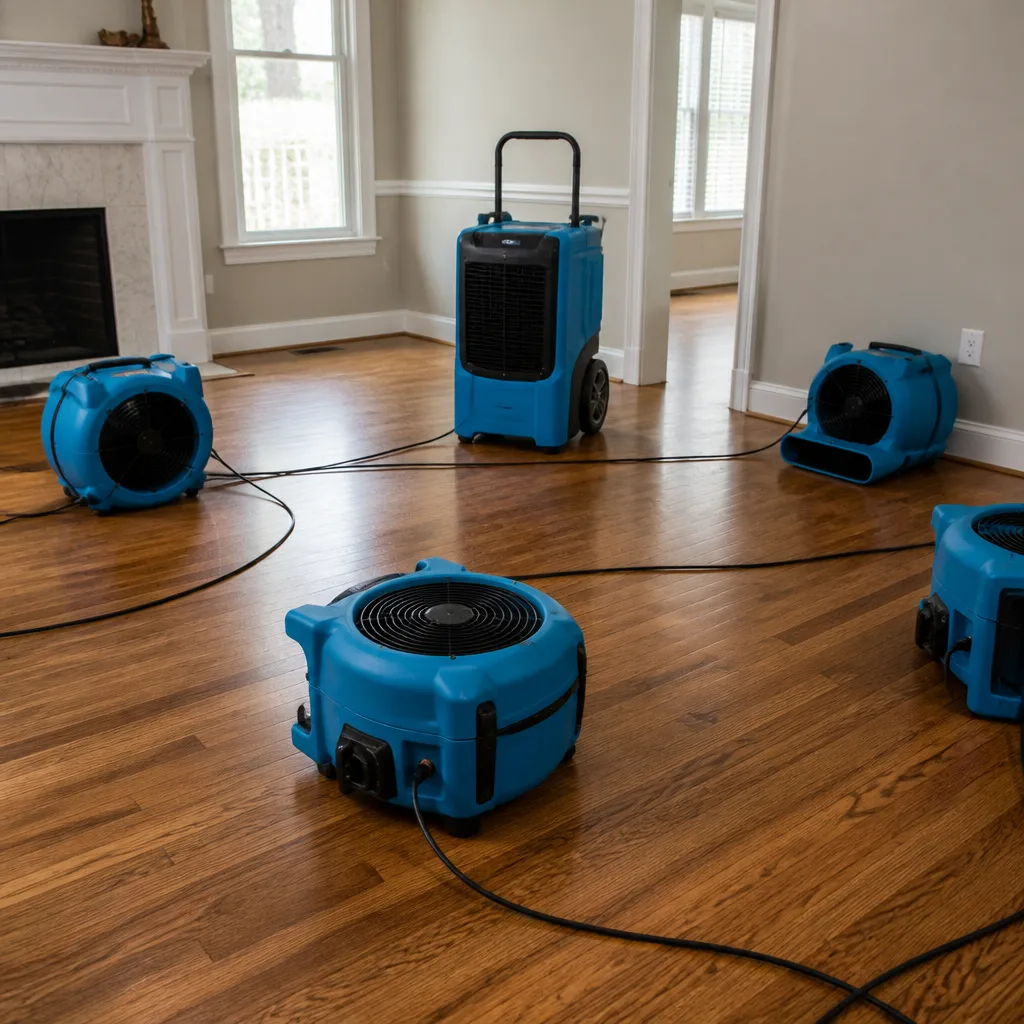
- Negative air pressure. An air scrubber equipped with HEPA filtration creates negative pressure inside the containment, meaning air flows into the containment but not out. This is what keeps mold spores from blowing through your living room during removal. The exhaust is vented outside, not into the house.
- Removal of affected materials. Drywall, insulation, carpet, and padding with visible mold growth are cut out and bagged inside the containment. The rule is simple: porous materials with mold growth get removed, not cleaned. Non-porous surfaces (tile, concrete, metal) can be cleaned, but drywall and carpet that have absorbed mold cannot be reliably salvaged.
- HEPA vacuuming. Every surface inside the containment, plus a 2-foot perimeter outside it, is vacuumed with a HEPA-filtered vacuum. This removes settled spores that are invisible to the naked eye. It’s a slow, methodical process, and it’s the difference between a job that passes clearance and one that doesn’t.
- Antimicrobial treatment. After removal and vacuuming, an EPA-registered antimicrobial is applied to all remaining surfaces. This step kills any mold fragments that survived removal and prevents regrowth on the cleaned surfaces. It’s not a magic spray; it works only after removal and vacuuming are done correctly.
- Drying. The area is brought to dry standard using professional drying equipment. In a coastal Los Angeles home, this might mean running dehumidifiers and air movers for several days after the visible work is done. Drying verification uses moisture meters, not guesswork.
- Clearance testing. A third-party mold assessor, or sometimes an in-house technician, collects air samples from inside and outside the containment. The inside sample should have equal or lower spore counts than the outside sample. If it doesn’t, the remediation is incomplete and the process repeats.
This is the standard we work to at Mold Remediation in Los Angeles. Every step is documented, and every step exists for a reason.
What a Written Scope of Work Should Include Before Any Containment Goes Up
Most mold remediation proposals are vague. They say “remove affected drywall, treat, and clean” without telling you how much drywall, where, or what happens after. A proper written scope of work is specific enough that two different contractors would quote the same job the same way. Here’s what it should include.
- Exact square footage of containment. Not “the affected area.” Specific numbers: “Containment: 12 x 14 bedroom, 168 square feet.”
- Specific materials to be removed. “Remove drywall from floor to 24 inches above floor line on the east wall and south wall of bedroom.” Not “remove damaged drywall as needed.”
- Number and type of air scrubbers. “One HEPA 500 air scrubber running at 500 CFM for the duration of the project.” This tells you the negative air pressure is real, not decorative.
- The antimicrobial product name and EPA registration number. Legitimate remediation companies use named products with registration numbers. If a scope says “antimicrobial treatment” without naming the product, ask why.
- Clearance testing protocol. Who collects samples, how many, and what standard is used. “Third-party clearance testing: 1 outdoor and 2 indoor air samples, analyzed by an accredited laboratory.” If clearance testing isn’t in the scope, it isn’t in the job.
- Drying standards. “Area to be dried to dry standard as defined by IICRC S500, verified with moisture meters and documented in the final report.”
- Post-remediation repair scope or a clear statement of exclusion. Mold remediation removes materials. Reconstruction puts them back. Most remediation companies don’t do reconstruction. Your scope should tell you what’s included and what’s not, so you can plan for a separate repair contractor if needed.
- The written guarantee. A legitimate remediation company stands behind its work in writing. At Wendell Water Damage Restoration, every job includes our 365-Day Done Right Promise: if it’s not done right, we make it right, stated in writing on every repair.Water Damage Repair in Los Angeles covers the reconstruction side when mold remediation requires removing and replacing drywall, flooring, or cabinetry.
What’s missing from most contractor proposals is specificity. Vague language usually means the contractor hasn’t done a real assessment, or is pricing the job low to win it and planning to change-order you later. We put a written price before any work starts, always, so you know the number before a single sheet of plastic goes up.
What Mold Remediation Costs in Los Angeles
Mold remediation in Los Angeles costs more than in most parts of the country, for real reasons: labor rates, disposal fees, and the difficulty of working in older, tighter homes. Here’s a realistic breakdown.
- Small, contained job (under 10 square feet): $1,500 to $3,000. This is typically a bathroom ceiling, a closet wall, or a small area around a window leak. Includes containment, removal, HEPA vacuuming, antimicrobial treatment, and often one day of work.
- Moderate job (10 to 100 square feet): $3,000 to $6,500. Typical of a bedroom wall, a hallway, or a kitchen section. Multiple days of containment, drying equipment, and air scrubbing.
- Large job (100 to 300 square feet): $6,500 to $15,000. Multiple rooms, significant removal, extended drying time, possibly structural drying (Injectidry systems into wall cavities).
- Whole-home remediation (300+ square feet or multiple areas): $15,000 to $30,000+. This is a gut-and-restore scenario, often following a major water event like a roof failure or extensive plumbing leak. May require temporary relocation.
- Clearance testing: $300 to $800. Usually charged separately by a third-party assessor. If it’s included in the remediation price, confirm it’s genuinely third-party.
- Exterior stucco repair or water intrusion source correction: $2,000 to $10,000+. This is not mold remediation per se, but it’s often required for the remediation to last. Includes flashing repairs, crack sealing, or full wall assemblies in worst cases.
These are honest ranges for the Los Angeles market. Anything significantly lower usually means corners are being cut, typically on containment, negative air pressure, or clearance testing. Call (940) 466-4354 for a written, itemized quote on your specific situation, free.
Will Insurance Cover Mold Remediation?
Insurance coverage for mold in Los Angeles depends almost entirely on the source of the water. Standard homeowners policies exclude mold damage unless it results from a covered peril, like a sudden pipe burst, an appliance failure, or a roof leak from a covered storm. Mold that develops from chronic humidity, poor ventilation, or long-term neglect falls outside coverage. Here’s the nuance that matters.
If a pipe bursts in your Los Angeles home and mold develops in the two weeks it takes for a plumber to arrive, the remediation is generally covered as part of the water damage claim, subject to your policy’s mold sublimit (often $5,000 to $10,000). If the mold is in a wall cavity discovered years after a slow, undetected stucco leak, it’s almost certainly not covered.
The best approach is to document everything with photos, call your insurer immediately, and ask specifically about your policy’s mold sublimit and whether remediation falls under the covered peril. Some insurers will pay for remediation if it’s tied directly to a covered water event. Others will fight it. Water Damage Restoration in Los Angeles should always be the first call after a water event because fast response, drying the affected area within 24 to 48 hours, prevents most mold from developing in the first place. We work directly with adjusters and provide photo documentation suitable for claim submission.
Common Mistakes to Avoid
- Painting over mold. Paint seals moisture in, and mold grows through it within months. If you see a dark stain bleeding through a recently painted ceiling in a Los Angeles home, there’s active moisture behind it.
- Bleach as a mold treatment. Bleach kills surface mold but doesn’t penetrate porous materials like drywall and wood, where the mold roots live. It also adds water to the surface, potentially feeding deeper growth. Professional remediation uses EPA-registered antimicrobials designed for porous surfaces.
- Ignoring the moisture source. The most expensive mistake in Los Angeles mold remediation is treating the symptom without fixing the cause. A stucco leak, a condensation problem, or a roof issue must be corrected or the mold returns.
- Skipping clearance testing. Without post-remediation air sampling, you have no proof the job worked. If a contractor refuses clearance testing, that’s a red flag. Every legitimate mold remediation in Los Angeles includes it.
- DIY removal of large areas. Anything over 10 square feet, or anything involving HVAC systems, should be left to professionals. Disturbing mold without proper containment spreads spores through the house and can worsen air quality dramatically.
- Hiring the cheapest bid without a written scope. We’ve seen low-ball proposals turn into change orders mid-job, and homeowners end up paying more than the “expensive” quote would have been, with worse results. A written scope of work protects you from this.
- Assuming LA’s dry climate means no mold. This is the foundational mistake. The marine layer, stucco assemblies, and AC condensation all create mold conditions in Los Angeles. Vigilance, especially in coastal neighborhoods, is the best prevention.
When to Call a Professional
Call a mold remediation professional if you see visible mold larger than a dinner plate, smell musty odors you can’t locate, have experienced a water event that wasn’t professionally dried within 48 hours, or are buying or selling a home with mold disclosure questions. Also call if anyone in the household has respiratory issues, allergies, or immune system conditions and you suspect mold. Fast, documented response matters. Wendell Water Damage Restoration offers free estimates in Los Angeles, call (940) 466-4354, and we’ll give you a written price before any work begins. We’ve been serving Los Angeles since 2006, and we answer the phone 24/7 with a live person, not a voicemail.
Frequently Asked Questions
How much does mold remediation cost in Los Angeles?
Mold remediation in Los Angeles typically costs $1,500 to $6,500 for contained areas under 100 square feet, and $10,000 to $30,000+ for whole-home remediation. The exact price depends on the square footage, the moisture source, and whether the job requires exterior repairs. Call (940) 466-4354 for a written quote on your specific situation. Estimates are free.
How long does mold remediation take?
Most residential mold remediation jobs in Los Angeles take 2 to 5 days from containment to clearance, including drying time. Larger jobs or those requiring structural drying with Injectidry systems can take 7 to 10 days. The moisture source correction may add time if exterior stucco repair is needed.
Do I really need full remediation, or can I just clean it myself?
If the mold covers less than 10 square feet and is on a non-porous surface like tile or metal, careful cleaning with antimicrobial products can work. Anything larger, anything on drywall or wood, or anything with a suspected moisture source behind a wall should be professionally remediated. Disturbing hidden mold without containment spreads spores and can make the problem worse throughout the house.
Will insurance cover mold remediation in Los Angeles?
Insurance covers mold remediation only when the mold results from a covered peril like a sudden pipe burst or appliance failure. Mold from chronic humidity or slow stucco leaks is generally excluded. Document everything with photos, call your insurer immediately, and confirm your policy’s mold sublimit. We coordinate directly with adjusters and provide claim-ready photo documentation.
Is mold remediation safe for my family during the process?
Yes, when done correctly under IICRC S520 protocol. Containment and negative air pressure keep mold spores confined to the work area. Air scrubbers with HEPA filtration run continuously. The affected area is sealed from the rest of the house until clearance testing confirms spore counts are at or below outdoor levels. Your family can usually remain in the home during remediation, though you’ll want to avoid the immediate work area.
What’s the difference between mold remediation and mold removal?
Mold removal is a misnomer. It’s impossible to remove all mold spores from any environment; they exist everywhere, indoors and out. Remediation means reducing mold to normal, healthy levels and correcting the moisture source that allowed it to grow. That’s what the IICRC S520 protocol is designed to do, and it’s the standard every legitimate Los Angeles mold company works to.
The Bottom Line
Mold in Los Angeles is real, common, and manageable when you understand what you’re dealing with. The city’s marine layer, stucco building stock, and aging infrastructure create mold conditions that surprise homeowners who assume a dry climate means no risk. The remediation process, proper containment, negative air pressure, removal, HEPA vacuuming, antimicrobial treatment, and clearance testing, works reliably when it’s done completely. The key is a written scope of work, a written price, and a moisture source correction that prevents recurrence. If you’re seeing mold or smelling something off, don’t wait. Call (940) 466-4354. We’ll tell you what we see, what it costs, and what the fix looks like, in writing, before anything starts.
Written by Blake Sorensen, Owner at Wendell Water Damage Restoration, serving Los Angeles since 2006.