
Last updated October 9, 2026
Free visual inspection and a written scope of work before any mitigation begins - photos, moisture readings, and drying logs go in your claim file
The scope we write is the scope we bill. Anything new gets shown to you, in writing, before we touch it.
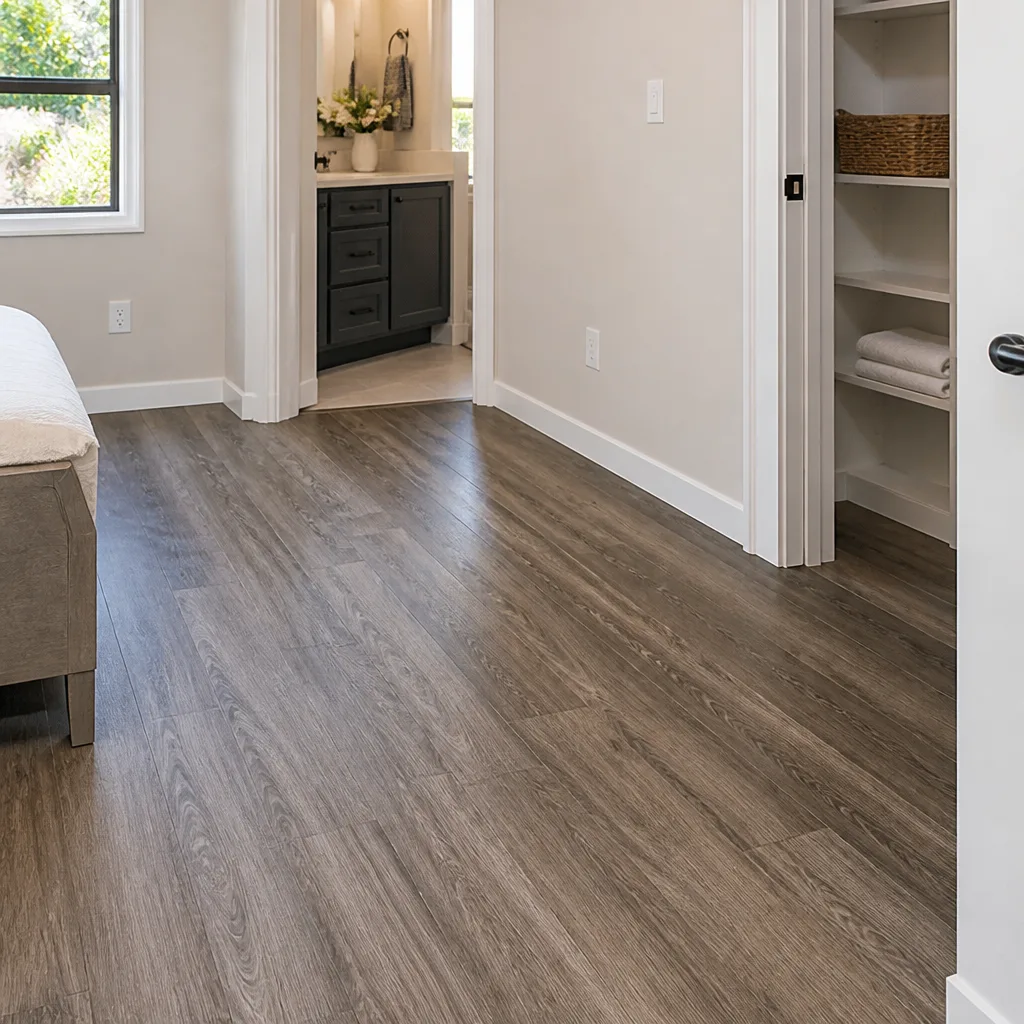
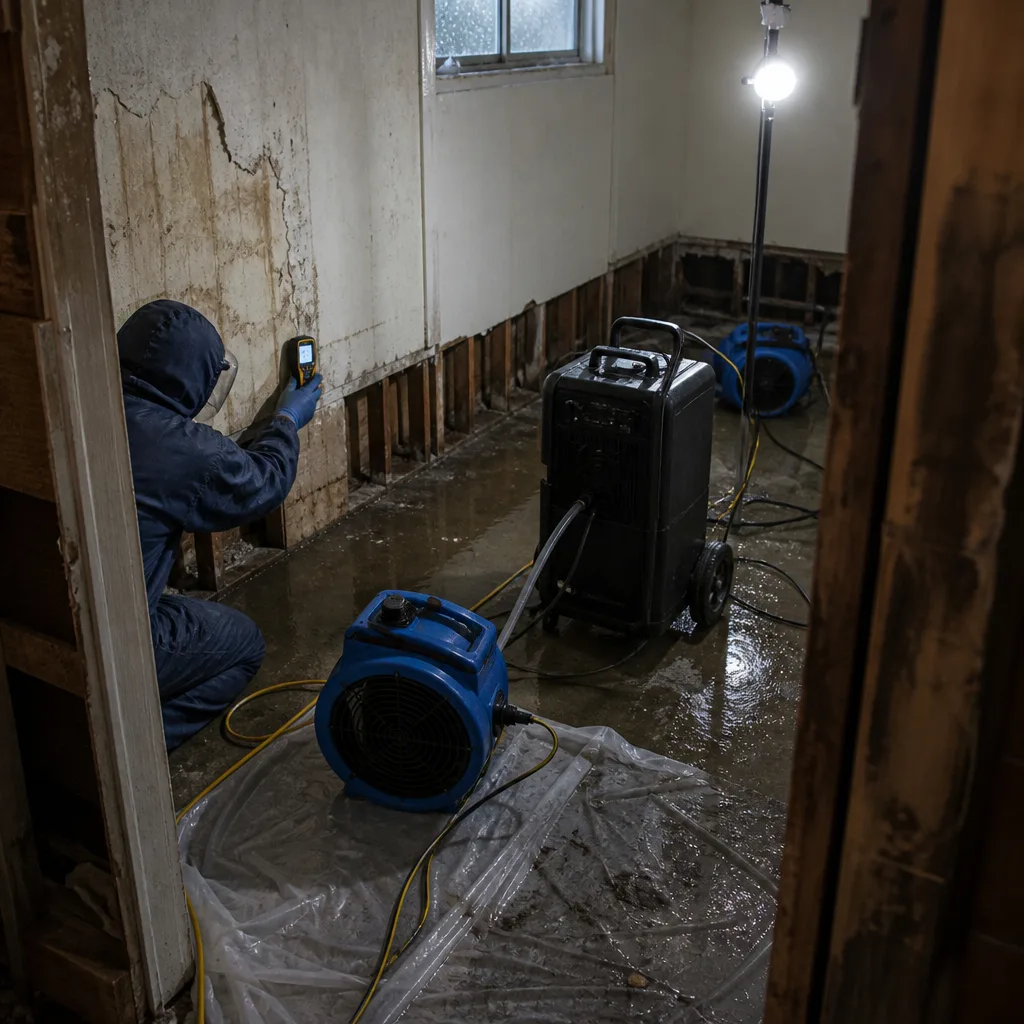 Before
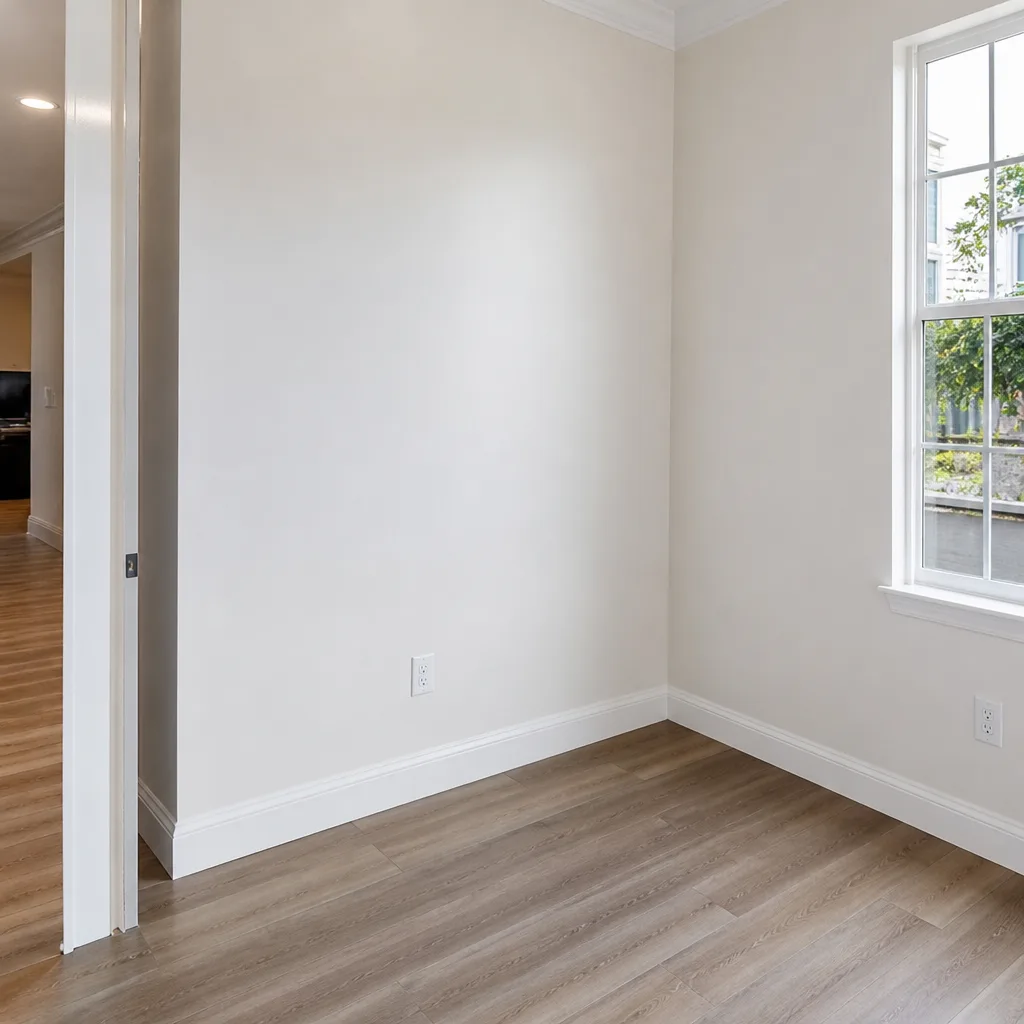 After
After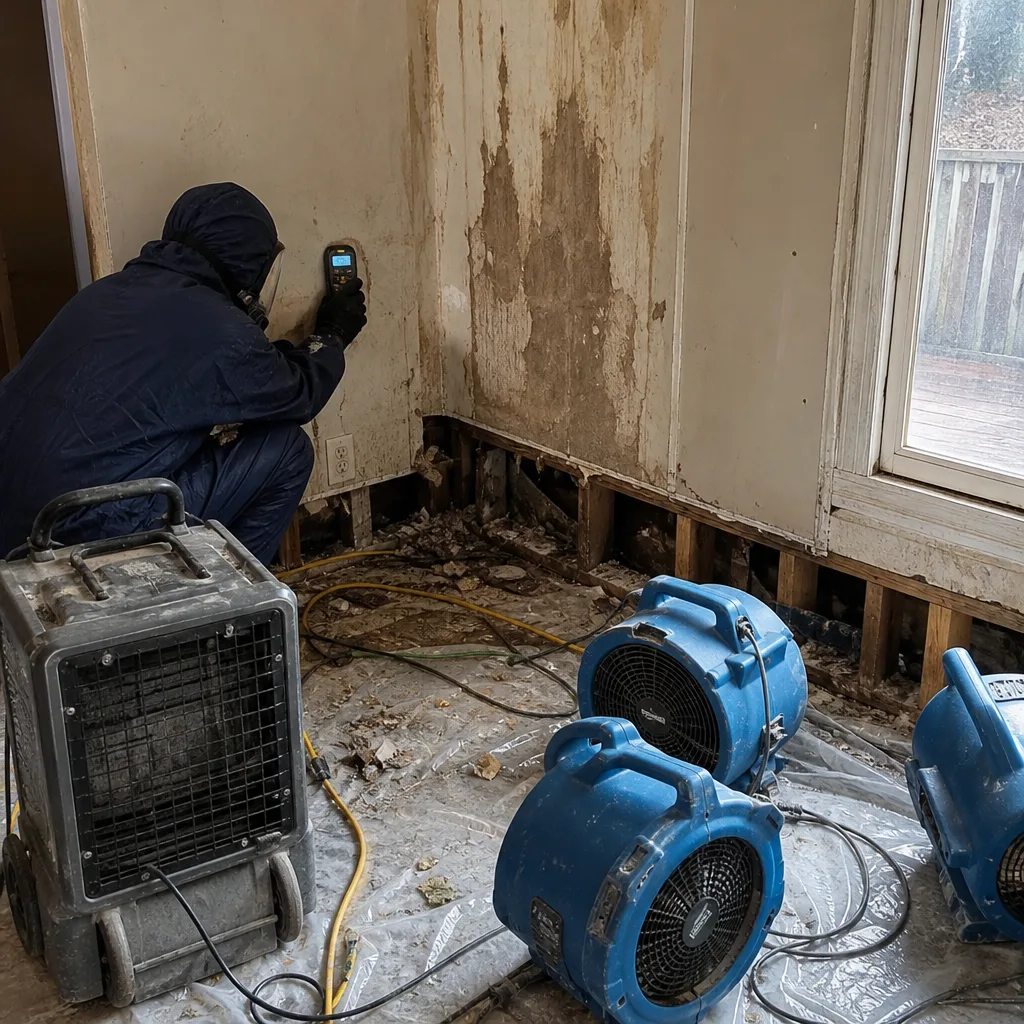 Before
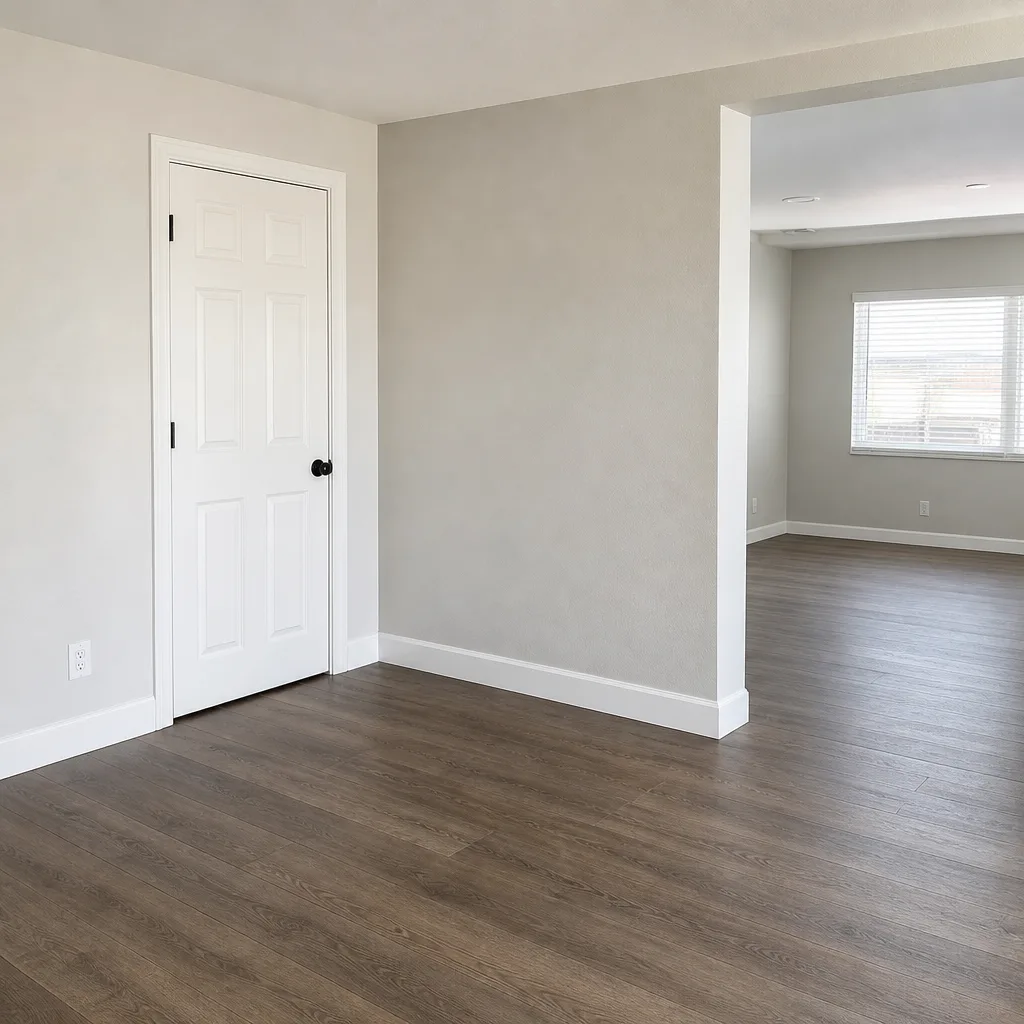 After
After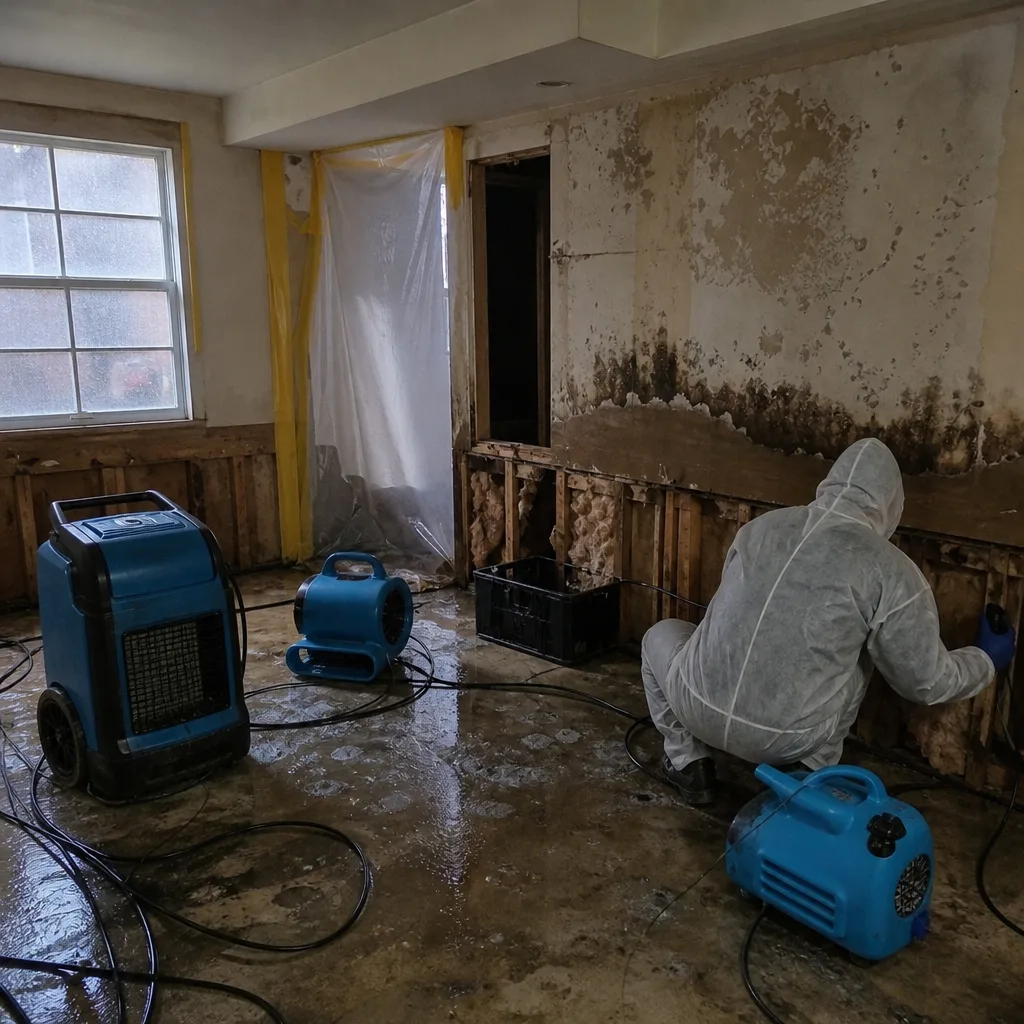 Before
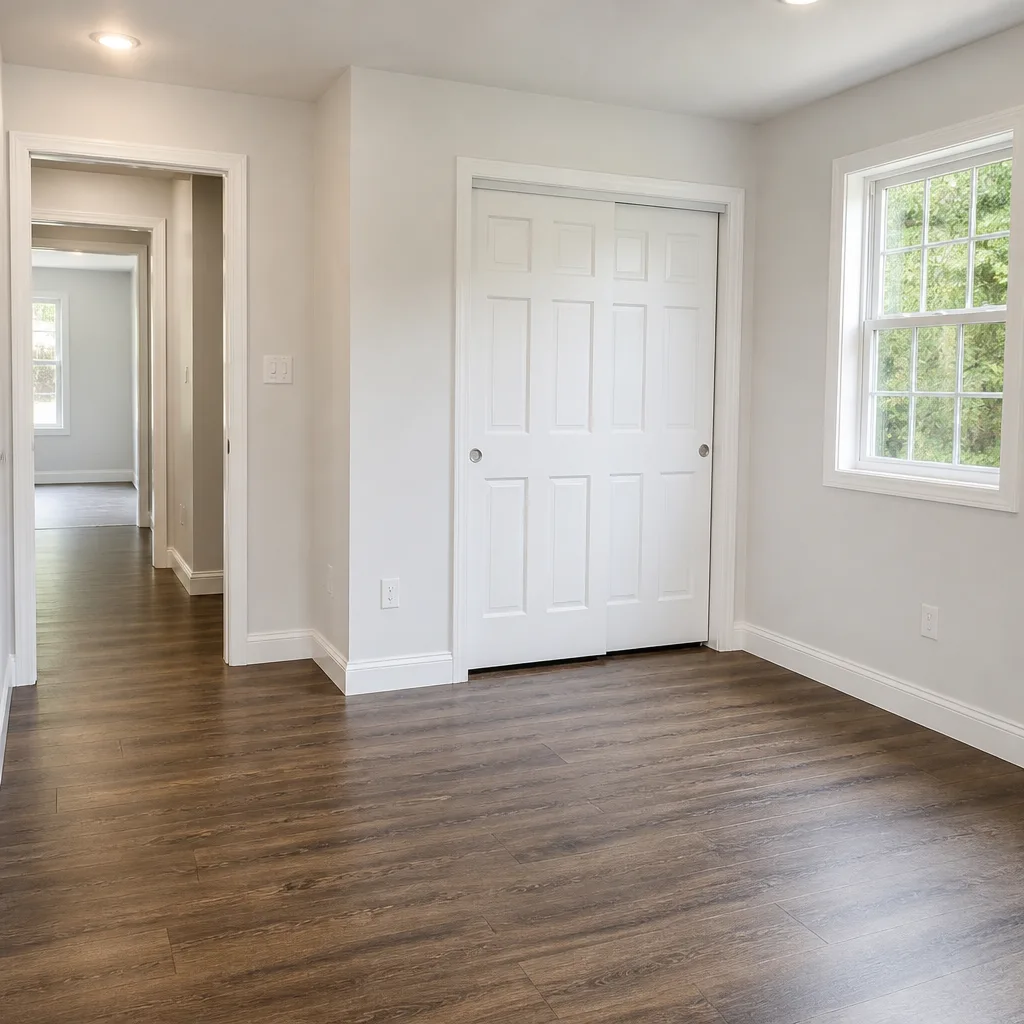 After
AfterHow Long Does Water Damage Repair Take? Timelines and What to Expect
When a contractor says “about two weeks,” ask them which two weeks they mean. The drying phase or the rebuild phase? Those are separate jobs, often with separate crews, separate permits, and separate insurance line items. Conflating them is how disputes start and projects drag into months. In Los Angeles, where older homes hide decades of layered drywall repairs and pier-and-beam foundations trap moisture differently than slabs, the distinction matters more than anywhere. This guide breaks down both timelines phase by phase so you know exactly what should be happening on any given day after water hits your home, and you can find how long water damage restoration takes: timelines and what to expect in our detailed breakdown.
Quick Answer
Water damage repair takes two distinct timelines: mitigation (extraction and structural drying) typically runs 3 to 5 days, and restoration (rebuilding drywall, flooring, and finishes) runs 1 to 3 weeks depending on scope. Total time for a full repair in Los Angeles averages 7 to 21 days for most residential water damage, though Category 3 water, insurance delays, and material lead times can extend that window.
Table of Contents
- Phase One: Mitigation, The 3-5 Day Clock
- Phase Two: Restoration, The 1-3 Week Rebuild
- What Legitimate Drying Documentation Looks Like
- What Extends Each Phase (and What Doesn’t)
- Category 2 and 3 Water: The 24-48 Hour Antimicrobial Factor
- Scope Creep: Legitimate Finds vs. Fraudulent Add-Ons
- Milestone Updates: What You Should Hear From Your Contractor
- Common Mistakes to Avoid
- When to Call a Professional
- Frequently Asked Questions
- The Bottom Line
Phase One: Mitigation, The 3-5 Day Clock
Mitigation is stopping the damage from getting worse. It starts the moment water is discovered and ends when moisture readings across every affected material hit the dry standard. That typically takes 3 to 5 days in a Los Angeles home under normal conditions. Here’s what should happen, in order:
- Extraction (Day 1): Standing water is removed using truck-mounted or portable extraction units. In a typical 300-square-foot affected area in a Los Angeles home, this takes 2 to 4 hours.
- Boundary Setting (Day 1): Dry areas get sealed off with containment barriers so moisture doesn’t migrate into unaffected rooms through the air.
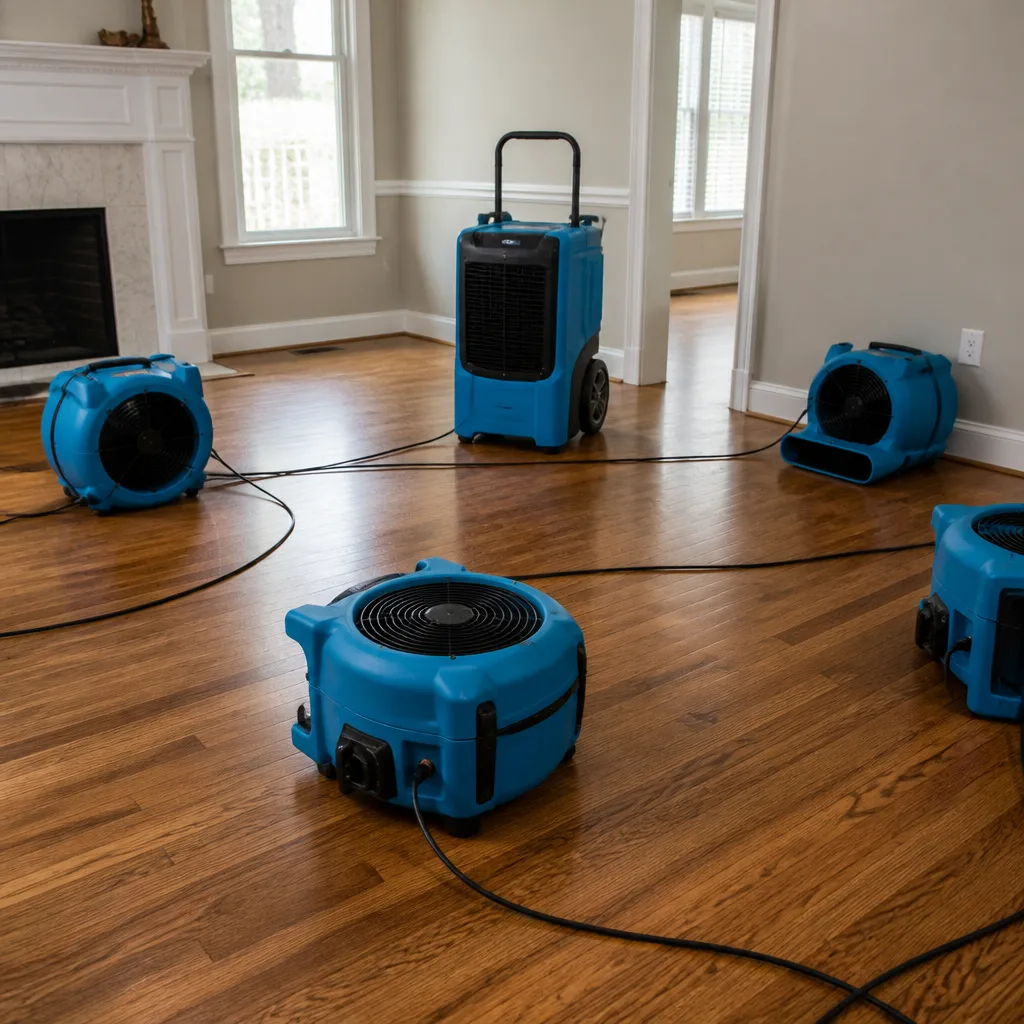
- Equipment Placement (Day 1): Air movers and dehumidifiers go in. A standard bedroom suite gets 4 to 8 air movers and one to two commercial dehumidifiers. We use Dri-Eaz, Phoenix, and XPOWER units because they move enough air volume to actually dry framing, not just surface drywall.
- Daily Monitoring (Days 2-4): A technician returns daily to take psychrometric readings, which means tracking air temperature, relative humidity, and material moisture content in each affected area. Equipment gets repositioned as readings shift.
- Moisture Verification (Day 3-5): The job is only done when every material reads at or below the dry standard for Los Angeles’s climate, typically 8-12% moisture content for wood framing and under 1% for drywall. If readings haven’t hit target, drying continues. That’s not a delay. That’s the job being done correctly.
Mitigation on a Category 1 clean water loss with one affected room often finishes in 72 hours. A Category 3 sewage backup across multiple rooms can push mitigation to a full 5 days, sometimes 6 if Los Angeles humidity spikes during the rainy months of January through March. The key distinction: mitigation ends when readings prove it ends, and your contractor should be able to show you those readings on demand.
For Los Angeles homeowners specifically, one thing we see regularly-and we cover in our guide on how to hire a damage restoration contractor in Los Angeles-is that homes built before 1980 often have lath-and-plaster walls rather than modern drywall. Plaster holds more moisture by mass and dries slower. If your contractor quotes you a generic 3-day mitigation timeline on a 1960s home in Silver Lake without accounting for plaster, they’re guessing.
Phase Two: Restoration, The 1-3 Week Rebuild
Restoration begins the moment mitigation ends. This is the rebuild phase, the part that actually puts your home back together. It runs 1 to 3 weeks depending on scope, and in Los Angeles, that range has some local factors baked in. Here’s what a typical timeline looks like:
- Days 1-2: Demolition and Disposal. Damaged drywall, insulation, and flooring are cut out and hauled. Los Angeles disposal fees and dumpster logistics are straightforward, but if you live in a hillside neighborhood with narrow streets, expect an extra half day for a smaller bin or a hand-carry crew.
- Days 2-4: Structural Drying Verification and Repairs. Framing is inspected, and any structural repairs, like sistering joists or replacing rotted sill plates, happen here. This is also when the antimicrobial treatment is applied if Category 2 or 3 water was involved.
- Days 3-7: Drywall, Texture, and Priming. Hanging drywall takes a day or two. Mudding and taping needs two to three coats with drying time between each. Los Angeles’s low humidity helps here, but dried mud still needs a full 24 hours between coats.
- Days 5-10: Flooring. If flooring was removed, this is where it goes back. Carpet installs in a day. Hardwood takes three to five days for a single room depending on whether it’s prefinished or site-finished. Site-finished flooring in a Los Angeles home adds two days for sanding and three coats of polyurethane, each needing a full day to cure.
- Days 7-14: Paint and Trim. Paint takes a day per coat, plus dry time. Baseboards, door casings, and any custom millwork add a day or two. In older Los Angeles homes with curved doorways or handcrafted trim, matching profiles can add three to four days if materials need to be milled.
- Days 10-21: Final Inspection and Cleanup. A walkthrough with your contractor, final photos, and a detailed invoice. This is where you should receive before-and-after documentation showing exactly what was done.
The honest answer on restoration is 1 to 3 weeks for most single-room or single-area residential water damage in Los Angeles. Full-kitchen rebuilds with custom cabinetry can run 4 to 6 weeks because cabinet lead times in LA’s current supply environment run 3 to 8 weeks depending on the shop. If your contractor doesn’t mention lead times before you sign, you’ll find out about them when the timeline slips.
What Legitimate Drying Documentation Looks Like
A contractor who can’t produce psychrometric logs is guessing at completion. That’s the line. Psychrometric drying is the professional standard for tracking air temperature, relative humidity, grains per pound (a measurement of actual moisture in the air), and material moisture content at each affected location every single day. Here’s what you should see:
- Daily readings: Written or digital logs showing the date, time, and readings for each piece of equipment placement and each affected material zone. Not “looks dry to us.” Numbers.
- Target readings set at the start: Before drying begins, your contractor should establish what “dry” means for your specific materials. For Los Angeles homes, that’s typically 8-12% moisture content for wood and under 1% for drywall.
- Equipment running logs: Which units ran, where they were placed, and how many hours they operated. If a dehumidifier failed at hour 40 and nobody noticed until day 3, the drying timeline reset.
- Final verification readings: The day the job is declared complete, you should see readings at or below target across every affected zone, not just the room where the water first appeared.
We deploy Dri-Eaz, Phoenix, and XPOWER commercial equipment under IICRC standards on every job, and every one of our mitigation projects includes a full psychrometric log as part of the final invoice. In our experience, the contractors who resist showing you these logs are the same ones who declare a job dry because the surface feels dry to the touch. Surface-dry is not dry. Moisture trapped behind a wall cavity is where mold starts six weeks later. If you hire Water Damage Restoration in Los Angeles, ask about drying documentation before you sign anything.
What Extends Each Phase (and What Doesn’t)
Some things legitimately extend a water damage repair timeline. Some are contractor mismanagement being sold to you as “unforeseen circumstances.” Here’s the honest breakdown for Los Angeles projects:
Legitimate timeline extenders:
- Affected area size: A 200-square-foot laundry room dries in three days. A 1,200-square-foot basement with multiple rooms and closets takes five to seven, sometimes longer with Los Angeles’s older pier-and-beam foundations that hold humid air under the house.
- Water category: Category 2 (gray water from washing machines or dishwashers) and Category 3 (sewage or flood water) require antimicrobial treatment, which adds 24 to 48 hours to mitigation and changes what gets removed versus salvaged.
- Insurance adjuster approval delays: Your adjuster needs to inspect, approve, and sometimes revisit before restoration starts. In Los Angeles, where adjusters are handling high case volumes, scheduling an adjuster visit can add three to seven days to the gap between mitigation and restoration.
- Material lead times: Custom cabinets, matching tile, specific hardwood species, and textured glass for older Los Angeles homes can run 2 to 8 weeks. This is the single most common legitimate delay we see, and it’s almost never disclosed at the estimate stage.
- Permitting: If structural work is required, Los Angeles County permits can take one to three weeks depending on the scope. Most of that can run concurrently with drying, but not always.
Not legitimate:
- “The crew got pulled to another job.” That’s the contractor’s scheduling problem, not your timeline.
- “We’re waiting on a part” when that part was never mentioned at the estimate. If it’s on the materials list, it should be on the timeline.
- Unreturned calls followed by a vague “we’re just wrapping up.” No status update means no progress. The Relay Standard we built our company around exists for exactly this reason: a live arrival time you can track, photo updates at each phase, and a written price before any work starts.
Category 2 and 3 Water: The 24-48 Hour Antimicrobial Factor
Not all water damage is the same, and the industry categorizes water by contamination level. The category directly affects how long your repair takes. Here’s what each category means for your timeline:
- Category 1 (clean water): From a supply line, faucet, or water heater overflow. Fastest mitigation, typically 3 to 4 days. Restoration can often begin immediately after drying verification without additional treatment.
- Category 2 (gray water): From washing machines, dishwashers, or toilet overflows without solid waste. Contains biological or chemical contamination. Requires antimicrobial application to all affected surfaces and removal of any porous materials that absorbed the water. Adds 24 to 48 hours to mitigation and typically expands the demolition scope beyond what a Category 1 loss would require.
- Category 3 (black water): Sewage, flood water from outside, or any water that has been sitting long enough to grow bacteria. This is the most involved category. Every porous material that touched the water gets removed, no exceptions. Non-porous surfaces get antimicrobial treatment. Subfloor and wall cavities get treated and re-dried. Mitigation on a Category 3 loss in a Los Angeles home often takes 5 to 7 days before restoration can even be scheduled.
Here’s what matters for your timeline: antimicrobial treatment is not optional and it is not skippable to save a day. If a contractor tells you they can “just dry it and move on” on a Category 2 or 3 loss, you’re not looking at a faster fix. You’re looking at a mold problem six weeks down the line that will cost more than the original job. Los Angeles’s average indoor temperature range means mold can start colonizing in 48 to 72 hours on untreated wet organic material. The treatment day is the cheapest part of the job compared to what follows if it’s skipped.
Scope Creep: Legitimate Finds vs. Fraudulent Add-Ons
Water travels, and it doesn’t respect property lines between rooms. When a contractor opens a wall and finds additional damage behind it, that’s legitimate scope expansion. When a contractor starts adding charges that were never documented and never explained, that’s something else entirely. Here’s how to tell the difference:
Legitimate scope expansion looks like this:
- Damage found behind a wall that was not visible during the initial estimate. Water wicks up drywall and travels along framing, so what started as a kitchen floor issue frequently becomes a lower-cabinet and lower-drywall issue once the wall is opened.
- Documented readings showing elevated moisture in areas that were not originally marked as affected.
- Photo documentation of the newly discovered damage before additional work is done. You should see the evidence before you approve the change.
- A written change order that says exactly what changed, what it costs, and how it affects the timeline.
Fraudulent add-ons look like this:
- Charges that appear on the invoice but were never communicated verbally or in writing.
- “Emergency” fees for work that was planned and scheduled days in advance.
- Equipment line items for equipment that was never on site. Ask for serial numbers. Commercial restoration equipment has serial numbers on every unit.
- Vague line items like “miscellaneous repairs” or “additional drying” without attached daily readings or photo evidence.
The single best protection against scope creep, both legitimate and fraudulent, is a written initial estimate with a clear scope of work and a written process for approvals on anything outside that scope. That’s why we put the price in writing before any work starts, with a digital invoice texted so you can pay from a link. The number on the screen is the number you pay. If additional work is needed, you get a written change order with photos before anything moves forward. That’s not a favor we do. That’s how the job should work.
For Los Angeles homeowners, there’s one more layer: many pre-1990 homes have had two or three rounds of partial remodels over the decades, which means hidden voids, old termite damage, and non-standard stud spacing behind the drywall. A contractor who skips the initial scope documentation and then “discovers” an extra $4,000 in work after opening the wall may be telling the truth about the voids. You just have no way to verify it without the initial written scope and the photo trail.
Milestone Updates: What You Should Hear From Your Contractor
You should never be in a position where you have to ask “is it almost done?” and accept a vague answer. Every phase of water damage repair has a defined completion point, and every completion point should come with a status update. Here’s what that looks like on a properly run job:
- Extraction complete: You get a note with initial moisture readings and the equipment plan for the next 48 hours.
- Daily drying updates: Each day the technician visits, you get a brief update with current readings and any equipment adjustments. Not a novel. A few sentences and a photo.
- Drying verification reached: You see the final psychrometric readings that prove the space is dry. This is the handoff point from mitigation to restoration.
- Demolition complete: Photos of the open walls, the removed materials, and any newly discovered damage with a change order if applicable.
- Repairs and rebuild complete: Final photos, final walkthrough, and the written guarantee on the work.
Wendell’s milestone-text system works exactly this way. You receive a status update at each phase completion with photos attached, so the phrase “it’s almost done” never has to be a question you ask. You’ll see extraction complete, drying in progress, drying verified, and rebuild complete, each with visual proof. Most of our clients in Los Angeles tell us the photo updates are the single most reassuring part of the process, especially when they’re not home during the work. If you’re looking at Water Damage Repair in Los Angeles, ask any contractor you’re considering how they communicate progress. If the answer is “we’ll call you when it’s done,” keep looking.
Common Mistakes to Avoid
- Waiting to call because you’re “watching the spot.” Water damage does not self-resolve. Every day of delay adds to mitigation time because moisture spreads laterally through drywall and wicks up from floors. In Los Angeles’s climate, the longer water sits, the more likely you cross into category 3 territory as bacteria grows. Call on day one.
- Hiring based on the lowest quote without asking how long the company has been local. Restoration pricing varies, but a quote 40% below everyone else usually means less drying equipment, skipped antimicrobial treatment, or no written documentation. You find out which on day 14.
- Assuming your insurance company’s “preferred vendor” is automatically the right fit. Preferred vendor lists are based on negotiated rates, not work quality. The contractor works for the insurance company’s price expectations, not your timeline. You have the right to choose your own contractor in California.
- Not asking about drying documentation before the job starts. If the contractor can’t tell you what a psychrometric log is, they can’t tell you when your home is actually dry. This is the single most predictive question for project outcomes.
- Paying in full before the final walkthrough. No legitimate restoration company requires full payment before completion. A deposit is reasonable on large restoration jobs, but final payment should happen only after you’ve seen the final documentation and walked the space.
- Skipping the written guarantee requirement. Every repair should come with a written guarantee. If the contractor won’t put the guarantee in writing, the guarantee doesn’t exist. We include the 365-Day Done Right Promise on every single repair, stated in writing, with a free second visit if the repair fails. If it’s not done right, we make it right.
- Ignoring the permit question. In Los Angeles, structural changes and some plumbing work require permits. A contractor who says “we don’t need a permit for this” on structural work is either misinformed or cutting corners. Either way, you’re the one holding the unpermitted work when you sell the house.
When to Call a Professional
Call a professional the moment you discover water where it should not be. That sounds obvious, but the specific cases where homeowners hesitate are the ones that end up costing the most: water visible on drywall that you can’t identify the source of, water pooling around a water heater, damp walls in a room below a bathroom, or any water that has been sitting for more than 24 hours. You also need a pro when you can smell a musty odor but can’t see water, because that means moisture is trapped somewhere you can’t access. Some issues, like a small puddle under a sink, are fine to handle yourself. Most aren’t. If you’re unsure, call and describe what you see. Wendell Water Damage Restoration home offers free estimates across the Los Angeles area, and a real person answers 24/7. Water damage doesn’t keep business hours, and neither do we. Call (940) 466-4354 and you’ll get an honest read on whether you’ve got a real problem or a paper towel problem.
Frequently Asked Questions
Structural drying typically takes 3 to 5 days for a standard single-room water loss in a Los Angeles home, with daily psychrometric readings confirming when materials truly reach the dry standard rather than just feeling dry on the surface.
Extraction can be completed in a few hours, but drying and restoration cannot. Any contractor claiming full water damage repair in one day is skipping drying verification, antimicrobial treatment, or both, which means you’ll be dealing with mold or weakened drywall within weeks.
Mold can begin colonizing on wet organic material within 48 to 72 hours in Los Angeles’s indoor temperature range. This is why mitigation starts with extraction and drying equipment on day one, and why antimicrobial treatment is non-negotiable on Category 2 and 3 water losses.
Most homeowner policies cover sudden and accidental water damage, like a burst supply line or water heater failure, but not gradual leaks that have been ongoing. Your adjuster will need documentation, including drying logs and photos, which is why we photograph everything and work directly with adjusters. For more specifics on what gets covered in Los Angeles, check our Mold Remediation in Los Angeles guide, which covers the insurance angle on the mold side too.
For single-room Category 1 losses, you can usually stay in the home during drying, though the equipment is loud and air movers run continuously. For Category 3 losses with sewage, antimicrobial treatment, and demolition across multiple rooms, you should plan for at least 3 to 5 days somewhere else while containment is up and the space is treated.
Los Angeles residential water damage repair typically runs $3,000 to $8,000 for a single-room Category 1 loss including mitigation and restoration, while Category 3 losses or multi-room projects run $10,000 to $25,000 or more depending on rebuild scope and material choices. Every job we do starts with a written price before any work begins, so you’ll know your exact number before you commit to anything. Call (940) 466-4354 for a free estimate specific to your situation.
The Bottom Line
Water damage repair has two separate timelines, and knowing which phase you’re in is the only way to know if your project is on track. Mitigation, the drying phase, should run 3 to 5 days and end with documented moisture readings, not a contractor’s intuition. Restoration, the rebuild phase, runs 1 to 3 weeks depending on scope and material lead times specific to your Los Angeles home. What protects you through both phases is documentation: a written initial estimate, daily readings during drying, photo updates at each milestone, and a written guarantee on the final work. For more guides & resources on protecting your home, see our blog. Every job we do at Wendell Water Damage Restoration includes all of it. Written price before any work starts. Photo updates at every phase. The 365-Day Done Right Promise on every repair. Call (940) 466-4354 and a live person will pick up, 24/7.
Written by Blake Sorensen, Owner at Wendell Water Damage Restoration, serving Los Angeles since 2006.