
Last updated October 9, 2026
Free visual inspection and a written scope of work before any mitigation begins - photos, moisture readings, and drying logs go in your claim file
The scope we write is the scope we bill. Anything new gets shown to you, in writing, before we touch it.
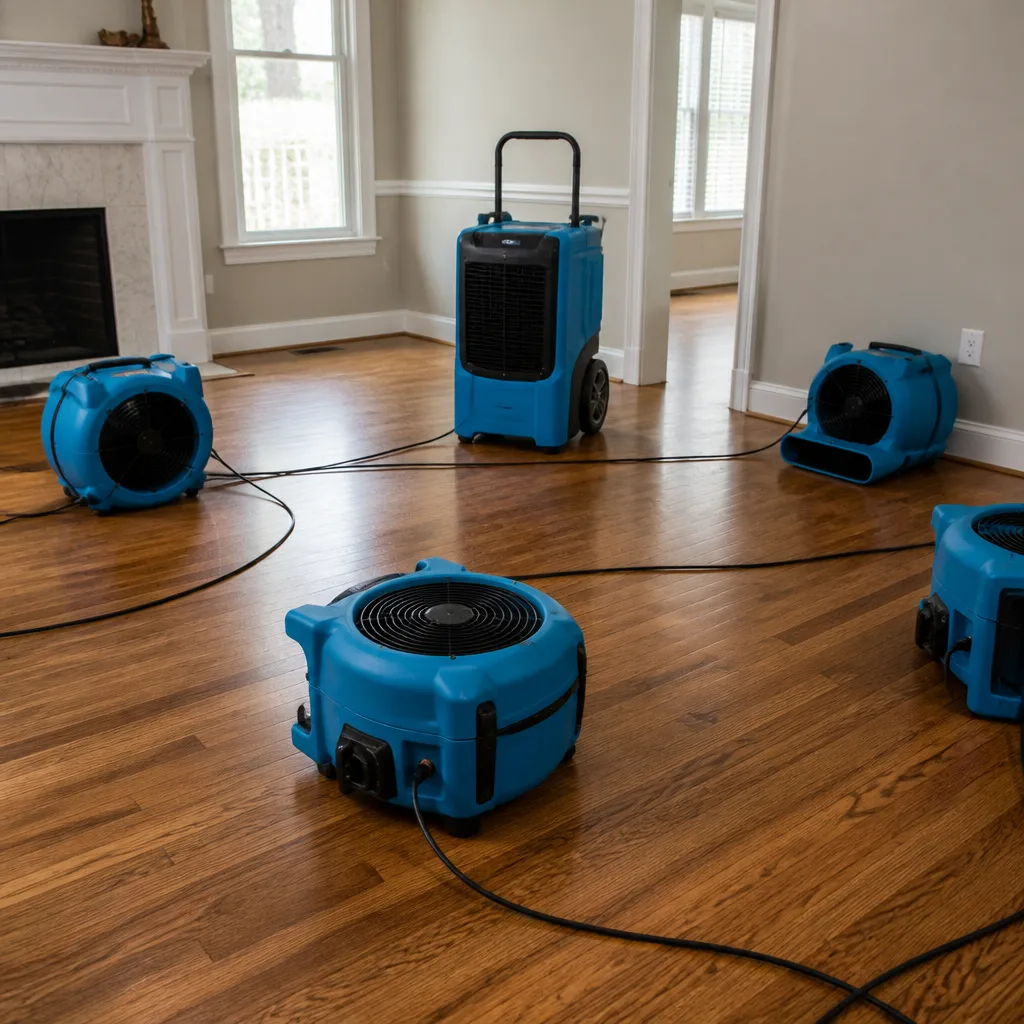


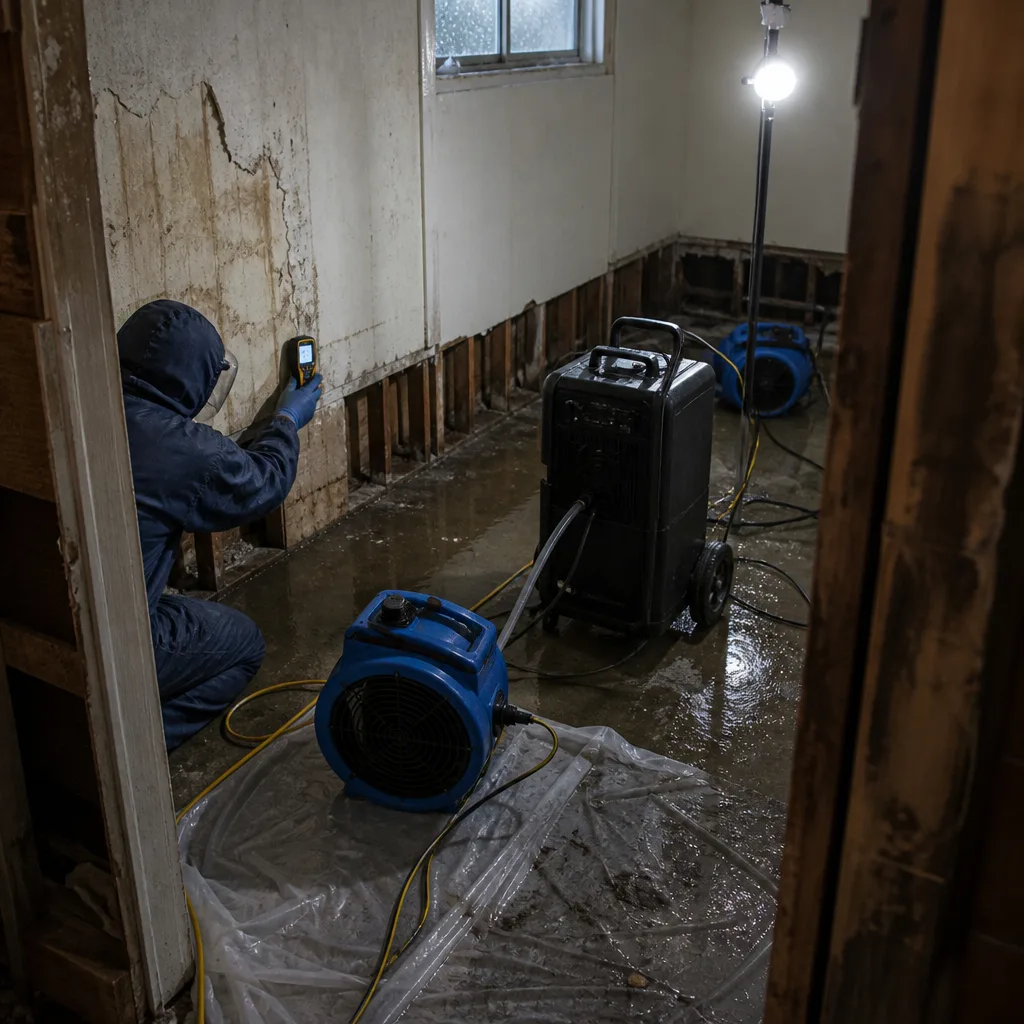 Before
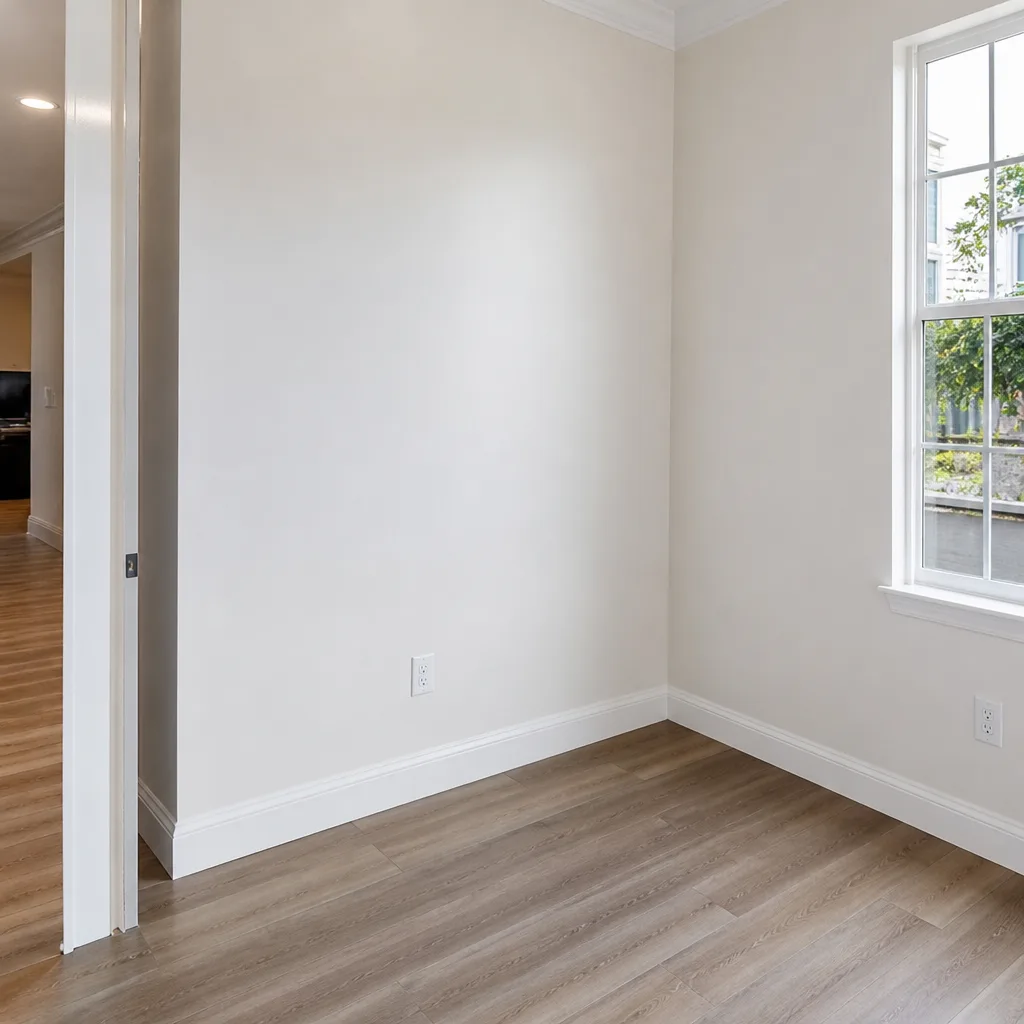 After
After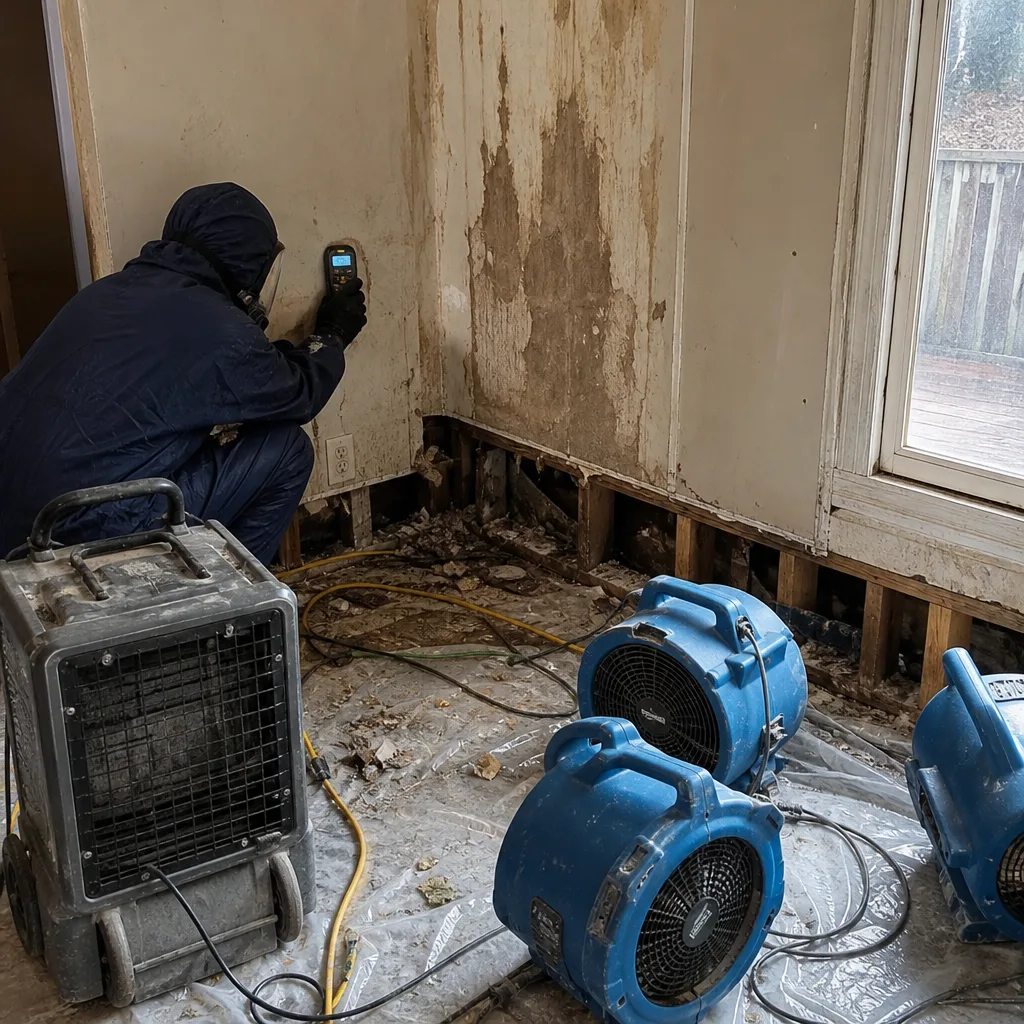 Before
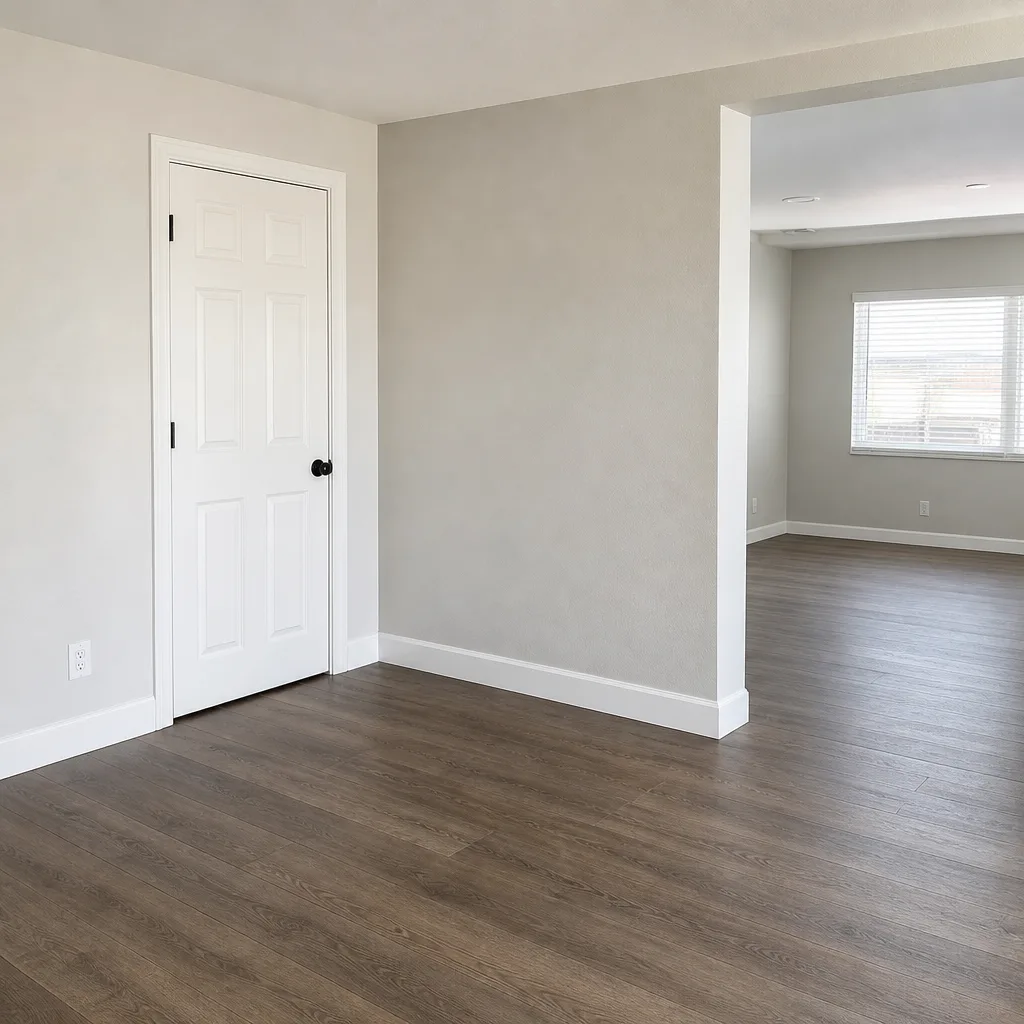 After
After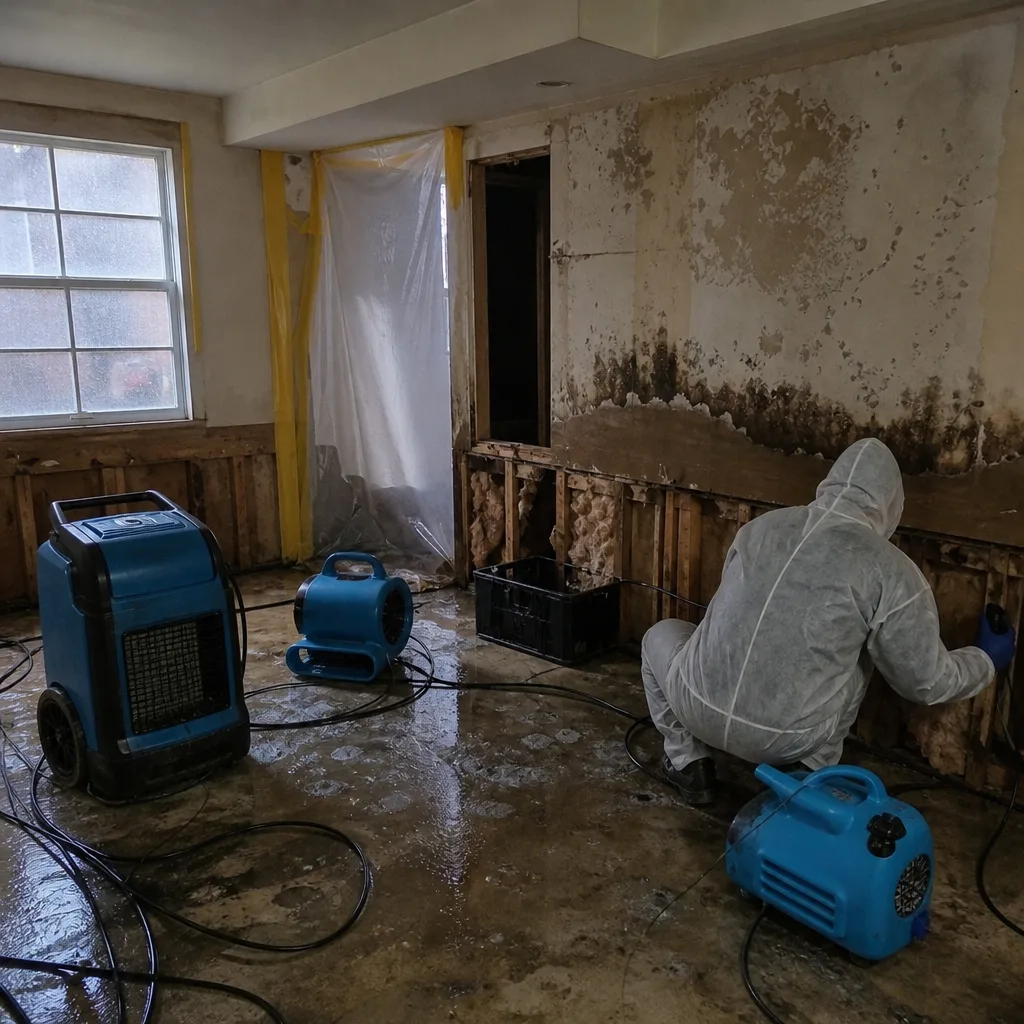 Before
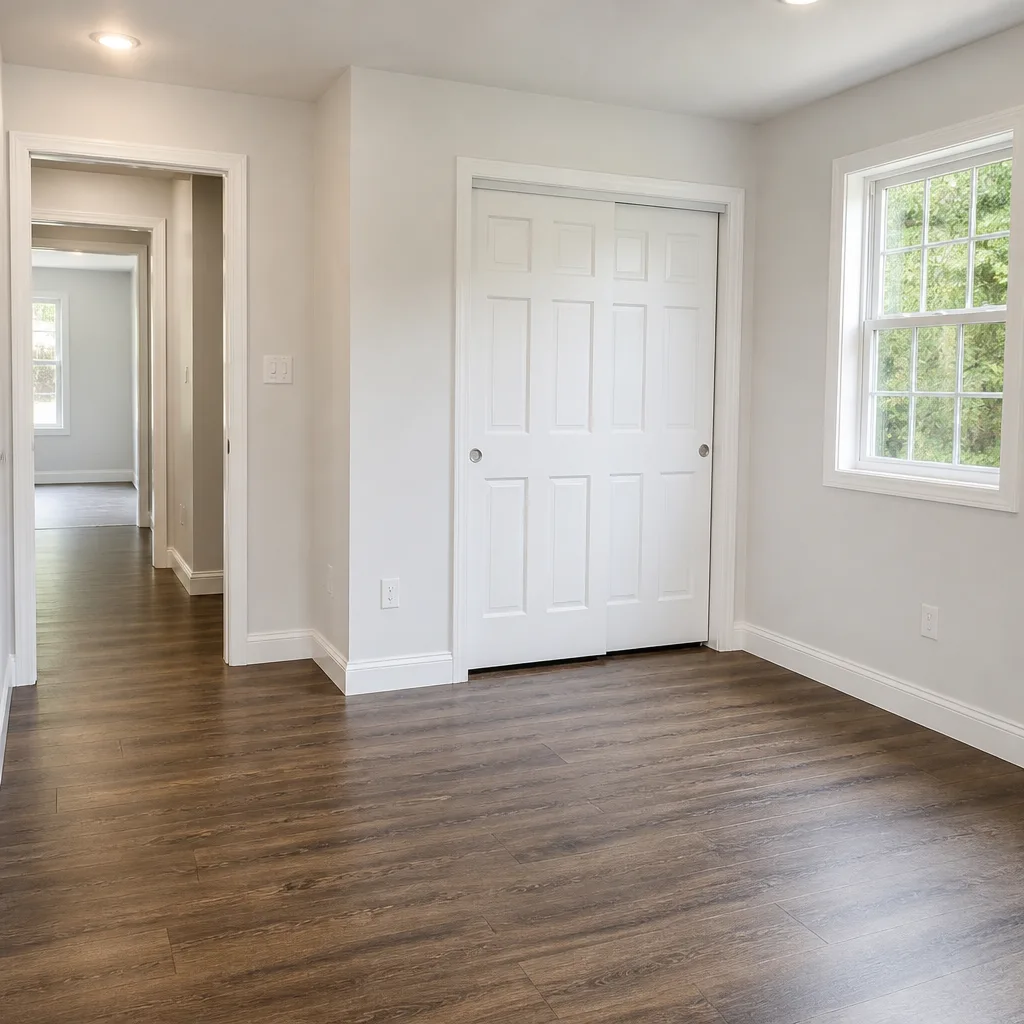 After
AfterHow to Hire a Damage Restoration Contractor in Los Angeles: A Step-by-Step Guide
The California Contractors State License Board (CSLB) logs a spike in unlicensed contractor complaints after nearly every major rain event in Los Angeles, and restoration work tops that list for a simple reason: when water is still on the floor and drywall is sagging, checking a license number feels like a luxury you can’t afford. That hesitation is exactly what storm-chasers count on. This guide gives you a step-by-step hiring process that takes less time than waiting for a callback, so you never hand your keys to a crew that disappears with your deposit and leaves the damage behind.
Quick Answer
Before you hire any damage restoration contractor in Los Angeles, verify their CSLB license number at cslb.ca.gov and confirm it’s active with workers’ comp insurance, then demand a written, line-item scope of work with a fixed price before any demolition or drying begins. A legitimate company will show you their license, give you a live arrival time, and put the price in writing without being asked. Anyone who pressures you to sign an Assignment of Benefits form or asks for a large cash deposit before showing proof of licensing should be disqualified immediately.
Table of Contents
- Step 1: Verify the CSLB License, Bond, and Workers’ Comp in Under 5 Minutes
- Step 2: Ask the Three Questions That Separate Restoration Companies from Storm-Chasers
- Step 3: Demand a Written Scope of Work Before Any Demo Starts
- Step 4: How to Evaluate a Bid (and Why That Low Quote Always Isn’t)
- Step 5: Red Flags Specific to the Los Angeles Market
- The Complete Los Angeles Hiring Checklist
- Common Mistakes to Avoid
- When to Call a Professional
- Frequently Asked Questions
Step 1: Verify the CSLB License, Bond, and Workers’ Comp in Under 5 Minutes
Every contractor doing restoration work over $500 in California must hold an active license from the California Contractors State License Board. The process of checking is fast, and a contractor who hesitates when you ask for their license number is giving you an answer already. Here is the exact verification sequence we recommend, in order:
- Get the six-digit license number. Ask for it by text or over the phone. It should be on their business card, website, and any estimate they provide. If they won’t give it, the conversation is over.
- Look it up at cslb.ca.gov. Type the number into the CSLB’s “Check a License” tool. Confirm the license status says “Active” and the classification covers restoration work, typically “C-61 / D-64” for non-structural remediation or a general “B” classification for broader water damage repair and reconstruction.
- Check the workers’ comp status. On the same results page, confirm workers’ compensation insurance is on file for active employees. If a technician gets hurt in your home and the contractor has no workers’ comp, your homeowner’s policy can become the target.
- Confirm the bond. A contractor license requires a $25,000 contractor’s bond. The CSLB page shows current bond status. A lapsed bond is a red flag that the business is in financial trouble or cutting corners.
- Verify the business address is in California. Out-of-state crews often list a P.O. box or a virtual office. Scroll down on the CSLB record and confirm a physical street address in-state.
This entire process takes about five minutes, and it eliminates a large share of the unlicensed or underinsured crews that flood Los Angeles after a heavy rain season. Wendell Water Damage Restoration routinely walks homeowners through this verification on a call, because any company confident in its licensing should welcome the check rather than resist it.
Step 2: Ask the Three Questions That Separate Restoration Companies from Storm-Chasers
Licensing is the floor. After you confirm the CSLB record, you need to ask three questions by phone or text before scheduling an in-person assessment. The answers, or the way a company answers them, reveal more than any review could.
Question 1: “Can you send me your IICRC certification number?” The Institute of Inspection, Cleaning and Restoration Certification (IICRC) sets the protocol for structural drying and mold remediation. A real restoration company has technicians and supervisors trained under IICRC, RIA, or IFA standards, and we can show you the credentials. A crew that responds with “we’ve been doing this for 20 years” and no certification number is disqualifying.
Question 2: “Will you give me a written line-item price before any work starts?” Every legitimate restoration company in Los Angeles can answer this in one word. We put the price in writing before any tool touches a surface, and that number is the number you pay. Any bidder who says they can’t know the price until they “get in there” is either inexperienced or planning to inflate the scope after your drywall is already open.
Question 3: “Can I see a copy of your insurance certificate with my name added as an additional insured?” A real restoration company carries general liability and pollution liability coverage for mold work, and we can add your name to the certificate within an hour. If a bidder balks at this request, assume they are underinsured or uninsured, and treating your property as the insurance.
Each of these questions is answerable in minutes, not days. A company that dodges even one has told you everything you need to know.
Step 3: Demand a Written Scope of Work Before Any Demo Starts
The single most important document in a Los Angeles restoration project is the written scope of work. It should be more than a one-page estimate. It should itemize exactly what gets torn out, what gets dried, what gets cleaned, what gets rebuilt, and what each line costs. A legitimate scope from our team typically breaks down like this:
| Scope Item | What It Should Include | Typical LA Range |
|---|---|---|
| Emergency water extraction | Number of rooms, square footage, trucks and extractors used | $400 – $1,200 |
| Structural drying (psychrometric) | Days of drying expected, number of air movers and dehumidifiers, daily moisture readings | $150 – $350 per day |
| Demolition and disposal | Linear feet of baseboard, square feet of drywall, flooring type, disposal fees | $3 – $8 per sq ft |
| Antimicrobial treatment | Product used, area treated, post-treatment clearance criteria | $0.75 – $2.50 per sq ft |
| Mold remediation (if needed) | Containment, air filtration, HEPA vacuuming, clearance testing | $2,000 – $8,000 depending on area |
| Repairs / rebuild | Drywall, insulation, paint, flooring reinstatement | Line-item per trade |
This is the standard, not the exception. If a contractor in Los Angeles hands you a single number scrawled on a work order and says “we’ll figure out the details later,” you are paying for the details later, and they won’t be in your favor. Before any demolition starts, you should also receive a digital invoice or a written proposal you can review at your own pace, not a pressure signature on an iPad in the front yard.
Step 4: How to Evaluate a Bid (and Why That Low Quote Always Isn’t)
The most dangerous number in restoration is the one that feels like a relief. When one bid comes in at $3,500 and another at $6,200 for what looks like the same job, the gap is rarely generosity. It is almost always an omission.
Real psychrometric drying, meaning the science of measuring the air’s moisture content so we know when your home is truly dry, not just surface-dry, requires professional equipment that is expensive to own and run. A single high-capacity dehumidifier from Dri-Eaz or Phoenix can cost $4,000 or more new, and a competent drying setup in a two-room water loss might deploy six air movers, two dehumidifiers, and a professional-grade moisture meter. That equipment plus a trained technician costs the contractor between $150 and $350 per day in Los Angeles before any profit. If a bid looks too low to cover that, the bidder is planning to use box fans from a hardware store, skip the moisture readings, compress the drying timeline, or pad a change order later. Every one of those paths leaves you with hidden moisture that becomes mold inside the wall cavity.
When you compare bids, line up the scopes item by item. A legitimate company will show you the equipment count, the number of drying days, and the moisture criterion that marks the job complete. Ask directly: “How many air movers and dehumidifiers are in this line?” and “What moisture reading triggers the removal of the equipment?” If the answers are vague, the price is fiction.
In our experience across Los Angeles, the jobs with the most callbacks are the ones where a homeowner chose the cheapest bidder and the drying was cut short. Moisture you can’t see inside a wall feeds mold for months. The money saved up front becomes a mycological problem that costs three to five times more to remediate later, so knowing Mold Remediation Warning Signs Every Homeowner Should Know can save you from far bigger bills.
Step 5: Red Flags Specific to the Los Angeles Market
Los Angeles has a restoration market unlike most of the country. It is large, wealthy, densely built, and hit by periodic rain events that create sudden, concentrated demand. Every time a big storm rolls through, out-of-state restoration crews follow it. Here are the red flags that are especially common in LA, and what to do about each one.
- Pressure to sign an Assignment of Benefits (AOB) on the spot. An AOB gives the contractor the right to bill your insurance company directly and, in some cases, control your claim. A restoration company that pressures you to sign one before you’ve even verified their license is a company planning to inflate the claim. You can always sign an AOB after you’ve done your homework.
- No physical business address in California. Storm-chasers often operate from a truck with an out-of-state plate and a phone that routes to a call center in another state. Confirm the CSLB record shows an in-state address, and if you can, confirm the company has been operating in Los Angeles longer than the current rain event.
- No IICRC certification on file. An uncertified crew can still dry a house, but they often can’t prove they know how to dry it correctly. We hold our work to IICRC, RIA, and IFA standards, and we use the same professional equipment brands, Dri-Eaz, Phoenix, and XPOWER, that are deployed on large commercial loss sites. If a bidder has never heard of those standards or brands, that is a disqualifier.
- Large cash deposits before any work begins. A small, reasonable deposit can be legitimate, but a restoration company demanding 50% up front in cash is a known pattern for unlicensed crews and, increasingly, for outright scams targeting Los Angeles homeowners after storms. A written scope with a fixed price and a digital invoice sent to your phone is the standard. Anyone demanding cash is not.
- Bidding without entering the property. A phone estimate for water damage is meaningless. A legitimate company sends a trained technician with a thermal imaging camera and a moisture meter to map the damage before pricing it. In Los Angeles, where slab foundations and stucco walls hide water in ways wood-frame construction doesn’t, skipping the inspection is a guarantee of an inaccurate scope.
The Complete Los Angeles Hiring Checklist
Print this list, screenshot it, or keep it open in a browser tab. Work through it in order and you will filter out the crews that prey on Los Angeles homeowners. Each step takes minutes, and each one protects you from the most common and most expensive restoration hiring mistakes.
- CSLB license verified. Active status, correct classification, bond current, workers’ comp on file, physical address in California.
- IICRC, RIA, or IFA certification confirmed. Credentials provided without pushback.
- Written line-item scope received before any work starts. Specific line items for extraction, drying, demolition, treatment, and repairs, with fixed prices.
- Equipment specified in writing. Air mover and dehumidifier count, brand names, number of drying days, and moisture criterion for equipment removal.
- Insurance certificate supplied. General liability and pollution liability, with your name added as an additional insured.
- Digital invoice standard. You receive an invoice by text with a payment link, not a demand for cash or a blank check.
- No AOB pressure. Any Assignment of Benefits discussion happens after licensing and credentials are verified, and only if you choose to proceed.
- Start date and live arrival time confirmed. You know who is showing up and when they will be there, not a vague four-hour window.
Common Mistakes to Avoid
- Hiring the first company that answers the phone. Speed matters when water is spreading, but a license check takes five minutes. Storm-chasers count on you skipping it because the floor is wet. The five minutes now save you a disaster later.
- Skipping the written scope because “it’s an emergency.” Emergencies are exactly when the scope matters most. A contractor who can’t provide a written price before starting work is a contractor who plans to name a price after your wall is open and you have no leverage.
- Comparing bids on total price alone. A $3,500 bid with no equipment list and no drying days is not cheaper than a $6,200 bid with a real psychrometric drying plan. In Los Angeles, where hidden mold is the single most expensive long-term consequence, cheap drying becomes remediation that costs more than the original loss.
- Paying a large deposit in cash. Cash deposits are nearly impossible to recover, and cash transactions leave no paper trail for your insurance claim. A legitimate restoration company sends a digital invoice you can pay from a link.
- Letting the contractor handle everything “with the insurance company” without any documentation in your hands. Your photo-documented assessment, written scope, and itemized invoice are the evidence your adjuster needs. Never outsource your entire claim to a contractor you just met.
- Assuming a company that advertises in the neighborhood is local and established. Out-of-state crews know how to buy local ads after a major Los Angeles rain event. Verify the in-state address on the CSLB record, not the Google Ads presence.
- Ignoring the moisture readings. Equipment removal without showing you final moisture readings is like a doctor discharging you without taking your temperature. If the contractor can’t show you the numbers, the job isn’t done, regardless of how it looks.
When to Call a Professional
Not every water issue needs a restoration company, but the line is usually clear. Call a professional when water has soaked into drywall, flooring, or insulation and stayed for more than a few hours, when you see water staining on ceilings or walls, when you smell must or mildew that returns after cleaning, or when a pipe has burst and water has run through multiple rooms. Call immediately if the damage involves sewage or gray water, because the health risk escalates fast and antimicrobial treatment becomes a health requirement, not an option. Mold growth behind walls, soft or bubbling drywall, and water pooling under cabinets are all signs that surface drying won’t be enough, and our Mold Remediation Troubleshooting: Common Problems and How to Fix Them explains what to watch for. Wendell Water Damage Restoration offers free estimates in Los Angeles, call (940) 466-4354 and a live person answers, 24/7.
Frequently Asked Questions
Go to cslb.ca.gov and use the “Check a License” tool with the contractor’s six-digit license number. Confirm the status is Active, the classification matches restoration work, the bond is current, and workers’ comp insurance is on file. A physical address in California should appear on the record.
You can, but you should not. Out-of-state crews without a California contractor license and in-state workers’ comp coverage are operating illegally, and your homeowner’s insurance may not cover damages or injuries caused by an unlicensed contractor. The post-storm surge in Los Angeles is the most common time these crews appear.
Most Los Angeles water damage restoration jobs run between $2,500 and $8,000 for extraction, drying, and minor repairs, with mold remediation adding another $2,000 to $8,000 depending on the size of the affected area; our Mold Remediation Maintenance Schedule: What to Do and When helps you plan for those costs. Psychrometric drying equipment typically costs $150 to $350 per day. A written, line-item quote should always come before work starts, call (940) 466-4354 for exact numbers on your specific property.
A legitimate Los Angeles restoration company with 24/7 live-answer dispatch can typically have a technician on-site within a few hours, sometimes faster depending on your neighborhood and current call volume. Anyone who promises a specific arrival without confirming a live tracking time is guessing. Water damage doesn’t keep business hours, and neither does Wendell.
Most homeowner’s policies cover sudden and accidental water damage, like a burst pipe or an appliance leak, but not gradual damage from an ongoing leak or lack of maintenance. Mold remediation coverage is often capped or excluded unless caused by a covered water event. Photo-documented assessments and a detailed written scope help your adjuster approve the claim faster, and we coordinate directly with adjusters on nearly every job.
If water soaked into drywall, subfloor, or insulation and sat for more than a few hours, professional-grade drying is the only way to prevent hidden mold growth that continues for months. Surface cleaning and a dehumidifier can’t reach the moisture trapped inside wall cavities. A psychrometric drying setup with the right equipment count is the difference between an inconvenience and a recurring mold problem inside your walls.
An Assignment of Benefits gives a contractor the right to bill your insurance company directly and can transfer some control over your claim. It is a legitimate tool in some situations, but you should never sign one under pressure before verifying licensing, credentials, and the written scope of work. A restoration company that pushes an AOB within the first hour is a red flag that warrants contacting another contractor.
The Bottom Line
Hiring a damage restoration contractor in Los Angeles eventually comes down to one principle: demand proof before payment. For more guides & resources on protecting your home, see our blog. Verify the CSLB license, bond, and workers’ comp in five minutes. Ask for IICRC certification without hesitation. Require a written, line-item scope with fixed pricing before any demo starts. Judge bids on equipment counts and moisture criteria, not just the bottom line, because a quote that seems low always is. And never sign an AOB or hand over cash under pressure. Wendell Water Damage Restoration has served Los Angeles since 2006 with written pricing before any work starts, a 365-Day Done Right Promise, and live-answer calls at (940) 466-4354, because the right contractor should always be reachable, verifiable, and honest about what the job will cost before touching a single tool.
Written by Blake Sorensen, Owner at Wendell Water Damage Restoration, serving Los Angeles since 2006.