
Last updated October 9, 2026
Free visual inspection and a written scope of work before any mitigation begins - photos, moisture readings, and drying logs go in your claim file
The scope we write is the scope we bill. Anything new gets shown to you, in writing, before we touch it.
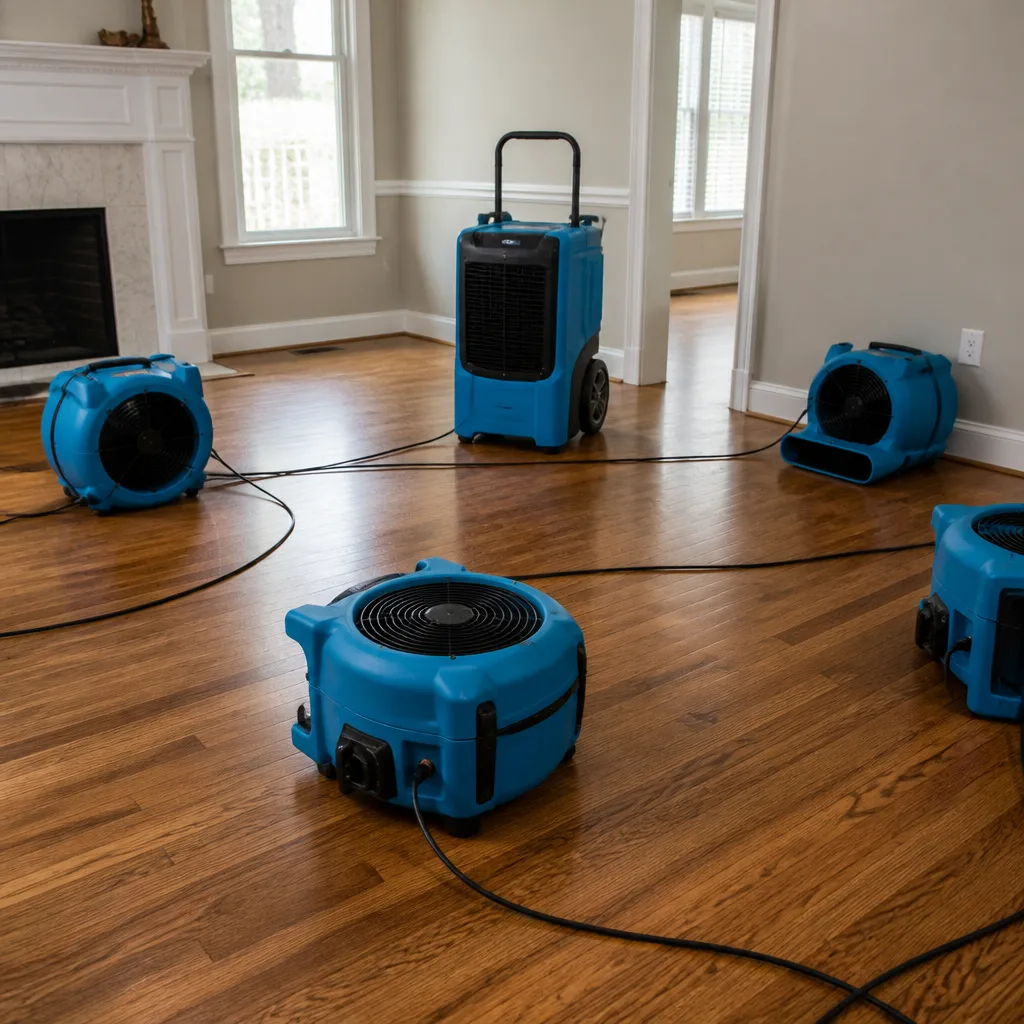



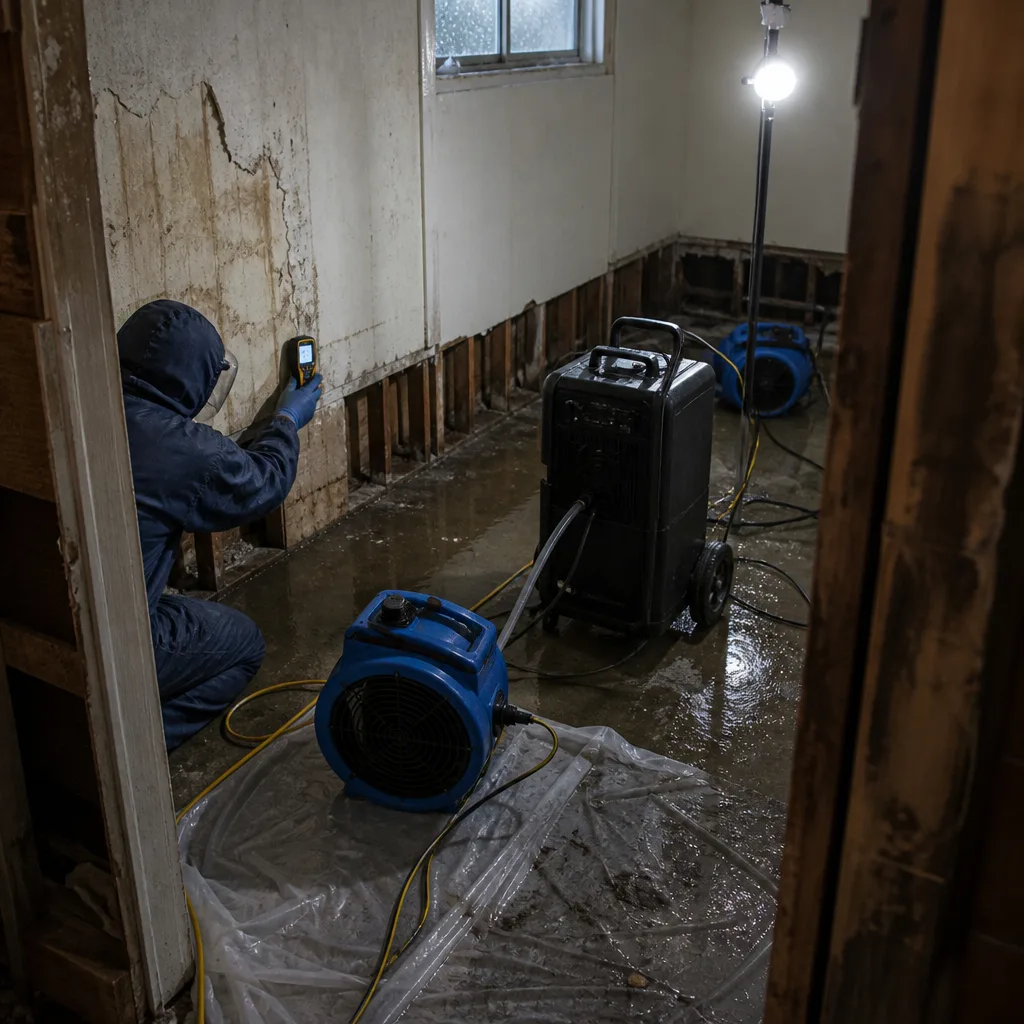 Before
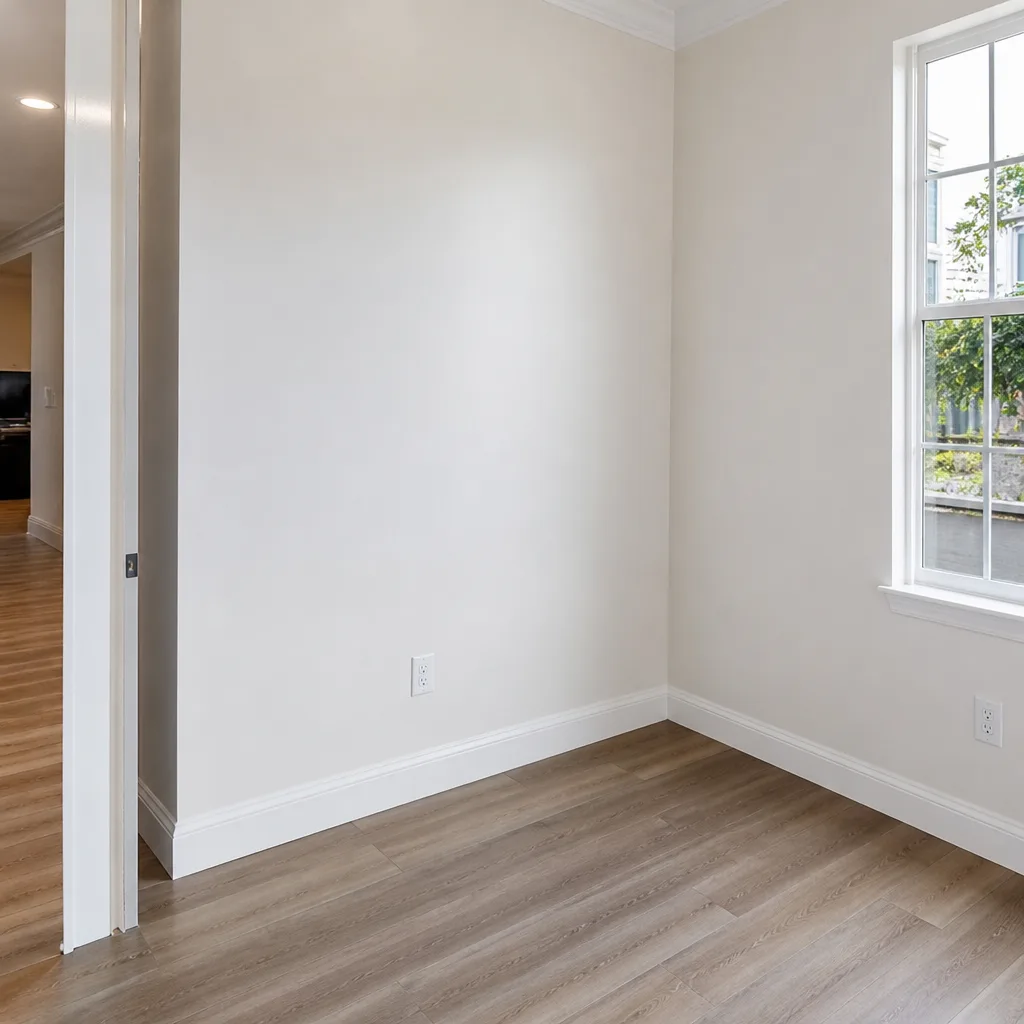 After
After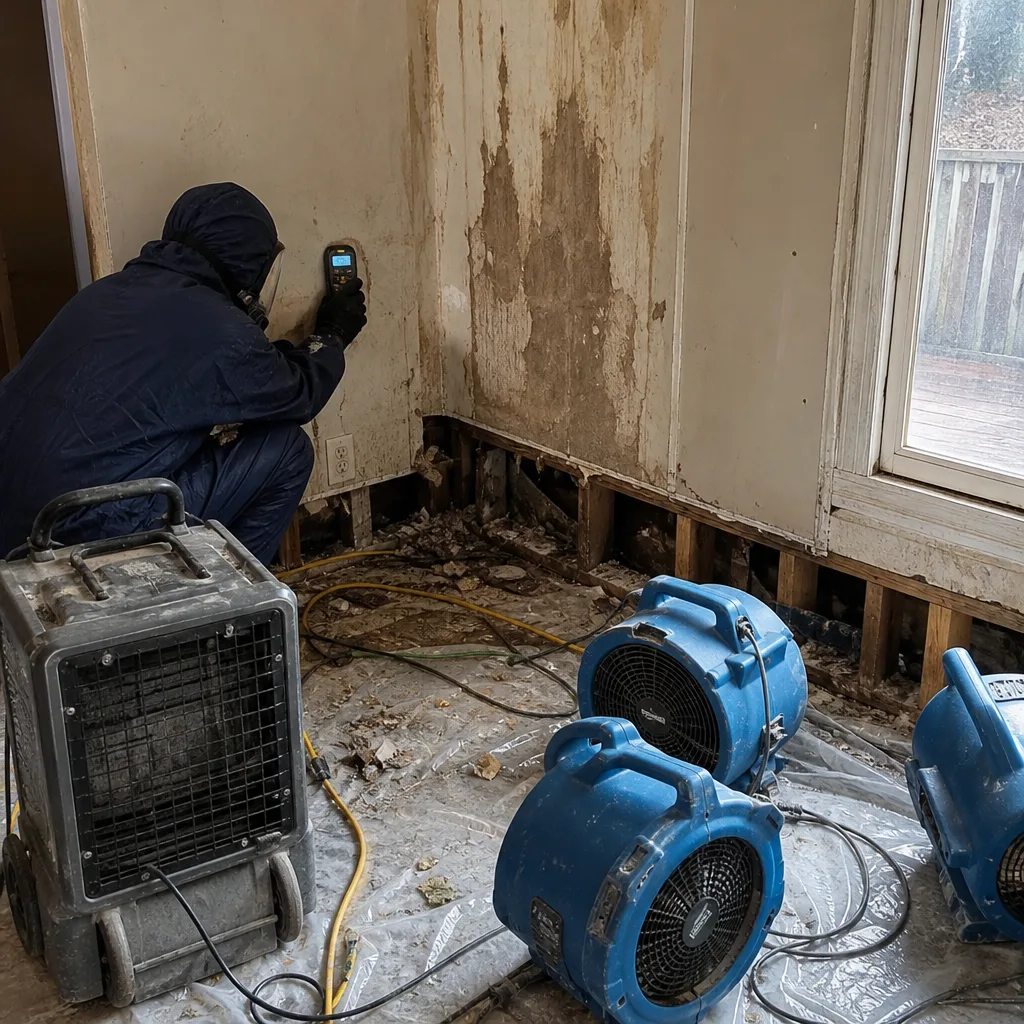 Before
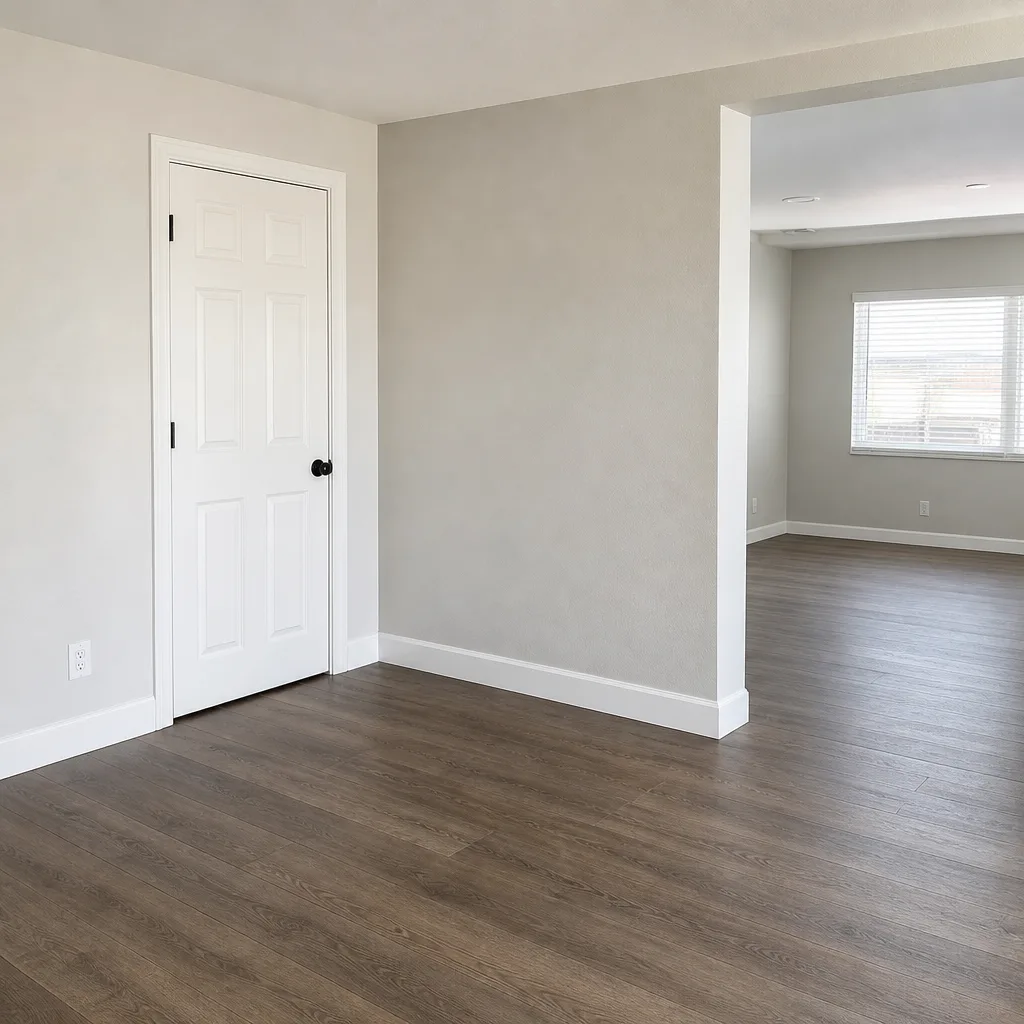 After
After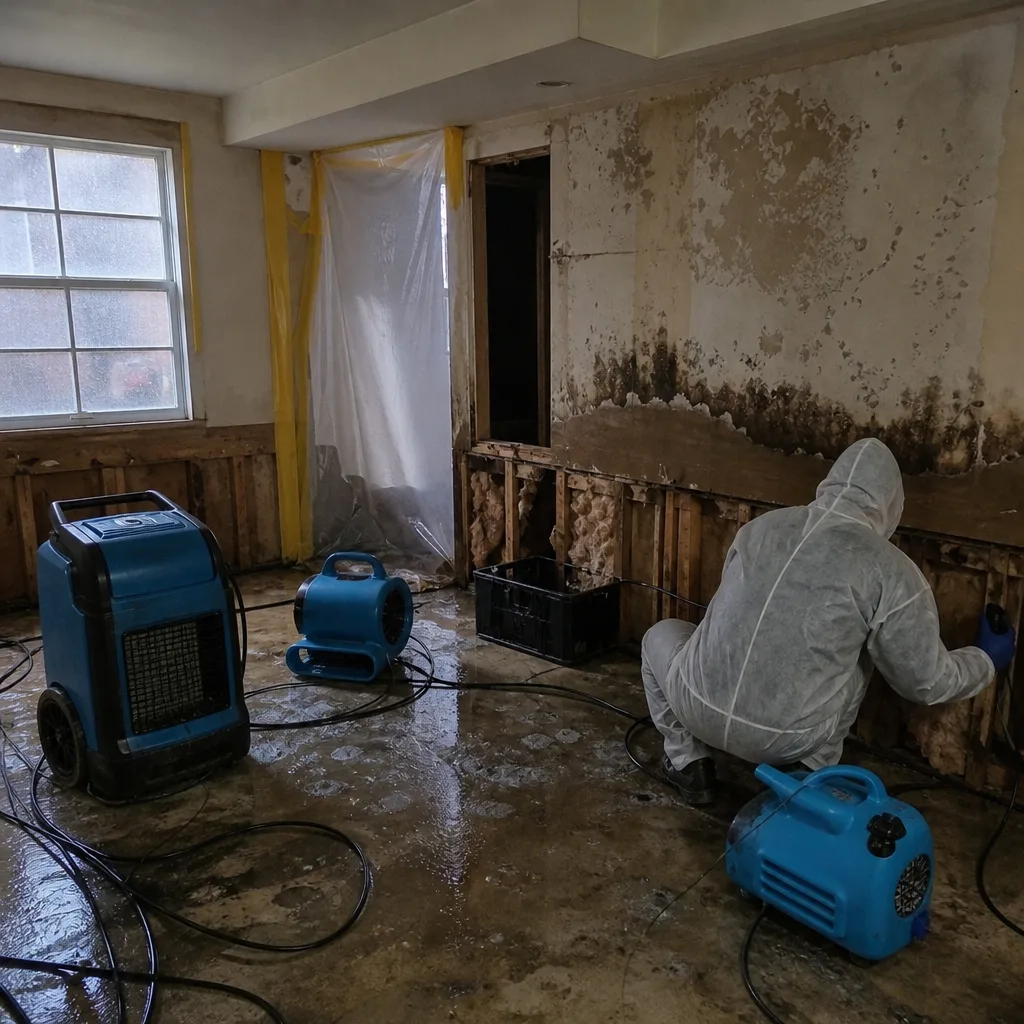 Before
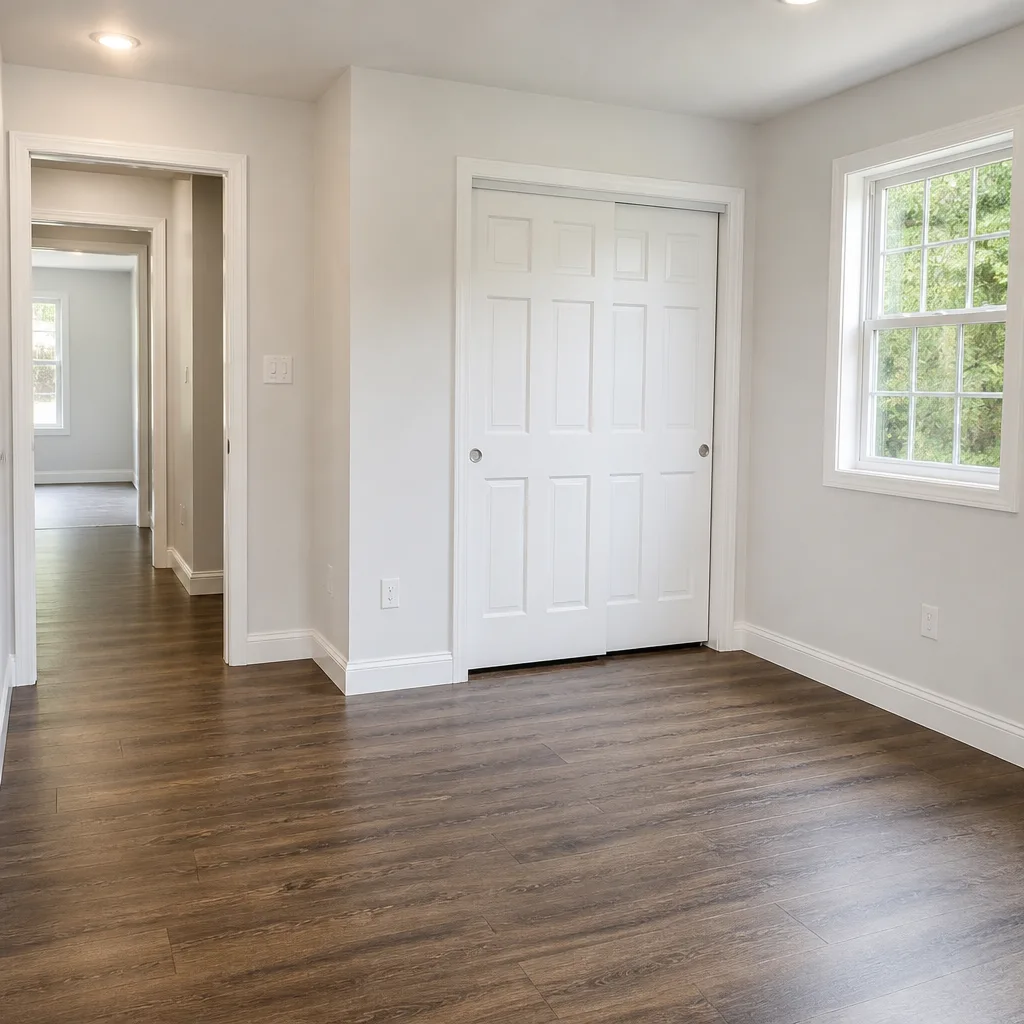 After
AfterWater Damage Repair Warning Signs Every Homeowner Should Know
A paint bubble the size of a quarter on your ceiling isn’t a cosmetic annoyance. It means water is actively pooling behind the drywall paper, and the drywall below it is likely already failing. That quarter-sized bubble often precedes a collapse measured in square feet. This guide names the warning signs precisely, what each one actually means behind the surface, and what it costs to catch a leak early versus late in Los Angeles, where stucco exteriors and older plumbing make hidden water damage a year-round threat. For professional help, see our Water Damage Repair services.
Quick Answer
The most common water damage warning signs homeowners miss are paint bubbling or peeling on ceilings and walls, drywall that sags or feels soft, rust stains around fixtures and baseboards, unexplained musty odors, a water bill that creeps up 10 to 15 percent with no usage change, and the sound of running water when every fixture is off. Any one of these signals means water is moving somewhere it shouldn’t be. The correct response is a professional moisture inspection, not a coat of paint.
Table of Contents
- Visual Warning Signs You Can See Right Now
- Non-Visual Warnings: Sounds, Bills, and Behavior
- The Los Angeles Stucco Problem: Hidden Intrusion for Years
- Cosmetic Damage vs. Active Damage: The $5 Tool That Tells You
- What Waiting Actually Costs in Los Angeles
- What a Professional Inspection Actually Looks For
- What You Can Check Yourself vs. What Needs a Pro
- Common Mistakes to Avoid
- When to Call a Professional
- Frequently Asked Questions
- The Bottom Line
Visual Warning Signs You Can See Right Now
Water damage announces itself visually long before a collapse, but the signals are subtle enough that most people register them as “normal wear” and move on. Here are the specific visual markers we’ve learned to read in Los Angeles homes after nearly two decades of restoration work, and what each one means in plain terms.
Paint Bubbling and Peeling
A bubble in paint means water has separated the paint film from the drywall paper beneath it. This is not a surface defect. Water is actively present, or was present recently enough that the bond is still failing. On ceilings, bubbles directly under a bathroom or roof penetration are the classic early warning of a slow plumbing leak or flashing failure. On walls, bubbles near the baseboard line often track water wicking upward from a wet slab or a leaking supply line inside the wall cavity.
Peeling paint at window sills and door thresholds in Los Angeles usually points to failed exterior caulking. Rainwater enters the gap, saturates the wall assembly, and the interior paint is the first thing to react. If the peeling is concentrated at the bottom of an exterior wall, think drainage or irrigation before you think plumbing.
Ceiling Sagging or Soft Drywall
A ceiling that looks slightly bowed, even by a half inch, is saturated drywall approaching failure. Drywall loses its structural integrity when its moisture content rises. The gypsum core turns to mud, the paper face loses tension, and the panel begins to deflect. We’ve seen ceilings in Los Angeles hold water for weeks before the first visible sag, which means the leak that caused it has been running that entire time.
Touch the suspect area with a flat palm. Drywall should feel rigid and cool. If it gives under light pressure, feels spongy, or feels noticeably colder than surrounding ceiling, it’s holding water. Cold spots matter: evaporation from a wet surface drops the surface temperature measurably. That temperature difference is a reliable field sign for hidden moisture.
Rust Stains Around Fixtures, Fasteners, and Baseboards
Rust stains mean metal is oxidizing, and metal only oxidizes when water is present. Around light fixtures, register vents, and ceiling fasteners, rust is a direct marker of a leak from above, often a supply line pinhole or a roof penetration. Around the base of a water heater or at shutoff valves, rust staining usually means a slow fitting leak or condensation that never properly drains.
One Los Angeles-specific pattern we see often: rust stains at the baseboard of a wall shared with a bathroom. The shower valve or tub drain inside that wall has a slow leak at a threaded connection. The water travels down the stud bay, pools at the bottom plate, and wicks into the baseboard. By the time the stain appears, the bottom plate and subfloor beneath it are typically wet.
Efflorescence on Concrete
Efflorescence is the white, chalky powder that forms on concrete, masonry, or grout. It looks like salt deposits, because it essentially is: minerals left behind as water migrates through the material and evaporates at the surface. Efflorescence is not itself damage, but it’s proof of ongoing moisture migration. Where there is efflorescence, water is moving through the slab, stem wall, or masonry on a recurring basis.
In Los Angeles, we see this most often on garage slabs, foundation stem walls, and retaining walls adjacent to planters. It often tracks an irrigation leak, a downspout discharging too close to the foundation, or a grade issue that directs runoff toward the wall instead of away. The moisture path may be seasonal, but the minerals accumulating on the surface are a permanent record of the pattern.
Staining Rings and Discoloration
A brownish ring on a ceiling or wall is a drying stain: water pooled there, evaporated, and left mineral and tannin deposits behind. A single ring with no growth or sheen might be a one-time event, like an overflowed toilet or a roof leak that was fixed. Multiple rings, concentric rings, or a stain that slowly expands means recurring water. Tannin stains that bleed through fresh paint within days are almost always active moisture behind the surface.
Non-Visual Warnings: Sounds, Bills, and Behavior
Some of the most expensive water damage in Los Angeles homes announces itself through your ears, your utility bill, or your appliances long before you see a stain. These signs are easy to dismiss because they don’t look like a problem. That’s exactly why they cause so much damage. Our Water Damage Restoration Maintenance Checklist for Los Angeles Homeowners covers how to catch these hidden issues early.
A Water Bill That Creeps Up Without Explanation
A 10 to 15 percent increase in water usage with no change in household behavior is a leak, not a coincidence. In Los Angeles, the Department of Water and Power bills in hundred-cubic-foot units. One HCF is 748 gallons. A toilet flapper leak can waste 200 gallons a day, which is roughly 6,000 gallons a month, enough to push a typical bill up noticeably. A slab leak under the foundation can waste far more, and it does so silently for months.
Pull up your last six bills. If usage is trending upward in a stair-step pattern while your habits haven’t changed, you have a leak somewhere. The question is whether it’s inside the house, where it’s causing structural damage, or outside in the irrigation system, where it’s just wasting money. Either way, the bill is the earliest warning device most homeowners already own.
The Sound of Running Water With Every Fixture Off
Stand in the quietest part of your house, usually late at night, with every faucet, toilet, and appliance off. Listen. The faint sound of water moving, hissing, or dripping behind a wall or under a floor is a leak in progress. You’re hearing water under pressure escaping a supply line, or water draining from a fixture seal that’s failed.
If the sound stops when you close the main shutoff valve at the street or at the house, the leak is on the supply side, inside your plumbing. A supply line leak inside a wall or slab is the single most destructive category of residential water damage in Los Angeles, because the water is often absorbed by framing and subfloor material for months before any visible sign appears.
A Water Heater That Cycles More Often Than Usual
A water heater that fires up more frequently, runs longer, or never seems to fully catch up is often fighting a hot water leak. Hot water leaks are invisible: the water goes straight into the wall cavity or slab and never surfaces. The heater doesn’t know the water is being wasted; it just knows it has to heat more water, more often.
In Los Angeles, where many homes are on slab foundations with copper supply lines, hot water slab leaks are a known failure mode. Copper reacts with soil chemistry over time. Pinholes form. Hot water leaks from the pinhole into the soil beneath the slab, and the water heater works harder to maintain temperature. You’ll often see a spike in your gas or electric bill alongside the water bill before you ever see water on the floor.
Musty Odors That Don’t Go Away
A persistent musty or earthy smell is mold and bacteria metabolizing inside a wet building material. That’s the plain explanation for what your nose is reporting. The smell means moisture has been present long enough for microbial growth to establish, which usually means weeks, not days.
In Los Angeles, the smell often shows up first in closets, under sinks, or in rooms with poor airflow. The odor source is nearly always a wet wall cavity, a saturated subfloor, or a crawlspace that’s collecting moisture. Opening a window helps temporarily, but the smell returns because the moisture source is still active. Odor elimination requires drying the material or removing it.
The Los Angeles Stucco Problem: Hidden Intrusion for Years
Stucco is one of the most common exterior finishes in Los Angeles, and it’s also one of the best at hiding water intrusion. Stucco is a cementitious cladding. It’s not waterproof, and it’s not designed to be. It absorbs water, and it’s designed to dry to the outside once the rain stops. The problem comes when water gets behind the stucco instead of staying on its surface.
Water gets behind stucco at penetrations: window and door frames, hose bibs, electrical boxes, dryer vents, and any place a screw or nail has broken the surface. Over time, the sealant at these penetrations ages, cracks, and fails. Rainwater enters the gap and runs down the back side of the stucco, saturating the building paper, the sheathing, and eventually the framing. Because the stucco face looks fine, the damage progresses unseen for years.
Here’s what to look for at stucco penetrations around your Los Angeles home:
- Gaps or cracks in the sealant bead around window and door frames, especially on south- and west-facing walls that take the most sun. UV breaks down sealant faster on these exposures.
- Staining or mineral streaks running down the stucco from a penetration point. Water is moving behind the surface and carrying minerals out through cracks.
- Soft or hollow-sounding stucco when you tap it with a knuckle near a penetration. A solid, sharp sound is healthy; a dull, hollow sound means the substrate behind the stucco is breaking down from moisture.
- Interior staining or bubbling on the wall directly opposite an exterior stucco penetration. This is the inside-out signal that exterior water has already reached the interior wall assembly.
One pattern we see regularly in Los Angeles: a homeowner notices a small bubble on an interior wall near a window, paints over it, and forgets about it. A year later, the window framing is soft, the wall cavity shows visible mold, and the repair involves replacing framing, insulation, and drywall instead of recaulking a window. The caulk failure that started it was visible the entire time.
Cosmetic Damage vs. Active Damage: The $5 Tool That Tells You
Not every stain is an emergency. Homes accumulate water history: that old roof leak that was fixed years ago, the toilet that overflowed during a Super Bowl party. These leave stains that are dry, inert, and perfectly safe to paint over. The question is whether the moisture is past tense or present tense, and a basic moisture meter answers it in seconds.
A pin-type or pinless moisture meter costs between $25 and $60 at any hardware store in Los Angeles. Press it against the suspect wall, ceiling, or floor. It reads the moisture content of the material as a percentage. Dry interior wood and drywall typically read between 6 and 12 percent. A reading above 16 to 18 percent on drywall means active moisture, and readings above 20 percent on wood mean conditions that will support mold growth.
Here’s the practical distinction:
- Cosmetic damage: A stain that’s uniform in color, dry to the touch, with a normal moisture reading and no odor. You can prime and paint it. The moisture event is over.
- Active damage: A stain with a moisture reading above target range, a stain that has grown in the last 30 days, a stain with any odor, or a stain that is cool to the touch. This requires finding and stopping the water source first, then professional drying, then repair.
The difference matters enormously in cost. Treating a cosmetic stain with a primer costs about $20. Treating an active leak that’s been running for months often means cutting out drywall, drying framing, replacing materials, and then finishing. That’s a different project entirely.
What Waiting Actually Costs in Los Angeles
Water damage is one of the few home repair categories where the cost curve is exponential, not linear. A leak that costs a few hundred dollars to fix today costs thousands to fix in 60 days. The reason is simple: water moves, and it keeps moving until something stops it. Every day it moves, it touches more material. Following a Water Damage Restoration Maintenance Schedule: What to Do and When can help you stay ahead of these escalating costs.
Here’s a realistic cost breakdown for Los Angeles, based on the restoration work we’ve priced over nearly two decades:
| Discovery Point | Typical Repair Scope | Typical Los Angeles Cost Range |
|---|---|---|
| Drip at a P-trap or supply line connection, caught early | Tighten or replace fitting, dry small area | $200 – $500 |
| Same leak after subfloor saturation | Remove and replace subfloor section, dry framing, replace flooring | $8,000 – $15,000 |
| Slab leak under foundation, caught within 30 days | Leak location and repair or reroute, targeted drying | $3,000 – $7,000 |
| Same slab leak after months of migration | Full slab repair, cabinetry, flooring, and wall repair | $25,000 – $50,000+ |
The gap between the first row and the second row is the cost of the warning signs in this guide being ignored. That $200 fix becomes a $12,000 remediation because water was given 60 days to saturate a subfloor instead of being stopped in the first week. In Los Angeles, where labor and material costs are above the national average, the spread is even wider.
The first step, every time, is a professional inspection. Wendell Water Damage Restoration offers free estimates, and a moisture assessment is the fastest way to know whether you’re looking at a $300 repair or a $15,000 restoration. Most of the time, the early signs are the early signs for a reason: the damage is early. Browse our more guides & resources to learn what to watch for between inspections.
What a Professional Inspection Actually Looks For
When a restoration technician walks a Los Angeles home looking for water damage, they’re not just glancing at walls. They’re working through a systematic checklist, and understanding that checklist helps you understand what’s being evaluated. Here’s the process in order:
- Visual survey of ceilings and walls. Stains, bubbles, sagging, discoloration, and peeling paint are mapped and photographed.
- Moisture meter mapping of any suspect area. Readings are taken across a grid pattern to define the wet area’s true boundary, which is almost always larger than the visible stain.
- Fixture inspection. Shutoff valves, supply lines, P-traps, and appliance connections are checked for drips, corrosion, and seal failure.
- Exterior penetration review. Window frames, door thresholds, hose bibs, vents, and stucco cracks are checked for sealant failure and water entry points.
- Building envelope assessment. Roof flashing, gutters, downspout discharge, and grade slope are checked for drainage issues that direct water toward the structure.
- Thermal imaging. A thermal camera shows temperature differences in walls and ceilings. Wet insulation and framing read colder than dry material, revealing moisture behind surfaces that look perfectly normal.
- Scope and pricing in writing. The results are summarized, the required work is scoped, and the price is put in writing before any work starts.
That last step matters more than most homeowners realize. Water damage repair pricing is famously wobbly: a crew starts, finds more damage, and the price creeps up as the job unfolds. Our approach is to scope the job, price it in writing, and stand behind that number. If new damage is discovered mid-job, the revised scope and price are agreed to before we touch the new area.
What You Can Check Yourself vs. What Needs a Pro
There’s a meaningful difference between monitoring for warning signs and attempting a repair. Monitoring is safe and smart. Repair work that involves opening walls, handling sewage-contaminated material, or working around electrical and plumbing systems needs a trained professional with the right equipment and protocols.
What You Can Do Yourself This Weekend
- Walk every room with a flashlight. Look at ceilings, corners, under sinks, and around windows. Mark anything that looks like the visual signs described above.
- Check your water bill history. Six months of billing data will show you whether usage is creeping up without explanation.
- Run the silence test. Kill all fixtures and listen. A hiss or trickle behind a wall is a leak.
- Inspect exterior caulking. Look at every window and door frame, every hose bib, every vent penetration. Cracked or missing sealant is a water entry point waiting for the next rain.
- Feel walls and floors with the back of your hand. Cold spots, softness, or buckling are moisture indicators.
What Needs a Professional
- Any active leak. Water under pressure inside a wall or slab will not resolve itself. Every day it runs adds to the repair scope.
- Any visible mold growth larger than a few square feet. Mold remediation requires containment, negative air pressure, and proper disposal. Attempting to clean it with bleach distributes spores and often drives moisture deeper.
- Any ceiling that is sagging. A sagging ceiling is a safety hazard. The collapse can happen without warning, and saturated drywall is heavy.
- Any water that may have touched sewage. A toilet overflow, a sewer backup, or a drain line failure means contaminated water. This requires antimicrobial treatment and specific drying protocols under IICRC standards.
- Any water behind stucco or inside wall cavities. This is not a DIY drying job. Proper drying requires psychrometric drying (tracking the air’s moisture level so we know when your home is truly dry, not just surface-dry), professional air movers, and dehumidifiers from manufacturers like Dri-Eaz and XPOWER.
Common Mistakes to Avoid
- Painting over a stain or bubble without checking moisture first. The paint will fail within weeks if the moisture is still present, and you’ll have spent money to hide the warning sign instead of acting on it.
- Assuming a small stain means a small leak. Water spreads laterally through drywall and subfloor. A quarter-sized stain on the ceiling often represents a wet area measured in square feet in the cavity above.
- Waiting for the stain to grow before calling. By the time a stain grows visibly, the water has moved into new material. The cost of the repair grows alongside it.
- Using a box fan and an open window to dry a water event. This is not drying. Professional-grade air movers and dehumidifiers from brands like Phoenix and Dri-Eaz move hundreds of cubic feet per minute and extract water vapor efficiently. A box fan moves air around and gives the water more time to cause damage.
- Assuming homeowners insurance won’t cover the repair. Many homeowners in Los Angeles skip the claim because they assume the policy won’t pay. Sudden and accidental water damage, like a supply line burst, is typically covered. Hidden leaks are often excluded, but the only way to know is to read the policy and file the claim. Documentation matters: photos, moisture readings, and a professional scope of work strengthen the claim.
- Ignoring a musty smell because there’s no visible mold. The mold is inside the wall cavity or under the floor. The smell is the signal. Wait long enough, and the visible growth will follow.
- Recaulking the exterior without checking what’s wet behind the stucco. Sealing the exterior without drying the wall assembly traps the moisture inside. The drying happens to the inside, and the damage compounds.
When to Call a Professional
Call a professional the moment you confirm any of these: a moisture meter reading above 16 percent on drywall, a ceiling that sags or feels soft, any active dripping you cannot reach and stop at the source, any water event that involved sewage, or any musty odor you cannot locate. These are not wait-and-see situations. The water is moving, and the damage is being priced while you wait.
Wendell Water Damage Restoration offers free estimates in Los Angeles, and we answer the phone with a live person 24/7. Call (940) 466-4354 for a moisture assessment, a written scope of work, and a price in writing before any repair begins.
Frequently Asked Questions
The first sign is usually a paint bubble or blister on a ceiling or wall, which means water has separated the paint from the drywall and is actively present behind the surface. A water bill that creeps up 10 to 15 percent with no change in usage is another early signal that often appears before any visual sign. If you see either, call (940) 466-4354 for a free estimate. Our technicians will confirm whether the moisture is active.
No. Water trapped inside a wall cavity or behind stucco will not dry on its own fast enough to prevent damage. The materials stay wet, mold establishes, and the structural components degrade. Professional drying with air movers and dehumidifiers is required to return the materials to a safe moisture level.
It depends on the material and the volume of water, but visible damage appears in as little as 24 to 48 hours, and structural degradation in framing can begin within weeks of continuous exposure. The timeline is why early detection matters so much: the first week of a leak is a plumbing repair. The second month is a restoration project.
It depends on the cause. Sudden and accidental water damage, such as a burst supply line or an overflowing appliance, is typically covered. Gradual damage from a slow leak that has been running for months is often excluded as a maintenance issue. The only way to know is to file a claim and let the adjuster determine coverage. Professional documentation, including moisture readings, photos, and a written scope of work, supports the claim. We work directly with adjusters and provide the documentation they need.
A professional water damage inspection is typically free when you call Wendell Water Damage Restoration. We’ll assess the damage, take moisture readings, and give you a written scope of work with a price before any repair starts. Call (940) 466-4354 anytime, and a live person answers.
Restoration is the emergency phase: extracting water, drying the structure, and preventing further damage. Repair is the rebuild phase: replacing drywall, flooring, and materials that were too damaged to save. Some companies do one or the other; we handle both, so you’re not coordinating two different crews and two different schedules.
The Bottom Line
The most expensive water damage repairs in Los Angeles are not the sudden floods. They’re the slow leaks that sent warnings for months before anyone acted. A paint bubble, a musty smell, a bill that creeps up, a rust stain around a fixture: these are not maintenance trivia. They’re the early warning system your house already has, and reading them correctly is the difference between a $300 repair and a $15,000 restoration. When in doubt, call (940) 466-4354. The estimate is free, the price is in writing before work starts, and the inspection will tell you which side of that cost curve you’re on. For more on our full service area, see our Wendell Water Damage Restoration home page, or our dedicated pages on Water Damage Restoration in Los Angeles, Mold Remediation in Los Angeles, and Water Damage Repair in Los Angeles.
Written by Blake Sorensen, Owner at Wendell Water Damage Restoration, serving Los Angeles since 2006.