
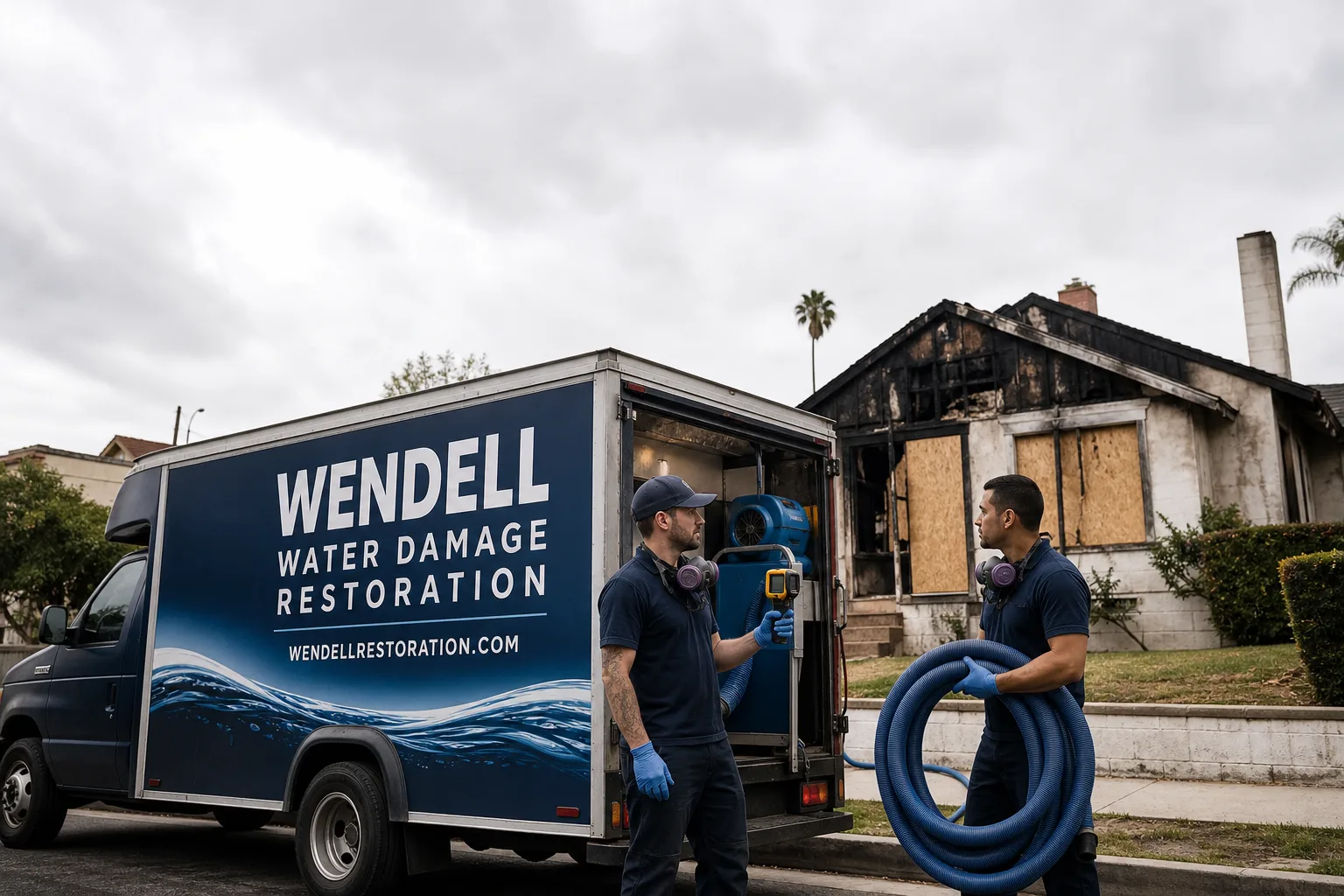
Free visual inspection and a written scope of work before any mitigation begins - photos, moisture readings, and drying logs go in your claim file
The scope we write is the scope we bill. Anything new gets shown to you, in writing, before we touch it.



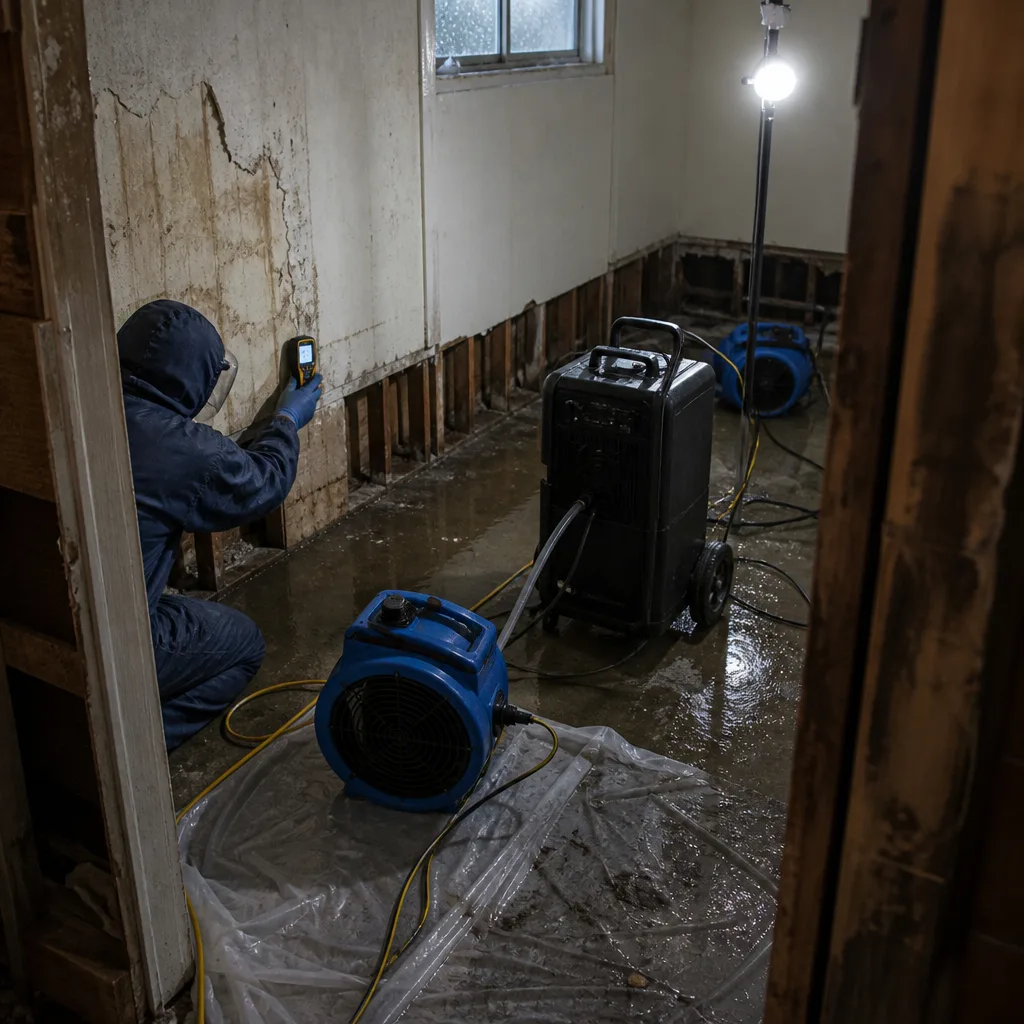 Before
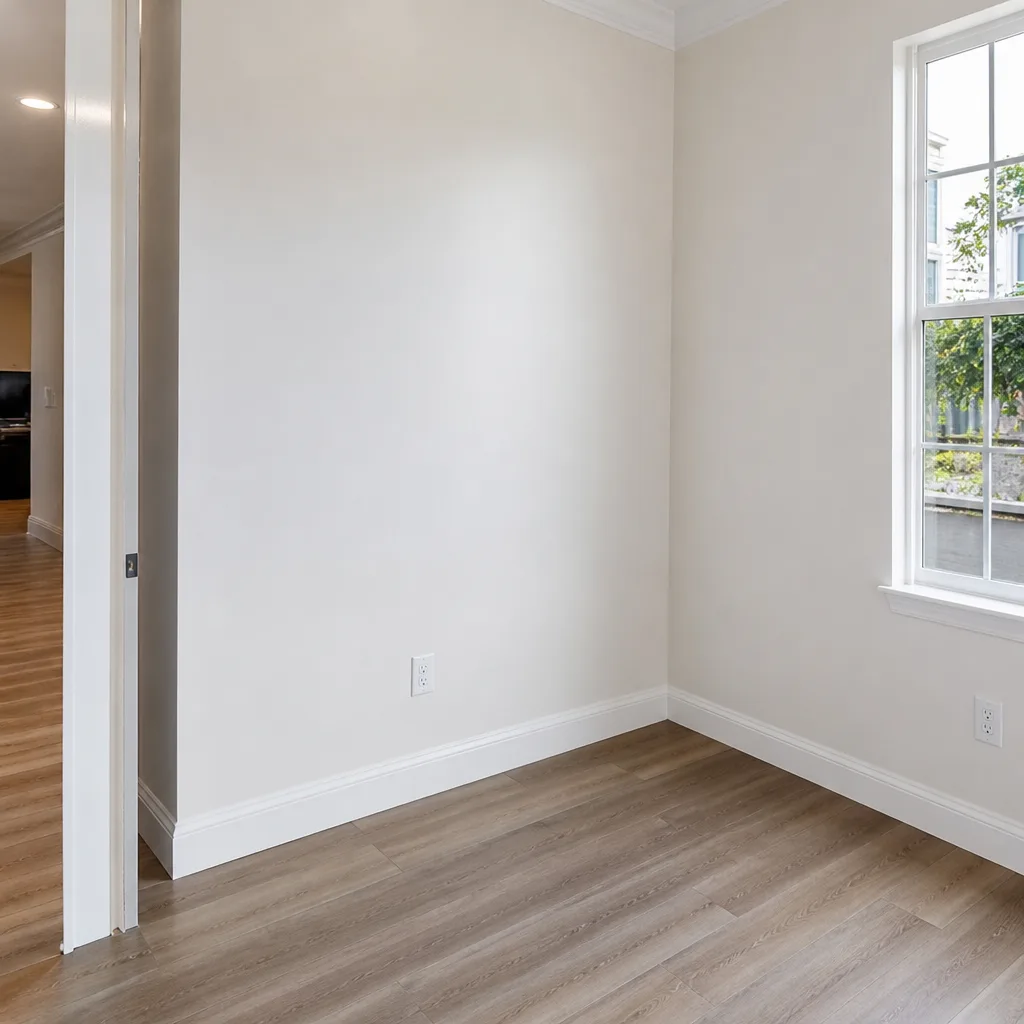 After
After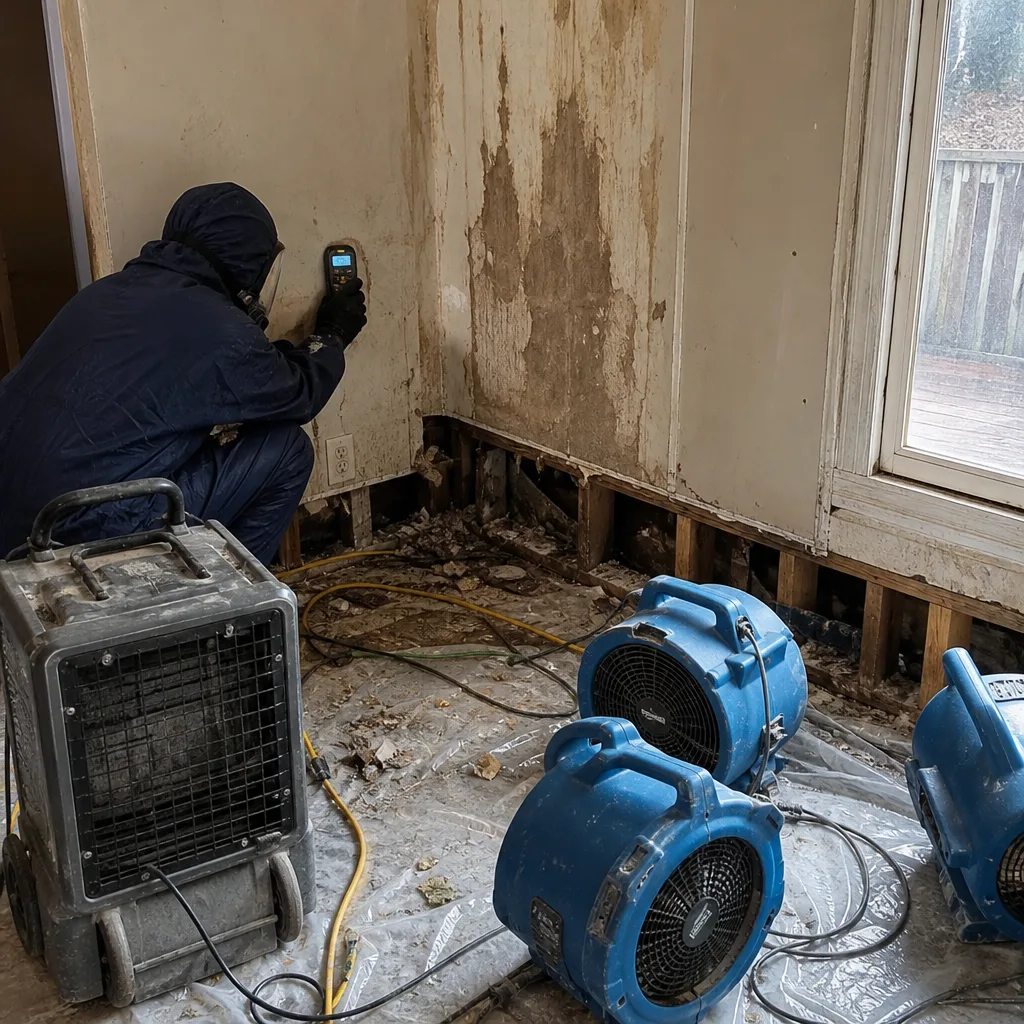 Before
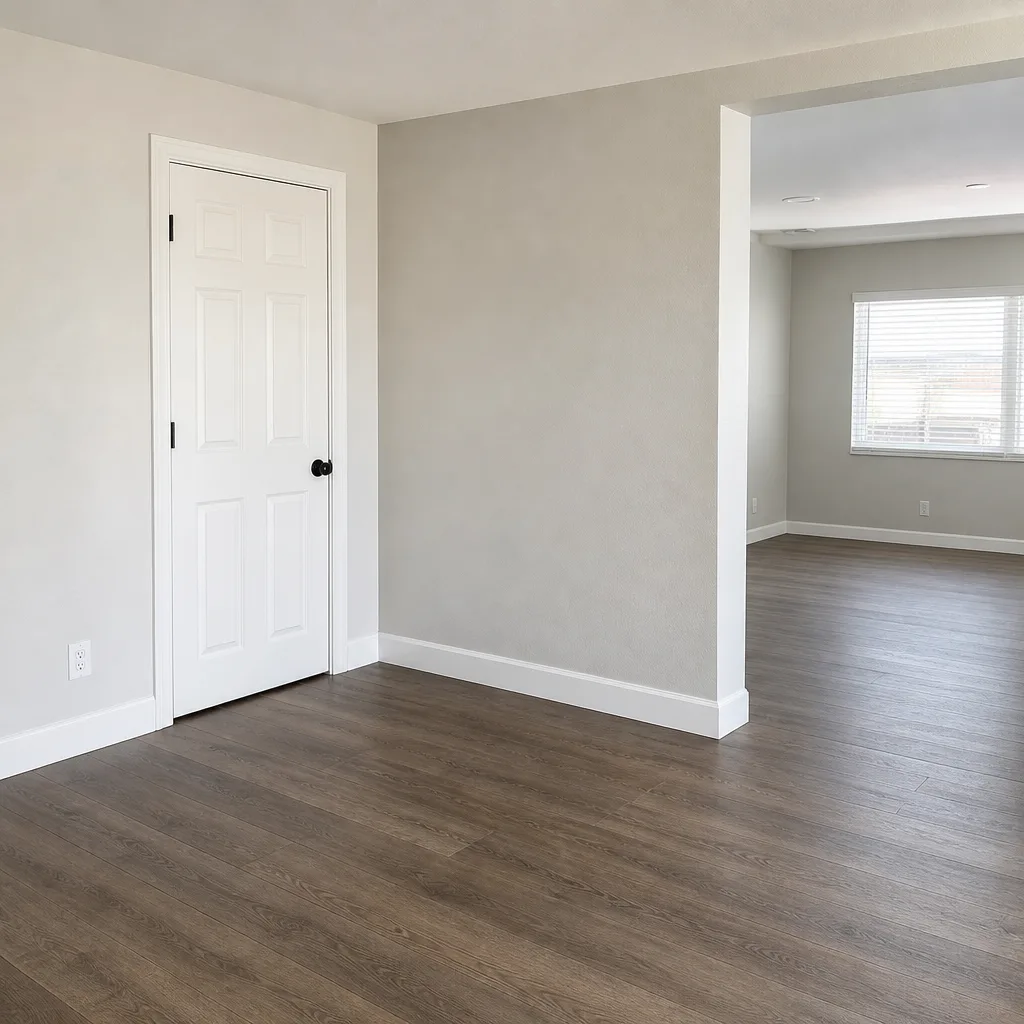 After
After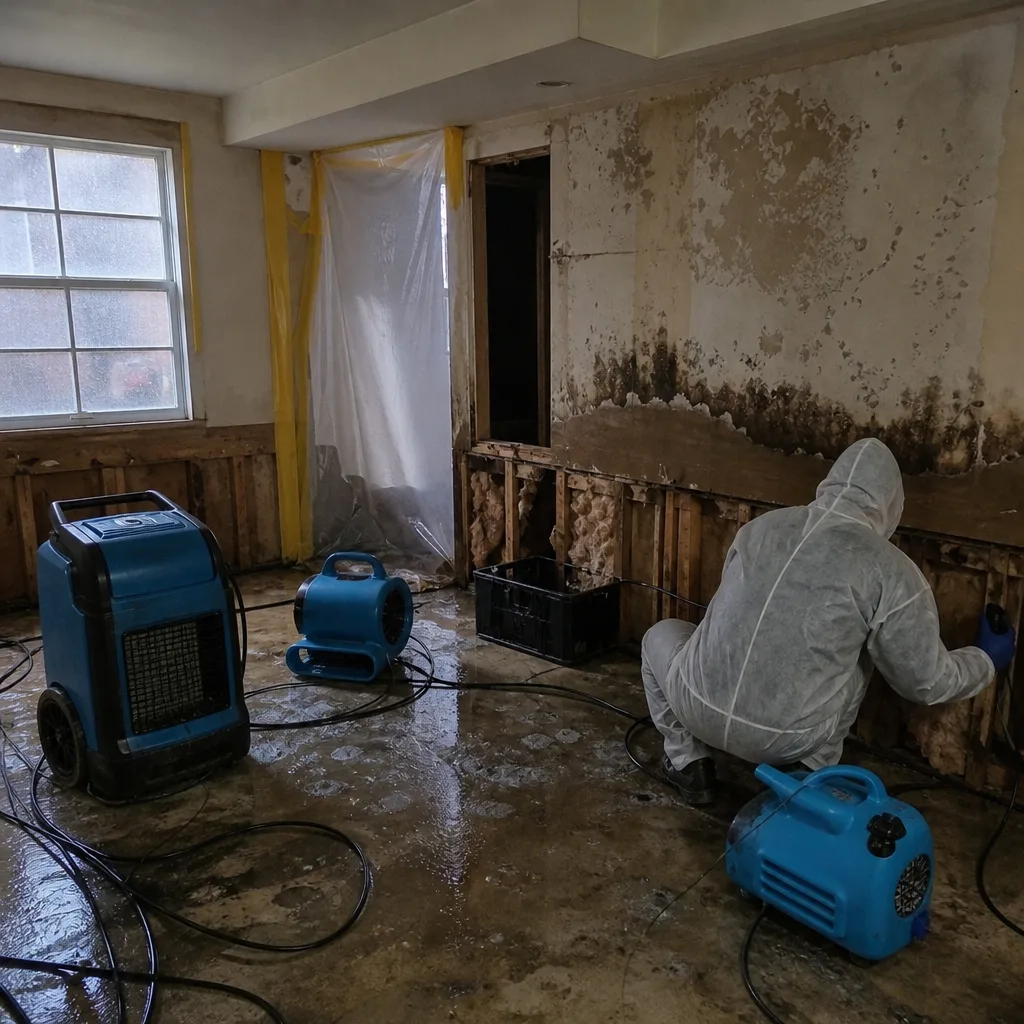 Before
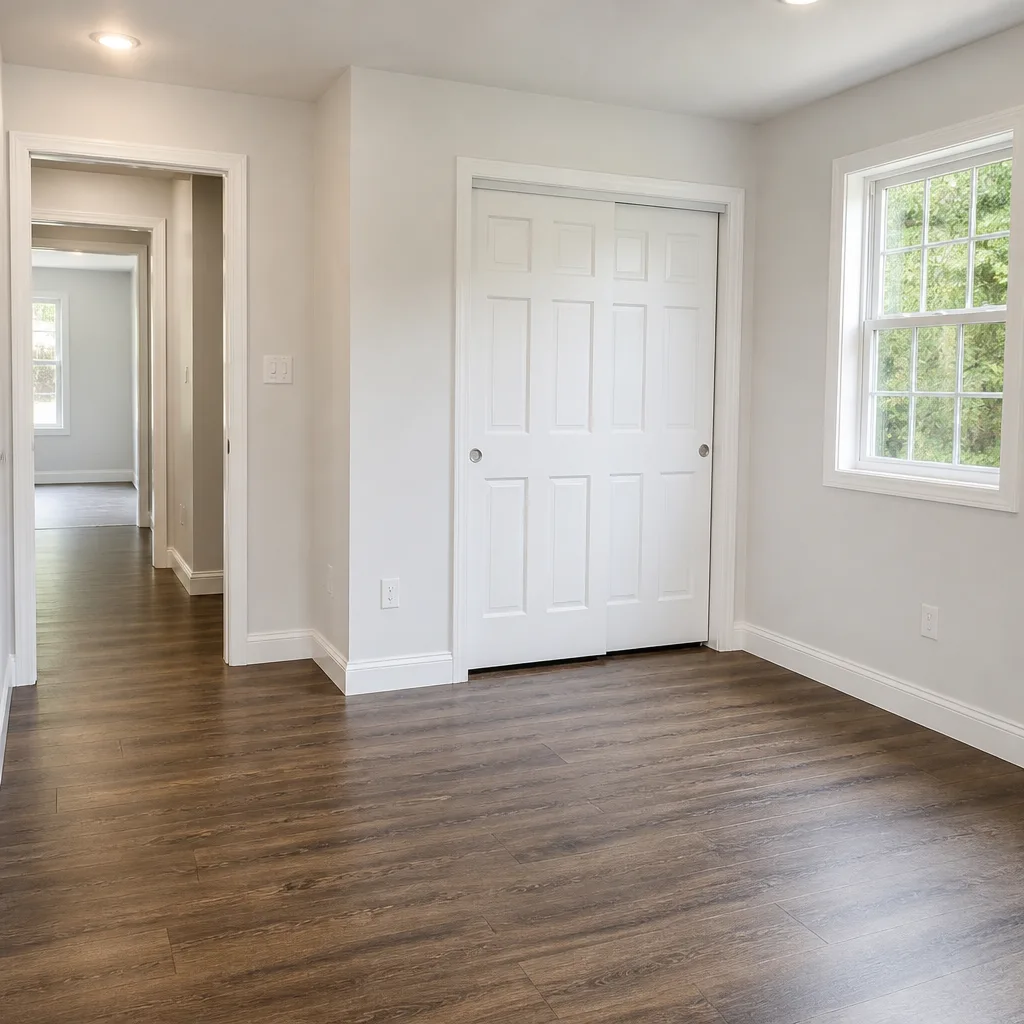 After
AfterWhat to Do After a House Flood
If your house just flooded, stop the water source if you safely can, get everyone out of standing water, and call your local Wendell Water Damage Restoration team at (940) 466-4354 right now. Every hour water sits in a structure, it moves deeper into subfloors, wall cavities, and insulation – damage that was fixable in the first few hours becomes significantly worse by morning. This is not a wait-and-see situation.
A house flood is almost always more than what you can see on the surface. Water follows the path of least resistance, which means it migrates through flooring seams, wicks up drywall, and saturates insulation long before you notice a smell or a stain. The visible puddle on your hardwood floor may be the smallest part of the problem. Professional restoration equipment reads moisture levels in materials your eyes can’t see – that’s not a sales pitch, it’s just how water behaves in a building.
What’s Happening
A flooded house means water has entered your home faster than it can drain, evaporate, or be absorbed safely – and it’s now saturating building materials that were never designed to hold moisture. Within minutes, porous materials like drywall, wood framing, and insulation begin absorbing water. Within 24 to 48 hours, conditions that support mold growth are in place. The clock is running from the moment the flooding started.
What you’re looking at – the water on the floor, the soaked carpet, the wet baseboards – is the surface layer. Underneath it, your subfloor is absorbing. Behind your drywall, framing is wicking. In your crawl space or basement, standing water may be creating humidity that drives moisture into floor systems above. Restoration isn’t just about removing the water you can see. It’s about measuring the moisture in the materials you can’t, then drying those materials systematically before secondary damage – mold, rot, structural weakening – takes hold. That process takes days, done right, with the right equipment running continuously.
Why It Happens
Appliance Failures and Supply Line Breaks
Washing machines, dishwashers, refrigerators with ice makers, and water heaters all have supply lines that can fail without much warning. A braided stainless supply line that looks fine from the outside can develop a pinhole leak at the fitting. The tell is usually a slow spread of water originating directly behind or under the appliance, sometimes with a faint dripping sound you only hear when the house is quiet. These failures can run undetected for hours, especially in laundry rooms and utility closets.
Plumbing Failures – Pipes, Joints, and Valves
A burst pipe or failed plumbing joint can release water extremely fast. Frozen pipes that thaw, corroded fittings under sinks, and failing shut-off valves are common culprits. If water is coming from a ceiling, wall, or the space under a cabinet and you can’t trace it to an appliance, a plumbing failure is the likely cause. Shut off the main water supply to the house immediately – the valve is typically near the water meter. Don’t guess at the source while water is still flowing.
Sewer Backup and Drain Overflow
When a municipal sewer backs up or a home’s main drain line clogs, water and sewage can enter through floor drains, toilets, or tub drains – usually in the lowest point of the house first. If the water is discolored, has an odor, or came up through a floor drain, treat it as contaminated. Don’t walk through it, don’t let pets near it, and don’t try to shop-vac it. Sewage-category water requires specialized handling and protective equipment beyond what a household has on hand.
Storm Water Intrusion and Flash Flooding
Heavy rain that overwhelms a sump pump, overland flooding from a storm, or water entering through foundation cracks or window wells all fall into this category. You can usually identify this cause by timing – the flooding happened during or shortly after significant rain, and the water is entering at or below grade. Basements and crawl spaces are the most common entry points. If your sump pump ran out of capacity or lost power, that’s the mechanical failure to address once the immediate flooding is controlled.
What to Do Right Now
- Stop the water source if it’s safe to do so. Turn off the main water supply if the flood is from a plumbing or appliance failure. You’ll find the main shut-off near your water meter, typically in the basement, crawl space, utility room, or outside near the foundation. Don’t attempt to operate any valve or shutoff that requires you to step into standing water near electrical outlets or panels.
- Do not touch your electrical panel if water is near it. If water has reached outlets, switches, or your electrical panel – or if you’re not certain it hasn’t – stay out of that area entirely and call your utility company before anyone re-enters. Standing water and live electricity are a fatal combination. This is a hard stop. Let the professionals assess before you do anything else in a flooded room with electrical components.
- Stay out of sewage-category water. If the flooding came up from drains or has any odor or discoloration, don’t wade through it. Category 3 water (the trade term for sewage-contaminated water) carries pathogens that cause serious illness. Keep children and pets clear of the area.
- Photograph everything before you move anything. Take wide shots of each affected room, close-ups of the water level on walls and baseboards, and images of any damaged belongings. Your insurance adjuster will need documentation, and your Wendell technician will use it to build an accurate scope of work. The photos take five minutes and save hours of back-and-forth later.
- Move soft goods off wet floors if you can do so safely. Rugs, upholstered furniture, and stacked items sitting in water will absorb more moisture the longer they sit. If moving them doesn’t require walking through sewage-category water or near electrical hazards, relocate them to a dry area. Don’t use a household vacuum on standing water – consumer wet-vacs aren’t rated for this volume, and they’ll slow down professional extraction when the team arrives.
How We Fix It
When your local Wendell Water Damage Restoration team arrives, the first thing a technician does is assess – not guess. Using calibrated moisture meters and thermal imaging, we map exactly where water has traveled in your floors, walls, and ceiling systems. That map determines the scope of work, and the scope is what gets written up as your price before a single piece of equipment is deployed. No surprises at the end.
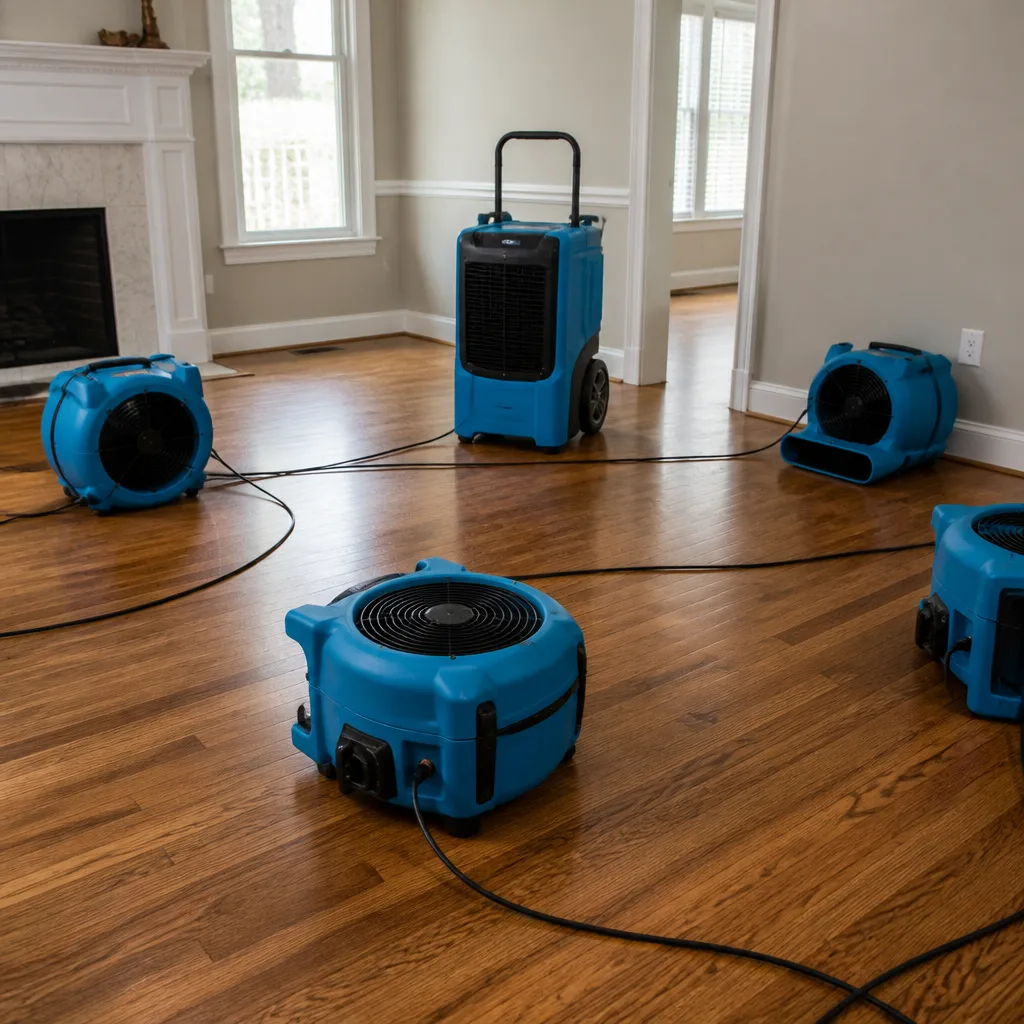
Extraction comes first: truck-mounted and portable extraction units remove standing water from the structure. Then professional drying equipment from Dri-Eaz, Phoenix, XPOWER, B-Air, and Injectidry is positioned and calibrated to the specific moisture readings in your materials – the number of air movers and dehumidifiers in a room isn’t random, it’s math based on the cubic footage and moisture load. Technicians return to take readings and adjust equipment over the following days. When the materials hit target moisture levels, drying is complete and documented.
This work falls under our Water Damage Restoration service, with Water Damage Repair covering any structural or finish work once the structure is dry. If mold is already present or developing, Mold Remediation runs as part of the same project. The 365-Day Done Right Promise covers the repair work in writing – if it’s not done right, we make it right. You’ll get photo updates by text throughout, and a digital invoice you can pay from a link when the job is complete.
Frequently Asked Questions
It cannot wait. Mold growth can begin within 24 to 48 hours of a water event, and structural materials absorb moisture continuously until they’re dried with professional equipment. Every additional hour means water has migrated further into materials that are harder to dry without demolition. Wendell answers every call with a live person, 24 hours a day, every day of the year – call (940) 466-4354 now and get the process started tonight.
Most standard homeowner’s insurance policies cover sudden and accidental water damage – a burst pipe, an appliance failure, or storm intrusion in many cases – but typically not gradual leaks or flooding from a rising body of water (which requires separate flood insurance). The fastest way to know is to call your insurer and open a claim, then let your Wendell technician document the damage with photos and a written scope. Your local Wendell team is experienced in working alongside insurance adjusters and can provide the documentation they need to process your claim accurately.
Your local Wendell Water Damage Restoration team handles water damage and we keep schedules open for exactly this kind of call. Call (940) 466-4354 right now – a live person will answer and connect you to your local team to set an arrival time you can actually track, not a vague window that has you standing by all afternoon.
Extraction and the initial setup of drying equipment typically happens in the first few hours of the job. The drying process itself – getting the moisture content in your floors, walls, and framing back to acceptable levels – usually takes several days of continuous equipment operation, with a technician checking readings each day. The timeline depends on how much water entered, what materials absorbed it, and how quickly restoration started. We give you the honest estimate up front: a written price before work starts, and a realistic timeline based on what the moisture readings actually show, not a number pulled from thin air.
Get It Fixed
Call (940) 466-4354 right now. A live person answers every call, 24 hours a day. Your local Wendell Water Damage Restoration team will give you a real arrival time you can track, document everything for your insurer, and put the full price in writing before any work begins. Book in a tap at wendellwaterdamage.com.
Written by Blake Sorensen, Owner and Lead Restoration Technician, Wendell Water Damage Restoration – serving homeowners nationwide since 2006 as part of the Relay Home Co. family.
What Our Customers Say
"Burst pipe at night. Booked a crew by phone and got a text with the lead's name and a live ETA. They set up fans, ran moisture readings, and sent daily photos to my phone."
- Lisa G."Insurance paperwork was easy since everything was in one portal."
- Manny R."Mold removal in a basement corner after the leak. Retested clean."
- Gordon K.