
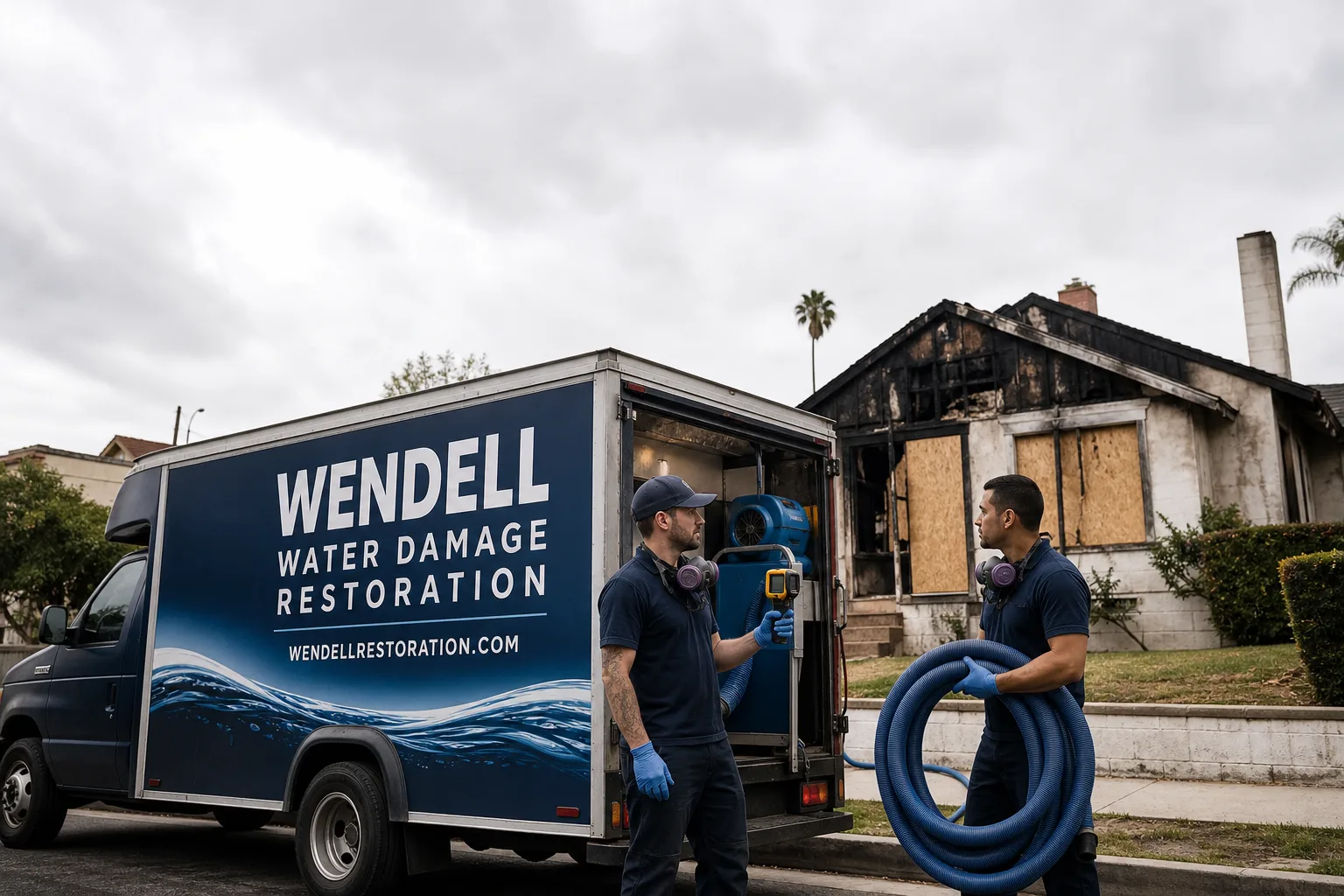
Free visual inspection and a written scope of work before any mitigation begins - photos, moisture readings, and drying logs go in your claim file
The scope we write is the scope we bill. Anything new gets shown to you, in writing, before we touch it.

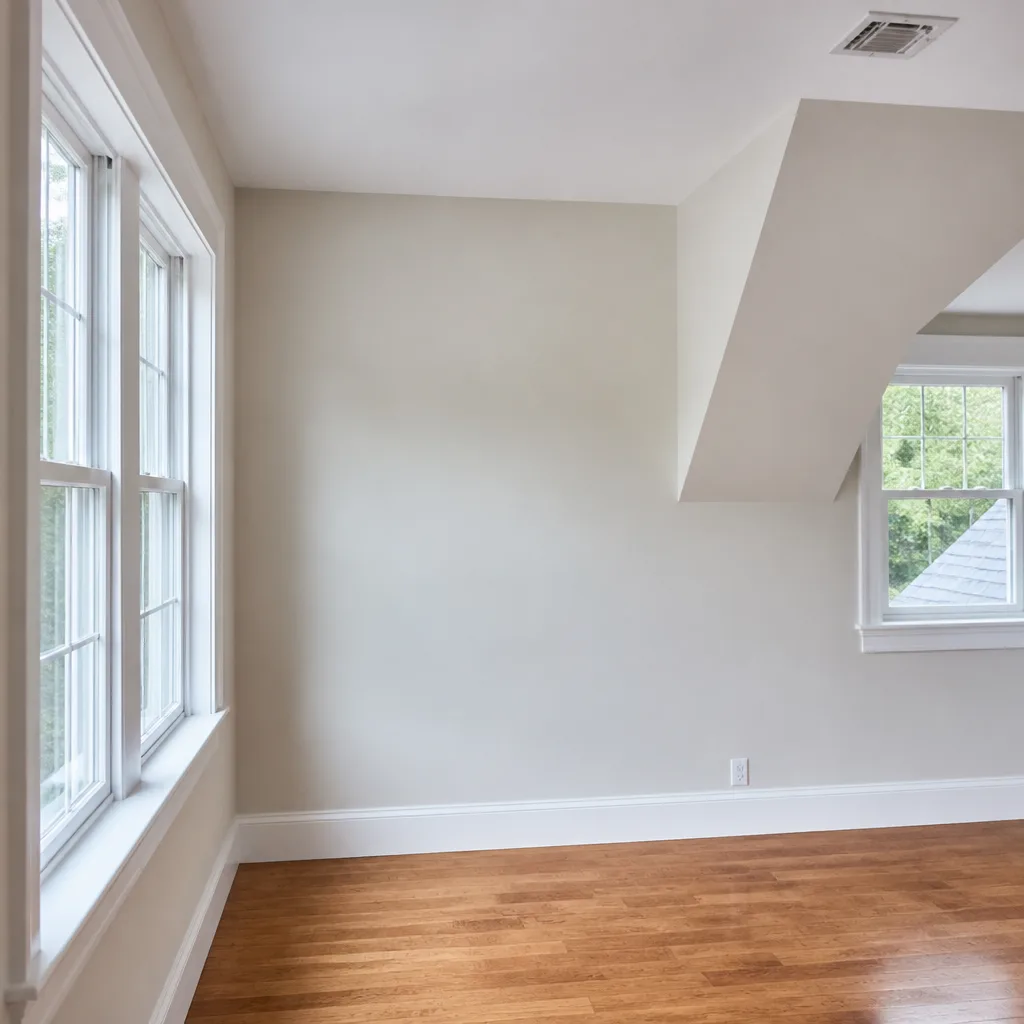


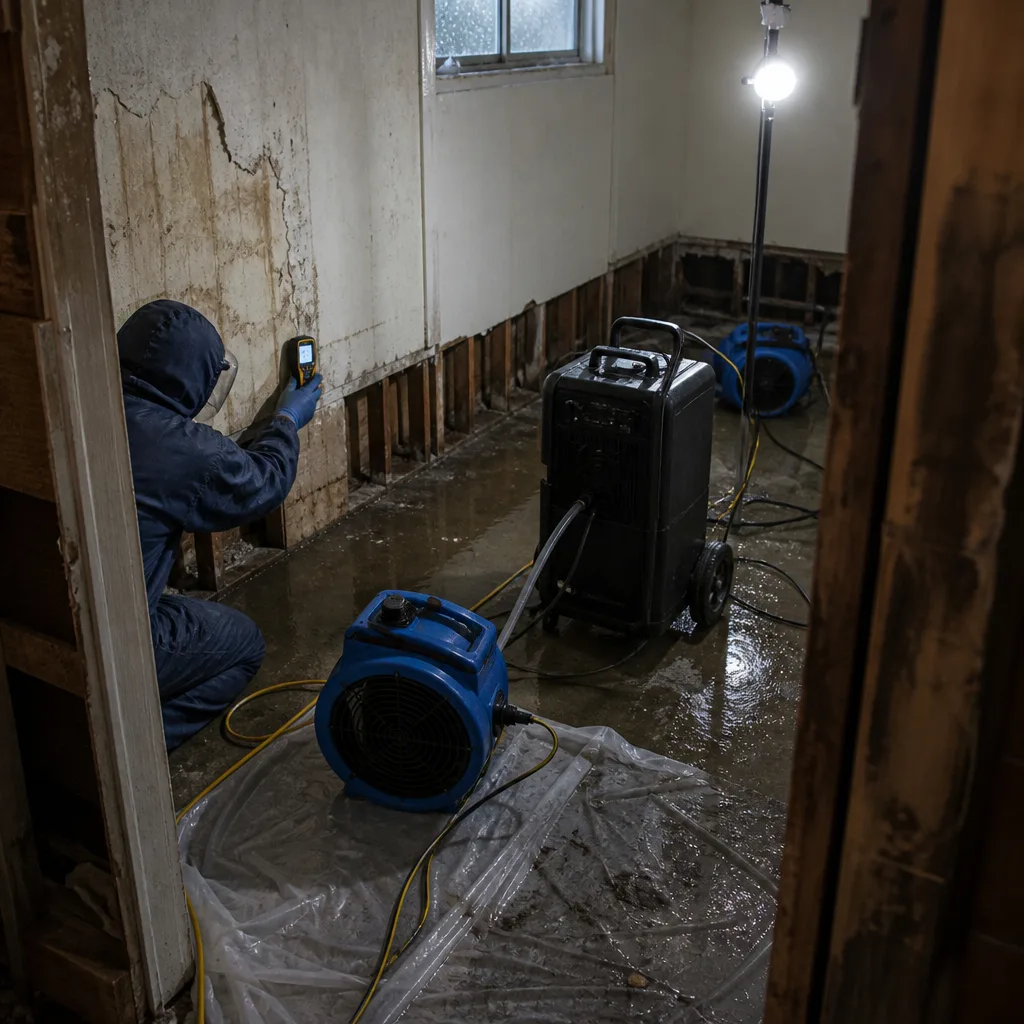 Before
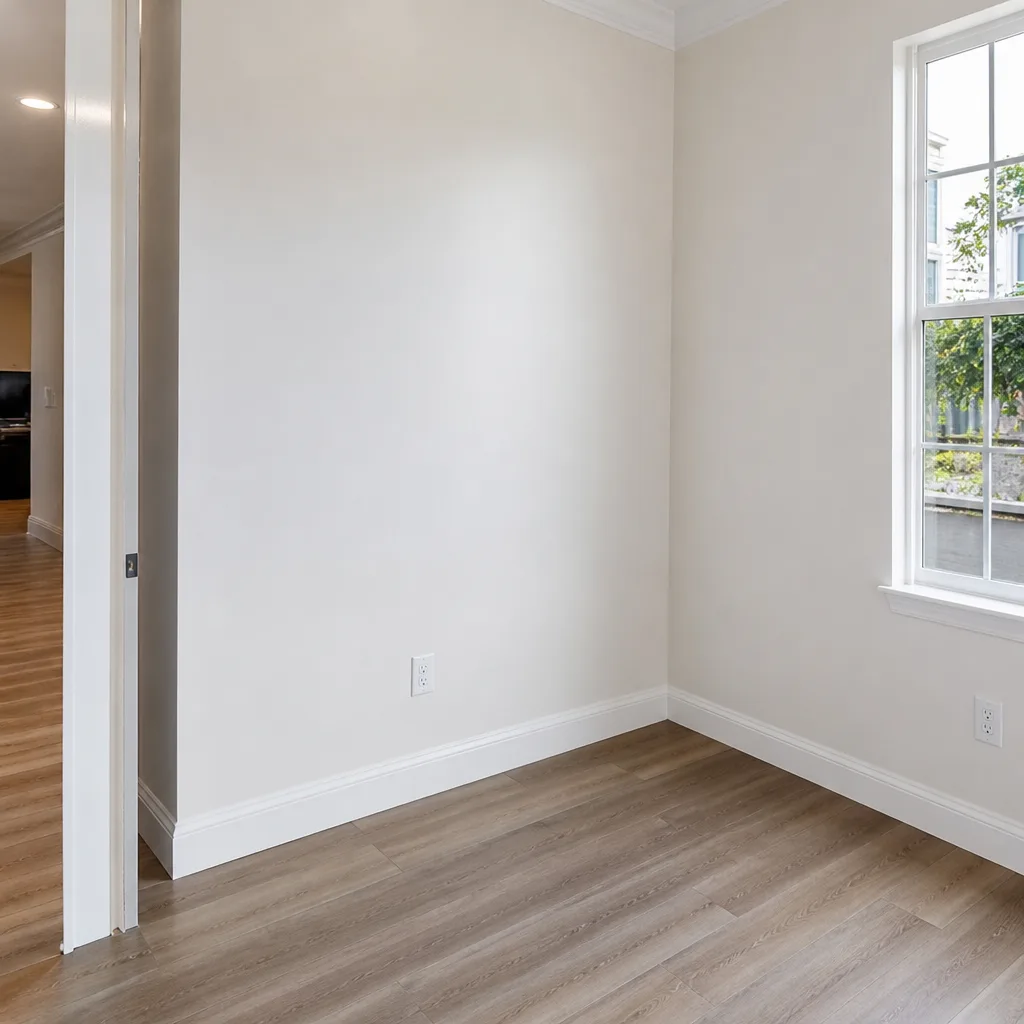 After
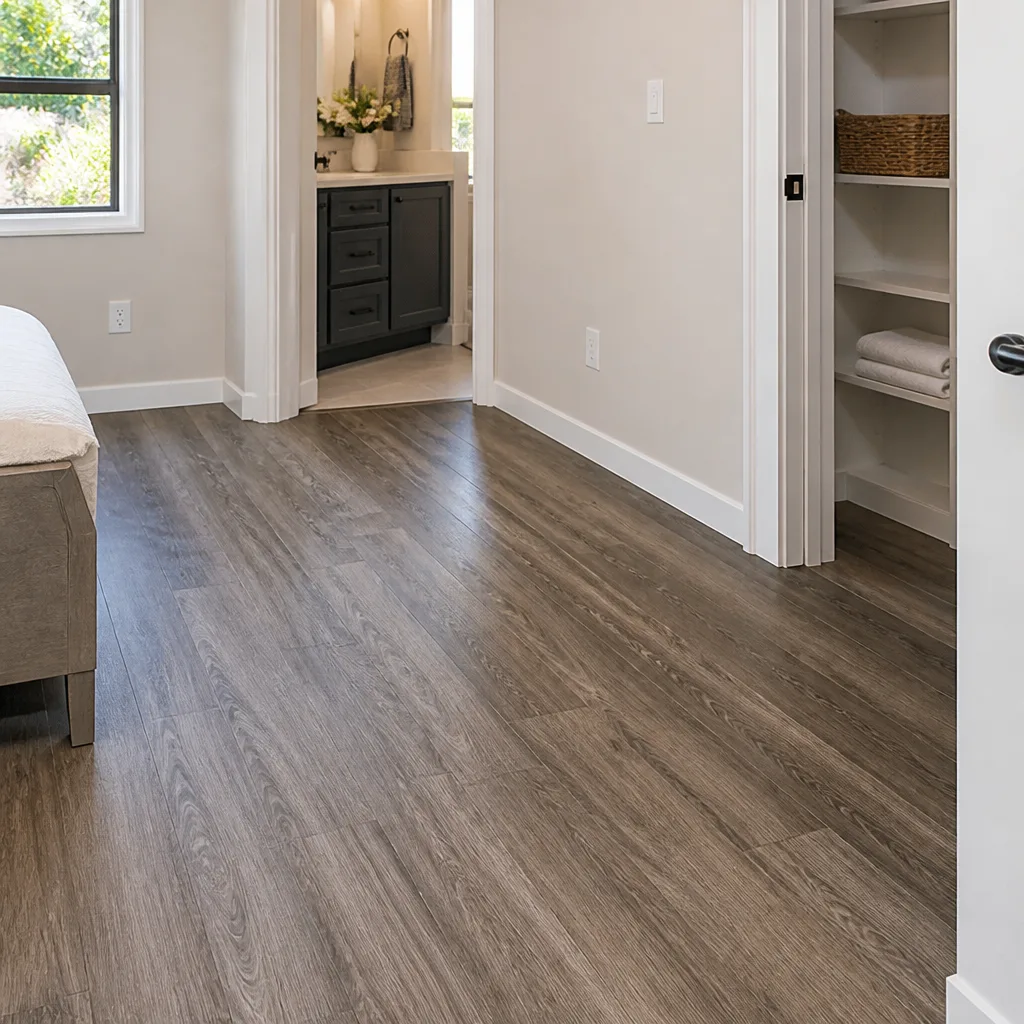
After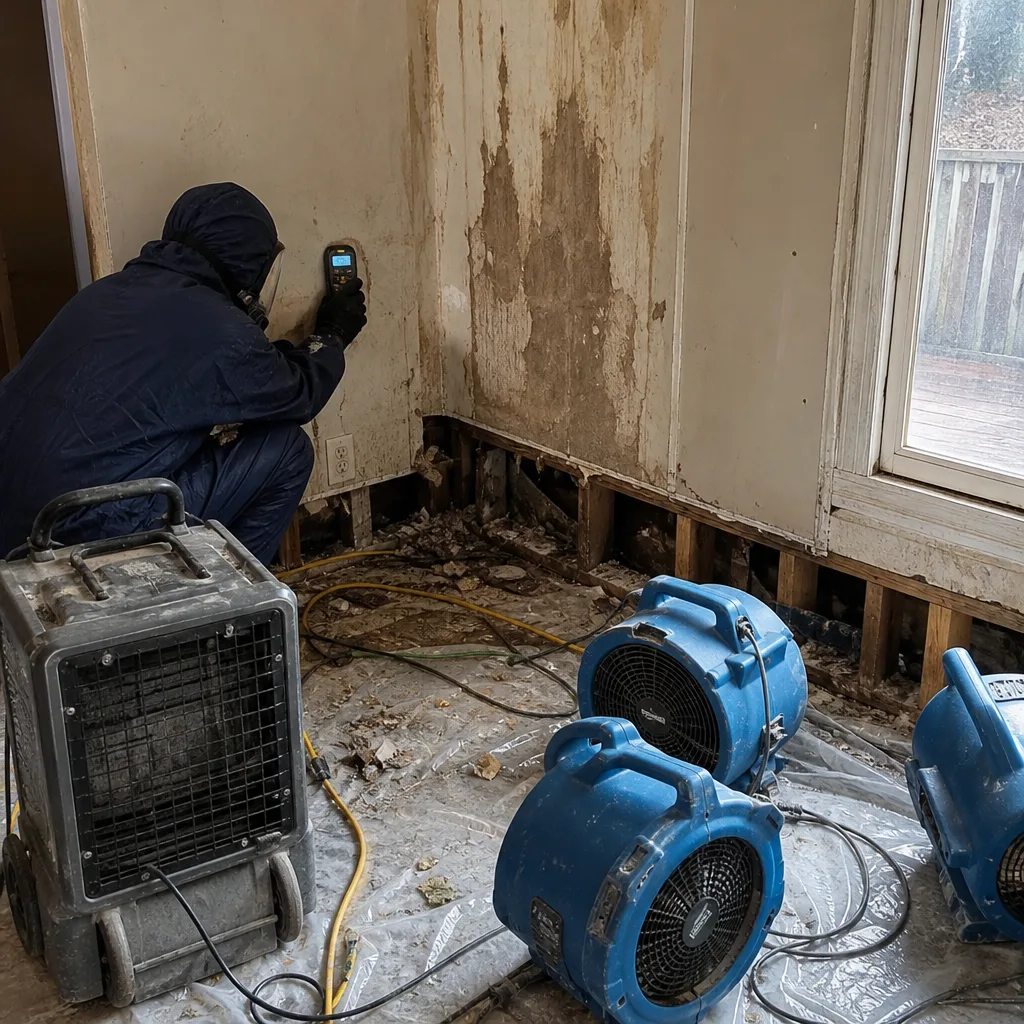 Before
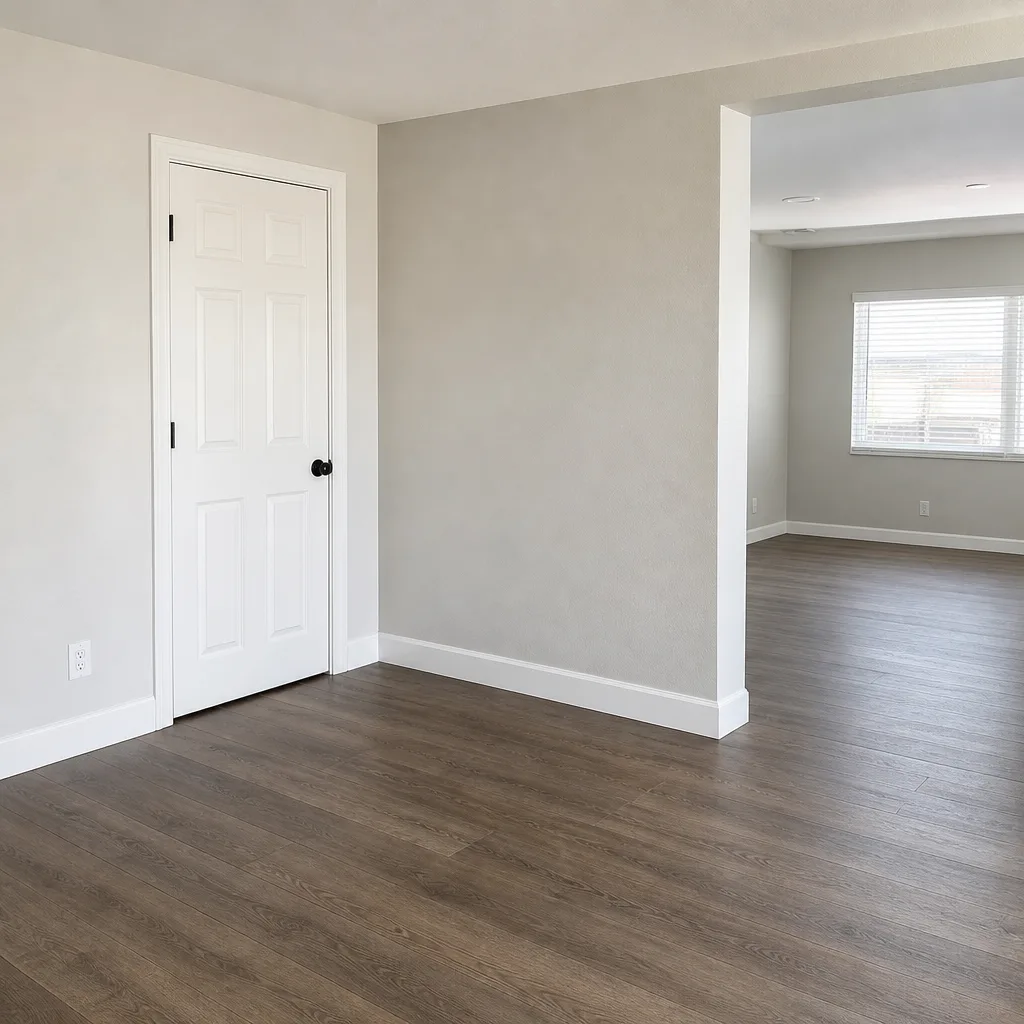 After
After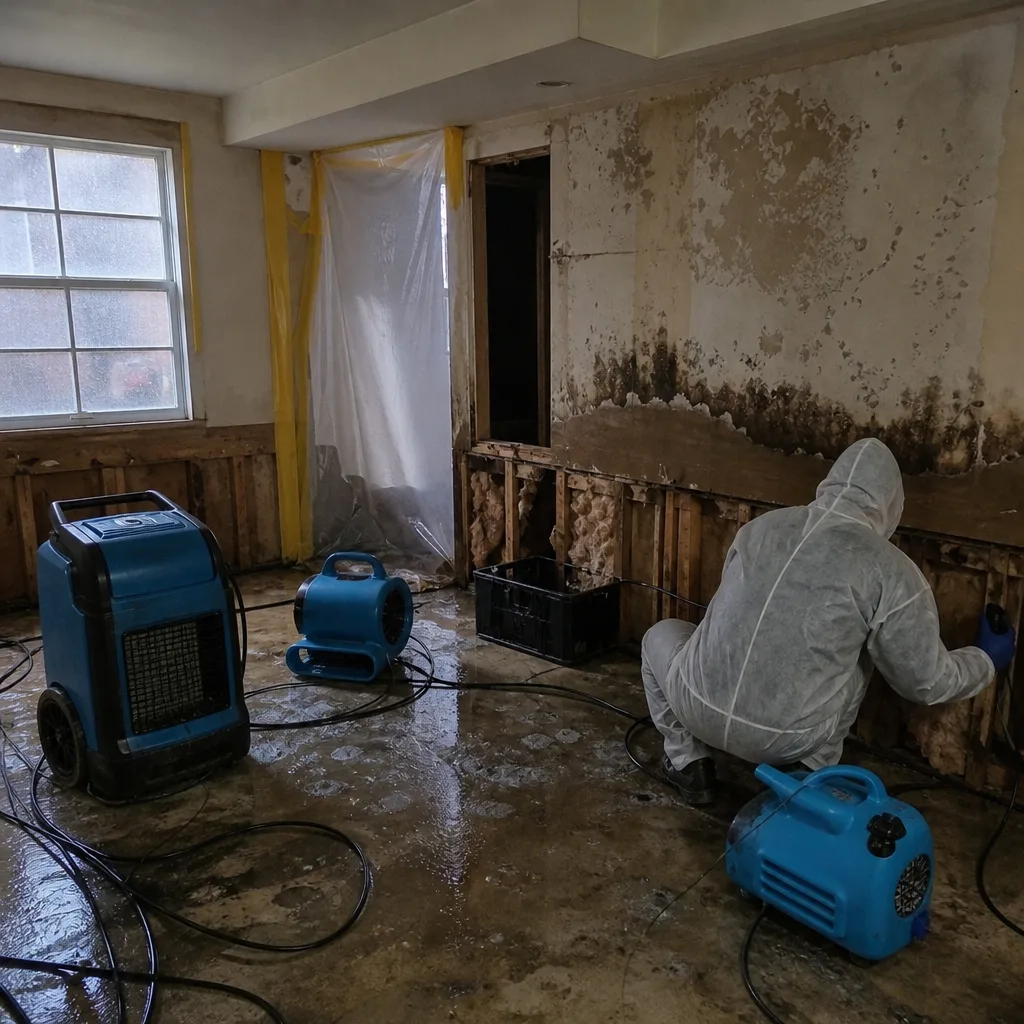 Before
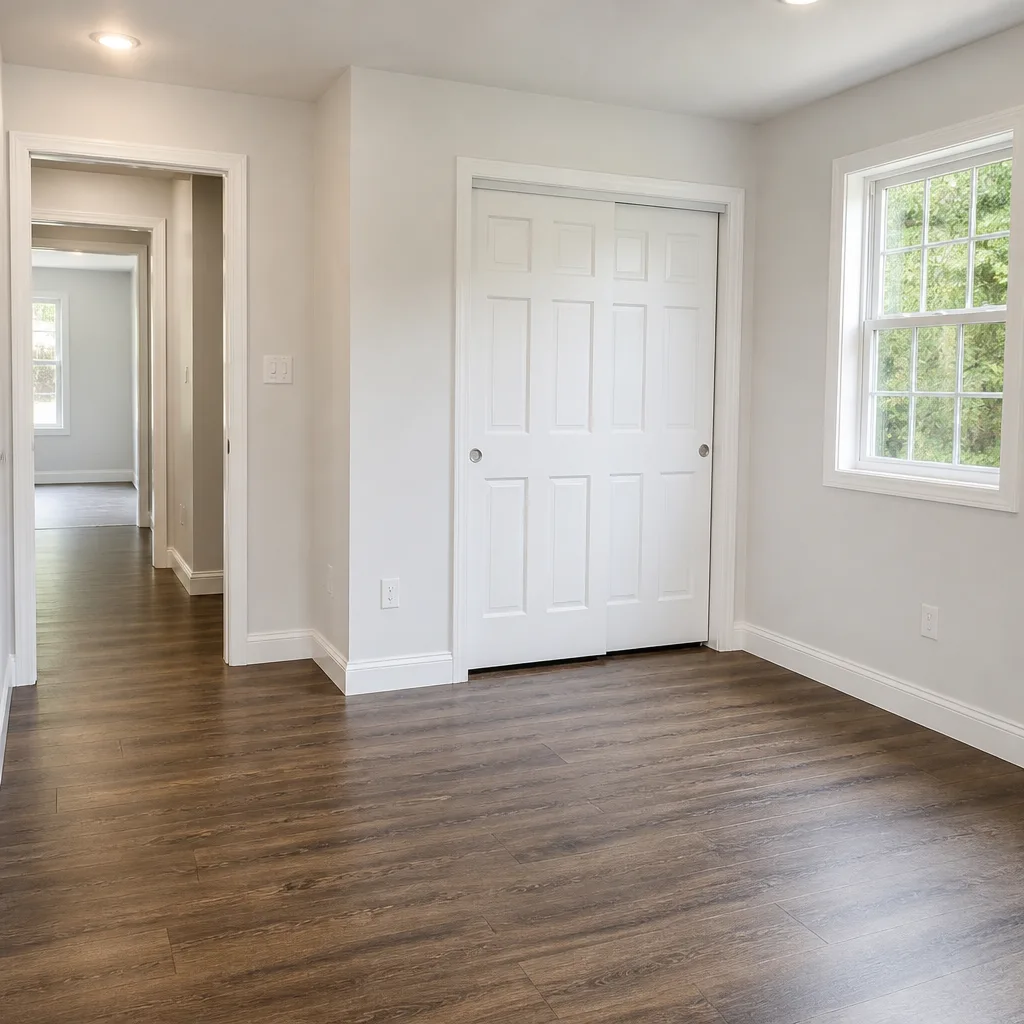 After
AfterFast, Reliable Water Damage Restoration Across San Fernando
Water damage in San Fernando rarely announces itself. More often it’s a slow seep under kitchen tile on Callan Street, a pinhole leak in a galvanized supply line behind a 1958 stucco wall on Orange Grove Avenue, or a water heater that lets go in a garage on Maclay Avenue at 2 a.m. When you call Wendell Water Damage Restoration at (940) 466-4354, a live person answers, gives you a straight price range before we dispatch, and sends a background-checked technician with a live arrival time you can track on your phone. We’ve been doing this since 2006, and we run every San Fernando job to IICRC standards using Dri-Eaz, Phoenix, and XPOWER equipment. Here’s what you need to know about Water Damage Restoration in this city, and why our approach fits how people actually live here.
Why Wendell Water Damage Restoration Is San Fernando’s Preferred Water Damage Restoration Company
San Fernando is a tight grid of pre-1970 homes, many on slab foundations, with galvanized plumbing that’s been quietly corroding for five decades. The crews other restoration companies send out may know the general Valley, but they don’t always know that a saturated slab in a 1950s ranch off San Fernando Road needs a different drying strategy than a flooded crawlspace in Granada Hills. Our technicians see these homes every week. They know about the pinhole failures behind original bathroom tile. They know that the clay soil under Mission Hills and San Fernando holds water longer after a pipe break, which means slab drying takes longer. That local knowledge means we don’t set up equipment and hope; we run psychrometric drying (tracking the air’s moisture level so we know when your home is truly dry, not just surface-dry) with daily moisture logs that you get by text.
The Relay Visibility Guarantee sets us apart: you get a written price before any work starts, a digital invoice you can pay from a link, and before-and-after photo updates by text. San Fernando homeowners have told us that’s the part that matters most. They aren’t home during the day. They want proof the job was done. Every repair also carries the 365-Day Done Right Promise. If it’s not done right, we make it right, and that’s in writing on every scope.
Water Mitigation in San Fernando
Water Mitigation is the first and most important phase of any water loss in San Fernando: it means stopping the source, extracting standing water, and getting the structure drying before mold can take hold. In a pre-1970 slab-on-grade home, mitigation almost always involves more than just pulling water off the floor. The moisture wicks up through the sill plates and into the drywall, and if the leak has been running for days, the subfloor can read 100% moisture content even though the tile on top looks fine. San Fernando homeowners typically pay between $1,800 and $4,200 for a standard water mitigation job, depending on how many rooms are affected and whether the leak was caught early or ran for a week.
Extraction comes first, always
We use truck-mounted and portable extraction units to pull standing water out of carpet, hardwood, and tile, then we map the moisture with thermal imaging and hydrosensors. What you can see is never the whole story. In one San Fernando kitchen on Callan Street, the homeowner only noticed six tile popping loose. The moisture map showed the entire slab was saturated from a pinhole leak in a galvanized line feeding the sink. That mapped boundary determines what gets dried versus what gets removed.
Drying is logged, not guessed
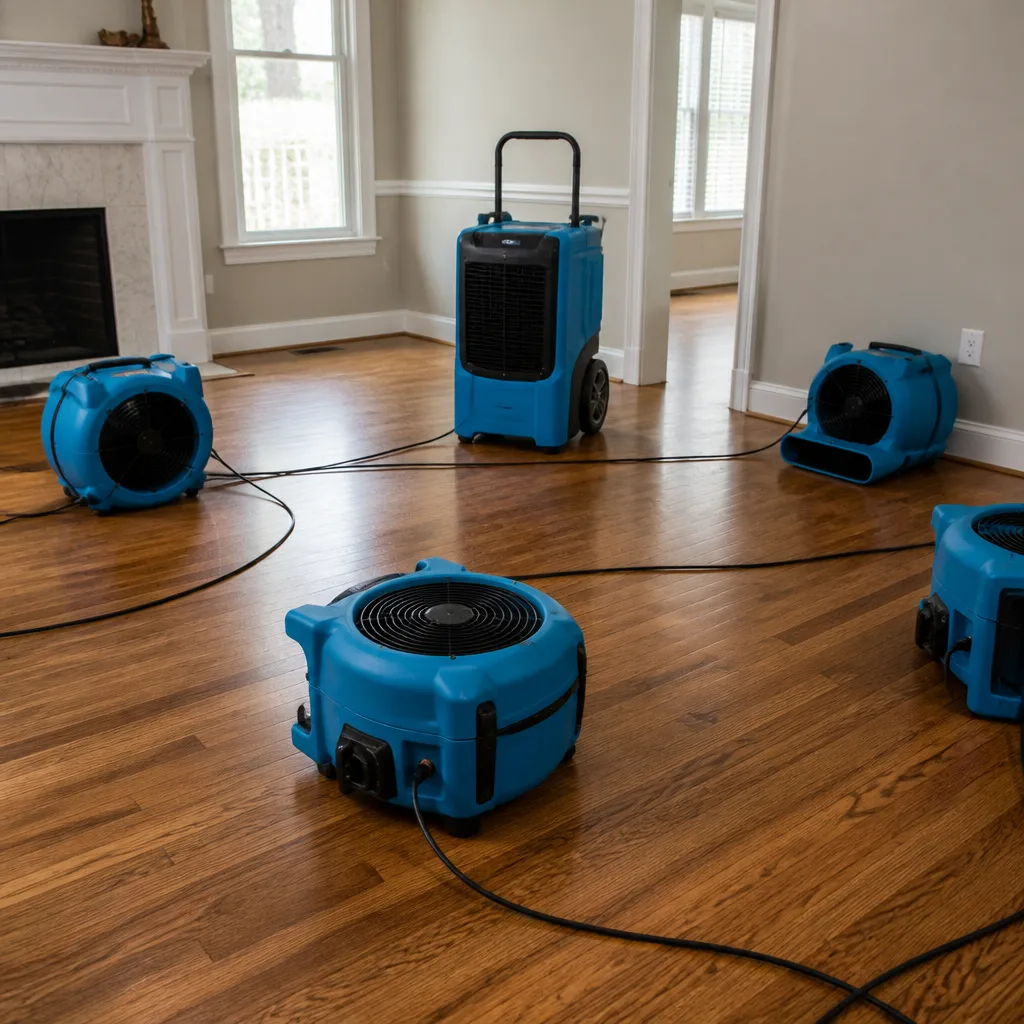
We run XPOWER air movers and a Phoenix dehumidifier, then log moisture readings twice daily against pre-loss condition. You see those numbers too, because we text them to you. The category of water matters here: clean category 1 supply water can degrade to category 2 or even 3 once it migrates through aged subfloor and wall cavities in older San Fernando homes, and the category decides what we can dry versus what has to come out. We don’t pad scopes. If it can dry, we dry it. If it can’t, we show you the readings and explain why before we cut anything.
Flooded Basement in San Fernando
A Flooded Basement in San Fernando usually isn’t the stormwater basement you’d see in a canyon neighborhood. Our basements here are often finished bonus rooms built under 1940s and 1950s bungalows, and the water comes from a failed water heater, a broken washing machine supply, or a slow drain backup. These are confined, low-ventilation spaces, which means humidity builds fast and mold can start on wet drywall within 24 to 48 hours. A flooded basement extraction and drying job in San Fernando typically falls between $2,200 and $5,500, depending on whether we’re pulling carpet, cutting drywall, and whether the water reached finished walls.
Why basements here dry slower
San Fernando sits on dense, clay-heavy alluvial soil. After the visible water is out, the concrete slab keeps releasing vapor for days. We account for that with longer dehumidification runtimes and more aggressive air movement than we’d use in a vented crawlspace. The Phoenix units we run push dry air at 225 CFM, and we monitor the grain depression (the difference between the air and the surface moisture) until the slab hits its dry standard. We don’t declare it done when the carpet feels dry. We declare it done when the meter says it’s dry.
What we save first
In any basement flood, we triage. Hardwood, built-ins, irreplaceable stuff. Then drywall. Then baseboard. In a finished San Fernando basement, the first 18 inches of drywall usually has to go because it’s touching a saturated slab. We’ll show you exactly where the cut line is and why before we make it. Then the written scope comes before any work.
Common Water Damage Restoration Problems We See in San Fernando Homes
- Galvanized supply line pinhole failures. Pre-1970 homes in San Fernando still run on galvanized steel that corrodes from the inside out. By the time you see a symptom like popping tile or a warm spot on the slab, the leak has often been running for weeks.
- Slab-on-grade wicking. Most San Fernando homes sit on concrete slabs, so water from a hidden supply line travels up through sill plates and into drywall. The visible damage is often ten feet from the actual source. Moisture mapping shows the real boundary.
- Water heater failures in garages and utility rooms. A 40-gallon tank letting go overnight can spread water across a garage slab and into an adjoining laundry room in under an hour. We see this constantly in the neighborhoods around San Fernando Road and Glenoaks Boulevard.
- Roof and ceiling leaks from older flat and low-slope roofs. Pre-1970 San Fernando homes with original or second-generation built-up roofing often develop slow leaks around vents and flashing. Water travels along joists and shows up as a stained ceiling in a hallway, far from the actual penetration point.
Pricing for Water Damage Restoration in San Fernando, CA
Straight numbers, the way we give them on the phone. A small, contained water loss, like a laundry supply line that was caught within an hour, typically runs $900 to $1,800. Standard water mitigation across one or two rooms falls between $1,800 and $4,200. A flooded basement with drywall removal, extraction, and full structural drying lands at $2,200 to $5,500. If the loss involves sewage or contaminated water, the price goes up because antimicrobial treatment, affected-material removal, and full containment are required. What affects the number: square footage, how long the water sat, category of water, and how much drywall, flooring, and baseboard has to be replaced. You’ll get a written price before any work starts, and if the repair fails within the year, the 365-Day Done Right Promise covers the second visit. Call (940) 466-4354 for a free estimate.
Trusted Brands We Service in San Fernando
We run Dri-Eaz and Phoenix dehumidifiers and XPOWER air movers on San Fernando jobs, the same professional-grade equipment used on large commercial loss sites. These aren’t rental-shop fans. They move air at commercial CFM rates and pull moisture down to the slab level, which is exactly what older slab-on-grade homes here need. We stock replacement parts for these units locally, which means a failed component mid-job doesn’t stall your drying plan. Our technicians arrive in uniform, background-checked, and the equipment gets staged with your live arrival time already texted to your phone.
We Also Serve Cities Near San Fernando
We handle water damage restoration throughout the northeastern San Fernando Valley. Our San Fernando crews regularly run jobs in Water Damage Restoration in San Fernando and the surrounding communities of Sylmar, Mission Hills, Pacoima, and Granada Hills. If you’re in one of those areas and have water where it shouldn’t be, call (940) 466-4354 and we’ll give you a live answer and a written price before we roll a truck.
Serving San Fernando, CA - Our Local Coverage Area
We’re based in the San Fernando area and know this community well. Use the map below to see our service coverage - if you’re nearby, we can almost certainly help.
FAQs About Water Damage Restoration in San Fernando
We typically have a technician en route to San Fernando within 60 to 90 minutes of your call, and you’ll get a live arrival time you can track on your phone, not a four-hour window. A live person answers every call at (940) 466-4354, 24/7. Every hour matters because mold can begin growing on wet drywall within 24 to 48 hours, so don’t wait for a “morning appointment.” Call us now for same-day dispatch.
Not necessarily. What you need first is a moisture map and a leak assessment. We use thermal imaging and hydrosensors to trace the water boundary and figure out whether it’s a single pinhole failure or multiple failing sections in the galvanized line. We’ll show you the readings, explain the repair-versus-repipe decision honestly, and coordinate with your plumber after drying is complete. We don’t sell repipes, and we don’t push you into one.
We save original hardwood whenever the readings support it. In San Fernando slab-on-grade homes, solid hardwood sitting directly on concrete is often too saturated to dry in place, but solid strip flooring over a subfloor can usually be saved with Injectidry panel drying and careful monitoring. We’ll know within the first day of drying, and we’ll show you the logged moisture readings before recommending anything. Call (940) 466-4354 and we’ll assess it in person.
Yes, and the reason is the soil. San Fernando sits on clay-heavy alluvial soil that holds water against foundation walls and under slabs longer than sandier ground. That means a flooded basement here needs a longer dehumidification phase and more aggressive air movement to hit the dry standard. We don’t apply a generic timeline. We monitor grain depression and moisture content in the concrete until the meters show dry, and we text you the logs as they happen.
A typical San Fernando scope includes source stop, extraction, containment if needed, moisture mapping, equipment set with XPOWER air movers and a Phoenix or Dri-Eaz dehumidifier, daily moisture logs, antimicrobial treatment where required, and a final walkthrough with photo documentation. You receive a written price before any work begins, and every repair carries the 365-Day Done Right Promise in writing. Call (940) 466-4354 to get started with a free estimate.
Wendell Water Damage Restoration serves San Fernando residents through our Los Angeles dispatch office, with local crews already working in the area. Founded in 2006 and part of the Relay Home Co. family, we operate to The Relay Visibility Guarantee: a live answer, a live arrival time, photo updates by text, a written price, and a guarantee you can hold. If you have water damage in San Fernando right now, call (940) 466-4354. A person will answer.
Written by Blake Sorensen, Owner at Wendell Water Damage Restoration, serving San Fernando and the surrounding communities.