
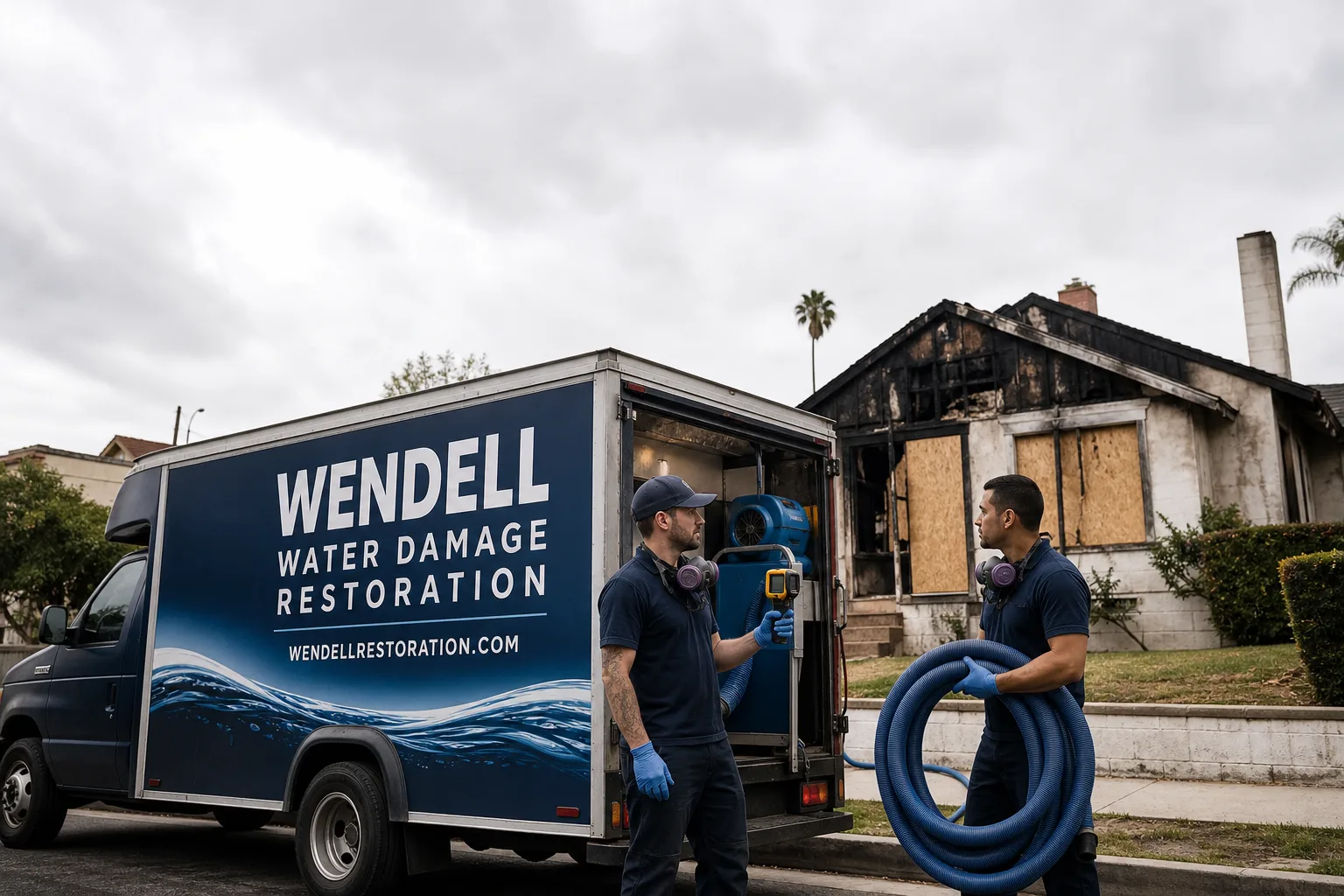
Free visual inspection and a written scope of work before any mitigation begins - photos, moisture readings, and drying logs go in your claim file
The scope we write is the scope we bill. Anything new gets shown to you, in writing, before we touch it.

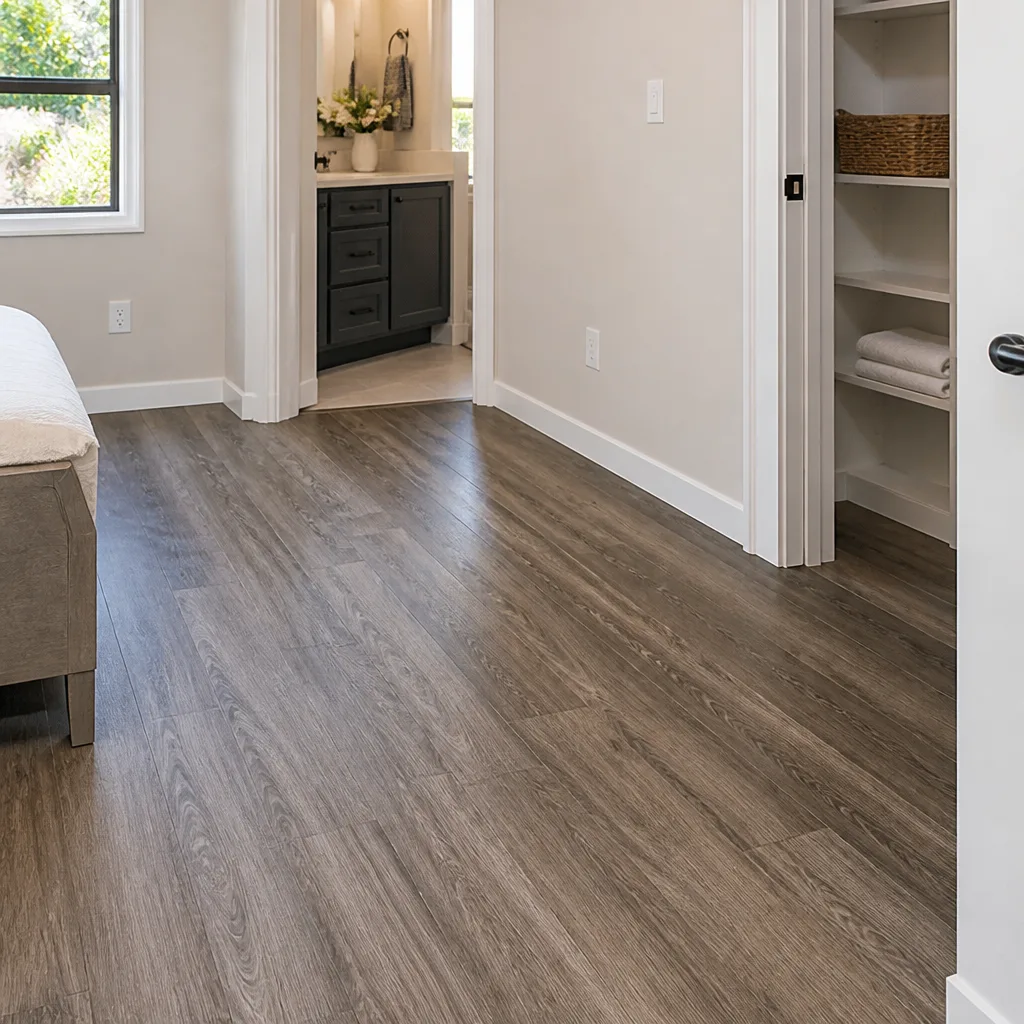

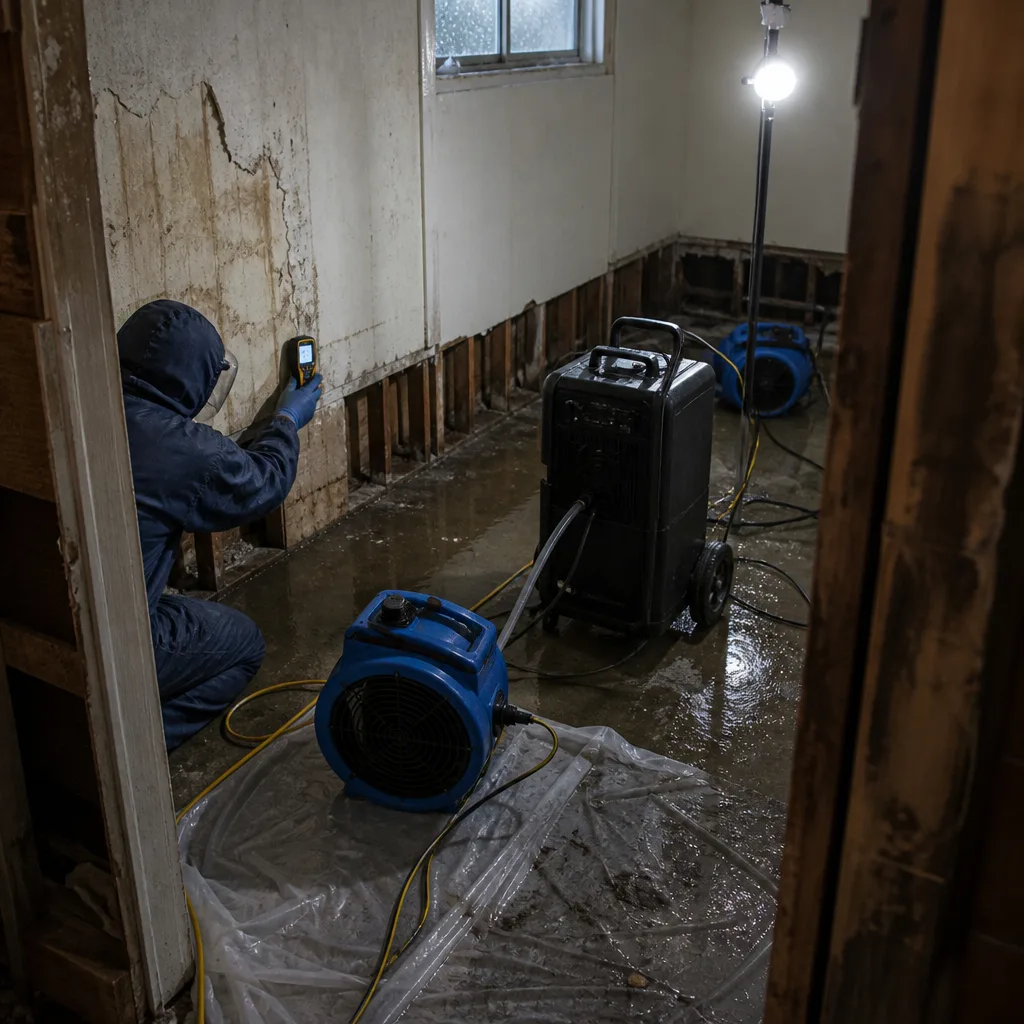 Before
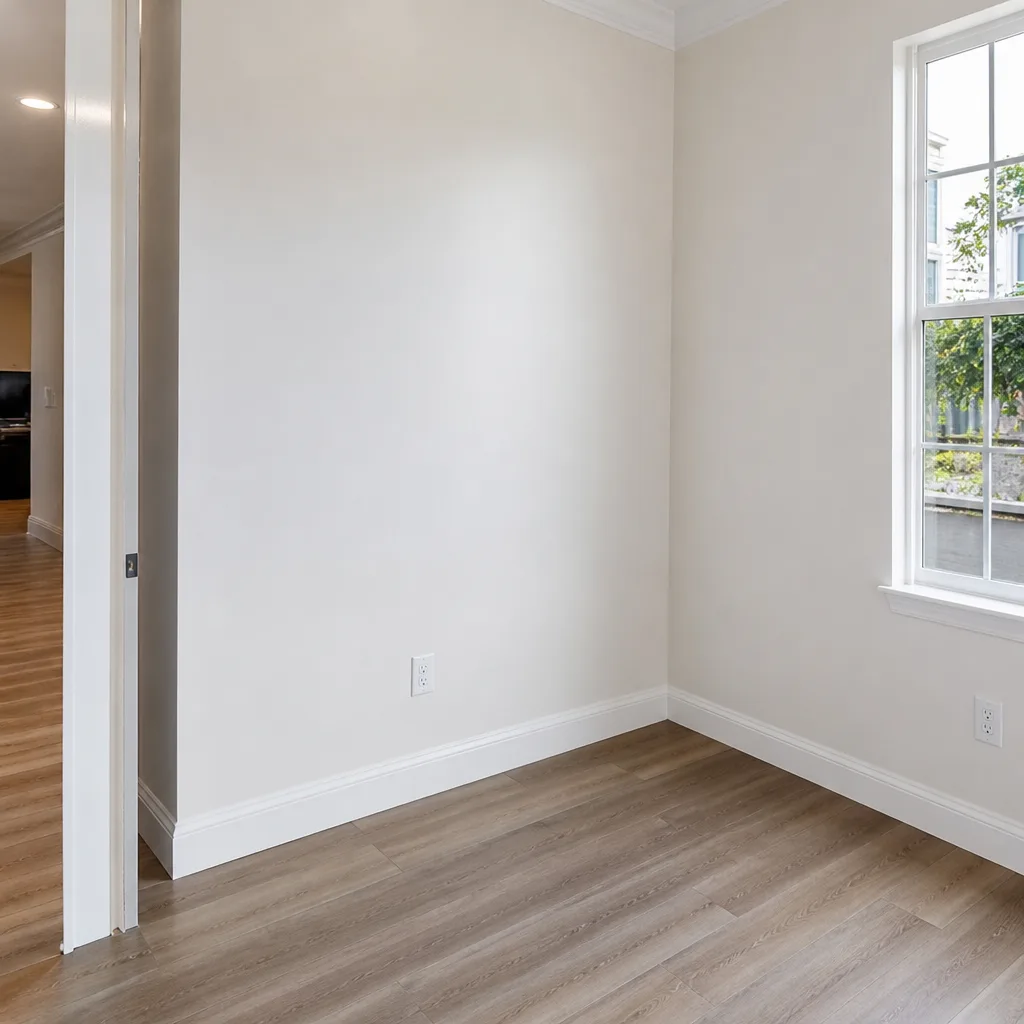 After
After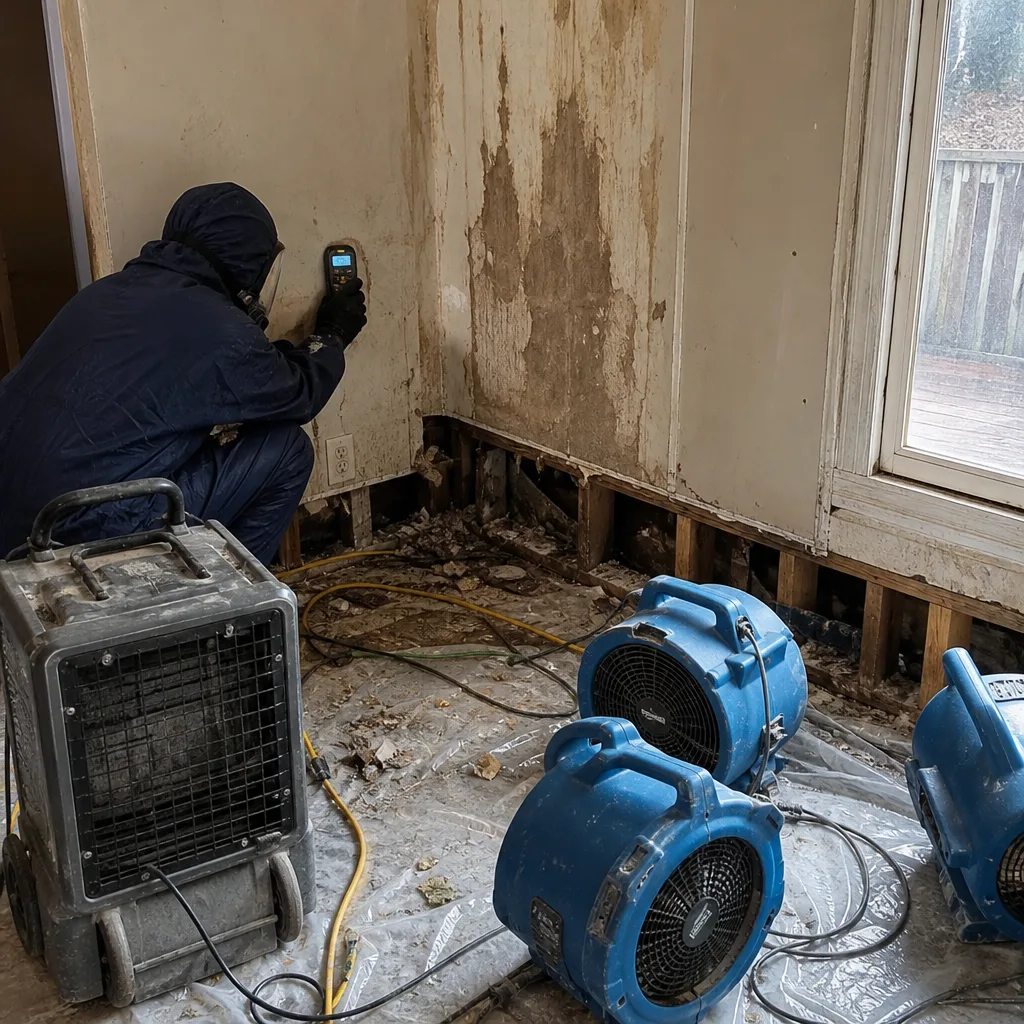 Before
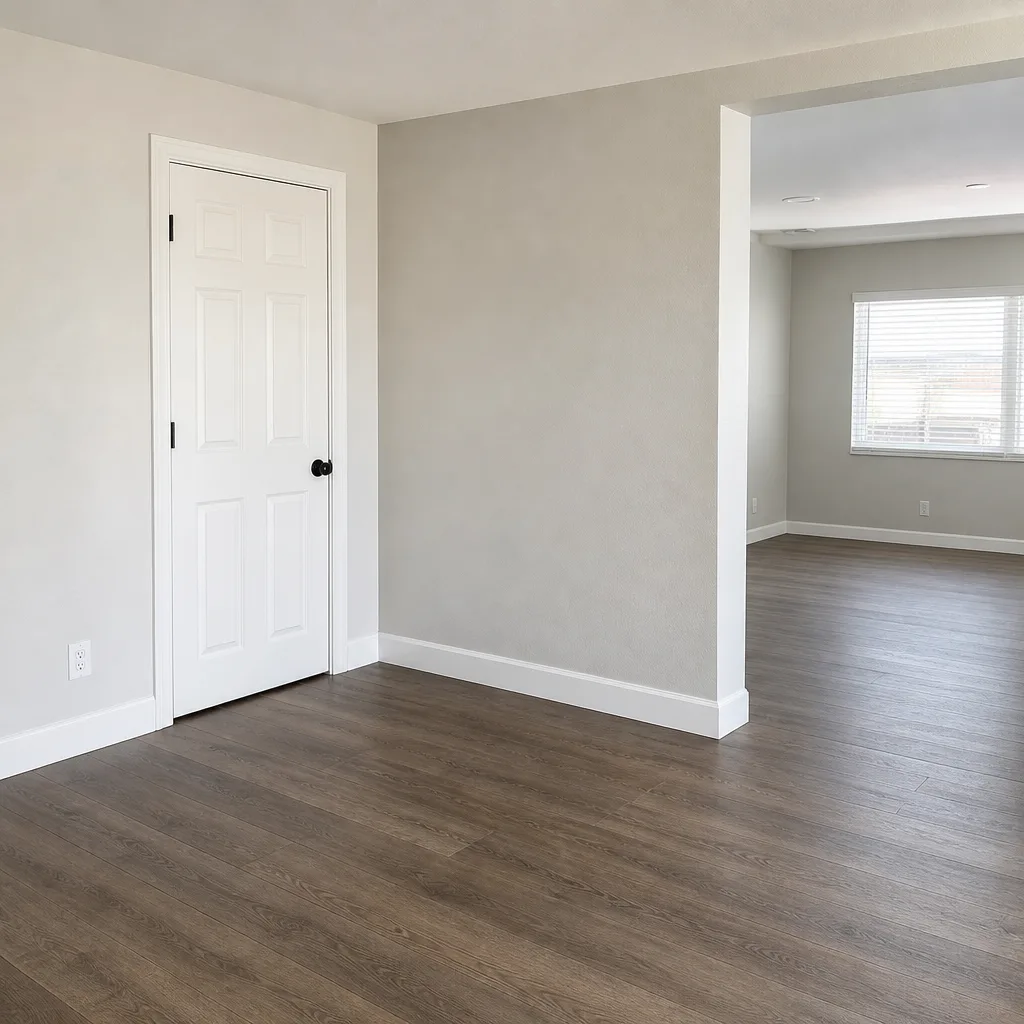 After
After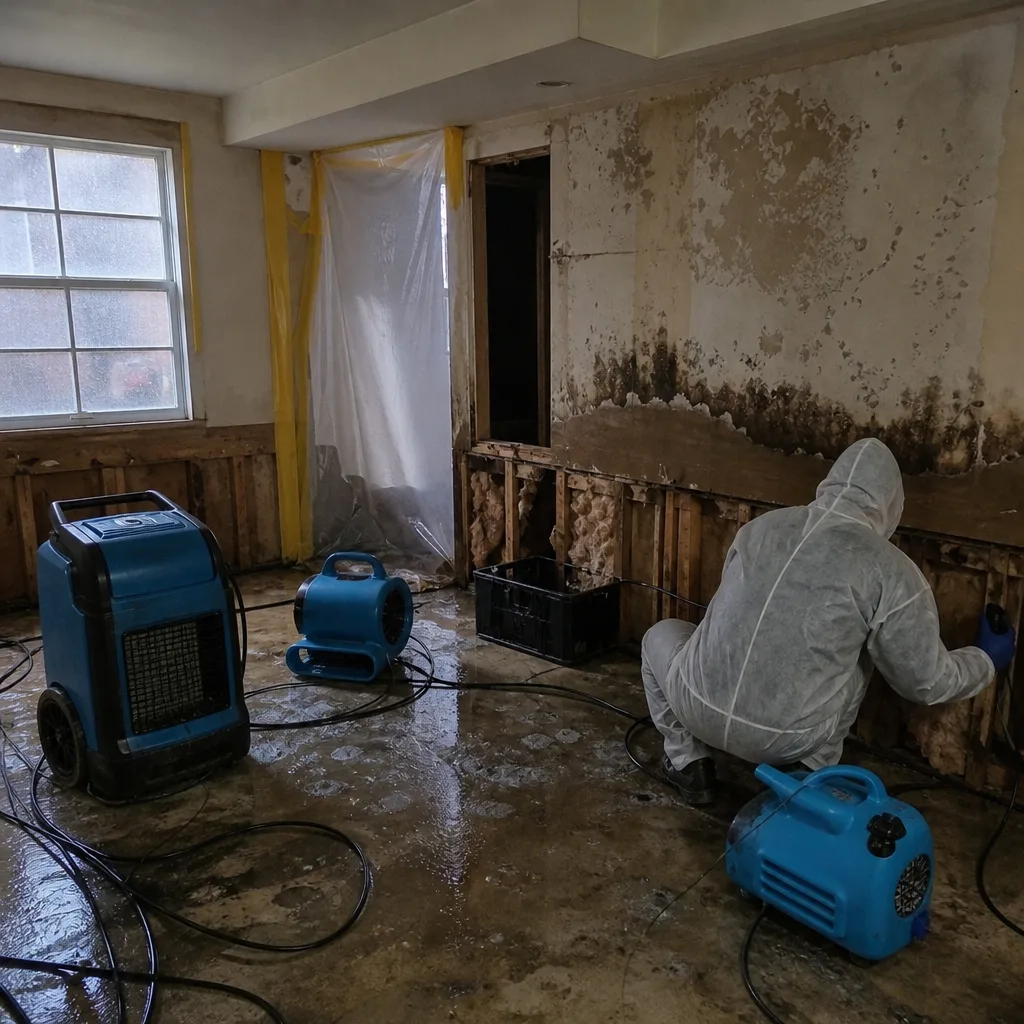 Before
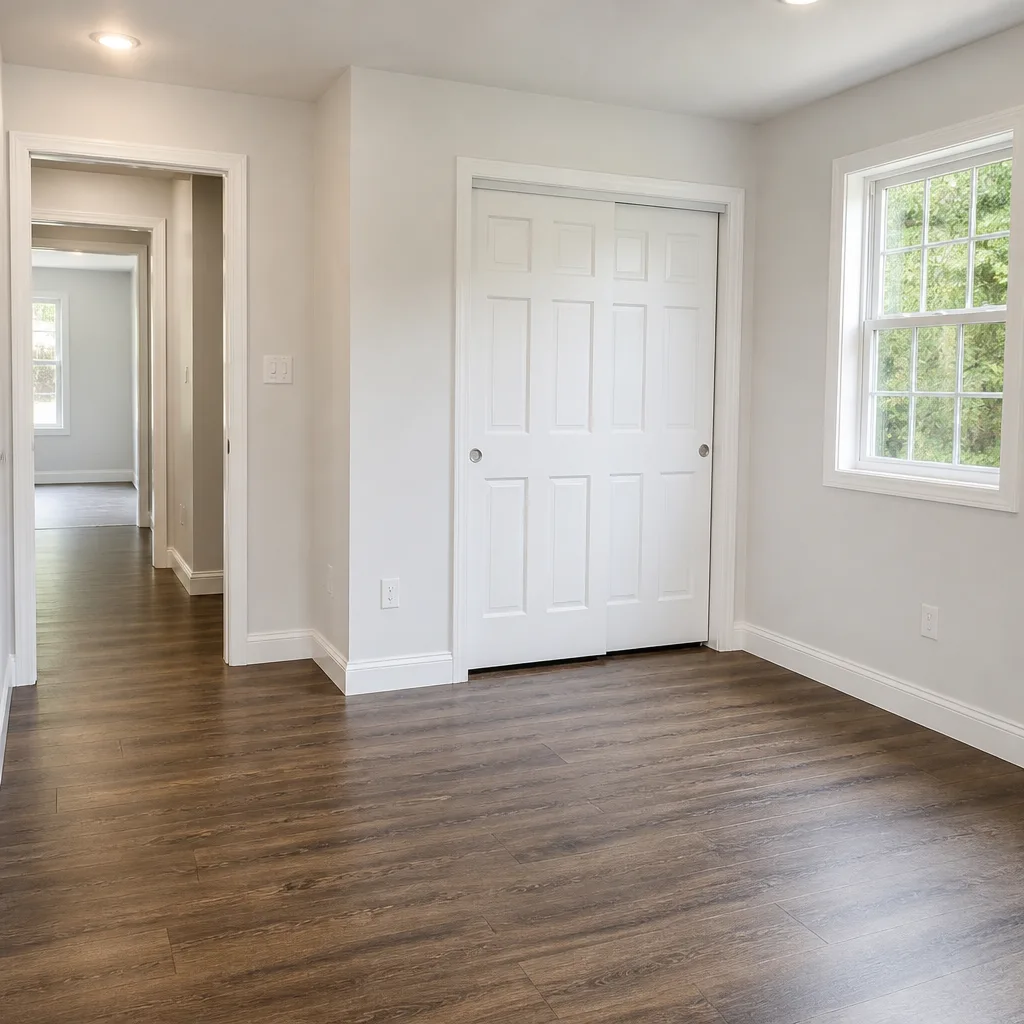 After
AfterFast, Reliable Water Damage Restoration Across Pico Rivera
Water damage in Pico Rivera usually means one of two things: a slab leak you can’t see, or water that ran across a slab-on-grade floor and soaked into drywall before you found it. Both need a local crew that shows up fast and knows what mid-century tract construction does to moisture. We answer live every time you call (940) 466-4354, and we’ll have a background-checked, uniformed technician on the way with a live arrival time you can track on your phone. No phone trees. No four-hour windows.
Blake Sorensen leads our team, and the way we work is simple: a written price before any tool comes off the truck, photo updates by text while the job runs, and a 365-Day Done Right Promise on every repair.
Why Wendell Water Damage Restoration Is Pico Rivera’s Preferred Water Damage Restoration Company
The moisture mapping approach matters more in Pico Rivera than almost anywhere else in the San Gabriel Valley corridor. Most homes here were built slab-on-grade between 1945 and 1965. That changes where water goes. It runs laterally under flooring, wicks up behind baseboards, and hides in wall cavities. A crew that reads only surface moisture will tell you the home is dry when the bottom plates are still saturated.
We dry by the numbers. Psychrometric drying (tracking the air’s moisture level so we know when your home is truly dry, not just surface-dry) drives every job, and our techs log daily readings until we hit dry standard. Pico Rivera homeowners regularly tell us the two things that won them over: a price in writing before work started, and a text with before-and-after photos proving the dry-out actually worked.
When you call, a live person answers. You’ll get a written scope, a written price, and an arrival window measured in minutes, not afternoons. Our crews carry Dri-Eaz, Phoenix, XPOWER, and B-Air equipment, and every job follows IICRC, RIA, and IFA standards.
Water Mitigation in Pico Rivera
Water mitigation in Pico Rivera means stopping active water, extracting what’s already pooled, and getting the structure drying before mold has time to establish, which on a warm slab takes 24 to 48 hours at the outside. Most mitigation jobs here run $1,800 to $4,200 depending on how many rooms are wet and whether water got behind cabinetry or under vinyl plank. The first hour on site determines what gets saved.
Slab-Edge Extraction and Containment
On slab-on-grade construction, water doesn’t soak down into soil the way it does with a basement. It spreads sideways. We run deep-probe moisture meters into the slab and along baseplates to find the true edge of the wet zone before setting equipment. Skipping this step is why some Pico Rivera homes develop musty odors six months after a “successful” dry-out.
Drying Logs and Daily Photo Updates
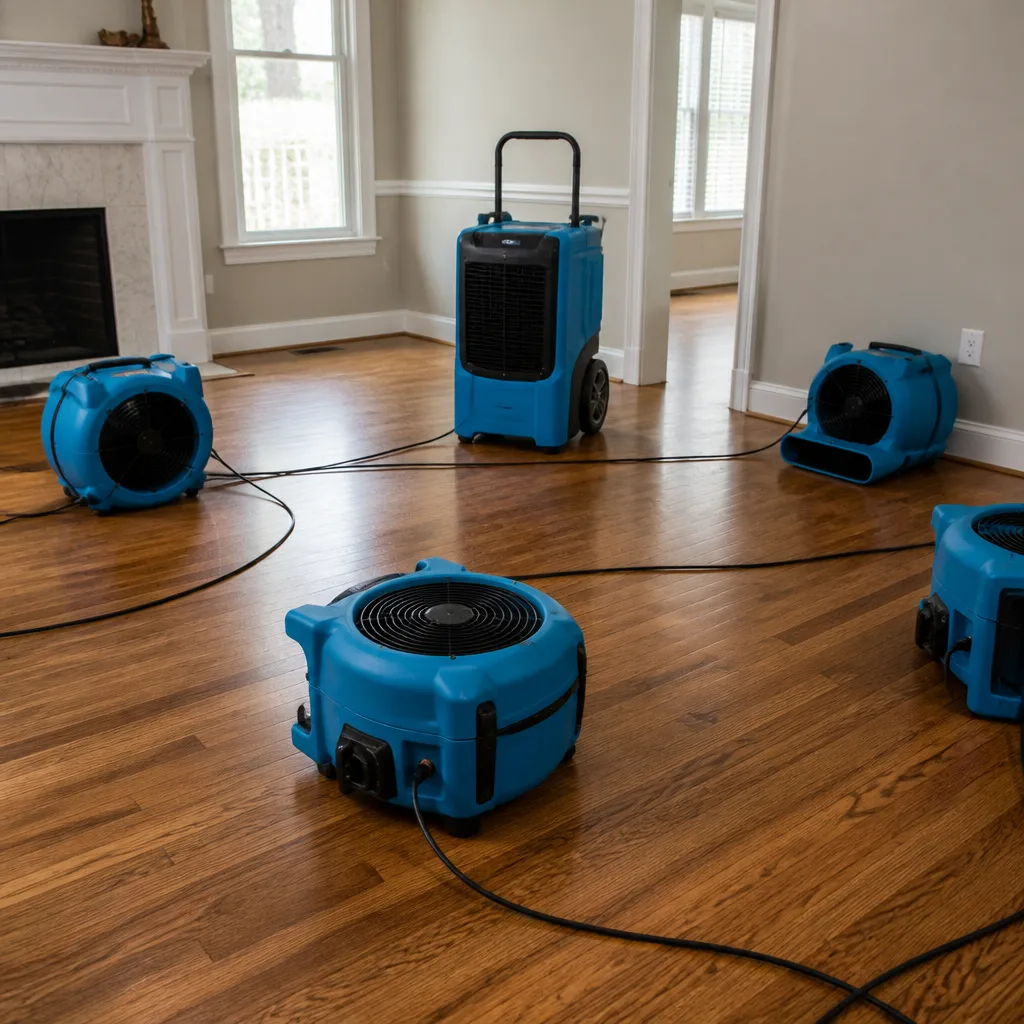
We set Dri-Eaz and Phoenix air movers plus a B-Air dehumidifier, then document the drying curve every day. You get photos by text showing moisture readings trending down. When the numbers hit dry standard, we prove it in writing and close the job.
Flooded Basement in Pico Rivera
Flooded basement calls in Pico Rivera are almost never a true below-grade basement. They’re converted garages, sunken dens, or a step-down family room with a slab floor and no proper vapor barrier. That changes the drying plan. Without containment and antimicrobial treatment, water trapped in a converted garage’s floor assembly will come back as a recurring damp smell. Typical flooded basement work here runs $2,200 to $5,000, with the spread driven by whether finished drywall and insulation are involved.
Converted Garage and Sunken Den Water Removal
We treat these spaces like the slab-edge conditions they are. Extract first, then run moisture mapping across the entire floor plane, not just the visible puddle. These rooms often have original single-pane windows and poor airflow, so we place dehumidification capacity higher than a standard room would need.
When the Water Is Category 2 or 3
If a supply line breaks, that’s Category 1: clean water. If it sat for two days or came from a washing machine drain, it’s Category 2 or 3 and carries contamination. That means antimicrobial treatment after extraction, not just drying. Our crew will explain the classification in plain words and show you the moisture readings that justify the next step.
Trusted Brands We Service in Pico Rivera
We service and deploy equipment from Phoenix, B-Air, and XPOWER on Pico Rivera jobs, and we keep common parts stocked with our Los Angeles dispatch so we’re not waiting on a parts run when your home needs a dehumidifier swap mid-dry-out. Because much of Pico Rivera’s housing stock shares the same mid-century construction patterns, we see the same failure modes on Mines Avenue as near Rivera Park or the San Gabriel Riverbed, which means faster diagnosis and faster drying. If you’re already running a homeowner-grade dehumidifier and it’s not moving the needle, we’ll tell you straight whether it’s helping or just spinning electricity.
Common Water Damage Restoration Problems We See in Pico Rivera Homes
- Lateral water migration on slab floors. Mid-century slabs have no below-grade drainage, so a leak near the kitchen travels under vinyl or laminate and saturates baseplates two rooms away. Surface-only moisture checks miss this entirely.
- Original copper and galvanized supply lines. Homes built in the 1950s and 60s around Pico Rivera often still have their original pipes. Pinhole leaks hide behind walls and present as bubbling paint or a musty smell long before a puddle shows up.
- No vapor barrier in converted garage spaces. When a garage is finished into living space without the slab treatment a true living area needs, any water event leaves a lingering damp that standard drying won’t fix without containment and antimicrobial work.
- Surface-dry flooring that’s still wet underneath. Vinyl plank and laminate trap moisture against the slab for weeks. We’ve had Pico Rivera homeowners call us after another company declared the job done, and our moisture probes found the slab still at 90% relative humidity under the floor.
Pricing for Water Damage Restoration in Pico Rivera, CA
Here’s what Pico Rivera homeowners can expect to pay. Emergency water extraction runs $900 to $1,800. Full structural drying with equipment monitoring runs $1,800 to $4,200 for a multi-room event. Flooded converted garage or sunken den work typically lands between $2,200 and $5,000. Burst pipe restoration, including drywall repair and baseboard replacement, adds $600 to $1,500 depending on linear feet opened. Every quote is written before work starts, and the number on the screen is the number you pay. There’s no change-order surprise in hour three. Call (940) 466-4354 for a free estimate with exact numbers for your situation.
We Also Serve Cities Near Pico Rivera
Our crews cover Pico Rivera and the surrounding communities, including Montebello, Santa Fe Springs, Whittier, and Bell Gardens. If you’re just over the city line, you’ll get the same live-answer dispatch, written pricing, and tracked arrival times. See our Water Damage Restoration in Pico Rivera coverage for details on response times by neighborhood.
Serving Pico Rivera, CA - Our Local Coverage Area
We’re based in the Pico Rivera area and know this community well. Use the map below to see our service coverage - if you’re nearby, we can almost certainly help.
FAQs About Water Damage Restoration in Pico Rivera
We can typically have a technician on site in Pico Rivera within 60 to 90 minutes of your call. Our Los Angeles-based dispatch coordinates crews locally, so you’re not waiting on someone coming from the other side of the county. Call (940) 466-4354 and you’ll speak with a live person who gives you an arrival time you can track on your phone.
Almost never. Pico Rivera’s housing stock is overwhelmingly slab-on-grade mid-century tract construction, so “flooded basement” calls are usually converted garages, sunken dens, or step-down family rooms. We treat those spaces differently from a true below-grade basement because the slab has no drainage path, which means lateral moisture mapping and containment matter more than sump pumps.
Category 1 is clean water from a supply line or faucet. Category 2 carries some contamination, like washing machine overflow or dishwasher discharge. Category 3 is grossly contaminated water from sewage backups or exterior flooding. The category determines whether we dry, disinfect, or remove materials. We’ll show you the category determination in writing, not just tell you over your shoulder while the blower runs.
We take daily moisture readings with deep-probe meters on the slab, baseplates, and inside wall cavities, and we compare them to the dry standard for each material. In Pico Rivera’s slab homes, we also check the underside of flooring materials because laminate and vinyl trap moisture against the concrete. You get the drying log photos by text, so you watch the numbers fall day by day. When they hit dry standard, that’s the call. Not before.
It depends on the material and how long it sat wet, but we’re biased toward saving what can actually be saved. Vinyl plank over slab often traps water underneath and needs pulling, while hardwood can sometimes be dried in place if caught early. Drywall usually gets cut at the flood line and replaced. We write the scope before work starts so you know exactly what’s coming out and what’s staying. Call (940) 466-4354 for an honest read, not a gut-it-all answer.
Written by Blake Sorensen, Owner at Wendell Water Damage Restoration, serving Pico Rivera and the surrounding communities with transparent pricing, live dispatch, and written guarantees on every job.