
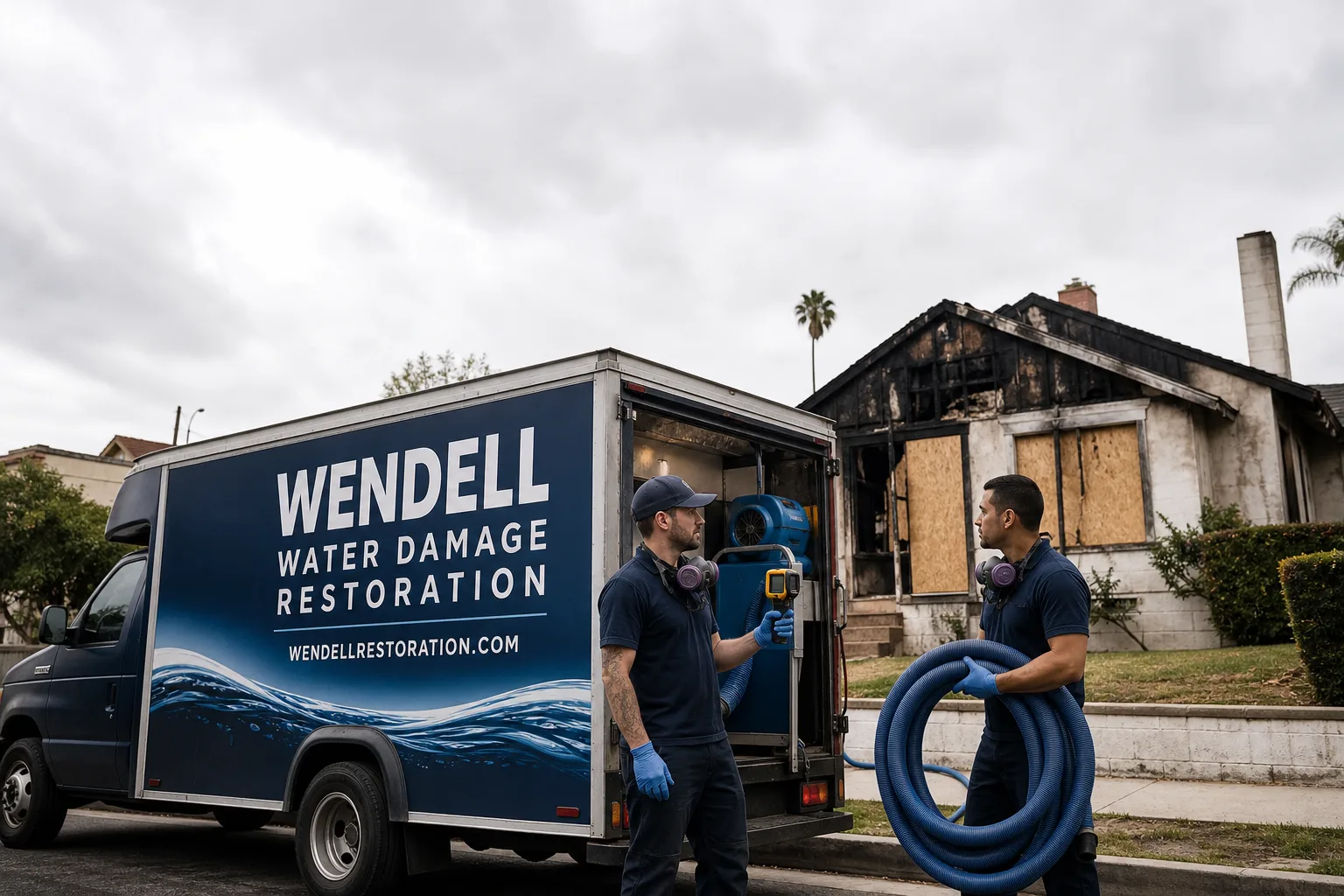
Free visual inspection and a written scope of work before any mitigation begins - photos, moisture readings, and drying logs go in your claim file
The scope we write is the scope we bill. Anything new gets shown to you, in writing, before we touch it.
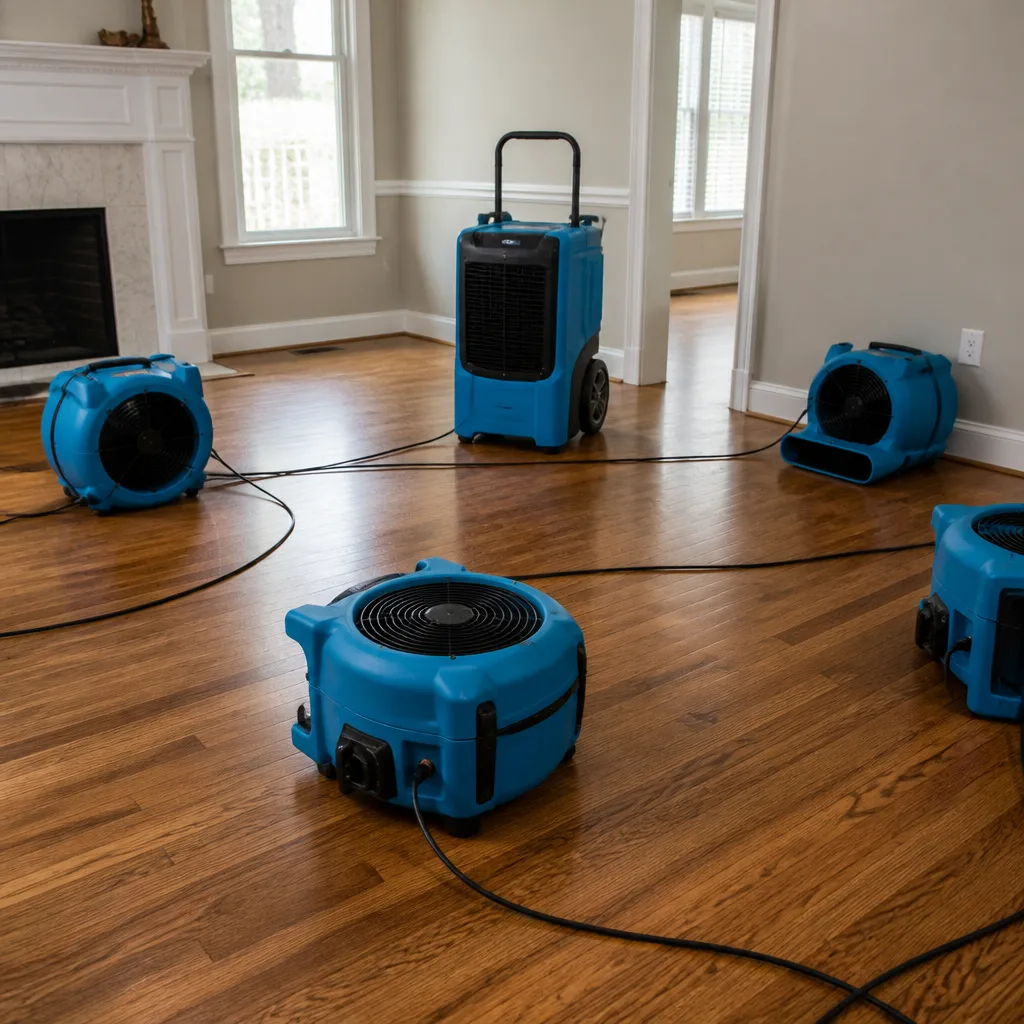
 Before
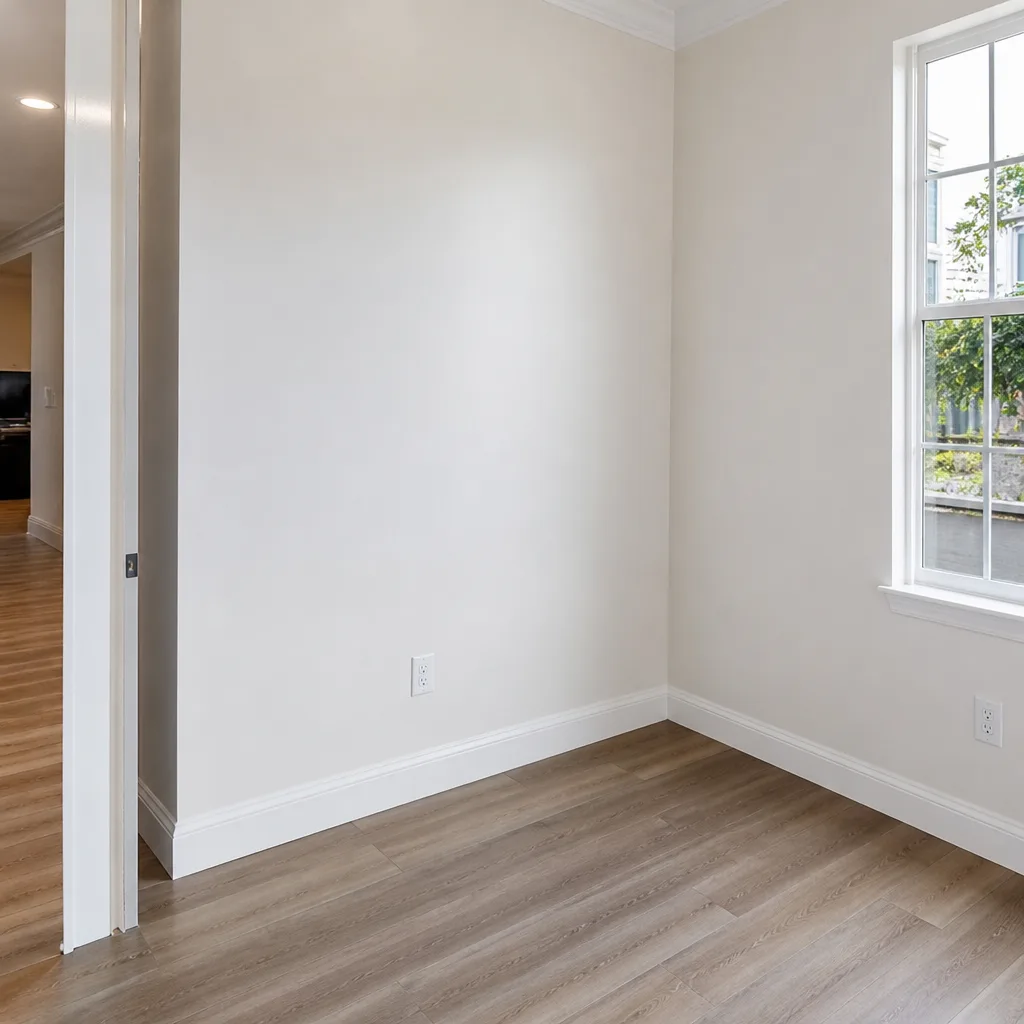 After
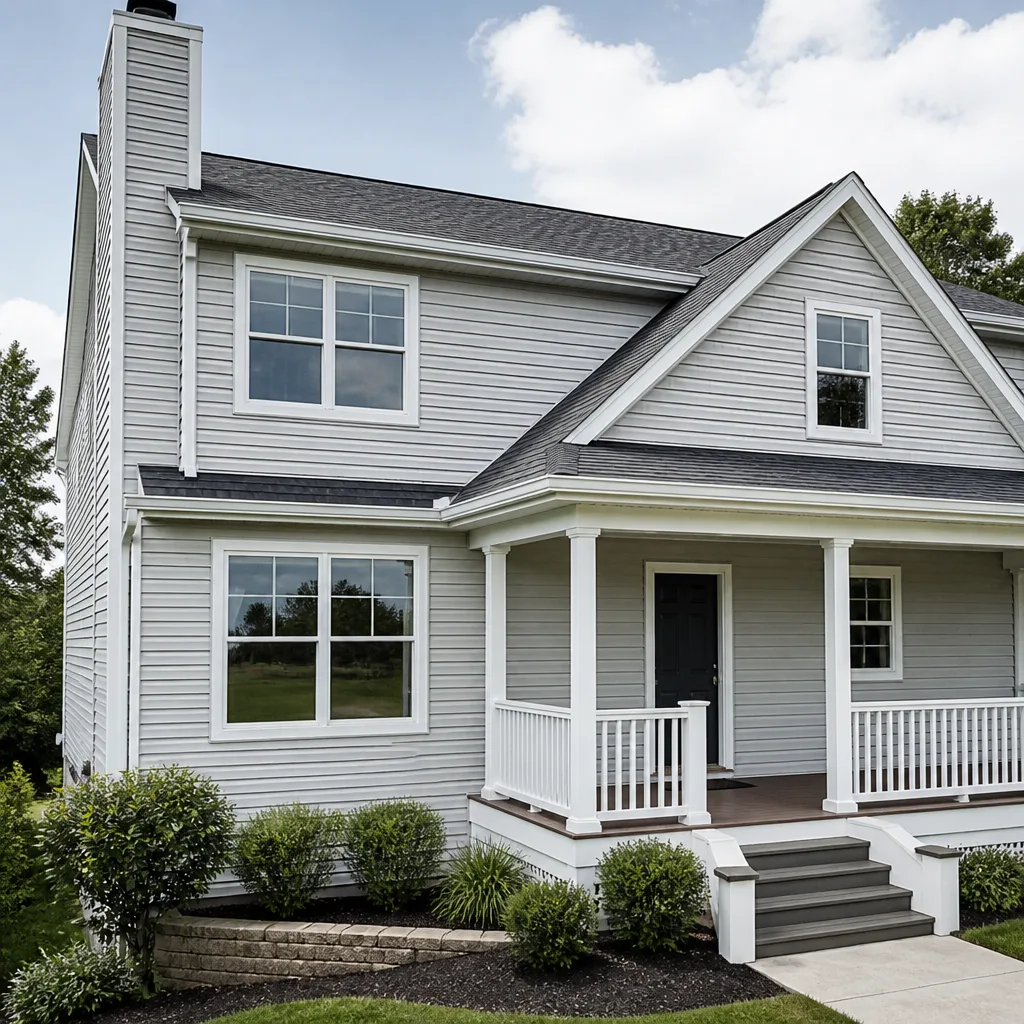
After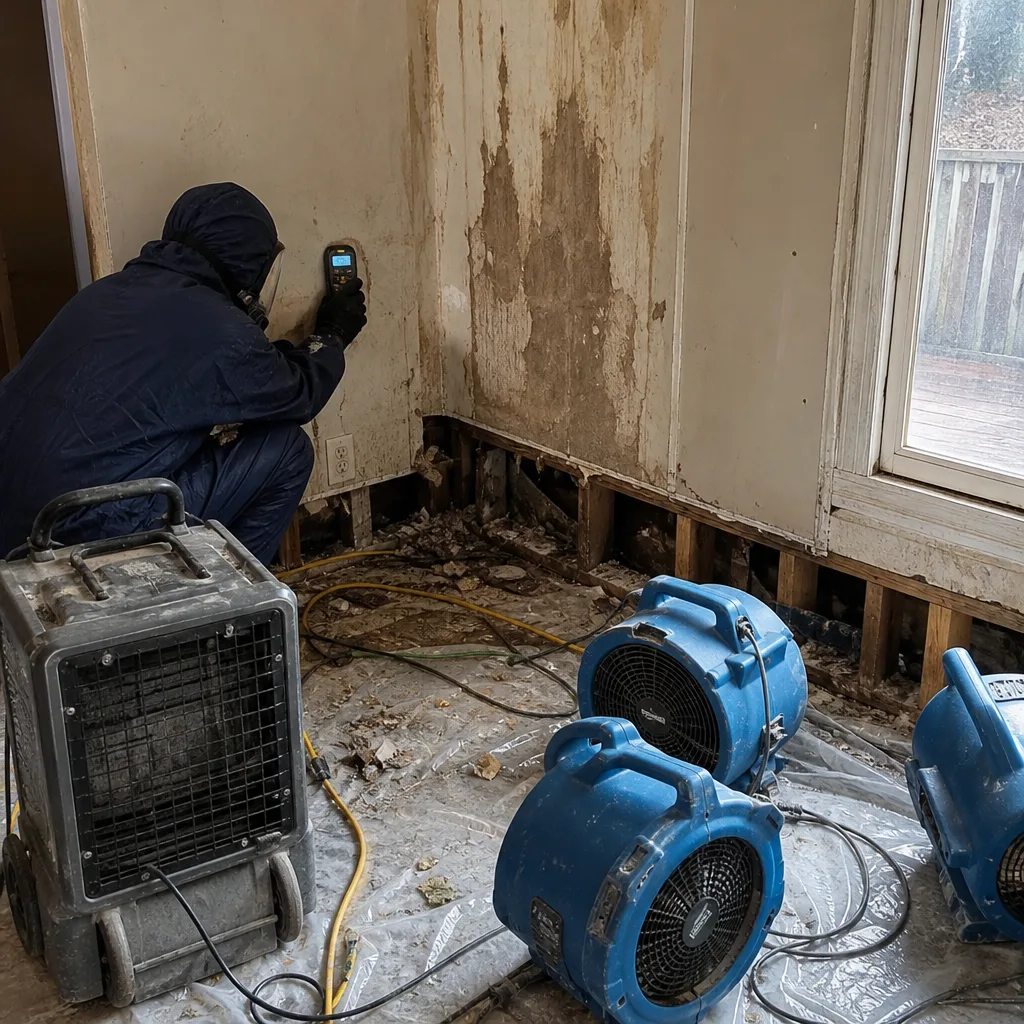 Before
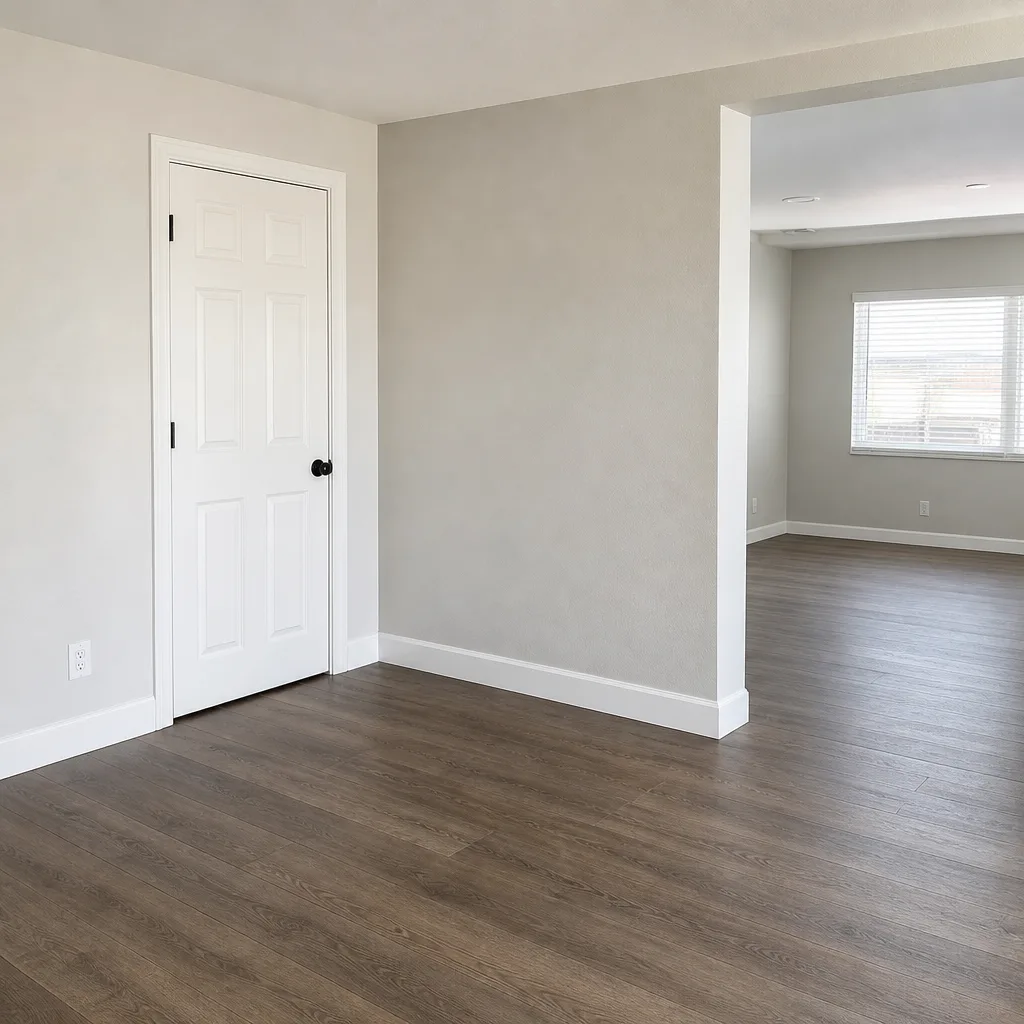 After
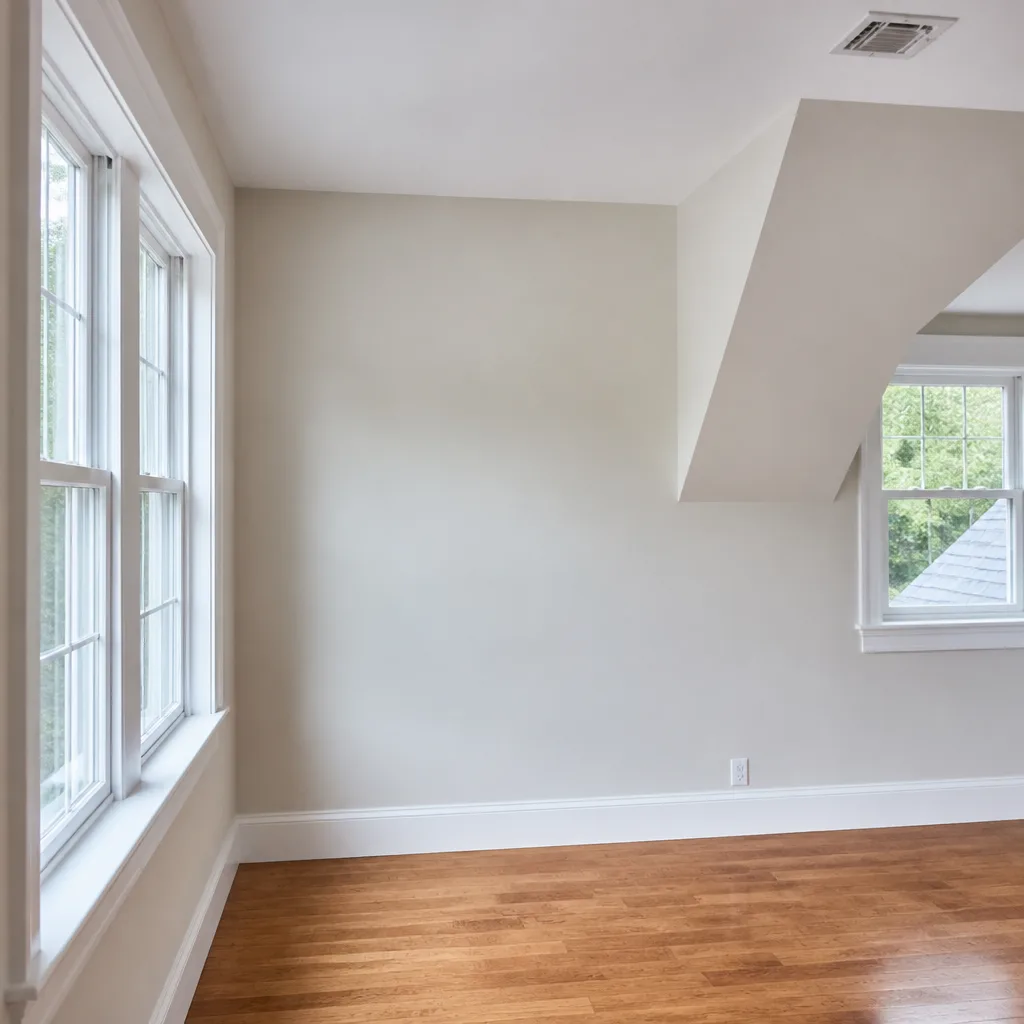
After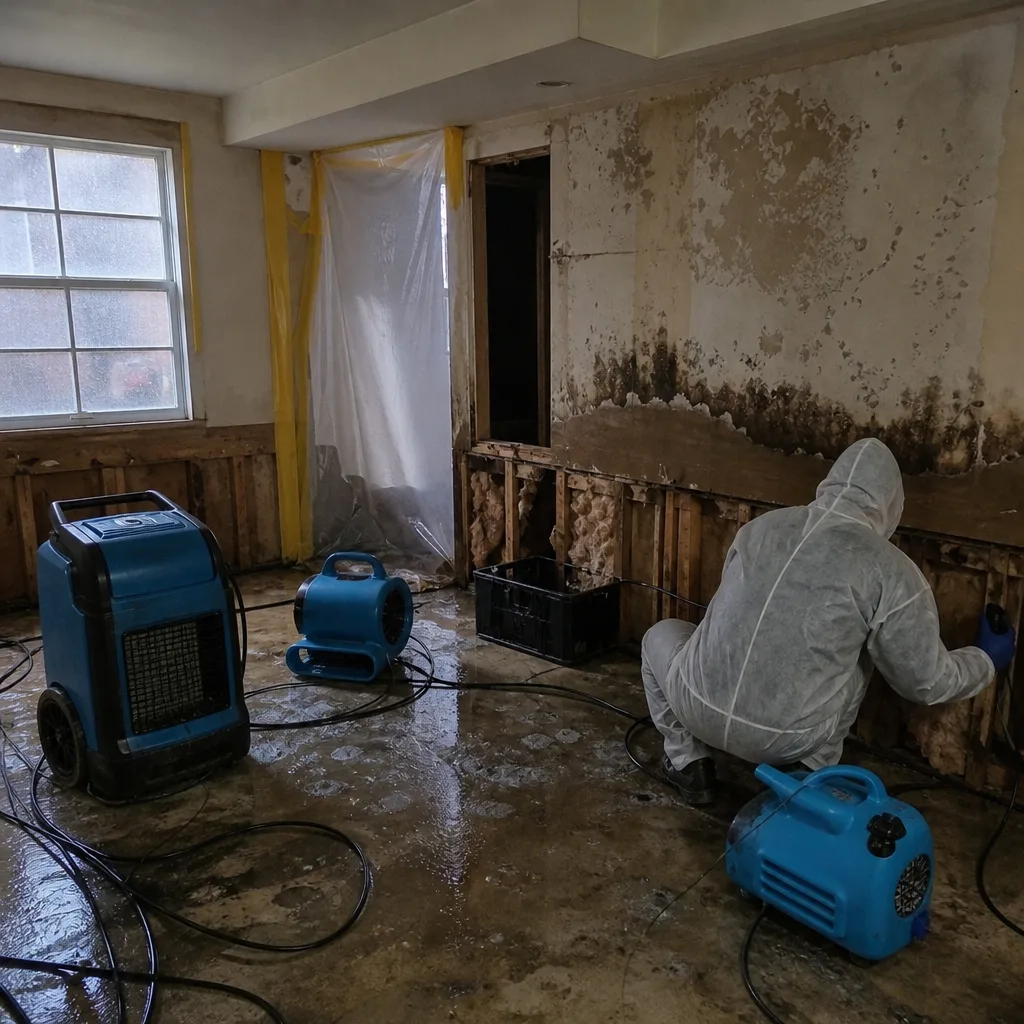 Before
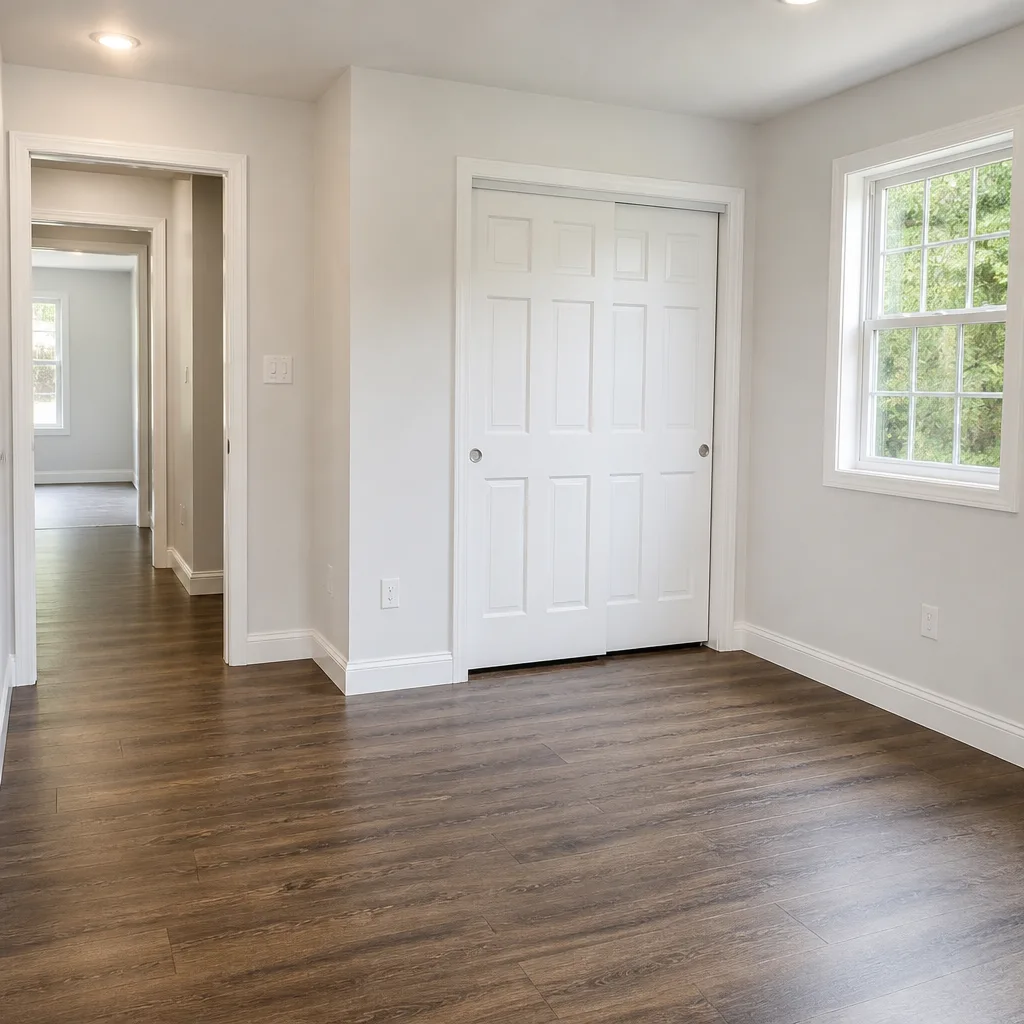 After
AfterFast, Reliable Mold Remediation Across East New York
Mold remediation in East New York typically costs $1,800 – $4,500 for a contained removal job in a finished basement, and we can usually have a technician at your door within 90 minutes of your call. You don’t get a vague window or a callback queue: you get a live person on the phone, a written price before we touch a single tool, and before-and-after photos texted to you as the job progresses. If you’re smelling that musty, wet-sock odor near a baseboard or seeing dark staining crawl up a wall cavity in a wood-frame rowhouse, call (940) 466-4354 right now. We’ve worked in this neighborhood long enough to know that East New York’s older homes hide mold differently than newer construction, and that knowledge changes how we find it and what we remove.
Why Wendell Water Damage Restoration Is East New York’s Preferred Mold Remediation Company
East New York homeowners call us because we answer, plain and simple. A live person picks up at (940) 466-4354, any hour, and that person can schedule a crew for your block, whether you’re near Broadway Junction, off Linden Boulevard, or tucked into a side street in Cypress Hills. We run every job under IICRC, RIA, and IFA standards, with the same professional drying equipment used on large commercial loss sites: Dri-Eaz dehumidifiers, Phoenix air movers, and XPOWER units for tight crawl spaces. Blake Sorensen leads our team, and under his direction we’ve built a local reputation for showing up when we say we will, with background-checked, uniformed technicians you can track in real time. The Relay Visibility Guarantee means you always know who is coming, when they’ll be there, and exactly what it costs, in writing, before work starts.
We know East New York’s housing quirks because we see them every week. Early-20th-century wood-frame rowhouses with finished basements and above-grade bathrooms are the norm here, and mold in those homes often blooms behind the drywall, along rim joists, and inside wall cavities where you can’t see it. You smell it before you see it. That’s why we don’t just treat the visible stain; we moisture-map the room and the cavity behind it. And if the repair ever fails within 365 days, our Done Right Promise means we make it right, in writing, every single time.
Mold Removal Service in East New York
A mold removal service in East New York means cutting out the affected material, not painting over it. When mold has penetrated drywall, baseboards, or the framing in a finished basement, the correct fix is physical removal of the wet, contaminated substrate, followed by antimicrobial treatment of what remains and drying to pre-loss condition. Homeowners who bleach mold on a rim joist in a rowhouse basement are masking the problem; the wood is still wet behind the stain, and spores return in weeks. We remove the material, dry what stays, and show you moisture readings before we close the wall back up. A contained removal in a single East New York basement room typically runs $1,800 – $3,200 depending on how far up the wall the damage goes and whether ceiling tile or dropped-ceiling cavities are involved.
Containment and Air Handling During Removal
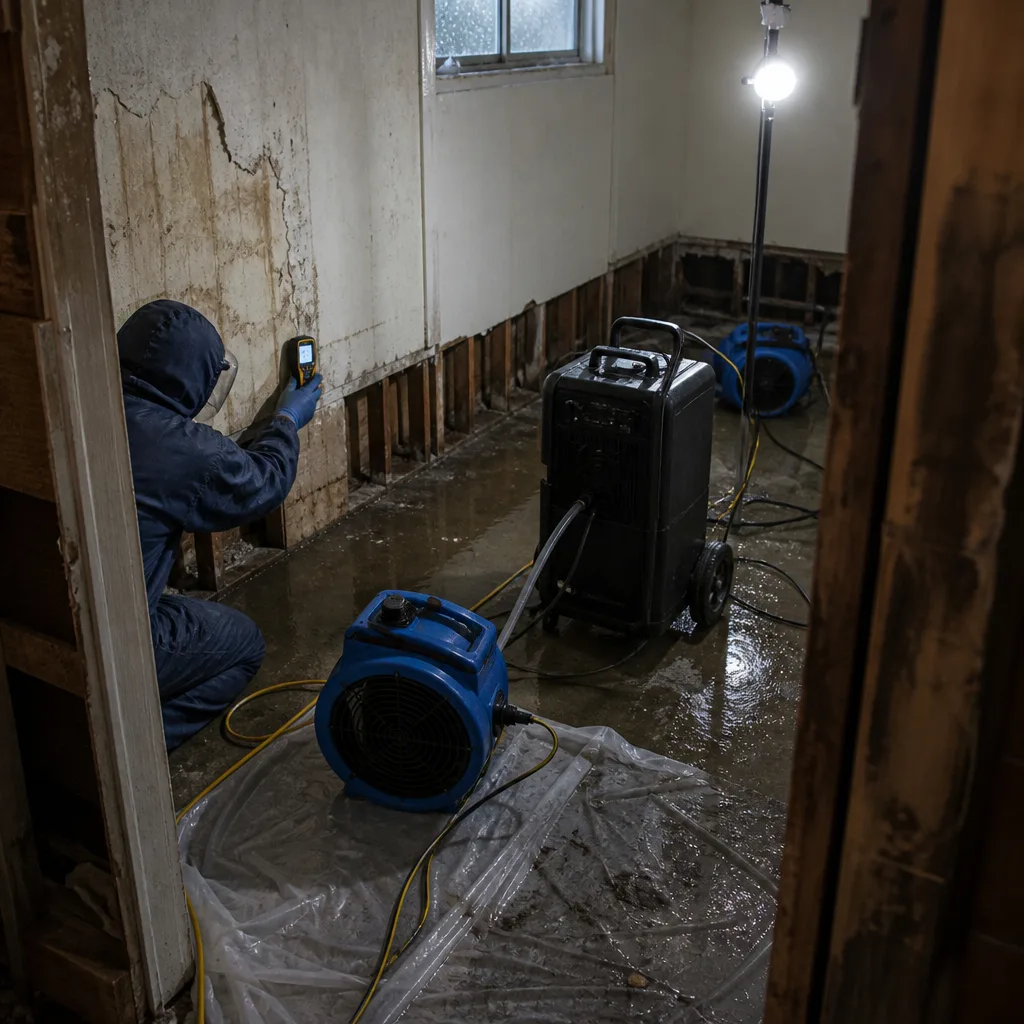
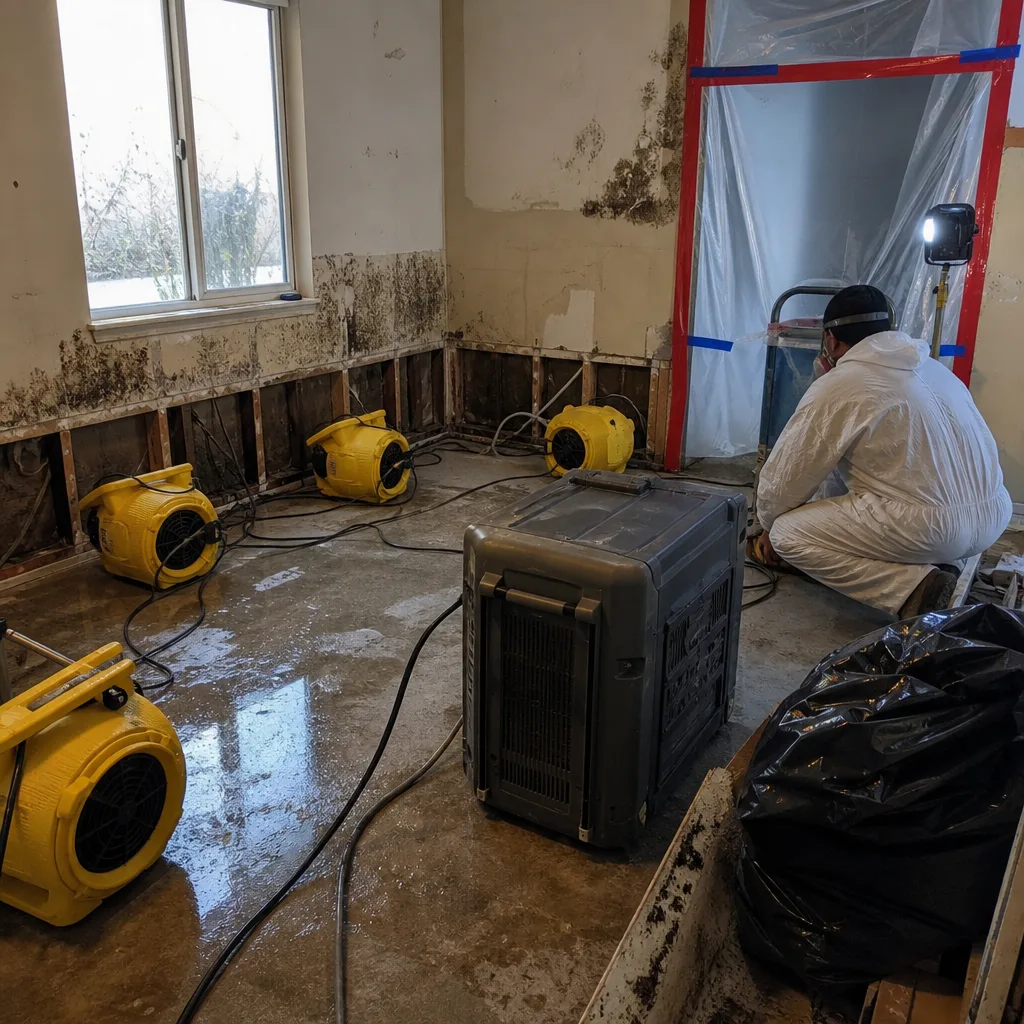
We set negative-air containment around the affected room in East New York basements before we pull any material, so spores don’t migrate into the living space or the adjacent unit in a multi-family rowhouse. HEPA air scrubbers run throughout the job. We log moisture readings daily, and we don’t take the containment down until the framing reads dry, not just the surface.
What Gets Removed and What Gets Saved
Baseboards, wet drywall, and insulation in the wet zone typically come out. Framing that reads below 16% moisture content after drying can usually stay. We’ll show you the moisture-map numbers on our pin and thermal meters, explain exactly what we’re cutting and why, and put that scope in writing before any demolition starts.
Mold Remediation Services in East New York
Mold remediation services in East New York cover the full job: finding where the water came from, mapping how far the moisture moved, removing contaminated material, treating the cavity, and drying everything to a standard that won’t feed regrowth. In this neighborhood’s wood-frame semis and attached rowhouses, that almost always means checking the party wall and the floor system above the basement, because water doesn’t respect property lines. A full remediation of a finished basement with cavity drying and rebuild-ready surfaces in East New York runs $2,500 – $4,500, with crawl space or attic involvement pushing it higher. Every job includes a written price before work starts, a written 365-Day Done Right Promise, and a free second visit if the repair fails.
Moisture Mapping Before Anything Else
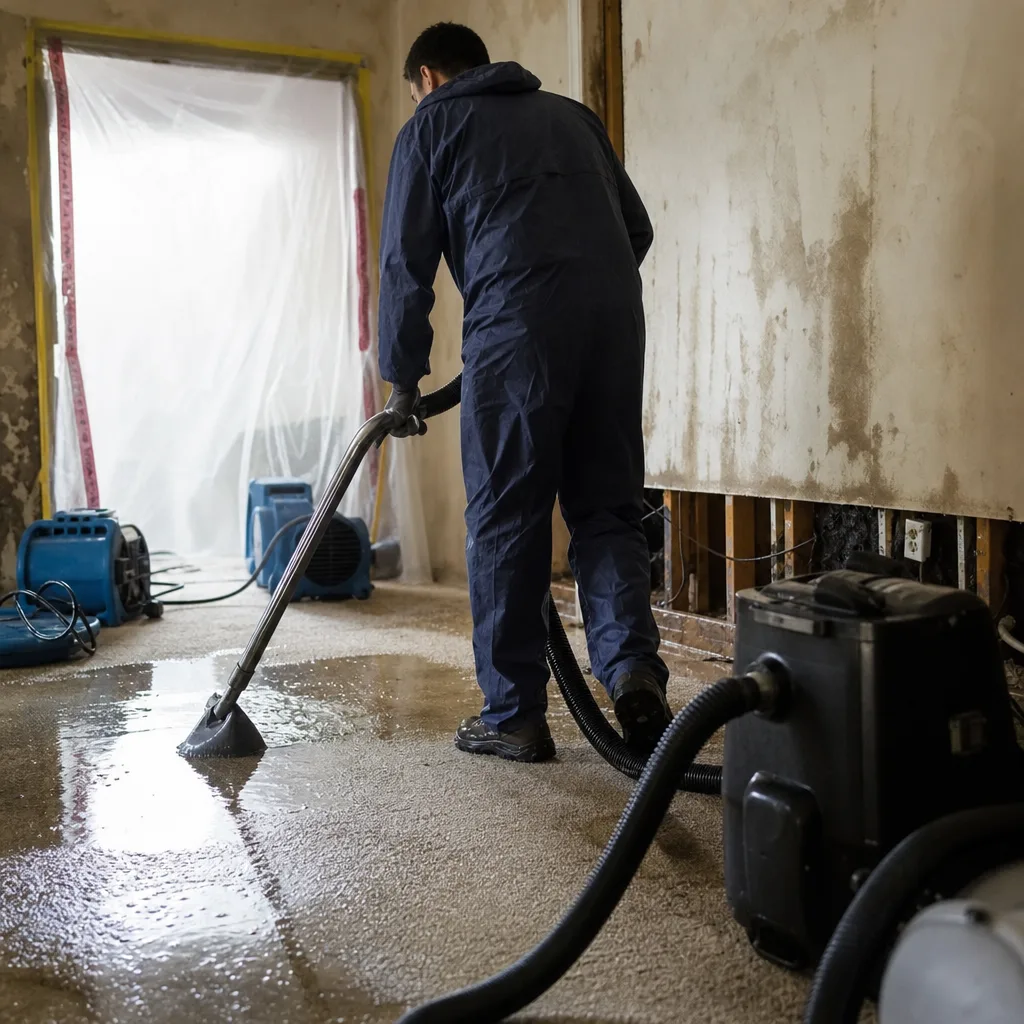
We don’t guess. On an East New York job, our techs map the affected area with thermal imaging and pin meters to see how far water moved through the framing, even when the drywall looks dry. In rowhouses, we check the rim joist and the base of the wall, the two places moisture hides when a second-floor line lets go and runs down inside the wall. That map drives the scope and the price, so you know exactly what you’re paying for before demolition starts.
After the Job: Verification and the Written Guarantee
When dry, we run a final moisture reading and show you the numbers, then text you before-and-after photos. You get a digital invoice you can pay from a link, and the number on the screen is the number you pay. The 365-Day Done Right Promise stays in writing on every East New York job, and if the repair fails within a year, we come back free.
What happens when you call
- 1
A real person answersNo phone trees - you reach a local pro.
- 2
You get an upfront price rangeHonest numbers before anyone is dispatched.
- 3
A background-checked tech heads outLicensed & insured, dispatched right away.
- 4
You approve before work beginsNothing starts until you say go.
Trusted Brands We Service in East New York
We run IFA and IICRC-standard protocols on every East New York job using equipment from Dri-Eaz, Phoenix, and XPOWER. Dehumidification capacity matters on this neighborhood’s early-1900s wood-frame construction, because framing that’s been wet for a week needs commercial-grade low-grain refrigerant drying, not a rental unit from a hardware store. We stock the filters, antimicrobial treatments, and HEPA units local to our New York City office, so we’re not waiting on a parts order when your East New York basement needs containment and air scrubbers same day.
Common Mold Remediation Problems We See in East New York Homes
- Paint-over jobs on basement framing. A homeowner or handyman bleaches and paints the dark stain on a rim joist or floor beam, and the mold comes back in six weeks because the wood was never dried to pre-loss condition. The wood behind that paint is still holding moisture.
- Landlords skipping moisture mapping in adjacent units. In a rowhouse, a Category 2 water loss in one apartment feeds mold in the unit next door through the shared wall cavity. If you only remediate the unit with the leak, the neighbor’s musty smell comes back and the spores keep moving.
- Finished-basement wall cavities left untouched. A crew dries the visible room but never checks the base of the wall or the dropped ceiling, so the moisture readings at the bottom plate stay high. Mold rebounds after the equipment leaves, and the whole job has to be redone.
- Supply-line leaks running down interior walls. East New York’s older plumbing routes often run inside wall cavities between floors, so a burst line on the second floor wets the first-floor rim joist and the basement before anyone notices. By the time the drywall swells, the cavity behind it has been wet for days.
Pricing for Mold Remediation in East New York, NY
Here’s the honest part: containment and removal of mold in a single finished-basement room in East New York runs $1,800 – $3,200. A full finished-basement remediation with cavity drying, rim joist treatment, and rebuild-ready surfaces lands at $2,500 – $4,500. Crawl space treatment adds $800 – $1,500 depending on access and square footage. What moves the number: how far the moisture traveled, whether the party wall or dropped ceiling is involved, and how many rooms need containment. Every quote is free, and it’s in writing before work starts. Call (940) 466-4354 and we’ll walk you through the scope on the phone before we send anyone out.
We Also Serve Cities Near East New York
Our crews cover more than just East New York. We run the same Mold Remediation protocols in Brooklyn, Queens, Manhattan, and The Bronx, with the same written pricing and 365-Day Done Right Promise. If you’re in a neighboring borough or a street away in East New York, call (940) 466-4354 and we’ll get a technician routed to you fast.
Serving East New York, NY - Our Local Coverage Area
We’re based in the East New York area and know this community well. Use the map below to see our service coverage - if you’re nearby, we can almost certainly help.
FAQs About Mold Remediation in East New York
Mold can start colonizing wet drywall and wood within 24 to 48 hours in an East New York basement, especially in summer when the humidity sits high. If the leak hit a finished wall cavity or ran behind a baseboard, the clock is shorter because there’s no airflow to slow the growth. Call (940) 466-4354 the moment you see water; the sooner extraction and drying start, the less material we have to remove and the lower the final cost.
Yes, usually. We use thermal imaging to find cooler, wetter areas inside the wall and pin meters to take moisture readings at the base of the cavity and along the rim joist. On East New York rowhouses, a baseboard that’s swollen, a persistent musty smell, or dark staining at the floor line tells us the cavity behind the wall is involved, even before we open it. We’ll show you the readings and the scope before cutting.
Most likely the wall cavities or the dropped ceiling never actually dried. If a crew dries the visible room but leaves the base of the wall at 20% moisture, mold rebounds once the equipment is gone. In Cypress Hills rowhouses with finished basements, the rim joist and bottom plate hold water for weeks after a supply-line leak, and that’s where the smell comes back from. We moisture-map every job and don’t stop drying until the numbers read pre-loss condition, not just surface-dry.
Yes, that’s most of what we do in East New York. Wood-frame construction with shared walls means water moves through floor systems and party-wall cavities, so we check the framing behind the drywall, not just the drywall itself. We’ve pulled wet insulation from cavities in early-1900s semis where the mold was blooming on the back side of the wall, invisible from the room. This housing stock needs a full moisture map, and that’s what we deliver.
Stop the water if the source is accessible, shut off the supply valve, and don’t touch the mold. Don’t bleach it, don’t paint it, don’t run a fan across it, because you’ll spread spores through the space. If it’s a rental, document it with photos and tell the landlord, but don’t wait on them; in a rowhouse, mold in your unit can feed into the one next door. Call (940) 466-4354 and we’ll walk you through the next steps on the phone, then send a technician with a live arrival time.
The Local Reality: Mold Hides in East New York’s Walls
Much of East New York’s housing stock is early-20th-century wood-frame rowhouses and semis with finished basements and above-grade bathrooms, and that changes everything about how mold behaves here. In a newer building, you often see mold on open ceiling tile or drywall where water pooled. In these older homes, the water travels inside wall cavities and along rim joists, behind finished surfaces, so mold is frequently invisible until the odor gives it away or a baseboard starts to swell. A homeowner on Miller Avenue in Cypress Hills called us after a second-floor supply line let go overnight and ran down into the finished basement. We did water extraction, moisture mapping with thermal and pin meters across the first-floor rim joist, then set containment and air movers plus a Dri-Eaz dehumidification setup, logging moisture readings daily. The drywall was Category 2 from the start, so we removed the wet base and treated the framing with antimicrobial treatment before drying. No visible mold ever reached the living space, because we got there before it could. That’s the difference in this neighborhood: you’re not chasing a stain on a wall. You’re chasing water that’s already moved through the structure.
If you own or rent in East New York and you smell something off in the basement or behind a wall, don’t wait for the stain to appear. Call (940) 466-4354. We’ll give you a written price before any work starts, a live arrival time, and a technician who knows exactly what these old rowhouses do when they get wet.
Written by Blake Sorensen, Owner at Wendell Water Damage Restoration, serving East New York.