
Injectidry Water Damage Restoration in Los Angeles: A Homeowner’s Guide
Injectidry is a panel-based drying system that forces air into wall cavities and under subfloors without cutting into drywall or pulling up flooring. In Los Angeles, where tile bathrooms, hardwood floors, and plaster walls are common in older homes, that’s often the difference between a three-day restoration and a three-week rebuild. If you’ve got water trapped where a fan can’t reach it, call (940) 466-4354 and we’ll tell you whether Injectidry is the right call before you spend a dime.
Why Day Two Is the Most Expensive Day of a Water Damage Job
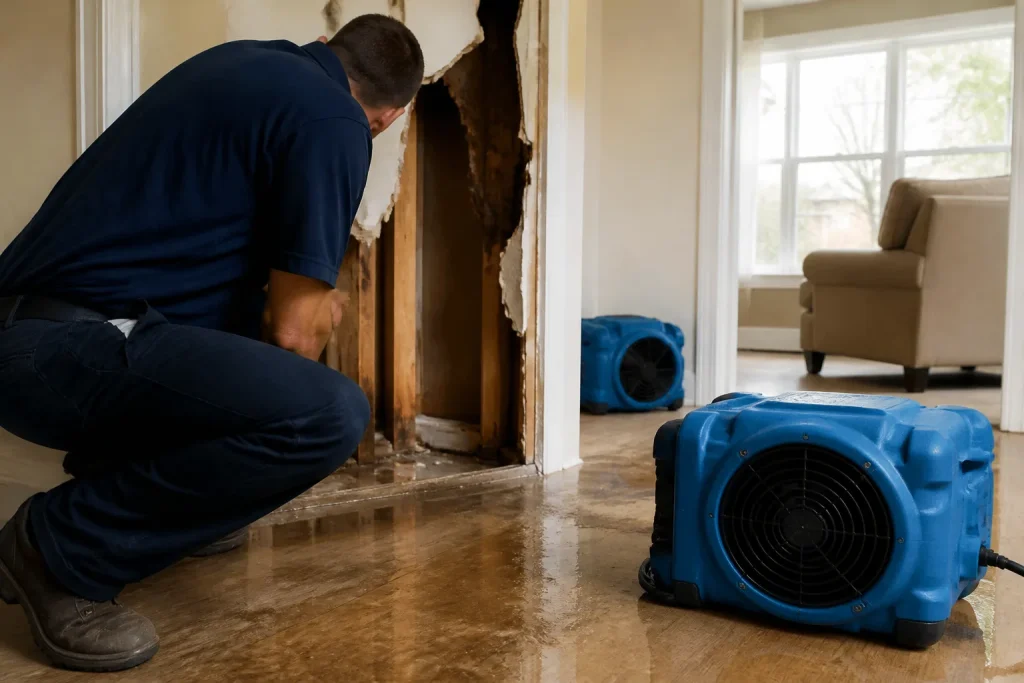
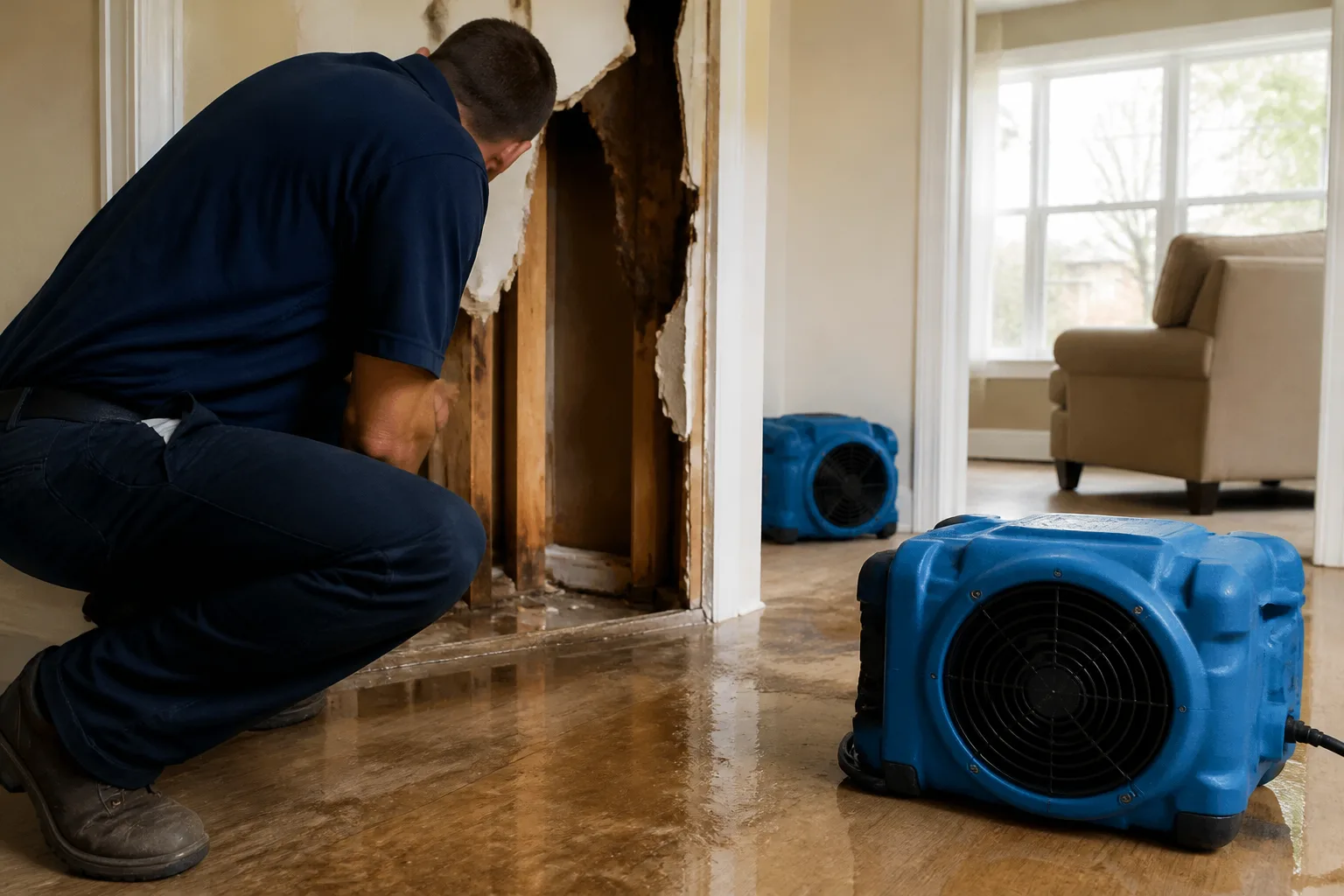
The most expensive decision in water damage restoration is often made on day two. Here’s how it plays out: a pipe leaks inside a wall, you catch it late, and by the time a contractor shows up, the baseboards are swollen and the drywall feels damp. A contractor who doesn’t own Injectidry panels has one play: tear out the baseboards, cut the drywall twelve inches up, and point fans at the exposed studs. That’s not malpractice. It works. But it’s also the only method they have.
We’ve been doing water damage restoration in Los Angeles since 2006, and we own Injectidry systems because we’d rather give a homeowner the option to save their walls than gut them on reflex. Demolition is fast and simple for the contractor. It is not always necessary. The trick is that Injectidry has a window: deploy it within 48 to 72 hours of water exposure, and it can pull moisture out of cavities that fans and dehumidifiers simply never touch. Miss that window, and the materials reach equilibrium with the ambient air. Once that happens, the moisture has bonded with the drywall and wood fibers, and you’re likely looking at tear-out whether anyone wants it or not.
That’s the thing most web pages about this won’t tell you. Injectidry isn’t a magic wand you wave at any water event. It’s a precise tool with a deadline, and knowing the deadline is the difference between a $900 drying job and a $12,000 rebuild.
How Injectidry Actually Works, Explained Without the Jargon
Injectidry is a low-pressure drying system. The name gets used a lot in insurance scopes with no explanation, so let’s walk through it properly.
The system works like this:
- The panels: Small plastic panels attach directly to the surface of a wall, ceiling, or floor. They’re sealed around the edges so no air escapes.
- The vacuum: A hose connects each panel to a central vacuum unit that pulls air through the affected material at low pressure.
- The flow path: Air enters through whatever opening exists (an outlet cutout, a small access hole, a gap at the baseboard) and moves through the wall cavity, picking up moisture as it goes. The moist air is then pulled out through the panel and exhausted outside or into a dehumidifier.
What makes this different from standard drying is the word conditioned. Fans move whatever air happens to be in the room. Injectidry moves air that has been dehumidified first, so the air entering your wall cavity is actively capable of absorbing moisture. It’s not recirculating damp air; it’s feeding the cavity dry air and pulling wet air out. Technicians call this psychrometric drying, which just means tracking the air’s temperature, humidity, and vapor pressure so you know when the materials are truly dry rather than just dry to the touch.
In our experience in Los Angeles homes, this matters most in two places: walls with insulation that acts like a sponge, and subfloors where water has pooled between the hardwood and the slab or joists. Both are places a box fan can’t touch.
When Injectidry Makes Sense in Los Angeles (and When It Doesn’t)
Los Angeles housing stock is not one thing. We’ve got 1920s Spanish bungalows in Highland Park, mid-century post-and-beam homes in the Valley, and newer condo builds in Playa Vista and downtown. Injectidry is not equally useful in all of them.
Here are the scenarios where we regularly recommend it:
- Tile-set bathrooms: If a supply line leaks behind a tiled shower wall, removing tile to dry the cavity means a full tile replacement job. In Los Angeles, that can run thousands of dollars before you’ve even touched the actual water damage. Injectidry can dry the wall cavity through a small access hole, often avoiding tile demo entirely.
- Hardwood floors over subfloors: Water that seeps under oak or maple flooring gets trapped between the finished floor and the plywood subfloor. Injectidry creates a vacuum under the floor planks, pulling moisture out through the seams. This is routinely used to save hardwood floors that would otherwise cup, buckle, or need full replacement.
- Plaster walls in historic properties: Los Angeles has thousands of pre-war homes with lath-and-plaster walls. Tearing out plaster is expensive, dusty, and permanently changes the character of the home. Drying the cavity from inside preserves the wall surface and the original finish.
- Multi-floor leaks: A leak on the second floor that travels down into a ceiling cavity gives you a classic blind spot. You can’t cut into it without removing ceiling drywall. Injectidry panels attached to the ceiling surface can pull that moisture out invisibly.
What Injectidry is not good for is standing water. If there’s a half-inch of water pooled under your kitchen cabinets, that must be extracted first with a truck mount or extraction unit. Injectidry handles the residual moisture in materials after the standing water is gone. If someone offers to dry a flooded room with panels alone, that’s a red flag.
How to Verify the System Is Actually Working
This is where homeowners can, and should, hold any restoration company accountable. Injectidry work comes with ongoing moisture readings. The panels have small access points that allow a technician to insert a moisture probe into the cavity without removing the panel. Those readings should be logged daily.
Here’s what you’re looking for:
- Moisture readings should drop measurably every 24 hours. If a wall cavity starts at 22% moisture content on day one, you should see 18% on day two, 14% on day three, and so on. The target is typically under 12% for drywall and under 10% for wood.
- If readings plateau for 48 hours straight, the protocol needs adjustment. That could mean adding a second panel, repositioning the existing ones, increasing the vacuum pressure, or adding a dehumidifier to condition the incoming air more aggressively.
- You should receive those readings. Any company running Injectidry can show you the numbers. If they can’t produce a daily moisture log, ask why not.
This is part of how we operate under the Relay Home Co. family’s standards. We don’t hand-wave drying progress. We log the numbers, and our technicians send photo updates by text as part of The Relay Standard: a written price before work starts, a live arrival time you can track, before-and-after photos delivered to your phone, and a digital invoice you pay from a link. If you’ve ever been through a restoration job where the crew went radio silent for four days, you understand why that matters.
Injectidry Cost Breakdown: Per-Day Fees vs. Full Replacement
Let’s talk dollars, because that’s the conversation most Los Angeles homeowners actually care about.
Injectidry deployment generally costs more per day in equipment rental than a standard fan-and-dehumidifier setup. You’re paying for the vacuum system, the panels, the hoses, and the technician time to monitor them. Here’s a rough framework for how to think about the total job cost:
| Approach | Typical Equipment Cost | Typical Labor | Typical Scope of Additional Work |
|---|---|---|---|
| Injectidry drying (3-5 days) | $250-$500 per day | Daily monitoring visits | Minimal; often none |
| Standard demo + drying | Lower equipment fees | Higher labor (demo, disposal) | Drywall replacement, painting, baseboards, texture match |
| Full rebuild | Varies | Highest | Complete wall or floor replacement, finish work |
The framework is simple: if Injectidry costs $1,200 over five days and saves you from replacing and repainting 40 square feet of drywall plus baseboards plus texture matching, you’re likely ahead. If the drywall is already swollen, the paint is bubbling, and the baseboards are pulling away, no drying system on earth is going to put that material back to new. This is where the 48-to-72-hour window comes back into play. In Los Angeles, a homeowner who calls us the day they discover a leak has options. A homeowner who calls us a week later usually has demolition.
We’ll never recommend Injectidry just to run up equipment fees, and here’s the structural reason why: under our 365-Day Done Right Promise, if the drying doesn’t hold and the wall fails later, we come back and make it right, in writing. That promise is attached to every water damage repair in Los Angeles we do. A company that cuts corners on drying is a company that eats warranty work. We don’t want to eat warranty work, so we measure moisture until the numbers are right.
When to Call a Pro Instead of Waiting
Injectidry work is not a homeowner DIY activity. It requires professional-grade vacuum units, sealed panels, and the moisture meters to verify drying progress. It also requires a trained read on when it’s appropriate at all. If water has been trapped for more than 72 hours, if sewage is involved, or if you see visible mold growth, the play has changed from drying to remediation, and you’ll want to look at mold remediation in Los Angeles rather than just drying. Mold in wall cavities means you’re sometimes opening the wall anyway, because the goal shifts from saving materials to removing contamination.
The call we’d suggest making is this: take photos, shut off water to the affected area if it’s from a supply line, move valuables out of the way, and call a company that owns Injectidry equipment and can deploy it same day. In Los Angeles traffic, same-day dispatch matters. Not all restoration companies keep Injectidry on their trucks, and every day you wait narrows your option set.
One more thing worth saying. Last month we pulled Injectidry panels off a wall in a Silver Lake bungalow where the homeowner had called another company first. That company told them the plaster had to come out. It didn’t. We dried the cavity in four days, the moisture readings came down from 19% to 9%, and the homeowner saved somewhere in the neighborhood of $8,000 in plaster and finish work. That’s not every job, but when it works, it works.
The Bottom Line
Injectidry is a targeted drying system for wall cavities and subfloors, and in Los Angeles it’s uniquely useful for tile bathrooms, hardwood floors, and plaster walls. The critical window is 48 to 72 hours after water exposure. After that, materials reach equilibrium with ambient moisture and drying often gives way to demolition. The cost trade-off is straightforward: higher daily equipment fees on the front end, but potentially thousands saved in rebuild work on the back end. If you’re in Los Angeles and dealing with water in a wall or under a floor, Wendell Water Damage Restoration offers free estimates and same-day Injectidry deployment. Call (940) 466-4354 and we’ll tell you honestly whether it’s the right tool for your situation.
Frequently Asked Questions
Most Injectidry drying jobs in Los Angeles run three to five days, depending on the materials and how much water entered the cavity. Daily moisture readings should show consistent decline. If readings plateau for 48 hours, the setup needs adjustment.
Yes. Injectidry panels can be used on hardwood floors to pull moisture from between the finished floor and the subfloor through the seams and gaps. It’s most effective when deployed within the first 48 to 72 hours, before the wood has fully absorbed ambient moisture.
In most cases, yes. Injectidry falls under standard water damage mitigation and is listed in most insurance scopes when it’s the appropriate drying method. We document all moisture readings and provide photo evidence directly to your adjuster, which helps support the claim.
If water is trapped in a wall cavity, under a floor, or behind tile, Injectidry may be appropriate. If water has been standing for more than 72 hours, or if mold is visible, the job may require demolition and remediation instead. Call (940) 466-4354 and we’ll walk you through what we’d recommend based on photos and a quick phone assessment. Estimates are free.
Written by Blake Sorensen, Owner at Wendell Water Damage Restoration, serving Los Angeles since 2006.
Need Damage Restoration Help?
Call Wendell Water Damage Restoration - licensed & insured, here with fast after-hours help in Los Angeles.
(940) 466-4354