
How to Choose the Right Damage Restoration Company in Los Angeles
Choosing a damage restoration company in Los Angeles comes down to one filter: transparency. You need a written price before work starts, a live person who answers the phone, and a technician whose arrival time you can actually track. If a company won’t commit to those three things before setting foot in your home, you haven’t found the right one yet. We’re going to walk you through exactly how to vet any contractor, including the questions that expose the ones you shouldn’t let through the door.
If you’re dealing with water damage right now and don’t want to read the whole guide, call (940) 466-4354 for a free estimate. If you’d rather do your homework first, here’s what we think actually matters.
The State of Restoration Contracting in Los Angeles: Why You Have to Filter Hard
A 2023 California contractor complaint report put water damage restoration in the top five most-complained-about home services in the state. The number one complaint wasn’t shoddy work. It was surprise billing: a low initial quote followed by a final invoice that landed thousands higher than what the homeowner was told on the first call.
That’s not a licensing problem. Los Angeles is full of licensed, certified restoration companies. It’s a process problem. Most restoration contractors still operate on an estimate-then-adjust model where the real number only shows up after the equipment is already in your living room and the drywall is already cut. By then, you’re committed.
Here’s what that means for you as a homeowner in Los Angeles: the certifications on the wall matter less than the pricing process before the technician rolls. A company can hold every IICRC credential available and still hand you a vague estimate with “miscellaneous drying costs” baked in as a catch-all. The right filter is transparency, not training. Training is table stakes. Transparency is rare.
The Three Questions That Disqualify Most Los Angeles Restoration Companies
Before you schedule any restoration contractor in Los Angeles, ask three questions. The answers will tell you more than any review profile ever will. We’ve seen firsthand what separates the companies worth calling from the ones you’ll regret.
Question one: Will you give me a written price before any work starts?
This should be an instant yes. Not “we’ll assess and then quote,” not “it depends on what we find.” A competent restoration company can give you a firm written scope for most water damage, mold remediation, and repair jobs after a thorough inspection. If they won’t commit to a number before they start pulling baseboards, you’re walking into an open-ended invoice. That’s how the surprise billing complaints from that 2023 report happen.
Question two: When I call, who answers?
Call the number before you’re in an emergency. At 2 p.m. on a Tuesday, not 2 a.m. If you get a voicemail or a call center that promises a callback within “one to two business hours,” that’s your answer. In Los Angeles, water damage from a burst supply line spreads fast. The moisture wicks into drywall and flooring within hours, not days. You need a live human on the first ring. Most restoration companies route after-hours calls to an answering service that takes a message. That’s a four-hour delay before anyone even knows your house is flooding.
Question three: Can I track my technician’s arrival time?
A vague four-hour window is a refusal dressed up as customer service. The technology exists to send a live arrival time by text, just like you get for a rideshare. If a restoration company can’t tell you exactly when the tech will pull up, they didn’t invest in dispatch software, which means they probably didn’t invest in other operational basics either. In Los Angeles traffic, “between 8 and noon” can mean 1:30 p.m. You deserve better than that.
What IICRC Certification Actually Means (and What It Doesn’t)
The IICRC (Institute of Inspection, Cleaning and Restoration Certification) sets the standard for water damage restoration practices worldwide. It’s the credential you want to see. But here’s what most Los Angeles homeowners don’t know: IICRC certification applies to individual technicians, not companies.
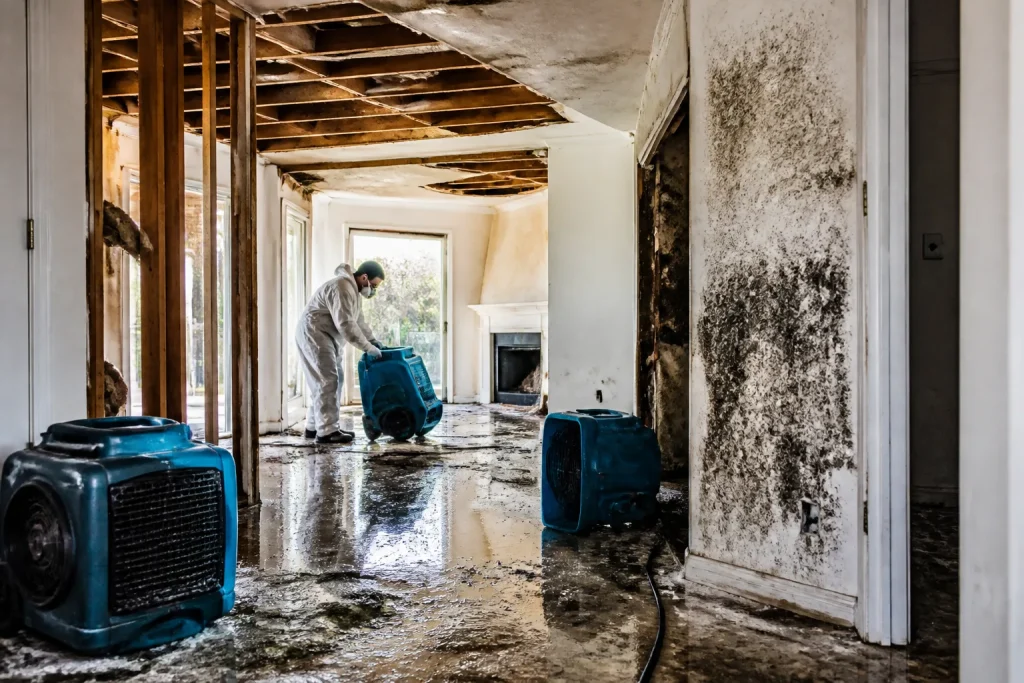
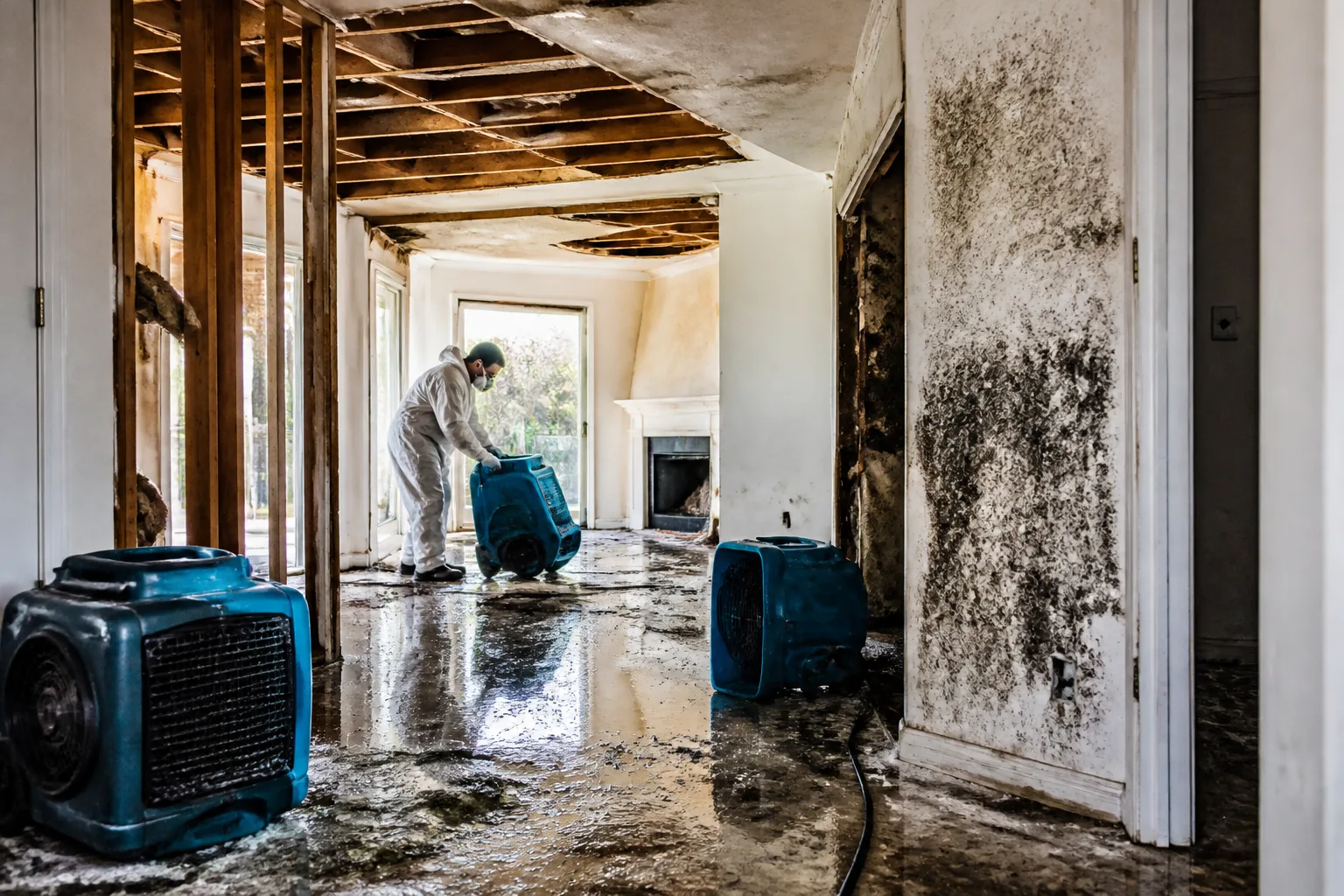
A company can say “IICRC certified” because one person on staff holds the credential. That doesn’t mean the tech who shows up at your door has passed the IICRC’s Water Damage Restoration Technician exam. That matters when your floor is wet, because the person operating the drying equipment needs to understand psychrometric drying (tracking the air’s moisture level so we know when your home is truly dry, not just surface-dry) and how to set up air movers correctly. Setup errors like positioning fans the wrong direction or skipping an affected cavity can leave moisture trapped behind walls for weeks. That’s how you get mold in a house that’s been “dried.”
Ask the company directly: “Is the technician coming to my home IICRC certified, or is it just the company?” A confident company answers in one sentence. A company that hedges probably doesn’t know who’s on the schedule that day.
We run every Wendell job under IICRC, RIA, and IFA standards with the same commercial-grade equipment brands used on large loss sites. Our technicians use Dri-Eaz and Phoenix dehumidifiers, plus XPOWER and B-Air air movers. We list the brands because you should ask what brand of equipment the company uses, too. Rental-grade machines from a big-box store don’t dry as fast or as thoroughly as commercial units. That adds days to your timeline and risk to your home’s structure.
How to Read a Restoration Estimate Like Someone Who’s Been Burned Before
Most homeowners in Los Angeles never read a restoration estimate line by line until after the job is done, when the final bill doesn’t match what they remembered agreeing to. Here’s how to read one before you sign it.
Line items that should always appear on a legitimate water damage restoration estimate:
- Water extraction, with a specific square footage or volume estimate
- Drying equipment rental or usage, listed by unit type and day count
- Demolition scope if needed, including exactly which walls, floors, or ceilings come out
- Antimicrobial or anti-mold treatment, with the specific product or method named
- Drying monitoring visits, including how many and on what schedule
- Any material costs, including drywall, insulation, baseboards, carpet pad
Red flags that signal future disputes:
- “Miscellaneous drying costs” without a number
- “Additional labor as needed” without a trigger condition
- Line items that say “TBD” or “to be determined”
- A quote that’s suspiciously lower than everyone else’s (that’s a teaser, not an estimate)
- Any refusal to put the scope in writing before work starts
We put the price in writing before any work starts, always. The digital invoice gets texted to your phone, and you pay from the link. The number on the screen is the number you pay. No adjustment, no surprise line item, no “we found more damage” conversation that ends with you writing a bigger check. That’s the standard every Los Angeles homeowner should demand from any restoration contractor.
Why “24/7 Availability” Claims Mean Nothing Without a Live-Person Test
Every restoration company in Los Angeles advertises 24/7 emergency service. It’s printed on trucks, splashed across websites, and posted on Yelp profiles. It’s the single most common claim in the industry, and it’s the easiest one to fake.
Here’s how to test it before an emergency happens: Call the number at 11 p.m. on a random weekday. If a live human picks up and can tell you when a technician can be there, you’ve found a real 24/7 company. If you hit a voicemail, a phone tree, or an answering service that says someone will call you back in the morning, that company’s “24/7 availability” is a recording, not a promise.
Water damage doesn’t keep business hours. A supply line burst at 1 a.m. in a Silver Lake condo needs a response at 1:15 a.m., not 8 a.m. when the office opens. The hours between 10 p.m. and 7 a.m. are when most structural damage happens, because water sits undisturbed and saturates materials.
At Wendell, a live person answers every call, 24/7. Not a voicemail, not a callback queue, not a phone tree. If you call (940) 466-4354 at noon or midnight, you’re talking to a human who can dispatch help in Los Angeles immediately.
Now, full disclosure: emergency water extraction is the kind of thing where speed matters because the damage compounds by the hour. For mold remediation and reconstruction work, the calculus changes. That work should be scoped, scheduled, and priced in writing like a remodel, because that’s what it is. Don’t let any company rush you into a mold job with same-day pressure. If they’re pushing speed on a non-emergency, they’re pushing you past your own good judgment.
The Relay Visibility Guarantee: A Benchmark for Grading Any Restoration Company
We built Wendell Water Damage Restoration around a simple standard we call The Relay Visibility Guarantee, and you can use it as a benchmark to grade any restoration company in Los Angeles, whether you hire us or not.
Here’s the framework: who is coming, when they will be there, and exactly what it costs.
Three pieces of information. You should know all three before you agree to anything, and you should be able to hold the company to all three during the job.
Who is coming: Background-checked, uniformed technicians. You should know the name and face of the person walking through your door before they arrive. A company that can’t tell you who’s coming hasn’t done basic dispatch work.
When they’ll be there: A live arrival time you can track, not a window. The technology exists. If they won’t use it, ask why.
Exactly what it costs: A written price before any work starts. Every time. No exceptions, no verbal estimates, no “we’ll see how it goes.” In writing, before the first tool comes out of the van.
We pulled one out of a garage over in Eagle Rock last week where the homeowner had called another company first. That company gave a verbal estimate of $4,200, then sent a final invoice for $7,800 after the drywall was already open. By the time we got there, the homeowner had already paid. The extra $3,600 was “unforeseen demolition.” It’s the same story from that 2023 complaint report, playing out in real homes in Los Angeles neighborhoods.
We run every job through this standard because it’s how we’d want to be treated if our own house flooded. It’s also part of our Wendell Water Damage Restoration home approach to everything we do. Each Wendell location is independent to The Relay Visibility Guarantee, so you get the same standard whether you need Water Damage Restoration in Los Angeles, Mold Remediation in Los Angeles, or Water Damage Repair in Los Angeles.
The Bottom Line
Choosing the right damage restoration company in Los Angeles isn’t about counting certifications or reading a hundred reviews. It’s about demanding a process that can’t hide surprise charges: a written price before work starts, a live person who answers the phone at any hour, and a technician you can track to the minute. Ask the three disqualifying questions. Read the estimate line by line. Test the 24/7 claim yourself with a midnight phone call. Any company that passes all three filters is worth considering. Most won’t pass one.
We back every job with the Done Right Promise: if it’s not done right, we make it right, stated in writing on every repair. We also include a free second visit if the repair fails. That’s how confident we are in the work, and it’s the standard you should hold every contractor to in Los Angeles.
If you’re in Los Angeles and need help, Wendell Water Damage Restoration offers free estimates. Call (940) 466-4354 and a live person will answer. We’ll give you a written price, a trackable arrival time, and the name of the technician before they show up. That’s how it should work.
Frequently Asked Questions
Ask for a written price before any work starts, confirm the technician coming to your home is IICRC certified (not just the company), and call the company’s number at an odd hour to see if a live person actually answers. A legitimate Los Angeles restoration company passes all three tests without hesitation. If they hedge on any of them, keep looking. For a company that meets all three standards, call (940) 466-4354.
A legitimate estimate includes specific line items: water extraction volume, drying equipment by unit type and day count, exact demolition scope, antimicrobial treatment by product name, drying monitoring visits on a schedule, and material costs. Vague language like “miscellaneous drying costs” or “TBD” is a warning sign. You should know the exact number you’ll pay before anyone touches your home in Los Angeles.
A real 24/7 company can dispatch a technician within hours, not the next business day. Los Angeles traffic makes vague windows worse, so demand a live arrival time you can track. If the company says “between 8 and noon,” they don’t have dispatch technology, which means slower response when you need it most. For emergency water extraction in Los Angeles, call (940) 466-4354 to talk to a live person right now.
For anything beyond a small spill on a hard floor, you need professional equipment. Household fans can’t remove moisture trapped in walls, under flooring, or inside cavities. Left untreated, that trapped moisture leads to mold growth within 24 to 48 hours, especially in Los Angeles’s mild climate. IICRC-standard drying with commercial dehumidifiers and air movers is the difference between a two-day fix and a two-month mold remediation project.
Written by the team at Wendell Water Damage Restoration.
Need Damage Restoration Help?
Call Wendell Water Damage Restoration - licensed & insured, here with fast after-hours help in Los Angeles.
(940) 466-4354