
5 Mistakes to Avoid With Mold Remediation
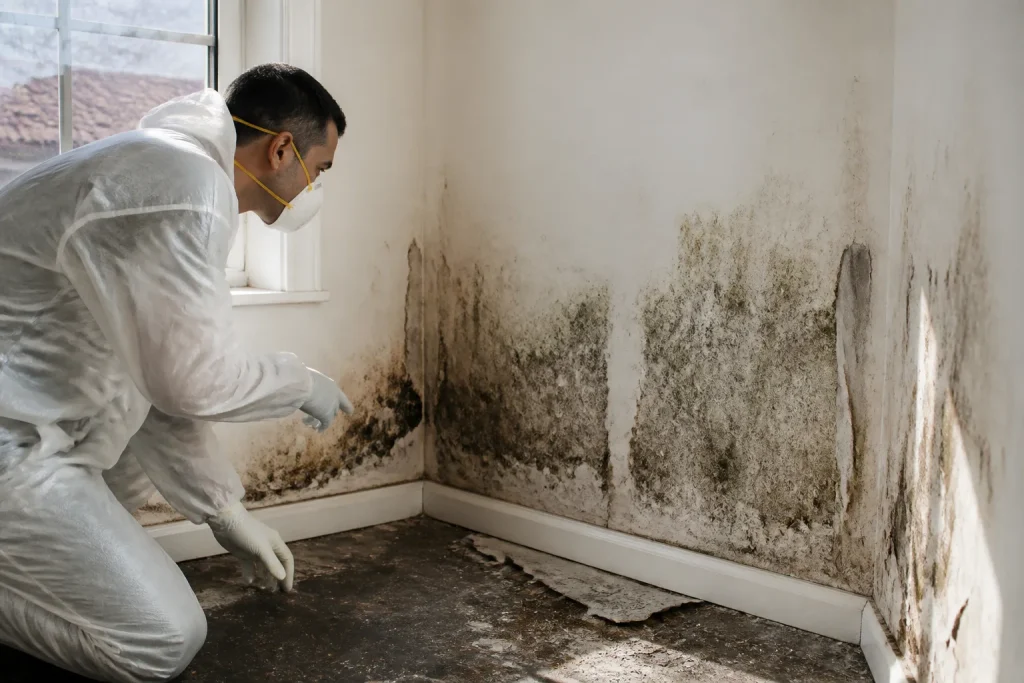
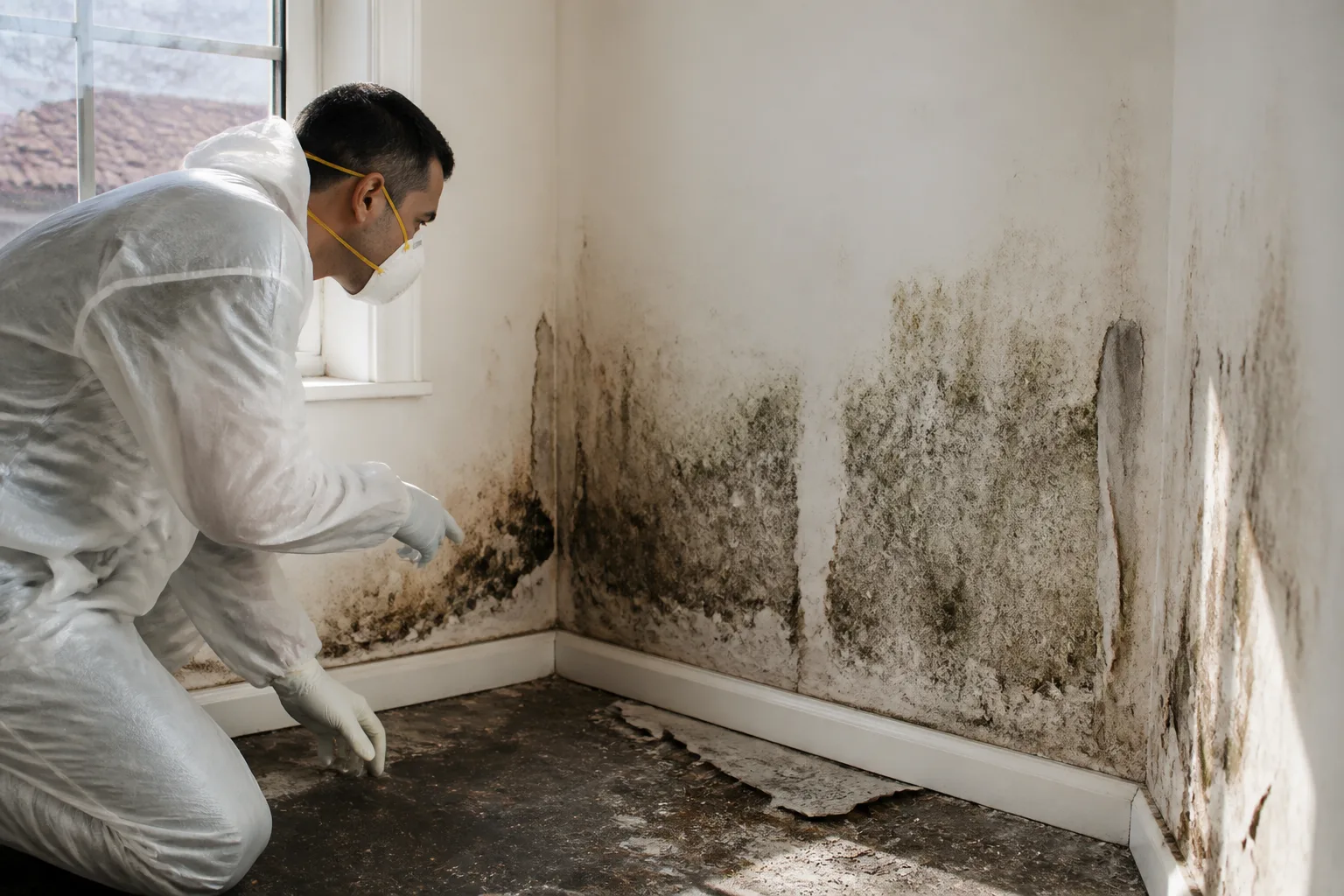
Most mold remediation failures in Los Angeles aren’t caused by bad chemicals or lazy scrubbing. They’re caused by process gaps: skipping the air test before work starts, hiring one contractor to do everything, ignoring the moisture source, skimping on containment, and accepting a verbal estimate with no written scope. Avoid these five mistakes and you’ll usually avoid the second remediation too.
If you’d rather skip the research and just talk to someone who handles this daily, call (940) 466-4354.
Key Takeaways
- Surface mold is a symptom. Airborne spore count is the real problem. Test before you treat.
- Never hire the same company to remediate and then run its own clearance test. That’s a conflict of interest.
- Mold returns within 72 hours if the moisture source isn’t fixed first. Moisture mapping comes before removal, always.
- Without negative air pressure and HEPA filtration, remediation spreads spores into clean rooms, especially in open-plan LA bungalows.
- A written scope of work is your only real protection against surprise “additional affected areas” billing.
Mistake 1: Skipping the Pre-Remediation Air Quality Test
Here’s the part most homeowners never hear: the mold you can see is not the mold that’s making you sick. It’s the airborne spores, and you can’t count those with your eyes.
A pre-remediation air quality test measures the concentration of mold spores floating through the air inside your home. It tells you two things: which species you’re dealing with and how far the contamination has spread. Surface mold behind a baseboard might look contained, but the air test could show elevated Aspergillus or Penicillium counts in a bedroom on the opposite side of the house. That changes the entire remediation plan.
We pulled a job out of a 1920s Spanish-style home in Echo Park last year where the visible mold was a two-foot patch behind the kitchen sink. The air test came back with Stachybotrys counts in the living room three times the outdoor baseline. The homeowner was convinced it was a small kitchen problem. It was a whole-house air problem. If they’d skipped the test and just treated the visible patch, they’d have paid for a second remediation within six months.
At Wendell, we run air quality testing before we touch a single wall. It’s not an upsell. It’s how we know what we’re actually fixing. Any company that quotes mold remediation in Los Angeles without first measuring the air is guessing, and you don’t want a guess when spores travel through your HVAC system every time the AC kicks on.
Mistake 2: Letting One Contractor Do Remediation AND the Post-Clearance Test
This one sounds innocent. You hire a mold company. They remove the mold. They test the air. They hand you a clearance certificate that says everything is clean. Done, right?
Wrong. That’s the equivalent of a student grading their own final exam. The IICRC standards for mold remediation recommend that the post-remediation verification (often called a clearance test) be performed by an independent industrial hygienist, not the company that did the work. The reason is simple: the company that removes the mold has a financial incentive to declare the job complete. An independent tester has zero incentive beyond accuracy.
We’ve seen what happens when this goes sideways. A contractor in the Valley “remediated” a crawlspace, ran their own clearance test, and handed the homeowner a clean report. Three months later, the homeowner’s toddler developed a persistent cough. A third-party hygienist found the crawlspace was never fully treated; the original contractor had just fogged the space and called it done. That homeowner paid for two remediations and a lot of sleepless nights.
So here’s the rule that will save you: insist on a third-party clearance test. It costs a few hundred dollars extra and it’s worth every penny. Wendell Water Damage Restoration follows IICRC protocol on every job, and we’ll happily work with whatever independent hygienist you choose. We want the test to be real because our Done Right Promise means we’ll make it right if it isn’t.
Mistake 3: Not Fixing the Moisture Source First
Mold is a living organism with one non-negotiable requirement: moisture. Remove the mold without removing the moisture and you’ve just created an expensive, temporary cleaning. The spores that survive (and some always survive) will have fresh moisture to feed on, and regrowth happens fast. In Los Angeles, with our warm temperatures and occasional marine layer humidity, regrowth can begin within 72 hours.
We see this most often in bathrooms. A homeowner notices black spots on the ceiling or around the tub. A contractor comes in, sprays antimicrobial treatment, scrubs the visible mold, and leaves. What nobody fixed was the slow leak behind the tile or the cracked shower pan or the improperly vented fan that’s been blowing moisture into the drywall for three years. Six weeks later, the mold is back. The homeowner is furious, and rightly so.
That’s why proper mold remediation starts with moisture mapping, not mold removal. We use thermal imaging and moisture meters to find every wet spot in the affected area, including the ones you can’t see. We trace the water to its source before we touch the mold. Then we fix the source first, dry the structure to a standard using the same professional-grade equipment we use on large commercial losses (Dri-Eaz, Phoenix, and B-Air gear), and only then do we start remediation. The order matters. Moisture first, mold second. Always.
If a contractor quotes you a mold job without asking where the water is coming from, hang up. That’s not mold remediation. That’s surface wiping with extra steps.
Mistake 4: Inadequate Containment During Remediation
Here’s a mental image most people don’t have when they imagine mold remediation: without proper containment, the act of removing mold releases millions of spores into the air. You take a wall with a two-foot mold patch, start tearing out drywall, and suddenly spores that were contained inside that wall cavity are floating into your kitchen, your living room, your bedroom. The remediation just became a contamination event.
Proper containment means sealing off the work area with plastic sheeting and creating negative air pressure inside the sealed zone. Negative air pressure means the air in the work area is being pulled out and filtered through a HEPA air scrubber, not leaking out into your home. Without negative pressure, spores find every gap in the plastic, every seam, every crack around a door frame.
This is a specific concern in Los Angeles because so many of our homes are open-plan bungalows. A Craftsman in Highland Park or a mid-century in the Valley doesn’t have tight, compartmentalized rooms. A hallway connects to the living room which flows into the dining room and kitchen. One poorly contained remediation in an open-plan home cross-contaminates the entire footprint.
When you’re vetting a mold remediation company, ask one specific question: “What’s your containment protocol?” If they look confused or say something about opening windows, they’re not following IICRC standards. At Wendell, we run negative air pressure barriers with HEPA-filtered air scrubbers on every mold job, no exceptions. If the job’s so small you think it doesn’t need containment, the job’s probably small enough that you should still want it anyway. Spores don’t respect square footage.
For more on how we approach mold removal in Los Angeles specifically, see mold remediation in Los Angeles.
Mistake 5: No Written Scope of Work Before the Job Starts
This last mistake is the one that costs Los Angeles homeowners the most money, and it has nothing to do with mold science. It’s about paper. Or more precisely, the absence of paper.
Here’s the standard bad experience: a contractor gives you a verbal estimate of $4,500 to remediate a mold problem in your garage. You agree. They start the job. Two days in, they call and say they found “additional affected areas” behind the water heater. The new price is $7,800. You’re already mid-removal, your garage is torn apart, and you have a contractor standing in your driveway asking for a decision. You have zero leverage.
A written scope of work prevents this. It specifies exactly what areas will be treated, what method will be used, what materials are included, what the total price is, and what happens if additional damage is found. If the contractor discovers new mold outside the written scope, that triggers a new, separate written estimate that you approve before work continues. You’re never on the hook for surprises.
This is one of the core reasons we exist. Wendell Water Damage Restoration puts the price in writing before any work starts, on every single job. You get a digital invoice you can pay from a link, and the number on that invoice is the number you pay. If we find additional affected areas mid-job, we stop and show you in writing before we proceed. No surprises, no pressure, no “while we’re in there” pricing.
If you’re reading this and realizing the contractor you’re currently talking to hasn’t put anything in writing, pause the job. Get the scope in writing first. It’s the single most important piece of consumer protection in this entire industry, and it costs you nothing to ask for.
When to Call a Pro
Some things are genuinely DIY-friendly. A small patch of surface mold on a bathroom tile from condensation is something you can clean with soap and water, provided the moisture issue is solved. But the moment you see any of these signs, you’re past the DIY line:
- Mold covering more than 10 square feet
- Mold that has penetrated drywall, insulation, or wood framing
- A musty smell you can’t locate
- Water damage history in the same area (past leaks, flooding, roof issues)
- Mold in your HVAC system or ductwork
- Any visible mold in a home with an infant, elderly person, or someone with respiratory issues
These are the situations where a trained professional with proper containment equipment and moisture mapping tools saves you money in the long run. Plus, working with mold that has penetrated building materials can release spores that make you sick during removal. That’s not a risk worth taking for a few hundred dollars in savings.
Related: if the mold started from a water event, you’ll also want to look at water damage restoration in Los Angeles. Fixing the mold without addressing the original water damage is just mistake number three wearing a different outfit.
How to Vett a Mold Remediation Company in Los Angeles
Since we’ve just walked through five ways this goes wrong, let’s close with a quick checklist for hiring someone who won’t make these mistakes. Print it. Save it. Use it when you’re calling around.
- Will they do pre-remediation air testing? If yes, who runs the lab analysis? You want a third-party lab, not an in-house test.
- Will they use an independent hygienist for clearance testing? If they insist on testing their own work, walk away.
- Do they do moisture mapping before they start? If they don’t mention finding the source, they’re planning to treat symptoms.
- What’s their containment setup? Look for negative air pressure and HEPA filtration. If they say they’ll “just spray and wipe,” keep looking.
- Will they put the scope of work in writing before starting? If there’s hesitation, end the call. A written price is not an unreasonable ask; it’s the bare minimum.
Every one of these questions should get a confident, clear answer. If you get vague language or sales pressure instead of answers, that’s your signal.
The Bottom Line
Mold remediation isn’t complicated when it’s done right, but it’s easy to do wrong. The mistakes that lead to failed remediations are almost always process failures: no air testing, no independent clearance, no moisture source fix, no containment, no written scope. Fix the process and the mold usually stays gone.
If you’re in Los Angeles and you want a mold remediation company that does all five things right, call Wendell Water Damage Restoration at (940) 466-4354. We’ll put the price in writing, run the process under IICRC standards, and stand behind the work with our Done Right Promise. You’ll get before-and-after photos by text and a live arrival time you can track. The estimate is free.
You can also learn more about our approach at the Wendell Water Damage Restoration home page or read about water damage repair in Los Angeles if the mold started with a leak.
Frequently Asked Questions
No. Mold-resistant primer seals the surface but does nothing to kill mold that has penetrated the substrate underneath. The mold stays alive beneath the paint and continues growing. Within months, it pushes back through. Painting over mold is the most common mistake we see in Los Angeles, and it fails a clearance test every single time.
Most residential mold remediation jobs in Los Angeles run between $1,500 and $6,000 depending on the affected area, the type of mold, and whether containment and structural repairs are involved. Small contained jobs (a bathroom wall or a closet) typically land between $1,500 and $3,500. Whole-room or multi-room remediation with full containment often starts around $4,000 and goes up from there. Call (940) 466-4354 for an exact quote based on your specific situation. Estimates are free and put in writing before any work starts.
Most residential mold remediation jobs take between one and three days for the physical removal and treatment, plus an additional day for the independent clearance test if air samples are sent to a lab. Jobs that require structural drying or significant drywall replacement can stretch to a week or more. The moisture source fix and the drying process often take longer than the mold removal itself.
It depends on the source of the moisture. If mold resulted from a sudden, covered event like a burst pipe or a roof leak from a storm, many homeowners policies will contribute to remediation costs. If mold developed from long-term neglect or a slow leak that went unaddressed for months, coverage is less likely. We handle direct insurance billing and photo documentation on every job, which helps if you’re filing a claim. We’re happy to walk you through what your policy likely covers before you commit to anything.
Written by the team at Wendell Water Damage Restoration.
Need Damage Restoration Help?
Call Wendell Water Damage Restoration - licensed & insured, here with fast after-hours help in Los Angeles.
(940) 466-4354