
Phoenix Water Damage Restoration in Los Angeles: A Homeowner’s Guide
Phoenix restoration equipment is the commercial-grade drying gear you’ll see on serious water damage jobs across Los Angeles, from Mid-Wilshire condos to Sherman Oaks split-levels. It’s built to pull hundreds of pints of water out of a structure per day, and when it’s sized and placed correctly, it can cut drying time nearly in half compared to rental fans from a big-box store. If you’re dealing with water damage right now and would rather skip the science lesson, call (940) 466-4354 and we’ll walk you through exactly what your home needs.
Here’s the part most guides skip: the brand on hand matters less than whether the technician knows the psychrometric targets for your specific floor assembly. But understanding what Phoenix equipment does, and what to look for when it’s running in your home, puts you in a position to hold any restoration company accountable. This guide explains what Phoenix systems actually do, how they handle Los Angeles’ unique housing stock, and the questions you should ask before anyone plugs in a dehumidifier.
What Phoenix Equipment Actually Does (And Why It’s a Step Above Rental Gear)
Phoenix dehumidifiers are low-grain refrigerant (LGR) systems designed for high-capacity water removal in residential and commercial environments. In plain English: they pull moisture out of the air and out of building materials far faster than the standard refrigerant dehumidifier you’d pick up at Home Depot for a damp basement. A typical Phoenix unit removes between 130 and 270 pints of water per day depending on the model and conditions. For context, a standard rental dehumidifier might manage 50 to 70 pints in the same conditions.
Why does that matter in Los Angeles? Because speed of drying directly correlates with how much of your home survives. Drywall that stays wet for more than 72 hours becomes a mold risk. Hardwood floors that dry too slowly cup and warp beyond repair. Cabinets and trim delaminate. The faster you hit true drying targets, the more likely you are to need repair rather than replacement. That’s the economic argument for professional-grade equipment, and it’s why Wendell Water Damage Restoration home technicians deploy Phoenix units alongside Dri-Eaz, XPOWER, and B-Air systems on every job.
One thing to understand: Phoenix is not a magic wand. The equipment is only as good as the person setting it up and the plan behind it. We’ve walked into Los Angeles homes where a homeowner rented three industrial dehumidifiers and ran them for a week, but the drywall behind the baseboards was still at 40% moisture content because nobody created airflow inside the wall cavities. The tools matter. The technique matters more.
The Wall Cavity Problem in LA’s Older Homes
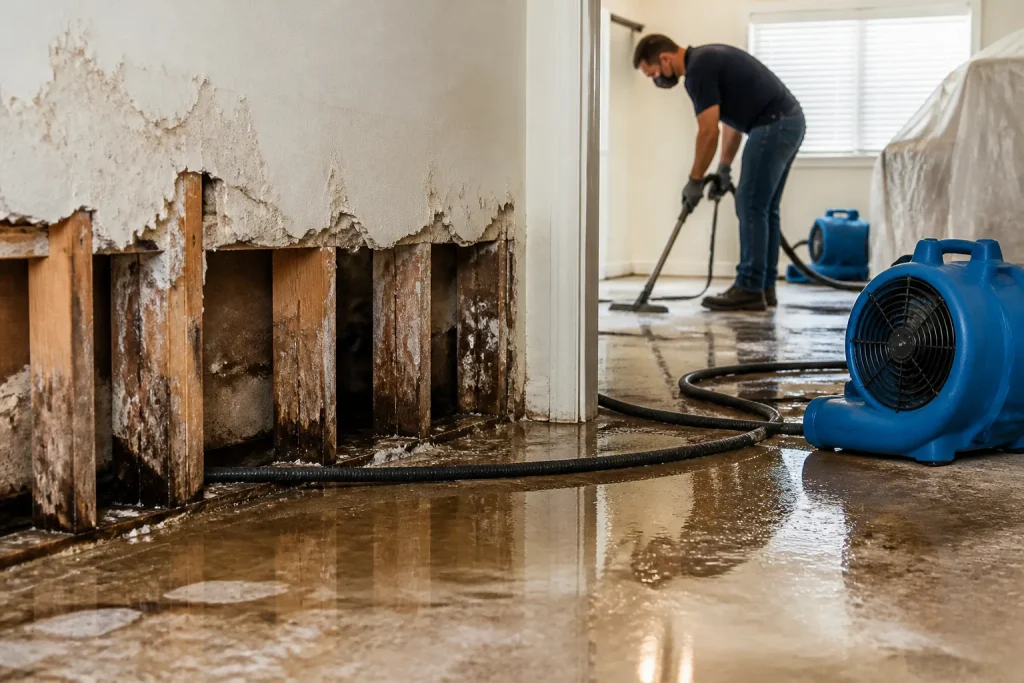
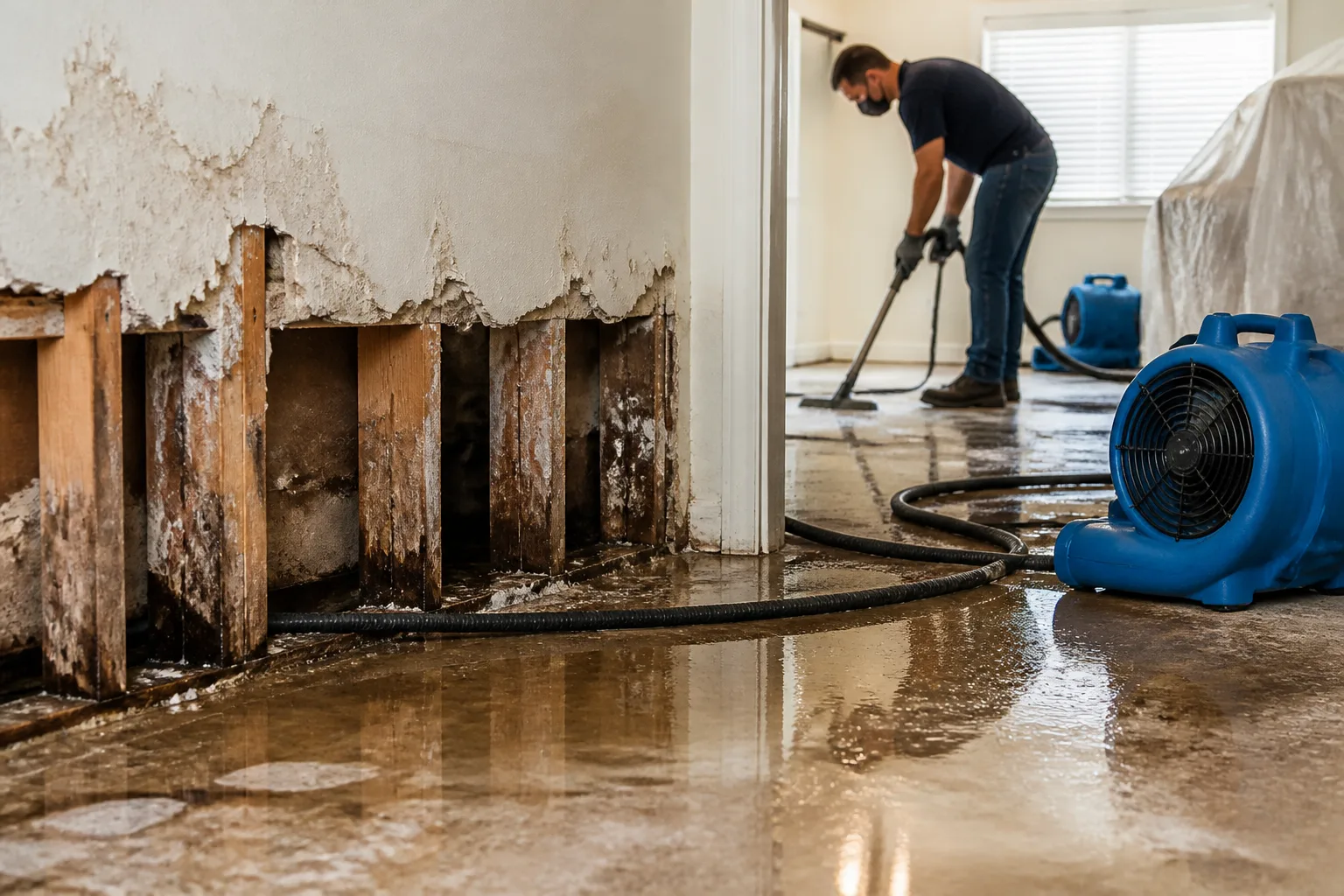
Los Angeles has a housing stock problem when it comes to water damage: thousands of pre-1960 stucco and lath-and-plaster homes that hide water in ways newer construction doesn’t. Water runs down inside wall cavities, soaks into the bottom plates, and wicks up insulation batts. Surface drying, meaning fans pointed at the visible drywall, does almost nothing for water trapped behind it. You need to move air through the cavity itself.
This is where Injectidry systems come into play. These are panels and manifolds that force dry air directly into wall cavities, under cabinets, and beneath hardwood floors, spaces regular air movers simply can’t reach. Pair an Injectidry setup with a Phoenix LGR dehumidifier pulling the moisture out of the room, and you’ve got a drying system that addresses the actual problem rather than just the visible symptom. We see this in neighborhoods like Eagle Rock and Highland Park, where 1940s bungalows built on raised foundations create perfect conditions for hidden water to sit and rot.
If a restoration company in Los Angeles tells you they can dry a wall cavity without opening it and without injectidry-style equipment, ask them to show you the drying plan. Ask how air is reaching the inside of the wall. IICRC S500 standard is clear on this: if the cavity can’t be dried in place, it gets opened. Better to lose a strip of drywall than to rebuild a wall assembly months later when the mold shows up.
What Your Technician Should Record at Every Visit
Professional-grade drying without documentation is just equipment rental with extra steps. When a company like ours deploys Phoenix dehumidifiers and air movers in your Los Angeles home, every daily visit should produce a drying log with specific readings. Here’s what legitimate monitoring looks like:
- Grains per pound (GPP): the actual moisture content in the air. This is what psychrometric drying tracks, and it’s the number that tells a technician whether the dehumidifier is actually removing water from the environment.
- Temperature and relative humidity: both affect how quickly materials release moisture. A hot, dry room dries faster than a cool, damp one. That’s why professionals often run the HVAC.
- Material moisture readings: taken with a moisture meter at multiple points per affected room. The target is typically 10 to 16% for wood and drywall, depending on the material and the baseline for your home.
- Equipment placement and settings: moving air movers as the job progresses is normal. What matters is that changes get documented.
If your restoration company can’t produce these logs, they’re not following IICRC- and RIA-standard practices. You should receive those readings, either on paper or by text, and they should trend downward every day. We send before-and-after photos and drying logs by text as standard practice, because you should never have to chase a contractor for proof the job is actually drying.
One more thing on monitoring: a technician who shows up, glances at the equipment, and says “looks good” without taking readings is guessing. Don’t accept guessing when your walls and floors are on the line.
Is the Equipment Sized Correctly? What IICRC S500 Actually Says
The IICRC S500 is the industry’s reference guide for professional water damage restoration, and one of its core principles is that dehumidification capacity must match the size of the affected area and the type of materials involved. A 200-pint Phoenix unit running in a 100-square-foot powder room is overkill. The same unit running in a 1,500-square-foot living room with wet carpet, pad, and drywall might be undersized.
Here’s a practical way to evaluate what a restoration company proposes for your Los Angeles home: ask how many pints per day their equipment pulls, and how many square feet of affected area you have. A rough professional benchmark is that you want at least 1 pint of dehumidification capacity per 10 square feet of affected area for light-to-moderate water damage. That number goes up with saturated materials, multiple affected rooms, or high ambient humidity, which Los Angeles absolutely gets in August and September.
Air movement matters too. IICRC guidance calls for air movers placed to create continuous, overlapping airflow across all wet surfaces. The number depends on the room layout and the materials involved, but if a company shows up with one dehumidifier and two fans for a 400-square-foot flooded kitchen, that’s a red flag. Equipment sizing is math, not vibes. A company deploying commercial Phoenix and B-Air gear should be able to explain the calculation behind their setup in about 60 seconds.
We wrote more about this in our local guide to Water Damage Restoration in Los Angeles if you want a deeper look at how the full process works from first call to final invoice.
The Transparency Test: What to Demand Before Work Starts
Here’s the thing about commercial-grade drying equipment: it creates a power imbalance if you don’t know what to ask for. The technician knows what the equipment does. You don’t. But there’s a simple test that separates companies that respect you from companies that trade on that imbalance.
Before any equipment gets plugged in, ask for the following in writing:
- The drying goal: what moisture reading means “dry” for your specific materials, and what daily readings you should expect to see.
- The equipment plan: how many dehumidifiers and air movers, where they’ll be placed, and why that setup matches your affected area.
- The monitoring schedule: who visits, when they visit, and how you’ll receive the drying logs.
- The price: a written quote before work starts, not an estimate that changes after equipment is “discovered” to be necessary.
Any professional restoration company deploying Phoenix, Injectidry, or other commercial-grade equipment should be able to show you the drying goal in writing before they start, and the achieved readings in photos when they finish. That’s not a special request. That’s the bare minimum standard for IICRC-certified work, and it’s exactly what our Water Damage Repair in Los Angeles process includes on every job. We put the price in writing before any work starts, and we text you a digital invoice you can pay from a link. The number on the screen is the number you pay.
Real talk from jobs across Los Angeles: we’ve seen homeowners told they need three weeks of drying, then watched a properly sized Phoenix setup hit targets in nine days. We’ve also seen the opposite, where a company under-sizes the equipment to keep the initial quote low, then bills for extra days when the home doesn’t dry. The first scenario comes from a technician who knows the science. The second comes from a sales strategy. The written plan is how you tell the difference.
When to Call a Pro (And When Equipment Knowledge Isn’t Enough)
There are water damage situations where no amount of homeowner research replaces a trained technician with commercial equipment. If water has sat for more than 24 hours, if it came from a sewage line or exterior floodwater, if it’s wicked up drywall or soaked through flooring into the subfloor, or if you smell anything musty after surface drying, call a professional. These are the jobs where Phoenix dehumidifiers and Injectidry systems earn their keep, and where waiting makes the final repair bill exponentially larger.
A quick example from the field: we pulled a Phoenix 200 Max out of a garage in Los Feliz a few weeks back where a water heater had leaked through the garage wall into an adjacent bedroom closet. The homeowner had been running two box fans for three days. The visible drywall felt dry to the touch, but the moisture meter read 38% in the bottom plate behind the baseboard. We set up an Injectidry panel into that cavity, ran the Phoenix for six days, and saved the framing. If they’d waited another week, that would have been a full wall rebuild and likely Mold Remediation in Los Angeles as well.
If you’re in Los Angeles and the water’s already down, our team is a phone call away at (940) 466-4354. If you’re researching ahead of time, save this guide and demand the transparency test from whoever you call.
The Bottom Line
Phoenix water damage restoration in Los Angeles is a specific tier of professional drying that most homeowners only encounter during a crisis. The equipment’s purpose is straightforward: remove water from air and materials faster than consumer-grade gear, and do it in a way that’s measurable. But the equipment is only half the equation. The technician’s plan, the daily monitoring, and the written drying goals are what actually determine whether your home comes back or gets ripped out.
What you should walk away with:
- Phoenix LGR dehumidifiers remove 130 to 270 pints per day, dwarfing rental units and cutting drying time significantly.
- LA’s older stucco and lath-and-plaster homes hide water in wall cavities that only injectidry-style systems can access.
- Daily drying logs with grain, temperature, humidity, and material moisture readings are non-negotiable.
- IICRC S500 sizing guidance exists for a reason; ask your restoration company to explain their equipment math.
- A written drying goal before work starts and achieved readings at the end are the transparency test every homeowner should demand.
If you’re in Los Angeles and need water damage help, Wendell Water Damage Restoration offers free estimates and a written price before any work starts. Call (940) 466-4354 and talk to a live person, 24/7. We’ve been doing this, and we’ll tell you exactly what your home needs, what it costs, and how long it’ll take.
Frequently Asked Questions
Most residential water damage jobs in Los Angeles dry in 3 to 7 days with properly sized Phoenix dehumidifiers and air movers running continuously. Jobs involving saturated hardwood, multiple affected rooms, or hidden wall cavity water can take 7 to 14 days. Your technician should give you a written drying goal with expected timelines before work starts. For an exact timeline on your home, call (940) 466-4354.
In most cases, yes. Phoenix equipment dries faster and more thoroughly than rental gear, which means less demolition, lower rebuild costs, and dramatically lower mold risk. A rental dehumidifier that takes twice as long to dry a wall cavity can easily cost more in sheetrock, paint, labor, and mold remediation than the professional drying would have cost upfront. The equipment is also only part of the equation; professional monitoring and placement make the real difference.
Most standard homeowner’s policies in Los Angeles cover professional water damage restoration when the cause is sudden and accidental, like a burst pipe or failed water heater. Gradual leaks and flood damage are often excluded or require separate coverage. Wendell works directly with insurance adjusters, provides photo documentation of all damage and drying records, and can help you navigate the claims process. Call (940) 466-4354 to discuss your specific situation.
Ask for the drying plan in writing before work starts. It should specify the dehumidifier capacity in pints per day, the number and placement of air movers, whether injectidry or similar cavity drying systems are needed, and the target moisture readings for your specific materials. If a company can’t produce this plan or won’t share daily drying logs, they’re not following IICRC S500 standards and you should look elsewhere.
Written by the team at Wendell Water Damage Restoration.
Need Damage Restoration Help?
Call Wendell Water Damage Restoration - licensed & insured, here with fast after-hours help in Los Angeles.
(940) 466-4354