
Dri-Eaz Water Damage Restoration in Los Angeles: A Homeowner’s Guide
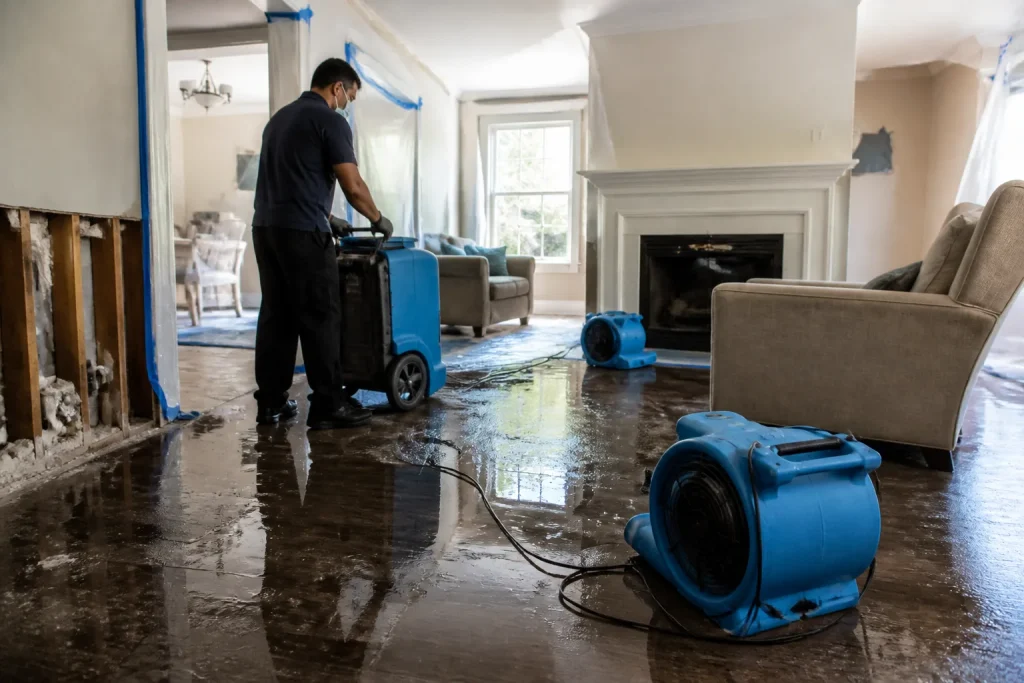
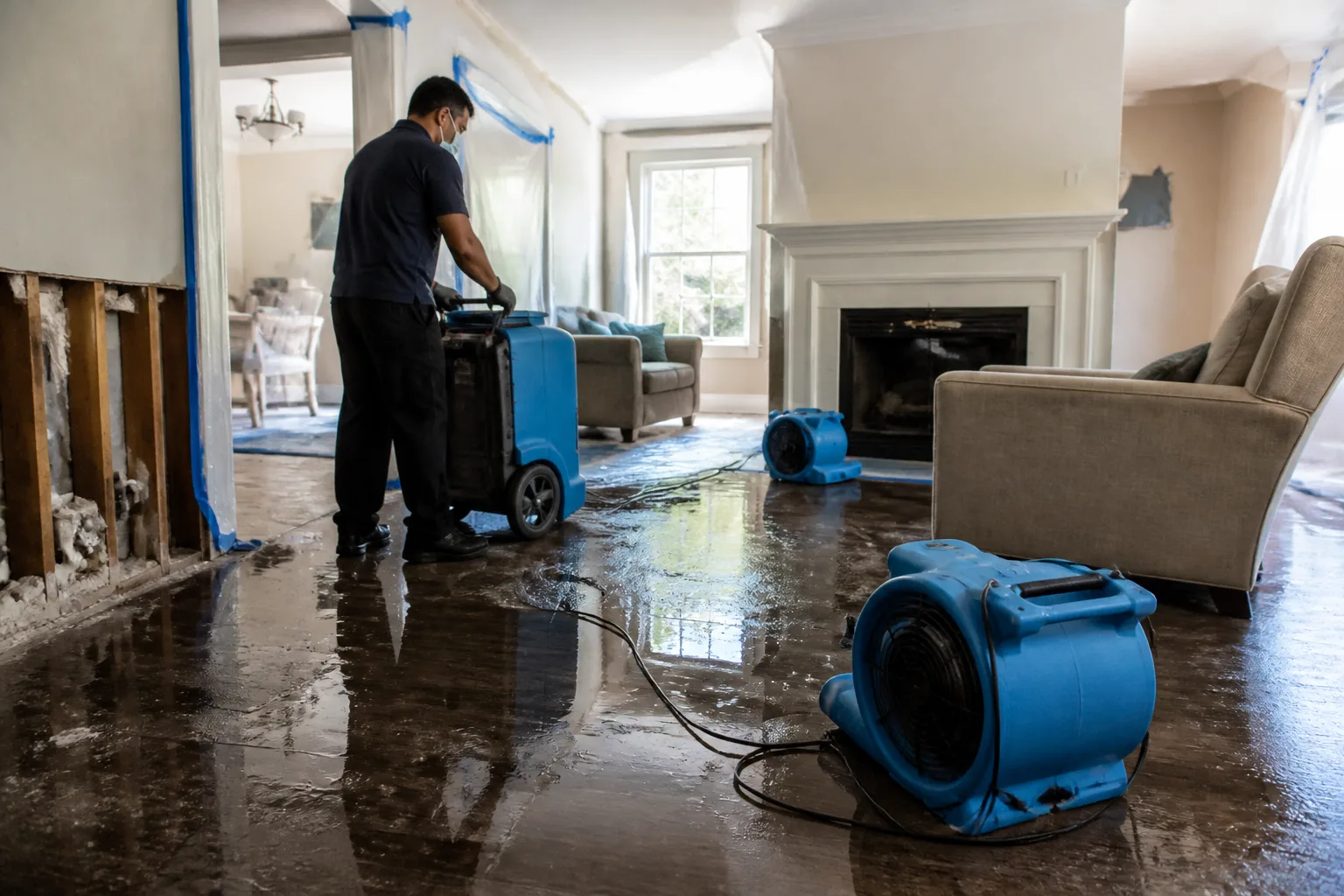
If you’ve had water damage in Los Angeles, a Dri-Eaz dehumidifier in your hallway means your restoration company uses professional-grade equipment, not rental-store gear. Dri-Eaz LGR (Low Grain Refrigerant) dehumidifiers pull moisture from the air far more efficiently than the units you buy at Home Depot, and they’re the standard on serious structural drying jobs. This guide explains what these machines actually do, how to verify they’re working correctly, and what to expect when a Los Angeles restoration crew sets them up in your home. If you’d rather skip the technical details and just want a straight answer about your situation, call (940) 466-4354 and we’ll talk you through it.
What Is a Dri-Eaz LGR Dehumidifier (and Why Should You Care)?
LGR stands for Low Grain Refrigerant. “Grain” here is a measurement of moisture in the air: 7,000 grains equals one pound of water vapor. An LGR dehumidifier is engineered to keep pulling water out of the air even when humidity levels drop below what a standard dehumidifier can handle. A conventional dehumidifier might stop being effective at around 50% relative humidity. An LGR keeps extracting water down to much lower levels, which matters because structural drying is about getting materials genuinely dry, not just making the room feel less damp.
Here’s why this matters in Los Angeles specifically. Our climate is drier than most of the country, which works in your favor. Dry air evaporates water from wet drywall, hardwood, and subfloor faster than humid air does. But that evaporation pushes moisture into the air, and that moisture wants to settle somewhere else in your home if it’s not captured. The Dri-Eaz unit’s job is to grab that vapor the moment it’s released, before it migrates into a closet, behind baseboards, or into a wall cavity you can’t see. In Beverly Hills living rooms and Echo Park bungalows alike, we’ve watched this keep secondary damage from spreading into rooms that never got wet in the first place.
The Dri-Eaz LGR 7000XLi, one of the most common units in residential Los Angeles restoration, runs about $85 a day as a line item on a typical invoice. That’s the machine itself; your total drying cost includes monitoring visits, air movers, and the technician’s time. When you see that line item, ask what specific unit is being used and how many square feet it’s covering. You’re paying for real performance, and you should know what that means.
How to Read a Dri-Eaz Machine Like a Technician
Every Dri-Eaz LGR dehumidifier has a control panel that tells you something useful if you know what you’re looking at. The first number is inlet temperature and humidity: the conditions of the air entering the machine. The second is outlet temperature. On a working LGR, the outlet air runs noticeably warmer than the inlet air because the refrigeration process generates heat as a byproduct of pulling moisture out. That warm, dry air gets circulated back into the room, which actually speeds evaporation from wet materials.
The critical number on a Dri-Eaz unit is the daily water removal rate, often displayed as pints per day. When a drying job starts, an LGR 7000XLi can pull 140 to 150 pints of water from the air in 24 hours under ideal conditions. As the structure dries, that number drops. A technician following IICRC protocol checks this daily and logs it. By day three or four on a typical Los Angeles water damage job, that number should have fallen significantly. If it hasn’t, something’s wrong: either the equipment isn’t sized correctly, there’s a hidden water source still feeding moisture into the space, or the drying chamber isn’t sealed properly.
Ask your restoration company to share those daily readings with you. At Wendell Water Damage Restoration, our technicians text photo updates that include the dehumidifier’s current extraction rate, so you can watch the number drop day over day without being on-site. A company that won’t show you those numbers is asking you to trust them blindly, and in Los Angeles, there’s no reason to accept that.
The Airflow Equation: Why Dehumidifiers Alone Don’t Dry a Room
Here’s the mistake most homeowners make. They see a big dehumidifier running and assume drying is handled. But a dehumidifier only processes the air that reaches it. Water trapped inside drywall, under hardwood flooring, or inside wall cavities doesn’t evaporate quickly on its own. It needs airflow across the surface to speed evaporation, and that’s where air movers (axial fans) come in.
The setup looks like this: air movers direct focused airflow onto wet surfaces, forcing moisture to evaporate into the room air. The Dri-Eaz dehumidifier then captures that moisture and removes it from the space. Remove either piece and drying stalls. Remove the fans, and water stays trapped in materials for weeks. Remove the dehumidifier and all you’ve done is redistribute moisture to drier parts of the house. In Los Angeles homes built on raised foundations, that can mean moisture migrating under the floor and settling into joists where it feeds mold for months before anyone notices.
The local pros use Dri-Eaz dehumidifiers paired with Phoenix and XPOWER air movers, placed according to IICRC and RIA standards. The number of fans matters less than their angle and placement. A fan pointed at the center of a wet room wastes airflow; one angled 15 degrees toward the baseboard channel of a wet wall creates the evaporation conditions that actually pull water from the material. When our technician sends you after-photos, you should see fans positioned around the perimeter of the affected area, not clustered in the middle of the floor.
Equipment Quantity vs. Equipment Placement: What Industry Standards Say
Here’s a question worth asking your restoration company: “How many dehumidifiers does my job need, and how did you calculate that?” The answer should involve square footage, the class of water damage, and the materials affected. IICRC guidelines suggest dehumidification capacity based on the cubic feet of air space and the water class of the loss. A Class 2 water damage job (water that has soaked into walls and flooring) in a 400-square-foot Los Angeles living room typically needs 80 to 100 pints of daily dehumidification capacity. That might mean one large LGR, or two smaller units if the space is divided by walls that restrict airflow.
Placement matters as much as quantity. A Dri-Eaz unit sitting in the middle of an open doorway works better than one tucked in a hallway corner. The unit needs clearance around its intake and exhaust so it’s not recycling the same pocket of air. And in multi-story Los Angeles homes, a common mistake is running a single dehumidifier on the first floor and hoping it dries a wet second-floor bathroom. It won’t. The wet zone needs its own equipment, or the moisture will spread before it ever reaches the machine.
We pulled a Dri-Eaz out of a Silver Lake garage last month where another company had set up one unit for a water damage job that ran through two floors and a shared wall. The homeowner’s ceiling was still wet after ten days. The machine was doing its job; it just wasn’t sized or placed for the actual job. That’s the kind of thing you catch when someone checks the daily extraction numbers and compares them against the square footage.
Day One, Day Three, Day Done: Tracking Drying Progress Through Photos
You won’t be home every day while your Los Angeles house dries. You have a job, maybe kids, a commute. So how do you know the equipment is running and the job is progressing? This is where photo documentation changes the game.
On day one, our technicians take photos of the full equipment setup: dehumidifier placement, fan angles, moisture meter readings pressed against the wettest areas. You should see the initial moisture content of affected materials. A wet drywall reading of 30% to 40% moisture content is common at the start of a Los Angeles water damage job. Drywall in a dry Los Angeles home normally sits around 8% to 12%, so that number tells you how much drying needs to happen.
On day three, the photos should show a visible difference. Moisture meter readings should be trending down. The Dri-Eaz unit’s daily extraction rate should have dropped from its day-one peak. If the photos look identical to day one and the numbers haven’t moved, the drying plan needs adjusting. That’s not normal, and a good restoration company reacts to it. Under IICRC protocol, you have a drying goal: return affected materials to their pre-loss moisture content. The target isn’t “the room feels dry.” It’s a number on a moisture meter.
At drying completion, the final photos should show the same wall or floor area with moisture readings in the normal range. With Water Damage Restoration in Los Angeles done through Wendell, you get those before-and-after photos by text, along with the written guarantee that backs every job. No vague “it’s dry now” phone calls. You see the numbers yourself.
Los Angeles Water Damage: What Makes Our Market Different
Los Angeles water damage isn’t like water damage in Houston or Atlanta. Our climate, our housing stock, and our plumbing infrastructure all shape how drying works here. Homes in Los Angeles fall into two broad categories: older homes built before the 1970s with raised foundations and plaster walls, and newer construction with slab foundations and drywall. Each dries differently.
Raised foundation homes, common in neighborhoods like West Adams and Highland Park, have a crawlspace underneath. Water that seeps through flooring can end up in that crawlspace, where it’s out of sight and hard to dry without pulling flooring or setting up containment from below. Plaster walls hold moisture longer than modern drywall and need slower, more measured drying to avoid cracking. In our experience, these older Los Angeles homes take 20% to 30% longer to dry than newer builds with the same square footage.
And let’s talk about the elephant in the room: earthquake retrofitting. Thousands of Los Angeles homes have been seismically retrofitted in the last decade, and those retrofits often include steel brackets and epoxy anchors that sit right where water wants to travel. Water following a wall cavity can pool around those anchor points. A technician who knows Los Angeles construction patterns will check those spots specifically. It’s a small thing, but it’s the difference between a drying job that’s done in five days and a mold problem that shows up six months later. That’s also why Mold Remediation in Los Angeles and Water Damage Repair in Los Angeles are tightly connected here: incomplete drying is the most common cause of mold we see in LA homes.
When to Call a Pro: The Line Between DIY and Dangerous
If this all sounds like a lot of technical detail, that’s because proper structural drying is genuinely technical work. Here’s where homeowners get into trouble. Water damage that looks small on the surface often hides in wall cavities, under flooring, and inside cabinets. A wet-dry vac and a rented fan from the hardware store can handle a small, contained spill on a tile floor. Anything involving water that soaked into drywall, laminate flooring, carpet with a pad underneath, or wall insulation needs professional drying.
The stakes aren’t just cosmetic. Incomplete drying in Los Angeles leads to mold, and mold remediation is a bigger, more expensive project than water extraction. Structural wood that stays wet for extended periods begins to warp and lose integrity. Electrical systems that got wet need checking. The cost of professional drying with Dri-Eaz equipment typically ranges from $1,500 to $4,500 in Los Angeles for a contained room loss, depending on square footage and how long the water sat. Compare that to $8,000 to $25,000 for mold remediation if the drying wasn’t done right. The math favors doing it properly the first time.
We’re not saying every water issue needs a full restoration crew. We’re saying that if water has been sitting for more than a few hours and you can see it wicking up drywall or seeping under flooring, the clock is running. Call (940) 466-4354 and speak to a live person, 24/7. We’ll tell you over the phone whether this is a job for a mop or a job for our equipment. No pressure, no scare tactics, just an honest answer from someone who does this work every day in Los Angeles.
The Bottom Line
Dri-Eaz equipment is an excellent sign that your restoration company takes drying seriously, but brand names alone don’t dry your house. The machine has to be sized correctly, placed correctly, paired with proper airflow, and monitored with daily moisture readings. In Los Angeles, where our dry climate and varied housing stock create specific drying challenges, these details matter more than ever. Ask your restoration company to show you the numbers: daily extraction rates, moisture meter readings, and clear photos at every stage. If they won’t, find someone who will. If you’re dealing with water damage in Los Angeles and want a straight answer about your situation, Wendell Water Damage Restoration offers free estimates and is available 24/7. Call (940) 466-4354 and we’ll help you figure out the next step.
Frequently Asked Questions
Professional water damage restoration in Los Angeles using Dri-Eaz equipment typically runs $1,500 to $4,500 for a contained single-room loss. Larger losses involving multiple rooms, crawlspace drying, or content manipulation can run $6,000 to $15,000 or more. Your specific cost depends on square footage, how long the water sat, and what materials got wet. At Wendell, the price goes in writing before any work starts, so you’ll never get a surprise number after the equipment is already in your house. Call (940) 466-4354 for a free estimate on your specific situation.
Most homeowners insurance policies in Los Angeles cover water damage restoration when the cause is sudden and accidental, like a burst pipe or supply line failure. Coverage typically includes equipment costs, including Dri-Eaz dehumidifiers and air movers. Gradual leaks, flooding from outside, and neglect are often excluded. We document every job with photos and moisture readings so you have what your adjuster needs, and we work directly with insurance companies to keep the process moving. Call (940) 466-4354 and we’ll help you understand what your policy likely covers.
Most Los Angeles water damage jobs dry in 3 to 5 days with properly sized Dri-Eaz equipment. Older homes with plaster walls and raised foundations can take 5 to 7 days. The daily extraction rate on the dehumidifier tells the story: if it doesn’t drop significantly by day three, the drying plan needs adjustment. We text you those daily numbers so you can track progress yourself, and we don’t declare the job done until moisture meter readings show materials are back to their normal range.
Yes, and the difference is significant. A Dri-Eaz LGR dehumidifier is built to run continuously for days or weeks in demanding conditions, extracting water at low humidity levels where consumer dehumidifiers stop working. Consumer units are designed for damp basements, not structural drying. If a Los Angeles restoration company shows up with equipment you could buy at a hardware store, they’re not doing professional drying. You’re paying professional prices for a rental-grade job.
For a small, contained spill on a tile floor that you caught immediately, yes, you can usually handle it yourself. For water that soaked into drywall, carpeting, laminate, or wall insulation, DIY drying almost always leaves hidden moisture behind. In Los Angeles, that hidden moisture becomes mold, and mold remediation costs three to five times what professional drying costs. If you’re unsure, call (940) 466-4354 and describe what happened. We’ll give you an honest answer about whether you need us or not.
Written by the team at Wendell Water Damage Restoration.
Need Damage Restoration Help?
Call Wendell Water Damage Restoration - licensed & insured, here with fast after-hours help in Los Angeles.
(940) 466-4354