
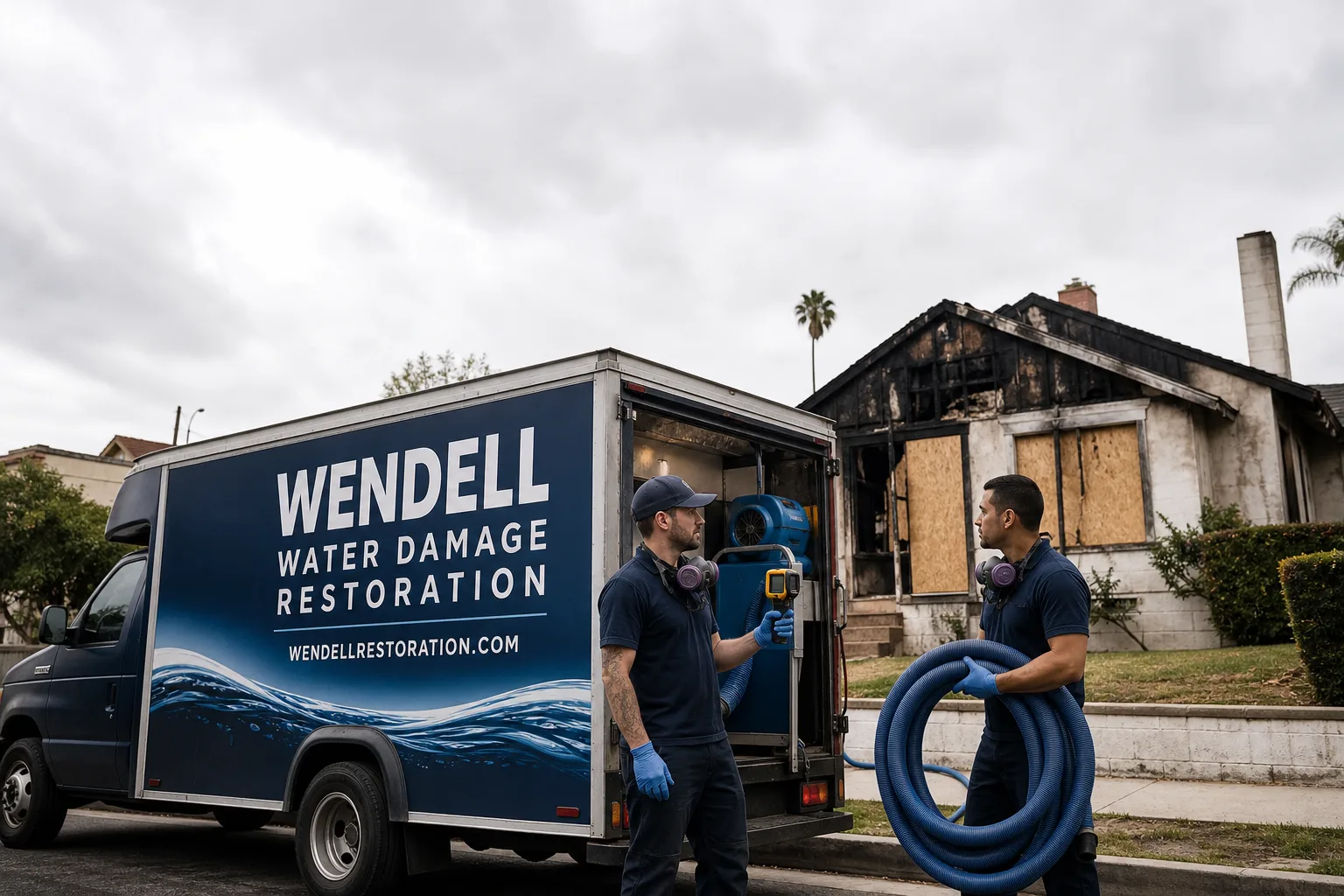
Free visual inspection and a written scope of work before any mitigation begins - photos, moisture readings, and drying logs go in your claim file
The scope we write is the scope we bill. Anything new gets shown to you, in writing, before we touch it.

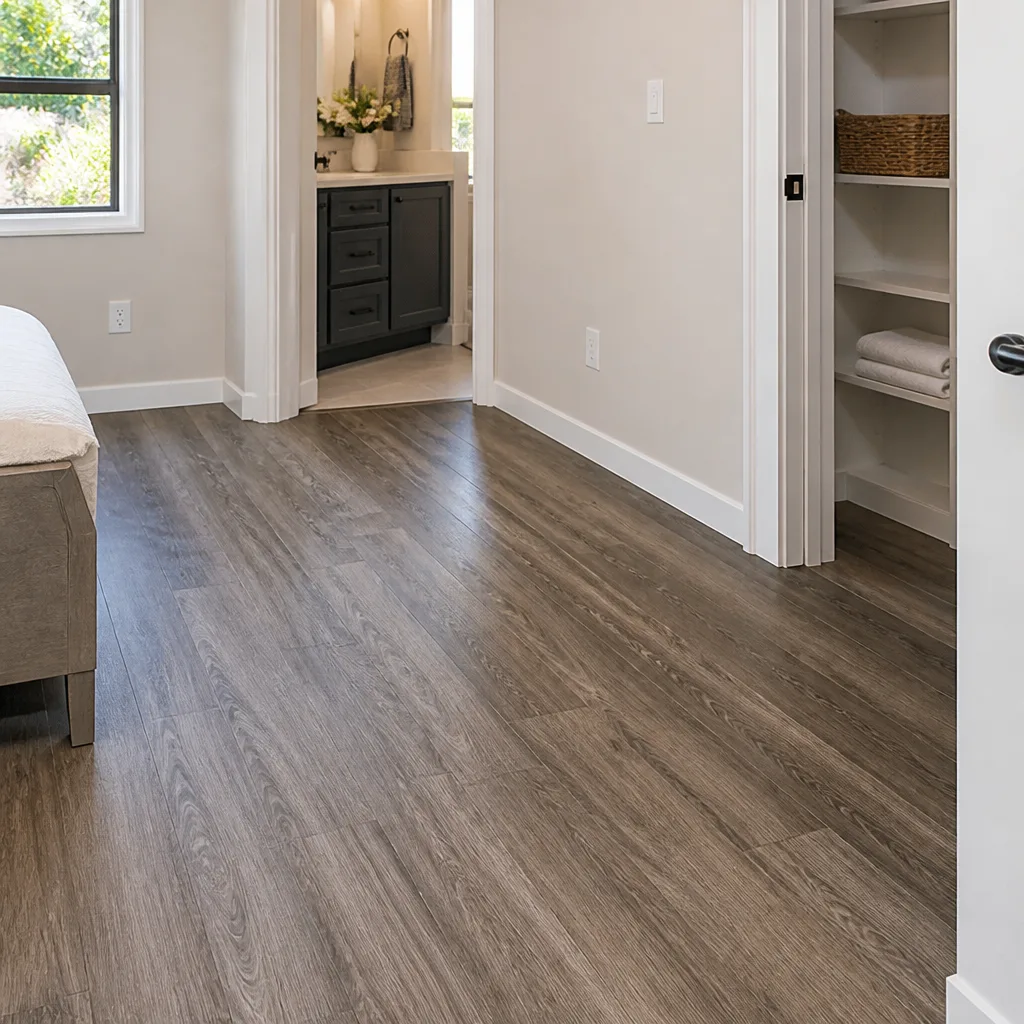

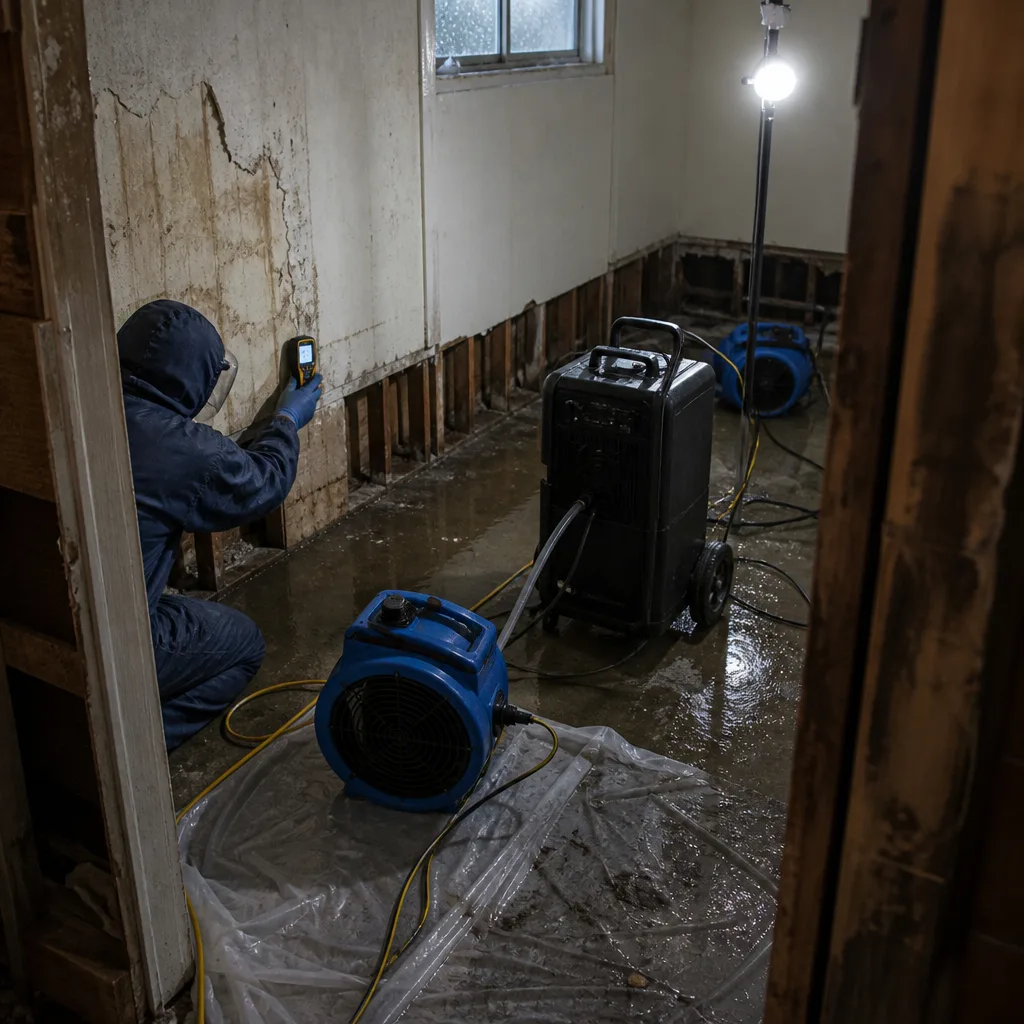 Before
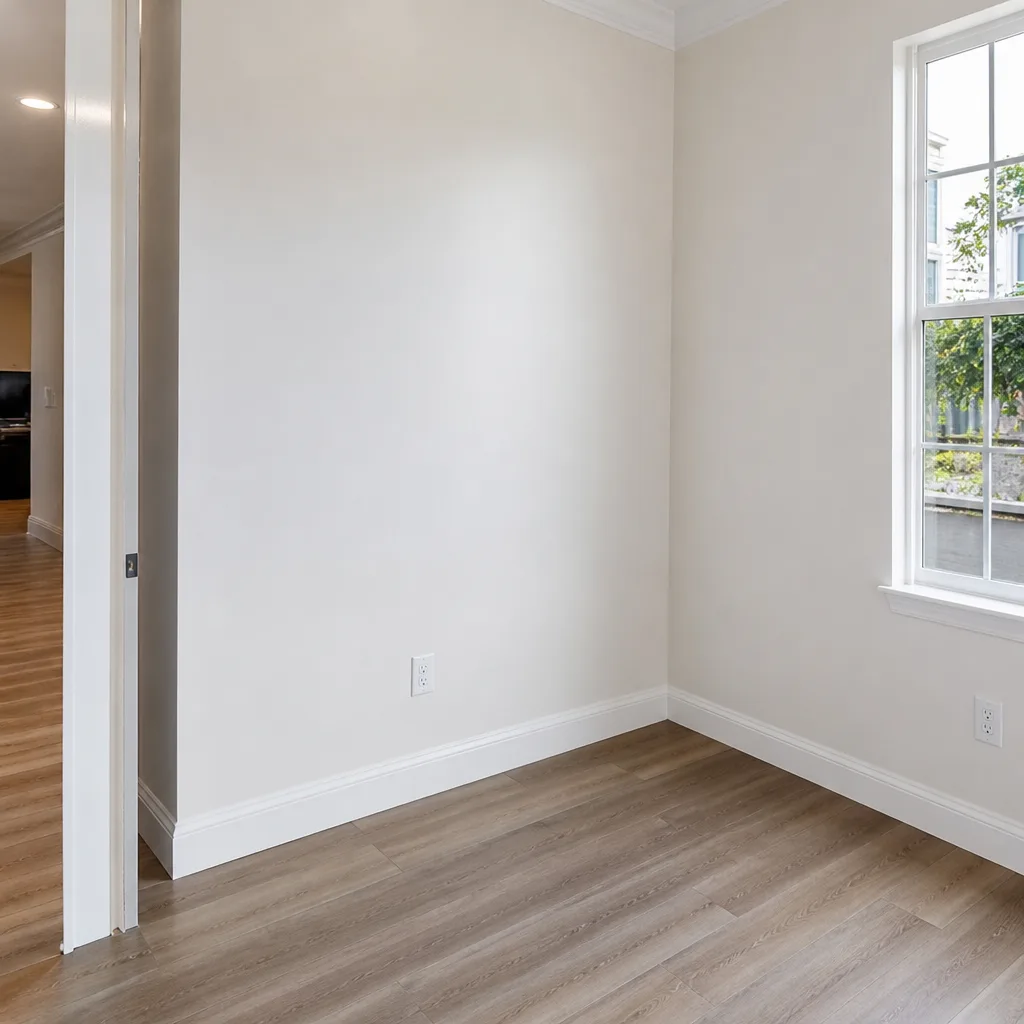 After
After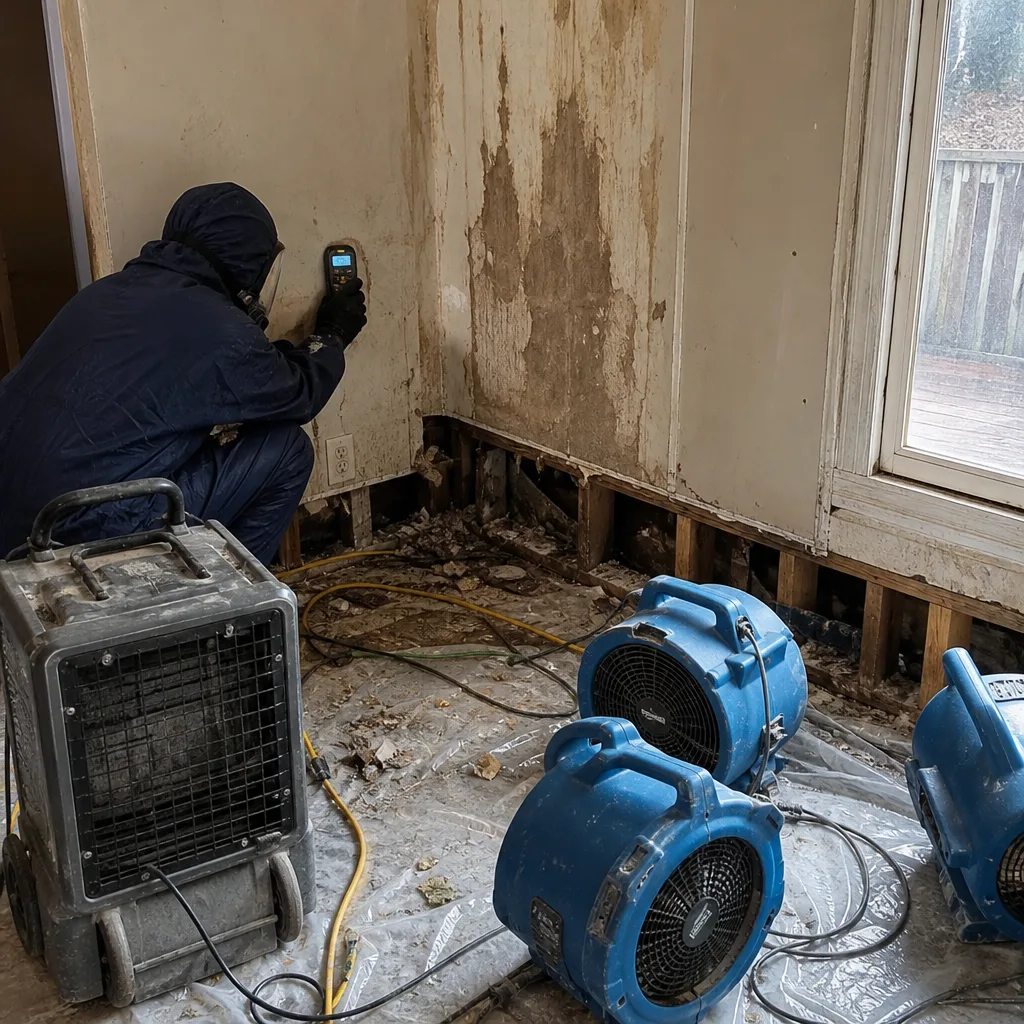 Before
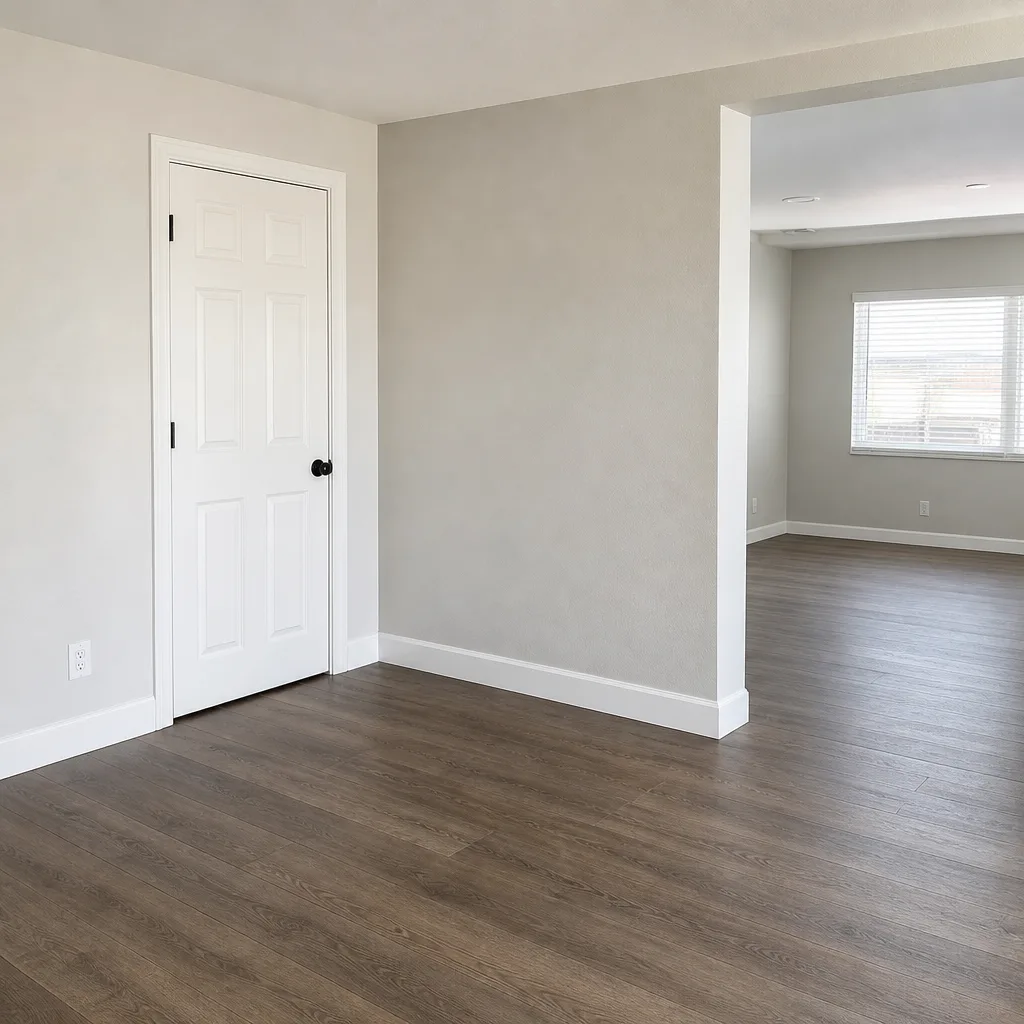 After
After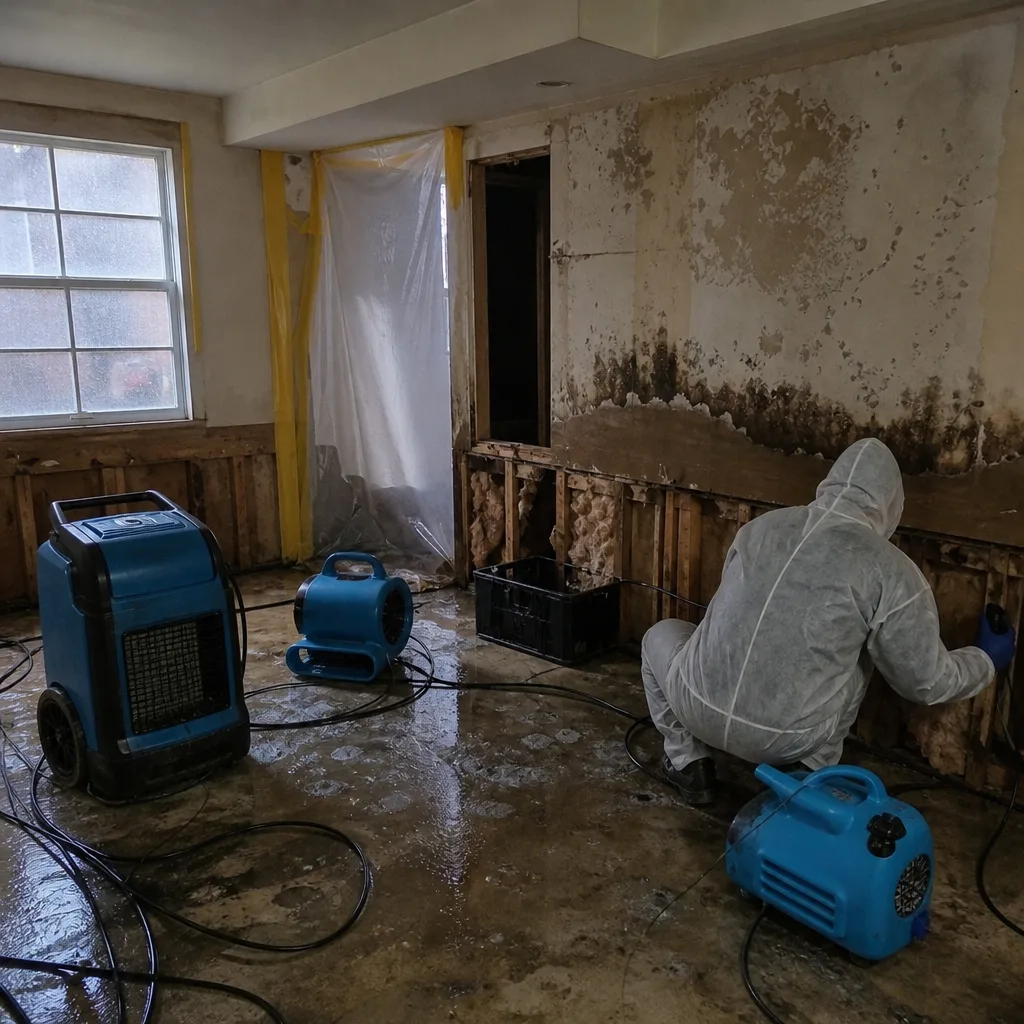 Before
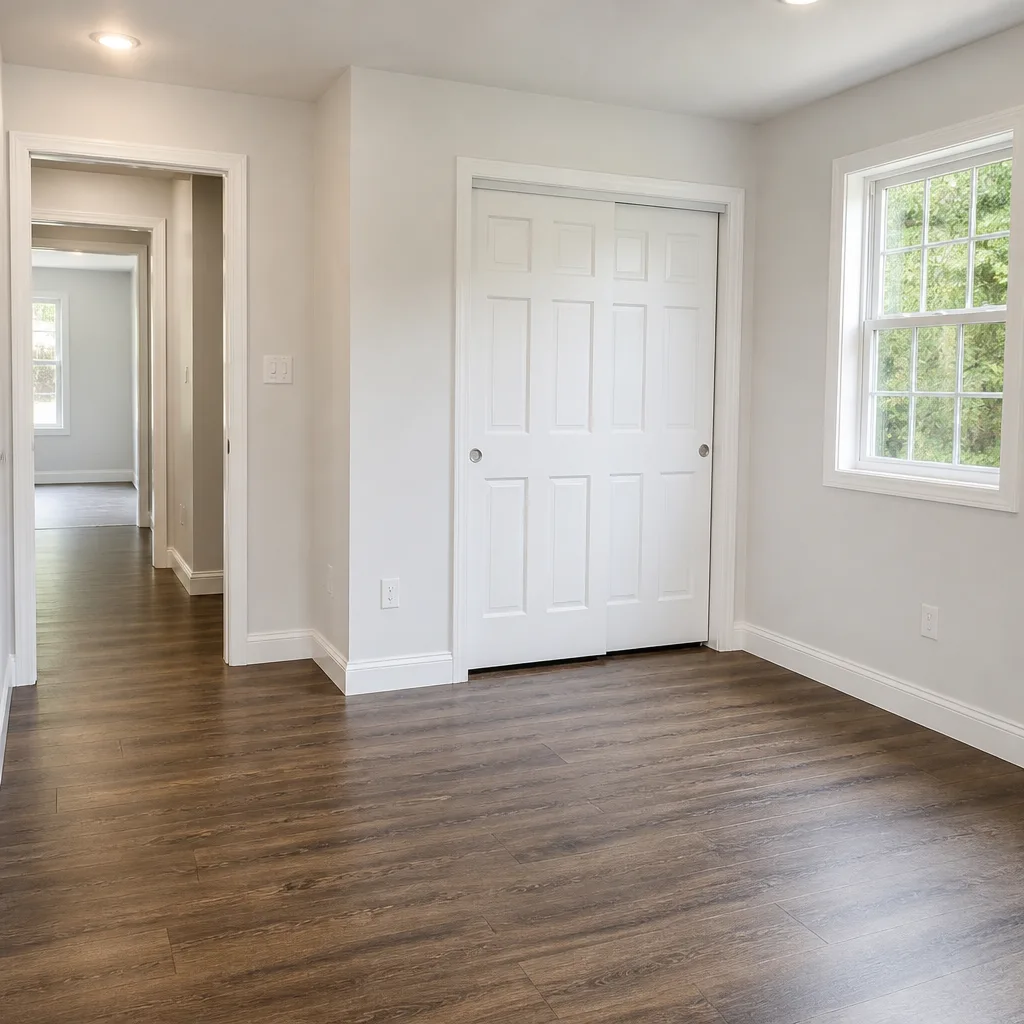 After
AfterWater Damage Restoration Stopped Working
If your water damage restoration stopped working – meaning the drying equipment shut off, the moisture readings aren’t dropping, or the damage looks worse instead of better – the job almost certainly wasn’t finished correctly the first time. Most cases come down to one of three things: equipment was pulled too early, a hidden moisture pocket was never located, or the source of water was never fully sealed before drying began. None of these fix themselves.
This is not a rare situation. Restoration work that looks done on the surface can still have active moisture trapped inside wall cavities, under subfloor panels, or behind baseboard trim. You won’t always see it until the drywall starts to bubble, the floor starts to warp, or a musty smell shows up a few weeks later. That smell is mold getting a foothold. The faster you get a trained technician back in with calibrated moisture meters and thermal imaging, the less damage you’re managing next month.
Why It Happens
Equipment Was Removed Before Drying Was Complete
Structural drying follows a science called psychrometrics – the relationship between temperature, airflow, and moisture content in materials. A job is complete when the wood framing, drywall, and subfloor reach what the IICRC calls “drying goals,” specific moisture content readings that confirm the material is back to a dry standard. If the air movers and dehumidifiers came out before those numbers were hit, the material kept holding moisture after everyone left. You’ll notice this when flooring starts to cup or buckle, or when painted surfaces begin to peel or bubble days after the crew packed up.
A Hidden Moisture Pocket Was Never Found
Water travels fast and does not stay where it landed. It follows wall cavities downward, migrates along subfloor seams, and pools inside insulation bats where no surface reading will catch it. If the original crew only took surface moisture readings and skipped thermal imaging, pockets like these go undetected. The tell is a persistent damp smell in a specific area of the room, or a section of drywall that feels slightly soft or sounds hollow when you tap it.
The Water Source Was Never Fully Stopped
Drying equipment can’t keep up with an active leak. If a supply line pinhole, a slow roof intrusion, or a leaking drain connection wasn’t confirmed closed before drying started, the equipment was fighting a losing battle the entire time. If moisture readings were flat for days rather than trending steadily downward, this is a likely explanation. Check under sinks, around the base of the toilet, and in the cabinet beneath any appliance that uses water – look for drips, staining, or any standing water that wasn’t there before.
Mold Growth Has Already Started
When moisture sits in a dark, enclosed space for more than 48 to 72 hours, mold colonization can begin on drywall paper, wood framing, and insulation. If you’re noticing a musty or earthy odor that wasn’t there right after the initial incident, or if you see dark spotting on drywall seams or baseboard edges, mold remediation is now part of the conversation – not just water restoration. This changes the scope of work, but it doesn’t make the project unmanageable. It just needs to be addressed directly rather than ignored.
What to Do Right Now
- Stop using any drying equipment you don’t fully understand. Moving air movers or repositioning dehumidifiers without knowing the drying plan can push moisture further into unaffected materials rather than pulling it out.
- Photograph everything before you touch it. Take photos of any visible damage, wet flooring, staining, or mold spotting. These photos matter for your insurance claim and give the next technician a baseline record. Date-stamp them with your phone.
- Check that the original water source is confirmed off. Look at the shutoff valve, the affected appliance, or the plumbing connection that caused the incident. If you see any dripping, new staining, or pooling, do not wait – call for help now.
- Do not disturb visible mold. If you see dark spotting or fuzzy growth on any surface, don’t wipe it, spray it with household cleaner, or cut the affected drywall out yourself. Disturbing mold without containment spreads spores to unaffected areas. Leave it for a certified technician.
- Open interior doors to improve circulation, but do not run a household fan directly at a wet surface. A box fan aimed at wet drywall doesn’t create the pressure differential needed to pull moisture out of the material – it mainly circulates surface air and can accelerate mold if the underlying material stays wet.
How We Fix It
When your local Wendell Water Damage Restoration team arrives, the first thing a technician does is a full re-assessment – not a visual once-over, but calibrated moisture meter readings across every affected surface plus thermal imaging to locate any hidden pockets the first crew may have missed. Before anything else happens, you get a written price. That number doesn’t change when the job is done.
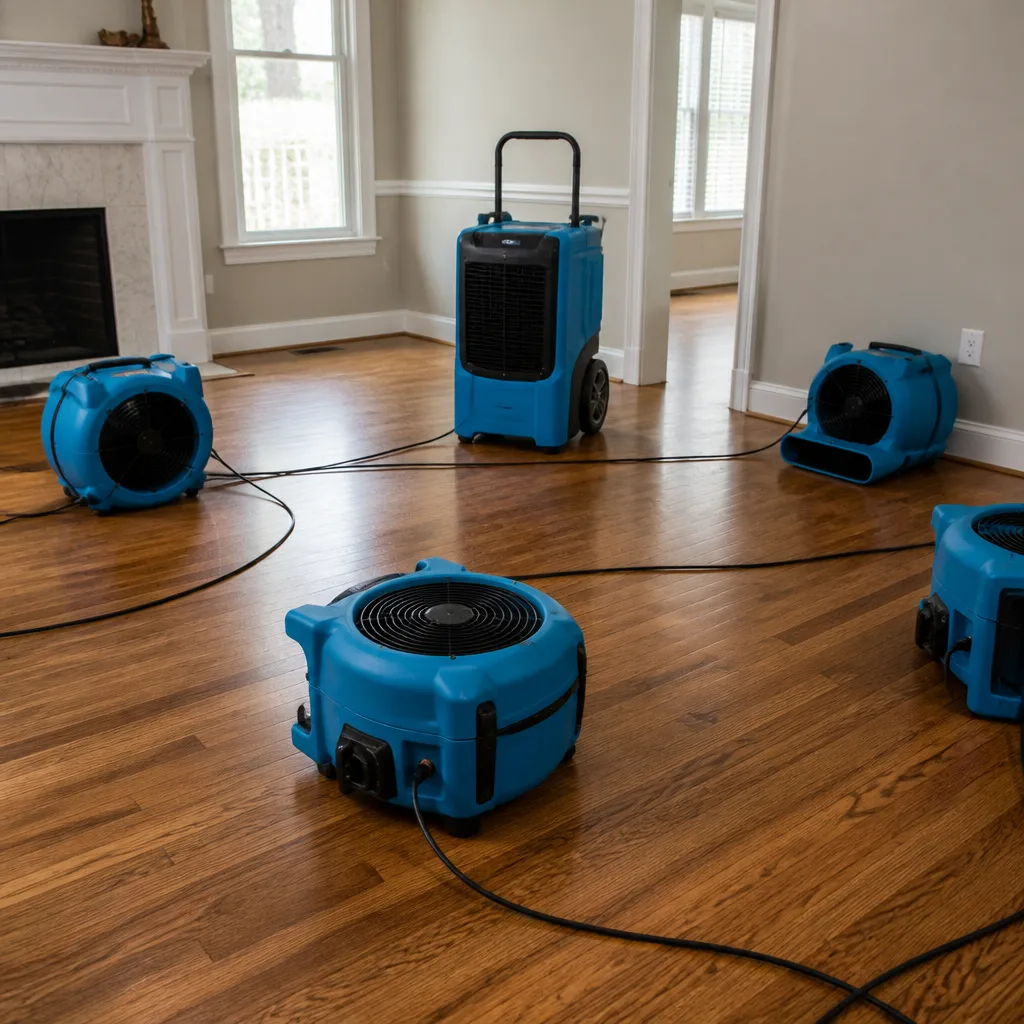
From there, the repair path runs through our Water Damage Restoration and, where mold is present, Mold Remediation services. Equipment from our Dri-Eaz, Phoenix, XPOWER, B-Air, and Injectidry fleet gets deployed to the specific areas that are still holding moisture, positioned according to IICRC, RIA, and IFA drying standards – not guesswork. You’ll get photo updates of the work, before and after, texted directly to your phone. Every repair is covered by the 365-Day Done Right Promise: if it’s not done right, we make it right, in writing, on every job. Timeline depends on material saturation levels, but a technician will walk you through what to expect at the assessment.
Frequently Asked Questions
It should not wait. Active moisture inside wall cavities and subfloor materials creates conditions for mold growth within 48 to 72 hours, and mold remediation is a significantly larger scope of work than finishing a drying job that stalled. The longer saturated materials sit, the more the damage compounds – both structurally and in terms of repair cost. Call (940) 466-4354 and a live person will answer right now, not a voicemail.
It depends on your policy and how the original claim was documented, but many homeowners’ policies do cover continued or worsening water damage when it stems from the same incident. Your local Wendell team will photo-document the current condition of the damage in detail, which is exactly what an adjuster needs to evaluate a continued claim. We won’t make promises about your specific coverage, but we will make sure you have the documentation to make a strong case. Call (940) 466-4354 to get the assessment started.
Water damage does not keep business hours, and neither does Wendell – a live person answers every call around the clock, every day of the year. When you call (940) 466-4354, your local team will give you a real arrival time you can track, not a four-hour window and a hope. Scheduling depends on current availability in your area, but the first step is a call, not a wait.
Not necessarily – it depends entirely on what the moisture readings show when your Wendell technician arrives. Some stalled jobs just need additional drying time with properly positioned equipment. Others have progressed to mold growth that requires remediation before drying can be completed correctly. The assessment tells us which situation you’re in, and you get a written price for whatever that scope looks like before any work starts. No guessing, no surprises at the end.
Get It Fixed
Call (940) 466-4354 right now – a live person answers every call, day or night. Your local Wendell Water Damage Restoration team will assess the damage, give you a written price before anything starts, and get the job done right – backed by the 365-Day Done Right Promise.
Written by Blake Sorensen, Owner and Lead Restoration Technician, Wendell Water Damage Restoration, serving communities nationwide since 2006.
What Our Customers Say
"Insurance paperwork was easy since everything was in one portal."
- Manny R."Mold removal in a basement corner after the leak. Retested clean."
- Gordon K."Water damage repair to the baseboards and drywall was clean."
- Ted H.