
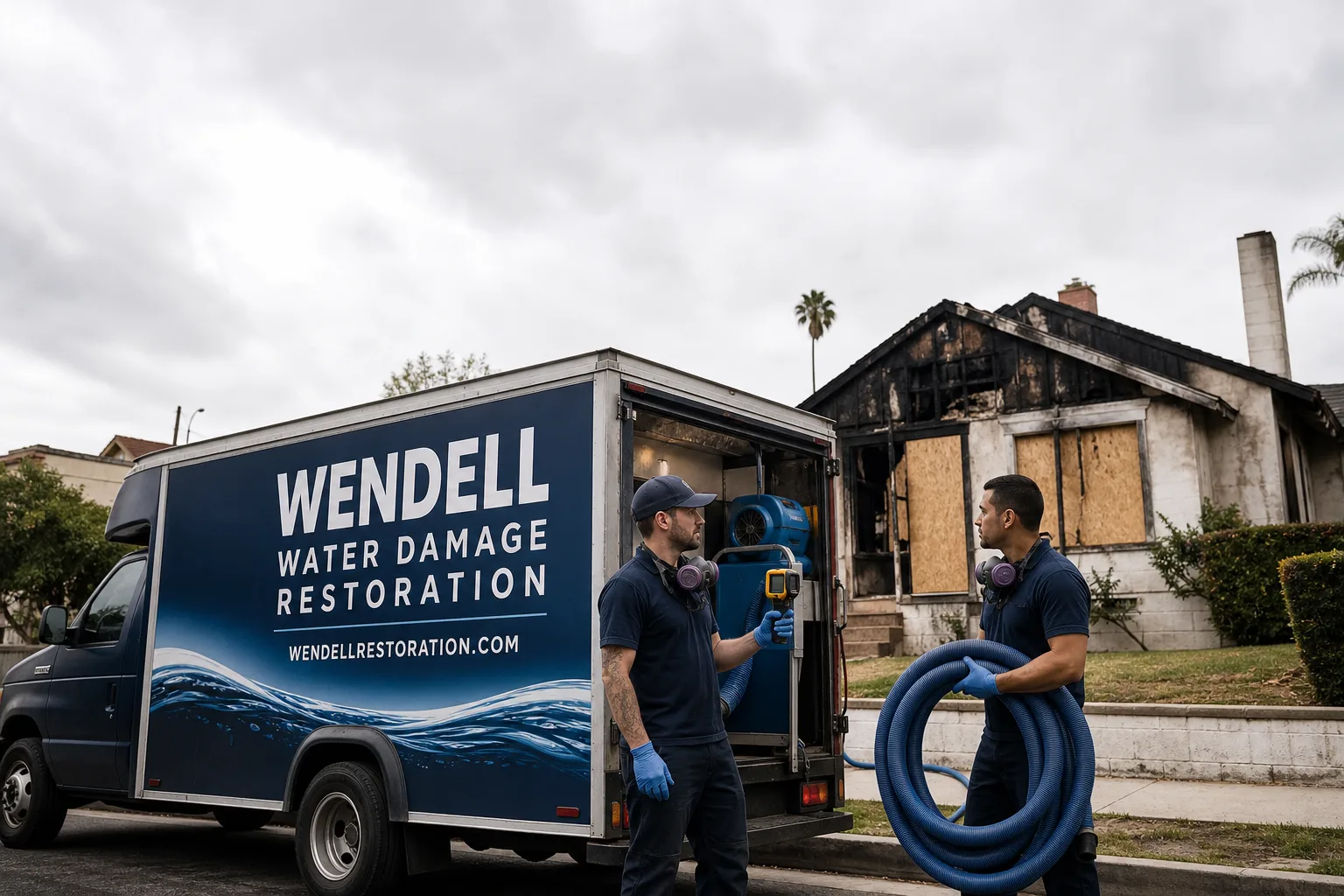
Free visual inspection and a written scope of work before any mitigation begins - photos, moisture readings, and drying logs go in your claim file
The scope we write is the scope we bill. Anything new gets shown to you, in writing, before we touch it.
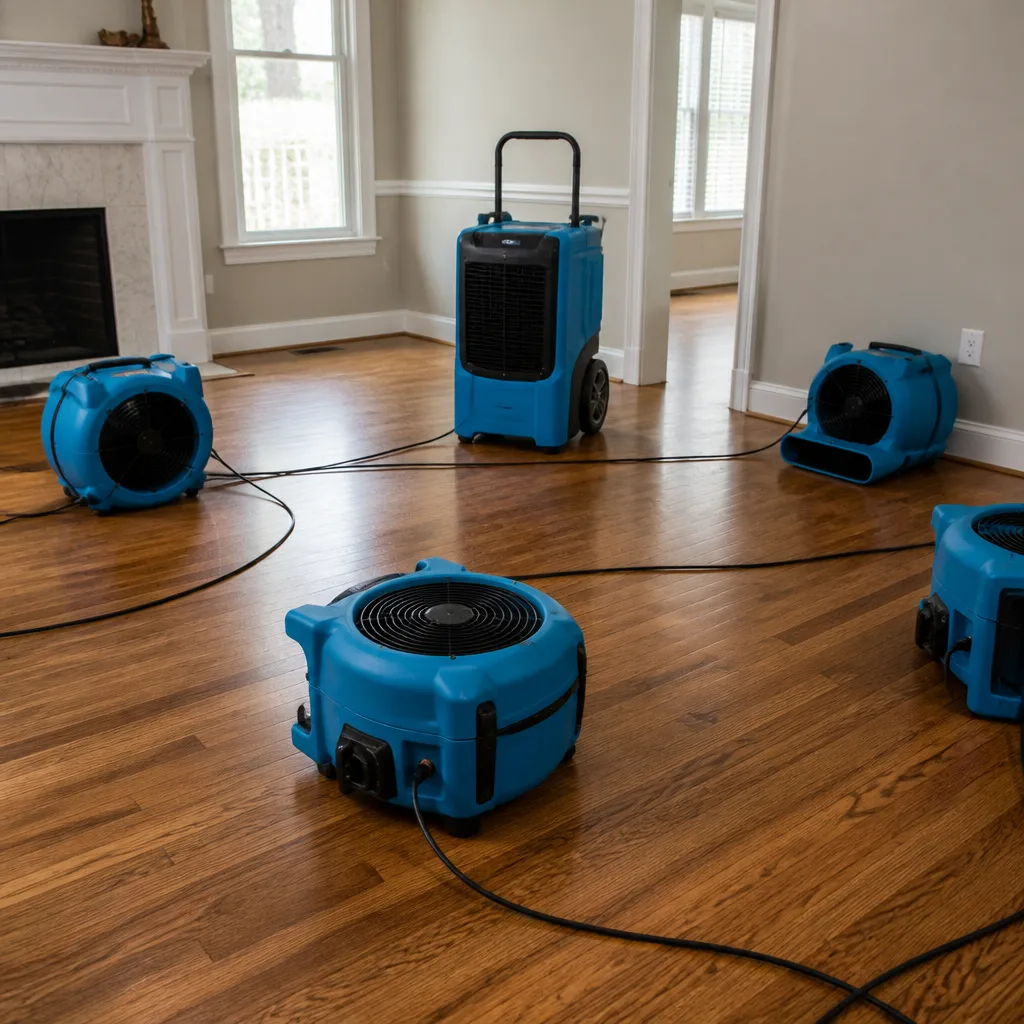
 Before
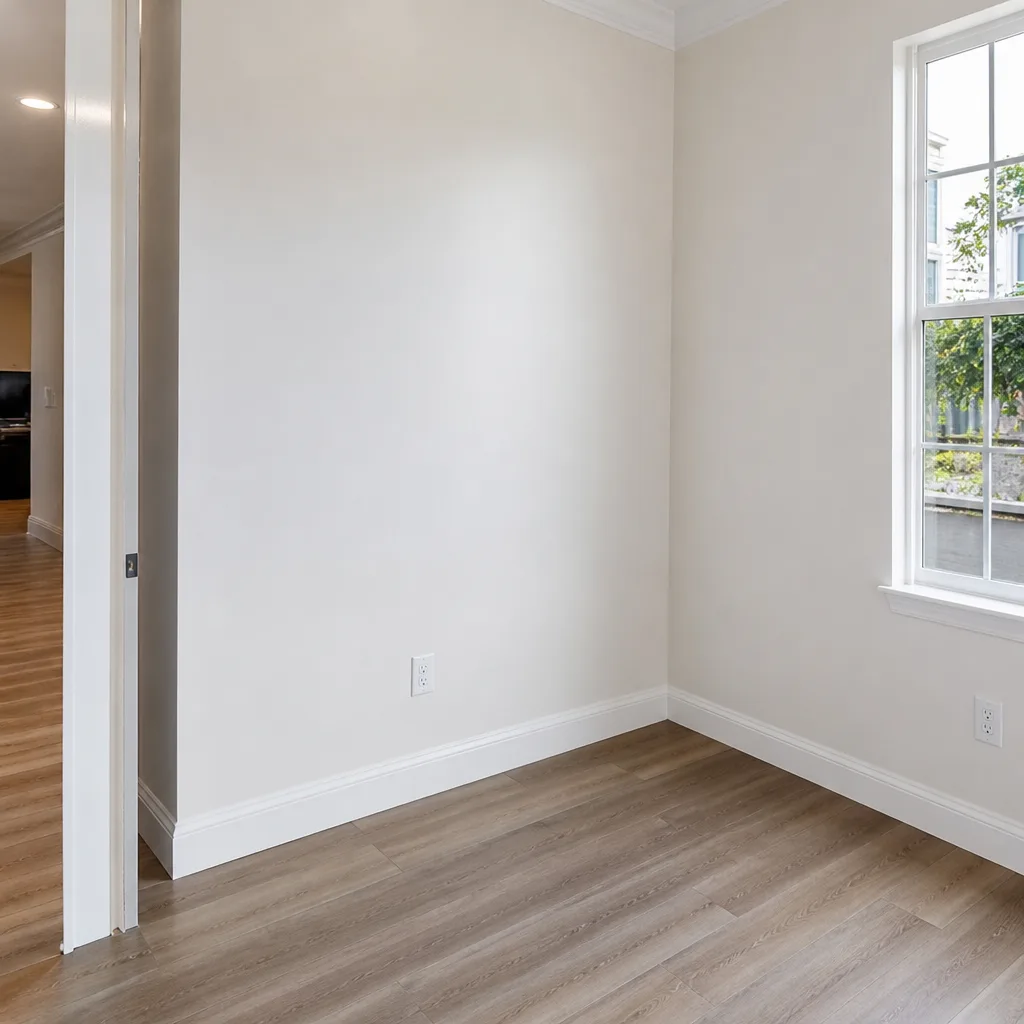 After
After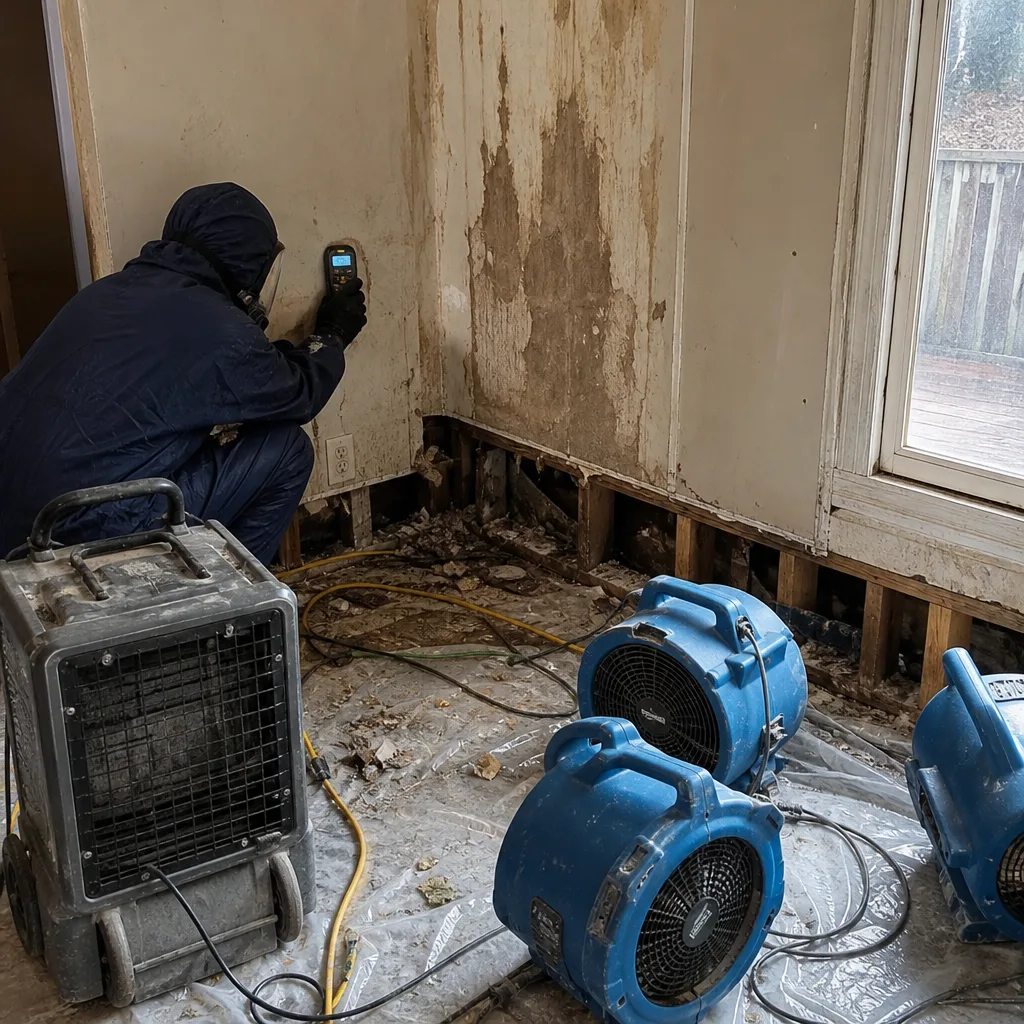 Before
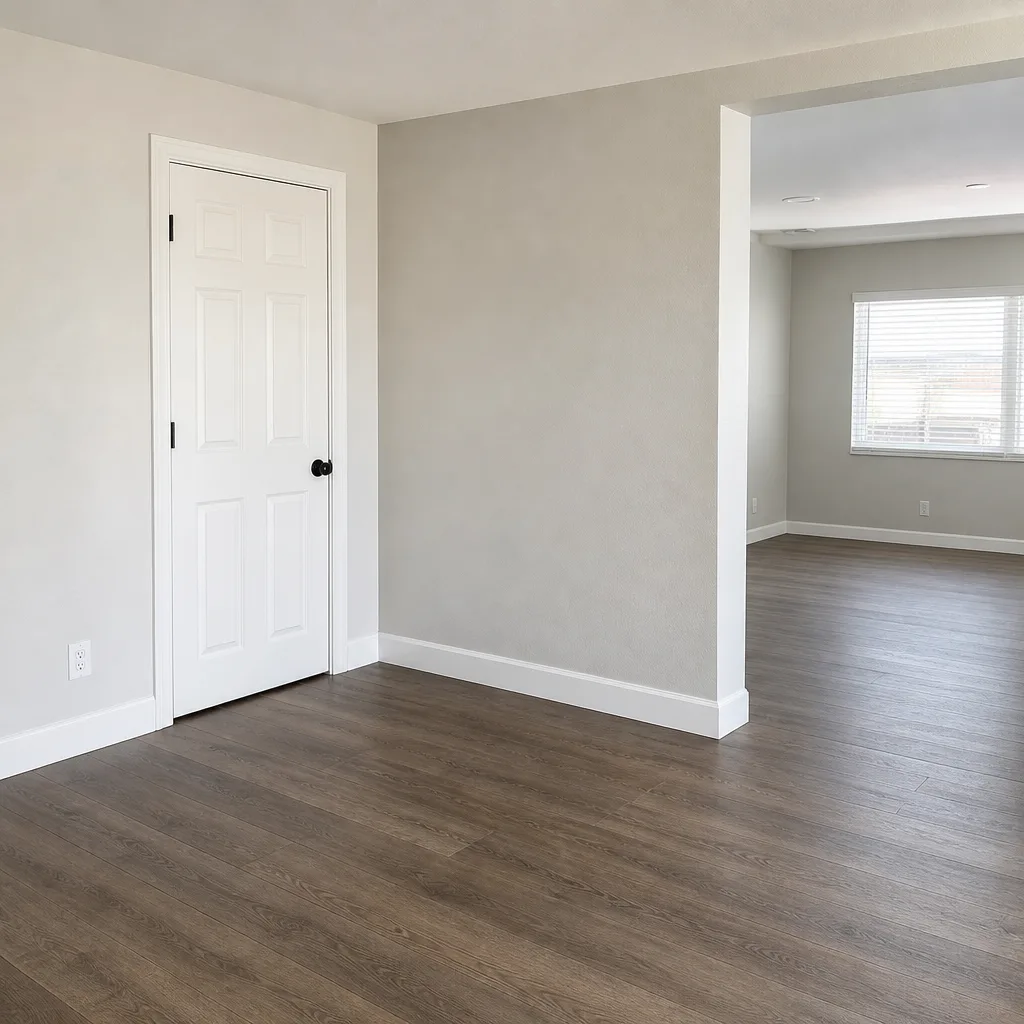 After
After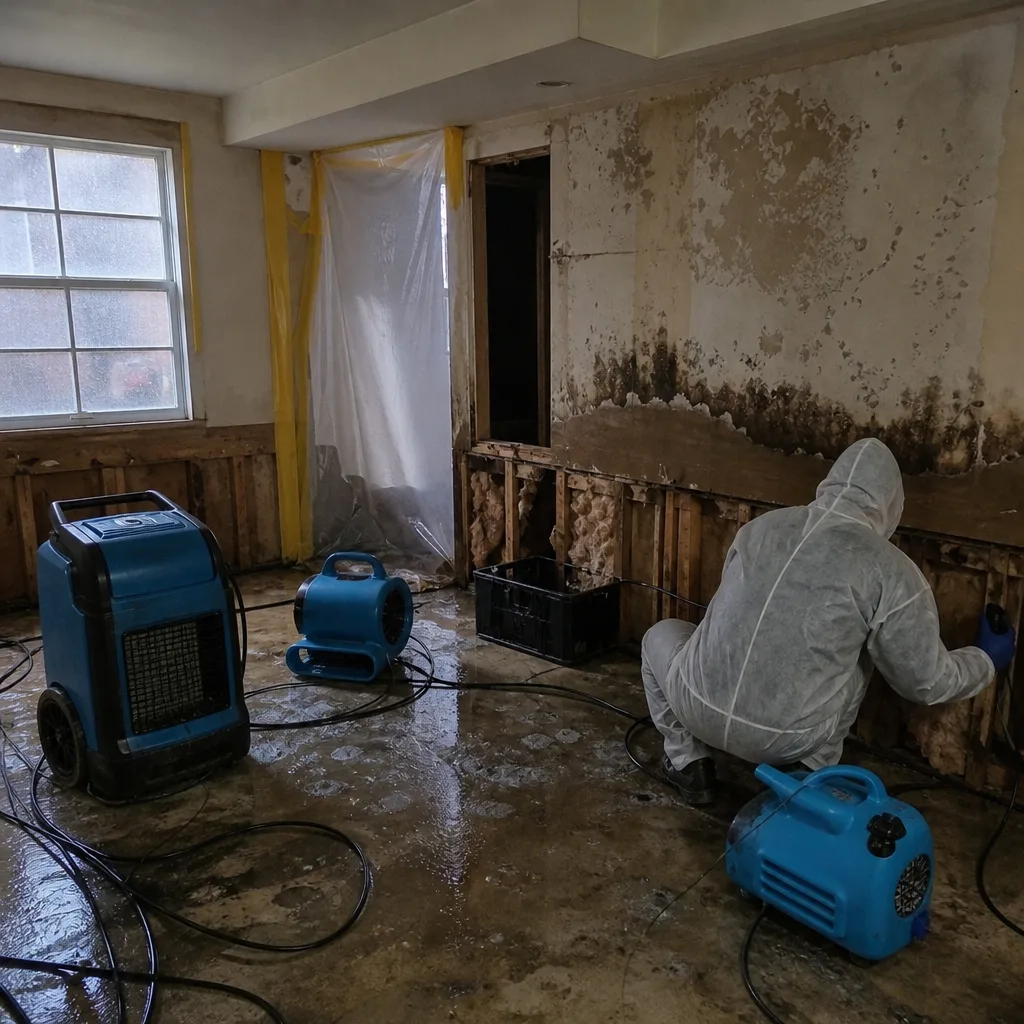 Before
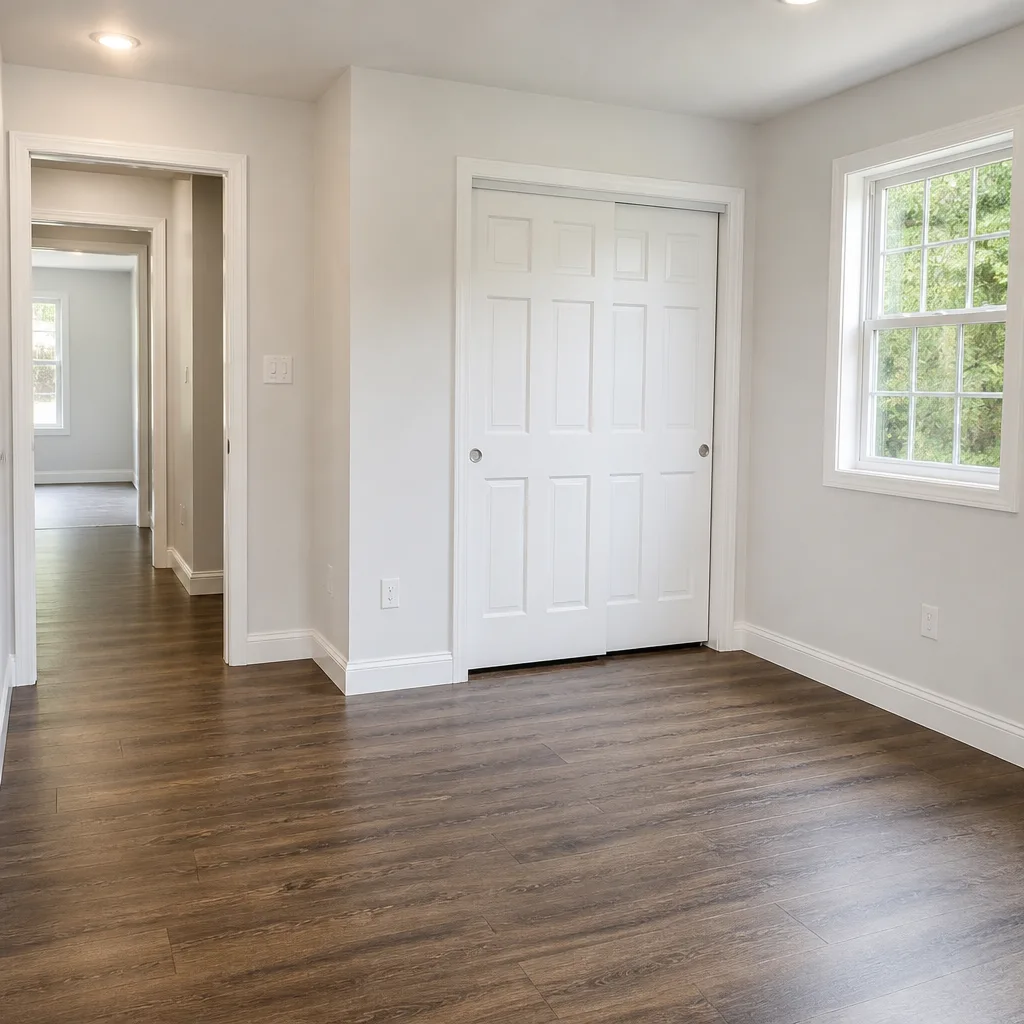 After
AfterFast, Reliable Water Damage Restoration Across Garfield
A finished basement off Midland Avenue near the Passaic takes on several inches of water overnight after a sump line freezes. By morning, the vinyl plank is buckling and water has wicked into the baseboard drywall. That is the most common call we get in Garfield, and the first thing you need to know is this: water damage restoration in Garfield typically runs $1,800 to $6,500 depending on water category, square footage, and how long it sat before extraction started. Our crews reach most Garfield addresses within 45 to 60 minutes. Call (940) 466-4354 and a live person answers, not a voicemail tree.
Wendell Water Damage Restoration has worked in Garfield long enough to know which blocks sit lowest along the Saddle River floodplain and which finished basements have original clay-tile laterals that fail without warning. That local knowledge changes where we place moisture meters, how we classify the water, and what we tell you about saving versus replacing your drywall. You get a written price before any work starts, and a live arrival time you can track like a rideshare.
Why Wendell Water Damage Restoration Is Garfield’s Preferred Water Damage Restoration Company
Garfield homeowners call us because we answer the phone and tell them the price before a single tool comes off the truck. That is not how most restoration companies operate here. We are part of the Relay Home Co. family, founded in 2006, and every job runs to The Relay Standard: book in a tap, live arrival time, photo updates by text, price in writing, and a digital invoice you pay from a link. The number on the screen is the number you pay.
Our technicians are background-checked and uniformed. You see who is walking through your door before they arrive. We run IICRC, RIA, and IFA standard practices on every job, with professional equipment from Dri-Eaz, Phoenix, XPOWER, B-Air, and Injectidry. The same brands and certifications used on large commercial loss sites. And every repair includes our 365-Day Done Right Promise in writing: if it is not done right, we make it right. Plus a free second visit if the repair fails.
Garfield’s housing stock is older and denser than a lot of Bergen County. That means basements tucked into low-lying blocks off River Drive and Outwater Lane, finished spaces with drywall over block or slab, and drain laterals that have been in the ground since the mill era. We know what that looks like when water is coming up from below the slab rather than through a window. That changes where we map moisture and how we classify the damage. It is also why we do not give vague four-hour windows. You get a live arrival time and a crew that actually shows up when we say we will.
Flooded Basement in Garfield
Flooded Basement work in Garfield usually starts the same way, a sump pump quits or a lateral backs up, and water rises through the slab or up the floor drain in the lowest point of the house. Homes along River Drive, Midland Avenue, and the numbered streets that slope toward the Saddle River sit close to the water table. When the ground is saturated after a storm, hydrostatic pressure pushes water through cracks in the slab and the cove joint where the floor meets the wall.
A flooded finished basement in one of Garfield’s split-levels is a race against the drying clock. Wet drywall crosses from Category 1 clean water into Category 2 or 3 within 24 to 48 hours, and that is when mold starts. For a typical Garfield finished basement with several hundred square feet of wet flooring and wicking baseboard, flood cleanup and drying runs $3,200 to $6,500. A smaller unfinished area with early extraction starts closer to $1,800.
Sump Failures and Lateral Backups
Older Garfield homes still have original clay-tile or cast-iron laterals. These fail from age, root intrusion, or ground shift. When that happens, water backs up into the basement from the floor drain, not a window. We trace the water to its source, extract, and map moisture across the slab and lower wall cavities before we set drying equipment.
Category Classification and What It Saves
The type of water determines what we can dry in place and what needs tear-out. Clean Category 1 water from a frozen sump discharge line can often save the finished space if we get there fast and dry to standard. Gray or black water from a backed-up lateral is a different story. We tell you the classification early, in plain language, and we put the scope in writing before any work starts.
Water Extraction in Garfield
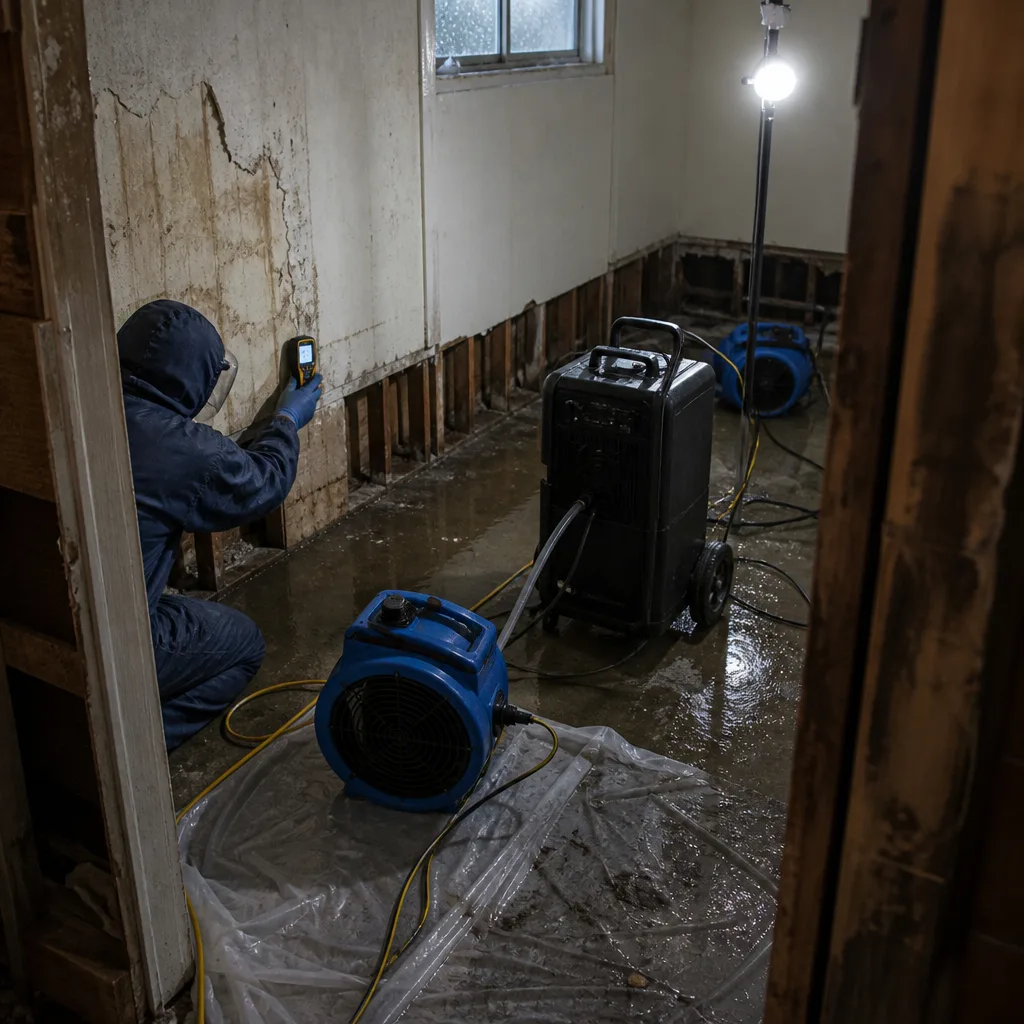
Water Extraction in Garfield is the first move on any standing-water job, and it has to happen fast. Standing water in a finished basement on Midland Avenue or a slab home off Passaic Street is actively wicking into drywall, baseboard, vinyl plank, and subfloor the entire time it sits. We run truck-mount and portable extraction units to pull the bulk water, then map the remaining moisture with penetrating and non-penetrating meters so we know exactly what is still wet behind the surface.
In Garfield, water extraction alone is rarely enough because of how these homes are built. A slab-on-grade with a finished floor means water trapped under vinyl or laminate stays hidden. A split-level with a crawl side means two separate drying environments. Extraction plus structural drying for a typical single-room water loss in Garfield runs $1,800 to $3,400, depending on how much water had to be removed and how far it migrated.
Slab and Wall Cavity Moisture Mapping
We do not guess. We map. Penetrating meters go into drywall and subfloor. Non-penetrating meters scan the slab. The readings tell us where the water actually went, not just where you saw it. That is how we decide what gets dried in place and what gets cut out.
Drying Equipment and Daily Logs
After extraction, we set Dri-Eaz and Phoenix air movers with B-Air or XPOWER dehumidifiers under containment, and we log daily moisture readings until the assembly hits dry standard. You get photo updates by text so you can see the numbers dropping. We do not guess-and-go. We log everything.
Trusted Brands We Service in Garfield
We arrive in Garfield with professional equipment from Dri-Eaz, Phoenix, and B-Air, and we carry the accessories and filter media to keep them running through a multi-day dry. Your sump pump brand does not matter to us, a Zoeller, Liberty, Wayne, or a no-name off the shelf, if a discharge line froze and backed up, we find it and dry the result. We also see Injectidry systems used on Garfield jobs where water traveled under hardwood or behind cabinetry, because drying a wall cavity from the inside beats tearing it apart when the water class allows. We stage local parts and equipment from our metro dispatch office so Garfield crews are not waiting on a truck from another county. That keeps your dry moving the same day we arrive.
Common Water Damage Restoration Problems We See in Garfield Homes
- Water rising from below the slab, not through a window. Garfield’s low-lying blocks near the Passaic and Saddle rivers sit close to the water table. After heavy rain, hydrostatic pressure pushes water through slab cracks and the cove joint. If you see wetness spreading in the middle of the basement floor with no obvious source, that is usually why.
- Original clay-tile and cast-iron laterals failing without warning. Many mill-era and post-war homes on streets like River Drive and Midland Avenue still run on their original drain laterals. When a lateral collapses or roots choke it, the basement floor drain backs up. Homeowners try to shop-vac it, but the water has already wicked into the slab and wall base.
- Finished basements that hide moisture behind vinyl plank and baseboard. A finished Garfield basement looks dry on top while the wall cavity behind the baseboard and the subfloor above the slab stay wet. DIY fans and box-store dehumidifiers do not create the vapor pressure differential needed to pull moisture out of those cavities. We see the second call turn out to be a mold job, not a water job.
- Overnight delay on low-lying blocks. Homeowners near the Passaic wait until morning to look at a wet basement. By the time we arrive, the drywall has crossed from dryable Category 1 into Category 2 or 3. Mold can start on wet drywall within 24 to 48 hours. The earlier extraction starts, the more finished space we can usually save.
Pricing for Water Damage Restoration in Garfield, NJ
A single-room water extraction and drying job in Garfield runs $1,800 to $3,400. A flooded finished basement with sump failure and wicking baseboard typically lands between $3,200 and $6,500. Ceiling and roof leak water damage that has soaked insulation and drywall runs $1,500 to $3,800. Burst pipe restoration falls in the $2,000 to $5,000 range depending on how far water traveled through walls and floors. Flood cleanup from surface water intrusion runs $2,500 to $7,000 when Category 2 or 3 water is involved. The biggest factors are water category, square footage, and hours before extraction. We put the price in writing before any work starts, and estimates are free. Call (940) 466-4354 for an exact number on your job.
We Also Serve Cities Near Garfield
Our crews cover Garfield and the immediate Bergen County ring, including Lodi, Passaic, Wallington, and Saddle Brook. If you are in one of those towns and looking for Water Damage Restoration in Garfield-level response, the same live-answer dispatch and written pricing apply. We know the Saddle River floodplain and the Passaic-side blocks across these borders. Call (940) 466-4354 and we will tell you exactly when a crew can be at your door.
Serving Garfield, NJ - Our Local Coverage Area
We’re based in the Garfield area and know this community well. Use the map below to see our service coverage - if you’re nearby, we can almost certainly help.
FAQs About Water Damage Restoration in Garfield
Water is almost certainly coming up from below the slab, through a failing sump or an original clay-tile or cast-iron lateral. Garfield’s low-lying blocks near the Passaic and Saddle rivers sit close to the water table, and after storms hydrostatic pressure pushes water up through slab cracks and the cove joint. This is why we place moisture meters on the slab and lower wall cavities, not just where you saw standing water. Call (940) 466-4354 and we will trace the source before we dry anything.
Within 24 to 48 hours. Wet drywall crosses from Category 1 into Category 2 or 3 in that window, and mold can start on the gypsum and paper facing. Extraction and drying that begins the same day usually saves the finished space. Overnight waits on low-lying blocks near the Saddle often mean more tear-out and a bigger number on the scope. Our Garfield response time is typically 45 to 60 minutes, and a live person answers the phone 24/7 at (940) 466-4354.
Yes. Clean Category 1 water, like a frozen sump discharge line that backed up, can often be dried in place and the finished space saved. Gray or black water, like a backed-up lateral carrying sewage, requires containment, antimicrobial treatment, and typically more tear-out. We classify the water early and tell you in plain language what that means for your drywall, flooring, and insulation. The classification is part of the written scope you get before any work starts.
Often yes, if the water is Category 1 and we get there within the drying window. We use Injectidry systems and directed air movement to dry wall cavities from the inside, with daily moisture logs to prove the assembly hit dry standard. If the drywall has already wicked Category 2 water or started to delaminate, we will tell you honestly that cut-and-replace is cheaper than a mold claim down the road. You get the truth and a written price either way. Call (940) 466-4354 to talk through your specific basement.
Yes. We photograph everything before, during, and after, and we send you before-and-after photo updates by text throughout the job. Our moisture logs, drying records, and the written scope are all claim-ready for your adjuster. We coordinate directly with insurance carriers and can bill them directly when approved. If you need documentation for an adjuster, we build the file as we work, not after the fact. Call (940) 466-4354 and we will start the documentation the moment we arrive.
If you have standing water in your Garfield basement, call Water Damage Restoration dispatch now at (940) 466-4354. We answer live, give you a written price before any work starts, and get a crew to your door with a live arrival time you can track.
Written by Blake Sorensen, Owner at Wendell Water Damage Restoration, serving Garfield and the surrounding Bergen County area. Founded in 2006, part of the Relay Home Co. family.