
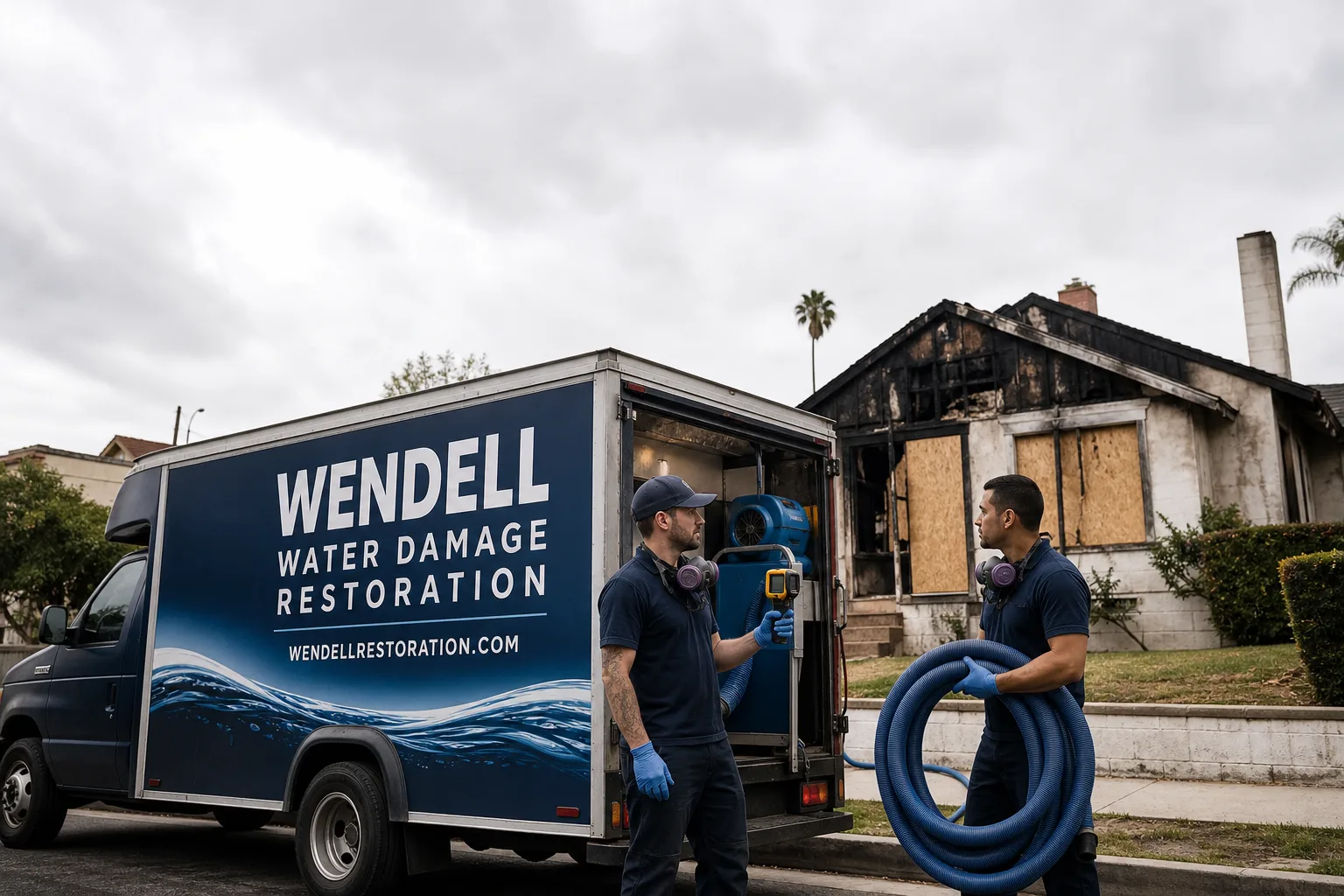
Free visual inspection and a written scope of work before any mitigation begins - photos, moisture readings, and drying logs go in your claim file
The scope we write is the scope we bill. Anything new gets shown to you, in writing, before we touch it.
 Before
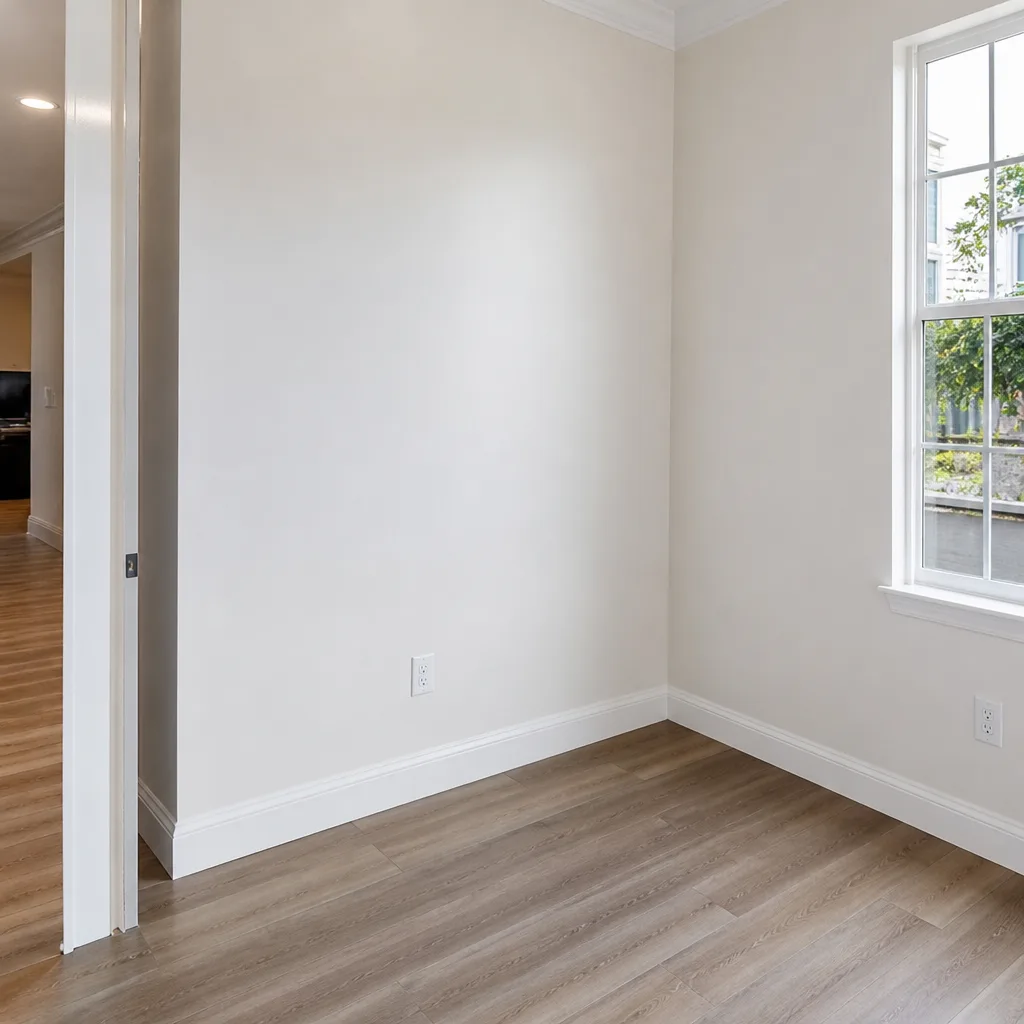 After
After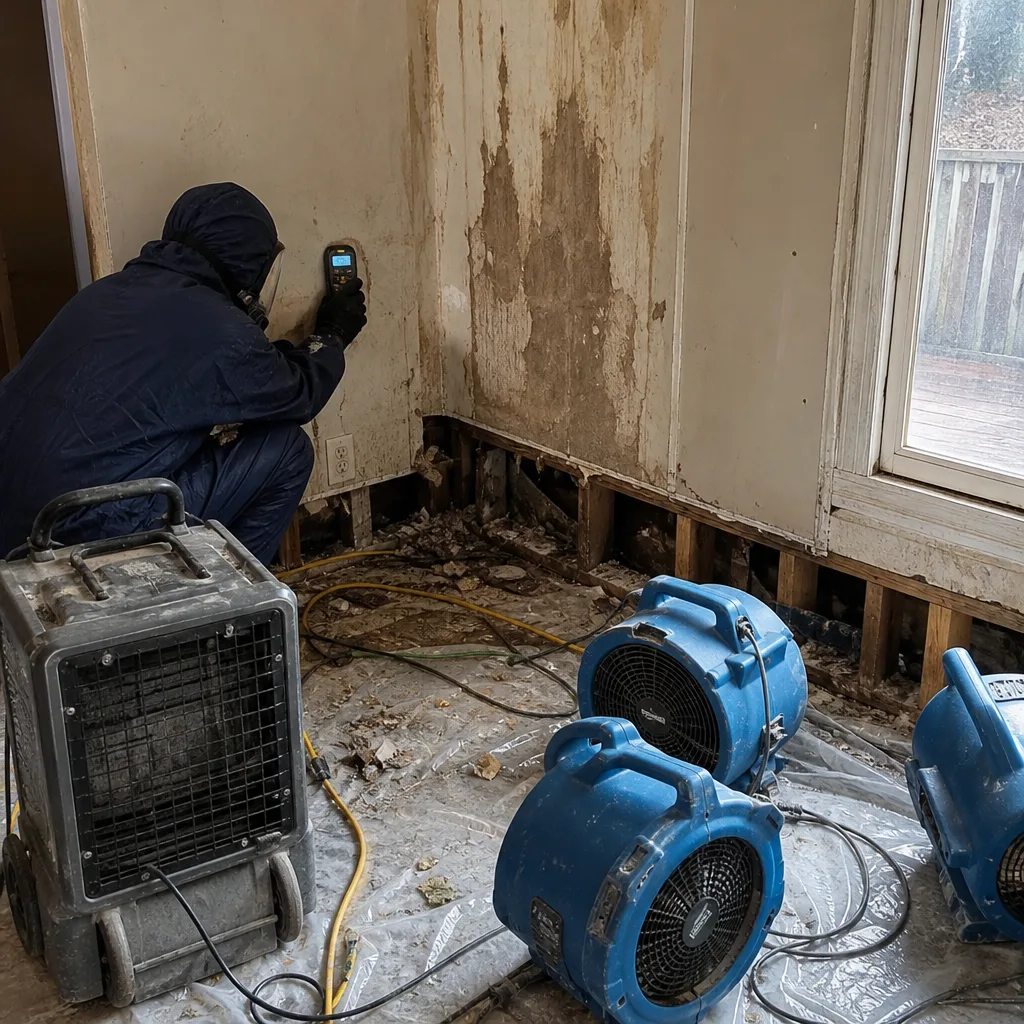 Before
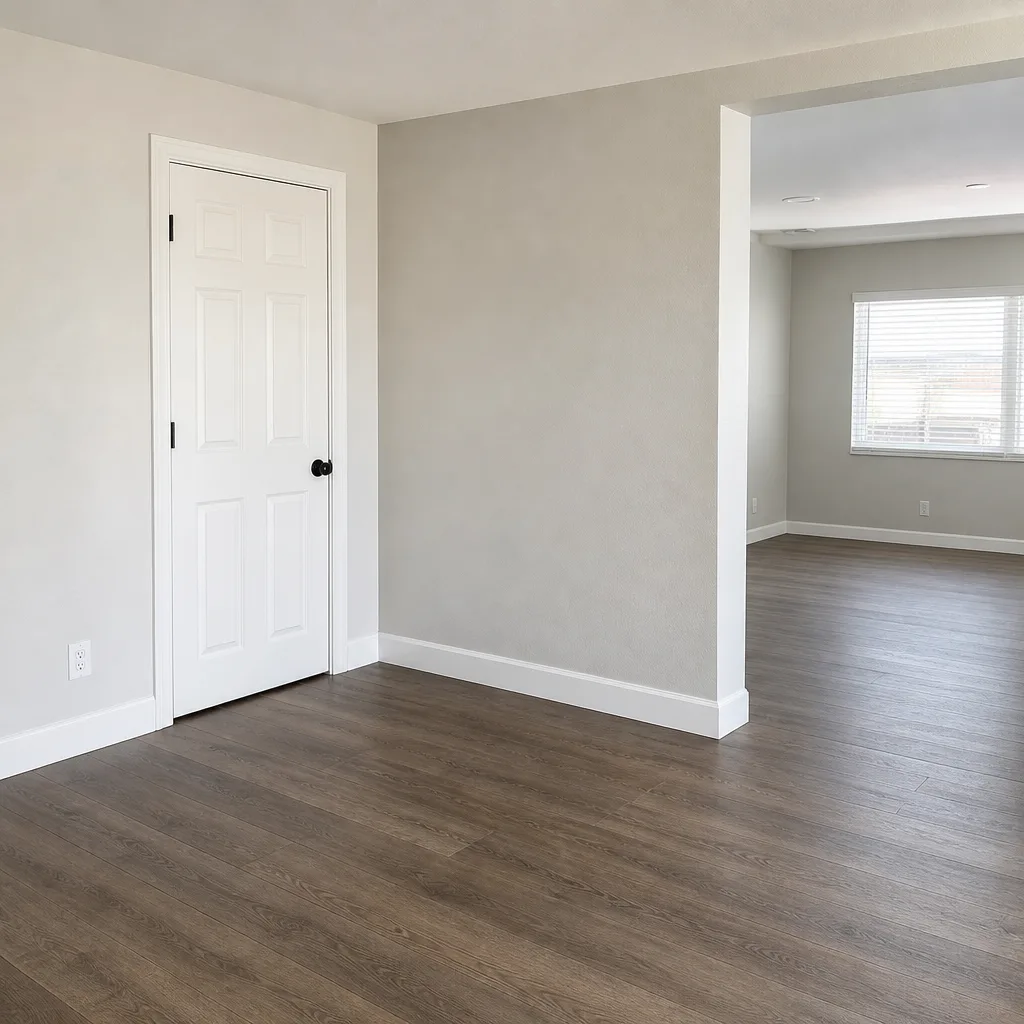 After
After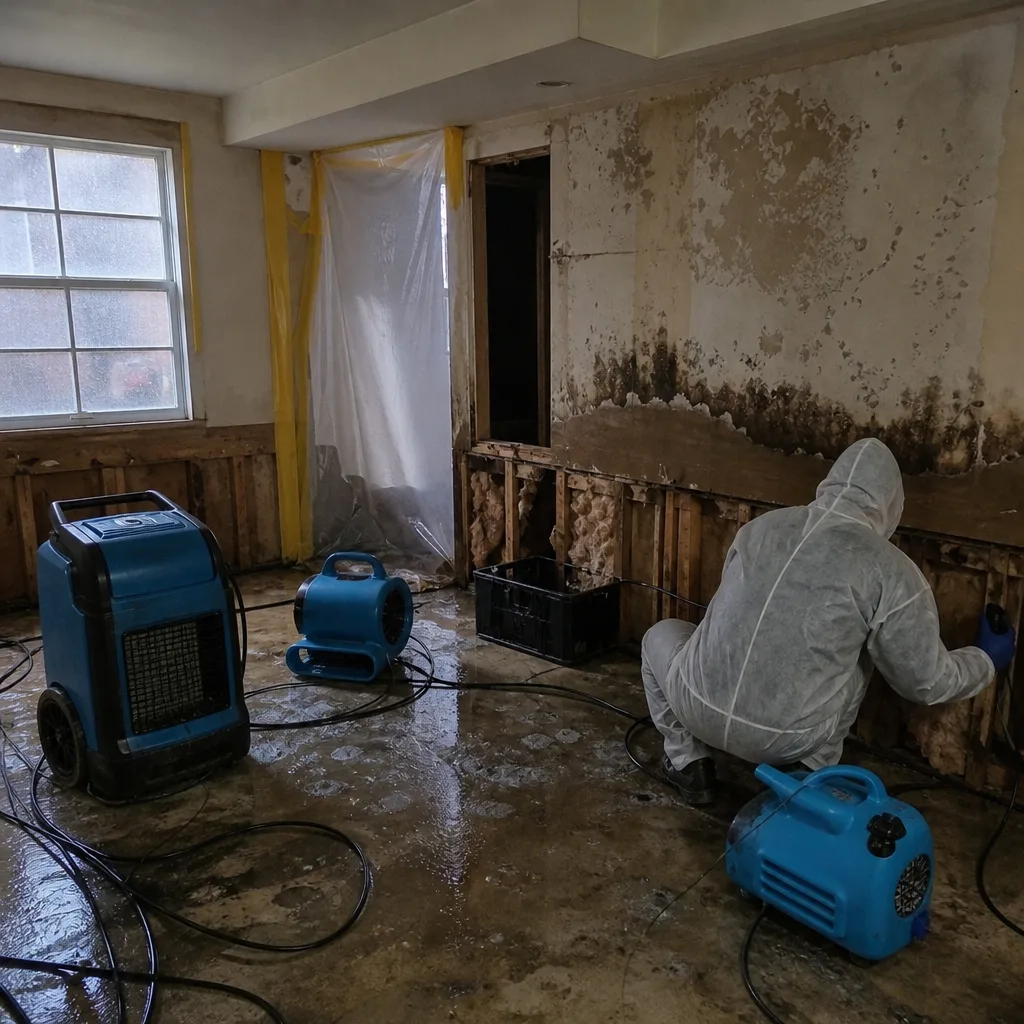 Before
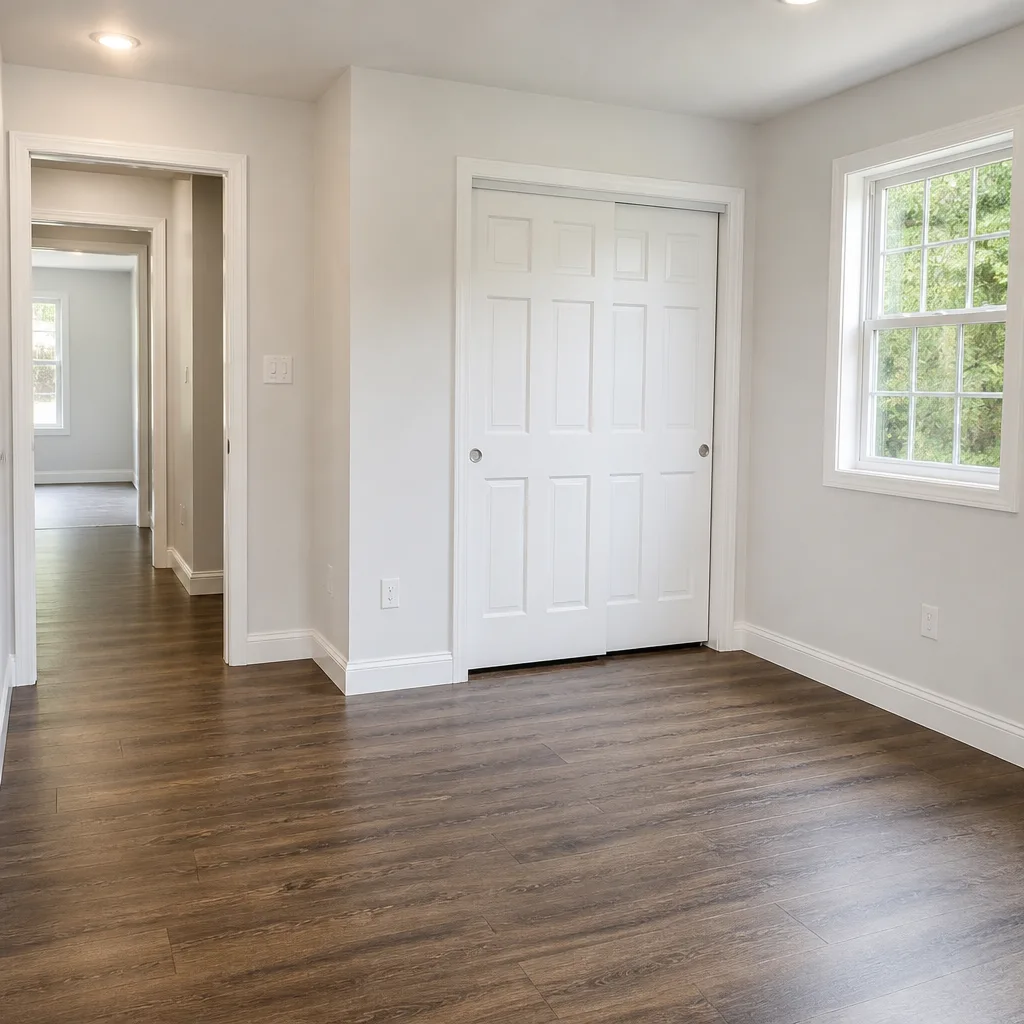 After
AfterFast, Reliable Mold Remediation Across West Covina
Mold remediation in West Covina typically costs $1,800 – $6,500 depending on how far the colony has spread and whether containment is needed, and our crews can usually start within 24 hours of your first call. We know the housing stock here: 1950s ranch homes off Valinda Avenue, newer townhomes south of the 10, and everything in between. When you call (940) 466-4354, a live person answers and you get a written scope and price before any work starts. No voicemail tag, no vague four-hour window, just a straight answer about what the job takes and what it costs.
Why Wendell Water Damage Restoration Is West Covina’s Preferred Mold Remediation Company
Most of our West Covina work comes from referrals after we’ve already done one job in a neighborhood, because the process is different from what people expect from restoration companies. You get a live arrival time you can track, not a window. The tech walking in is background-checked and uniformed, and you know their name before they pull up. The price is in writing before we touch a tool, and it’s the same number on the digital invoice we text you. Founded in 2006 and part of the Relay Home Co. family, each location is independently owned and operated to The Relay Visibility Guarantee.
Blake Sorensen leads our team and holds every job to The Relay Standard: book in a tap, live arrival time, photo updates, price in writing, text invoice. The 365-Day Done Right Promise means if it’s not done right, we make it right, stated in writing on every job. And if a repair fails, the second visit is free. That level of accountability is why West Covina homeowners keep our number saved.
Mold Removal Specialist in West Covina
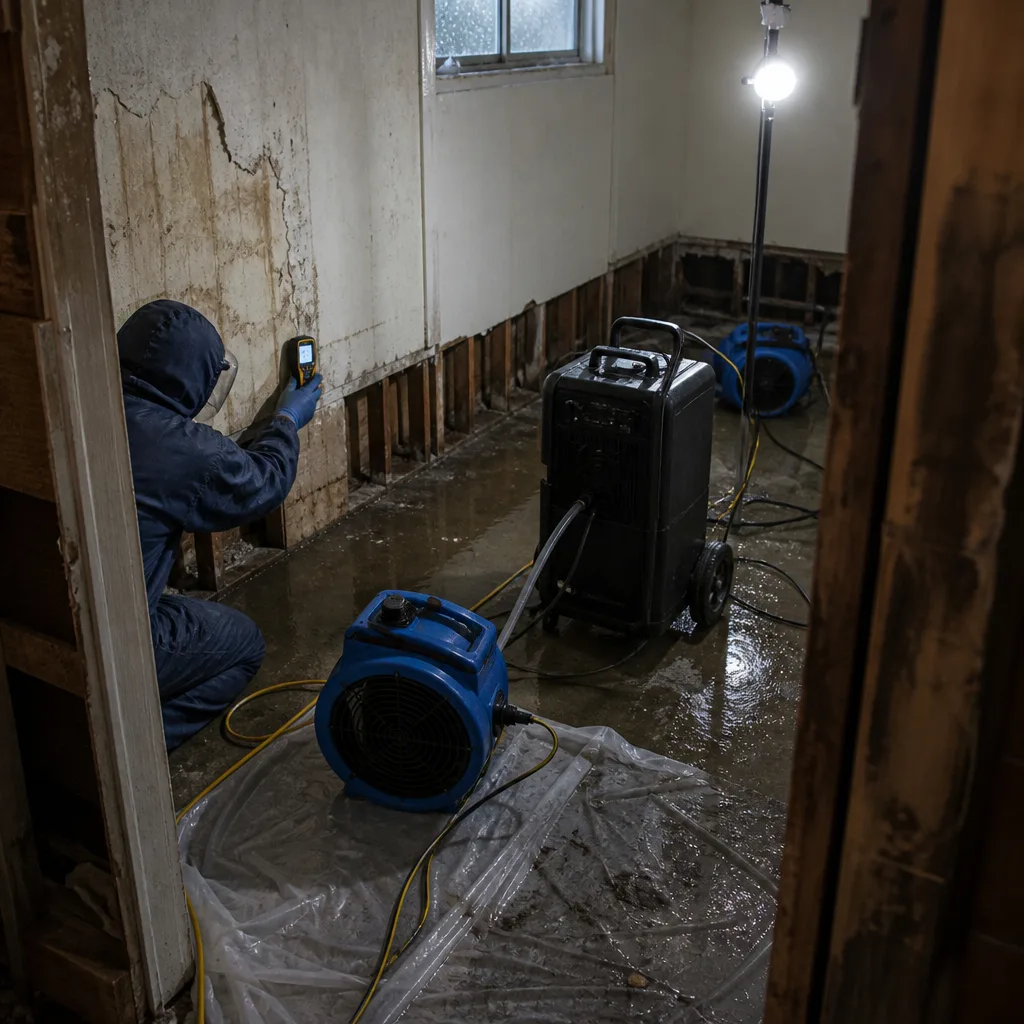
A Mold Removal Specialist in West Covina handles the physical removal of colonized materials, which matters because this city’s older ranch homes concentrate moisture in hidden spots like slab edges and shared bath walls. When we find mold on drywall, baseboard, or carpet tack strips, we’re not just spraying and promising it’s gone. We remove the affected material under containment so spores don’t spread through the rest of the house, then dry the framing to verified moisture levels.
Containment and Source Resolution
We set negative-air containment with HEPA filtration before cutting anything open. Then we trace the moisture source, because removing mold without fixing the water path means it returns in eight weeks. In West Covina’s slab homes, that source is often a supply line behind a vanity or a slab leak wicking up through carpet tack strips.
Verification Before Rebuild
We run daily moisture readings and document the drying log. We don’t close a wall until readings confirm the cavity is dry, not just surface-dry. If you’re in a West Covina tract home from the 1960s, we’re checking the shared wall cavities too, because category 2 water migrates horizontally in ways that surface drying misses.
Black Mold Removal in West Covina
Black Mold Removal in West Covina is the job we’re called for most often after a homeowner spots dark staining in a bathroom, closet, or utility area and waits to see if it spreads. By the time it’s visible on painted drywall, the colony has usually been active behind the surface for weeks. We treat this as a full remediation, not a wipe-down, because Stachybotrys chartarum (the species most people mean by “black mold”) releases spores when disturbed, and improper cleaning sends them airborne.
When Black Mold Shows Up
West Covina’s older homes, especially the 1950s and 60s ranches with original slab plumbing, give black mold the exact conditions it wants: slow leaks that go unnoticed, warm wall cavities, and poor ventilation in sealed utility closets. We see it most often in hall bathrooms, under kitchen sinks, and in closets that share a wall with plumbing.
The Removal Process
We don’t spray bleach on black mold. That doesn’t kill the root structure. We remove the affected gypsum board and any saturated insulation, HEPA-vacuum the framing, apply an EPA-registered antimicrobial, and dry the cavity under controlled conditions. Then we document everything with before-and-after photos texted to your phone so you see exactly what was removed and what the wall looked like before close-up.
Trusted Brands We Service in West Covina
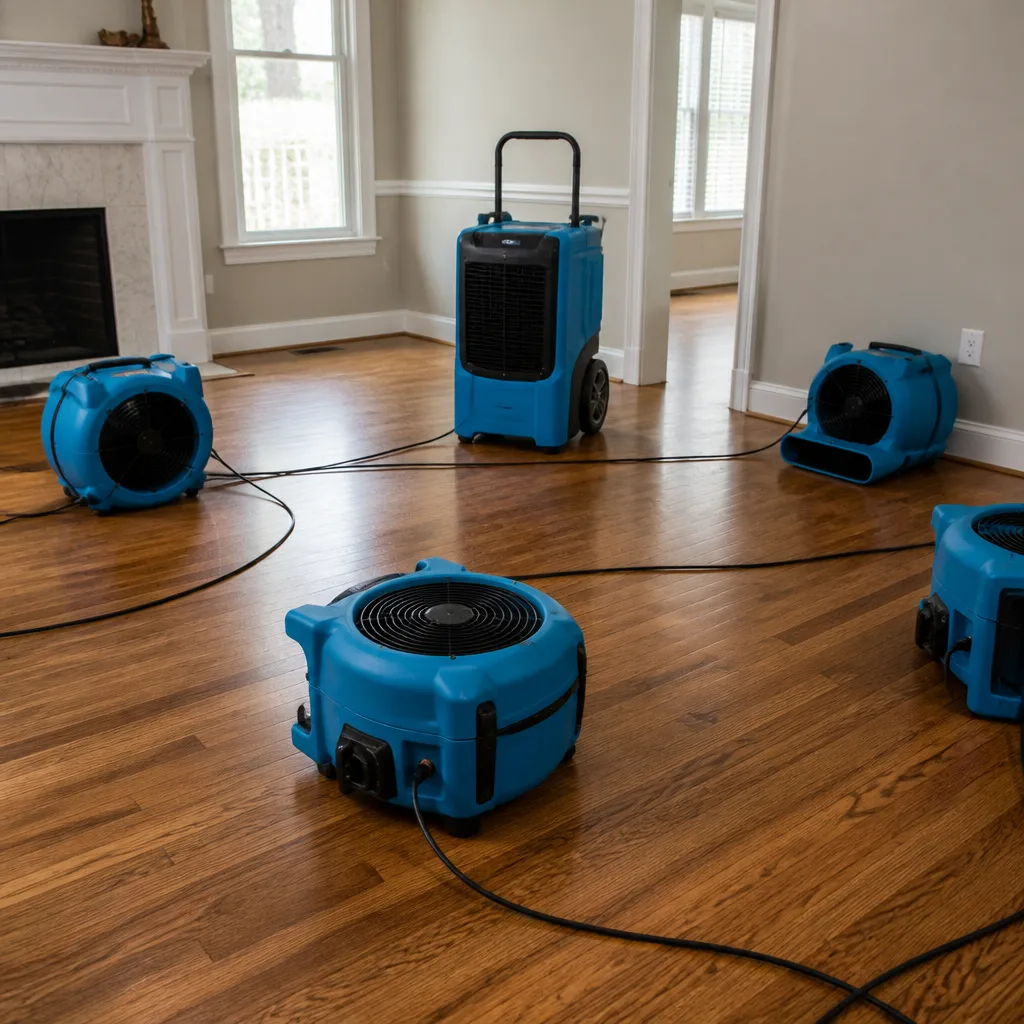
We work on all makes and models of homes across West Covina, which means our drying equipment has to handle everything from 1960s slab-on-grade foundations to sealed-envelope infill construction. We run Dri-Eaz dehumidifiers, Phoenix air movers, and XPOWER axial fans on every mold job, the same professional-grade brands used on commercial loss sites. Because we stock common restoration materials locally for West Covina customers, we don’t lose days waiting on shipments when a job needs HEPA filters, containment film, or replacement drywall fast.
Common Mold Remediation Problems We See in West Covina Homes
- Slab leaks wicking up through carpet tack strips. The 1950s and 60s ranches off Valinda and Cameron have original copper supply lines under the slab. When they fail, water travels up through the slab and saturates carpet padding in the middle of a room, far from any wall you’d think to check.
- HVAC condensate overflows in sealed utility closets. Newer infill townhomes south of the 10 are built tight for energy efficiency. That’s good for AC bills and bad for mold, because an overflowed condensate pan in a sealed closet has nowhere to dry and starts colonizing drywall within 48 hours.
- Contractors drying only the visible wet area. We get called in for second remediations where another crew dried the visible puddle but missed category 2 water that migrated under the slab or into the wall cavity. Mold regrows within weeks because the hidden moisture was never addressed.
- Homeowners waiting on a small ceiling stain. A slow leak above a West Covina living room looks harmless until the drywall gives way. By the time the stain darkens, the cavity above it has often been wet for weeks and the colony has spread across the top plate into adjacent joist bays.
Pricing for Mold Remediation in West Covina, CA
One thing we want West Covina homeowners to understand: no company can tell you a final mold remediation price from a phone call alone, because the scope depends on what we find when we open the wall or pull back the carpet. But we can give you a written range based on what you describe, and we hold to the written scope unless you approve a change in writing first. The number on the screen is the number you pay.
We Also Serve Cities Near West Covina
Our Mold Remediation crews cover the whole San Gabriel Valley area. If you need help in La Puente, Covina, Baldwin Park, or City Of Industry, the same West Covina dispatch setup applies: live answer, live arrival time, written price before work. We know these neighboring communities share the same housing era and climate conditions, so the diagnosis and pricing follow the same playbook.
Serving West Covina, CA - Our Local Coverage Area
We’re based in the West Covina area and know this community well. Use the map below to see our service coverage - if you’re nearby, we can almost certainly help.
FAQs About Mold Remediation in West Covina
How fast can you get to a mold job in West Covina?
We can typically start a mold remediation in West Covina within 24 hours of your call, and same-day starts are common for active water leaks that are still feeding mold growth. Because our dispatch and scheduling are coordinated from the brand’s Los Angeles office and crews serve West Covina locally, we’re not fighting traffic from across the county. Call (940) 466-4354 and a live person gives you a real arrival time you can track.
Do you handle mold in West Covina’s older slab-foundation homes?
Yes, and West Covina’s 1950s and 60s slab ranches are actually the most common structure we remediate. The challenge in slab homes is that water doesn’t stay put. It travels through the slab, wicks up through tack strips, and saturates wall bottom plates far from the original leak. We use moisture mapping across the whole affected zone, not just the visible stain, because the visible mold is often only the edge of a colony that’s been spreading under the flooring for weeks.
What brands of drying equipment do you use for mold remediation in West Covina?
We run Dri-Eaz dehumidifiers, Phoenix air movers, and XPOWER axial fans, the same professional brands used on large commercial mitigation projects. The brand matters less than the protocol: we run psychrometric drying, which means we track the air’s moisture level and log daily readings to know when your home is truly dry, not just surface-dry. The drying log is part of your documentation package, and that documentation is what your insurance adjuster wants to see.
How do you decide between repairing and replacing moldy materials in a West Covina home?
Porous materials like drywall, carpet pad, and insulation get removed when mold has colonized them, because there’s no reliable way to clean the root structure inside the material. Non-porous materials like solid framing and concrete can usually be HEPA-vacuumed, treated with antimicrobial, and dried. The rule we apply in West Covina homes: if it’s gypsum, it goes. If it’s wood, we evaluate based on how deep the mycotoxins penetrated and what the drying log shows. We give you this decision in writing as part of the scope before we remove anything.
Do you do pack-out for mold jobs in West Covina?
Yes. When a mold remediation in West Covina requires moving your belongings out of the affected room or the whole house, we do the pack-out, inventory every item, and photograph everything before it’s moved. We can work directly with your insurance adjuster and provide the photo documentation they require. The pack-out cost is included in the written scope before work starts, so it’s never a surprise line item at the end. Call (940) 466-4354 to schedule a free estimate and find out if your job needs pack-out.
Mold Remediation Built for West Covina’s Housing Reality
West Covina’s housing stock is split between 1950s and 60s ranch homes with original slab plumbing and newer infill townhomes with tight envelope construction. That split means mold jobs here rarely trace back to obvious roof leaks or window intrusion. Instead, we see slab leaks wicking up carpet tack strips in the older ranches and HVAC condensate pan overflows in the sealed utility closets of the newer builds. Different construction era, different water path, same result: mold that homeowners don’t find until it’s visible, which is usually weeks after the water first moved.
We were called to a 1960s ranch off Cameron Avenue after a homeowner noticed a musty smell in the hallway closet. Moisture mapping showed elevated readings in the shared wall between the closet and the hall bathroom, and the source turned out to be a slow supply-line leak behind the vanity. We set containment, removed the affected drywall and baseboard, ran air movers and a Phoenix dehumidifier for three days, applied antimicrobial treatment, and verified dry with daily moisture readings before closing the wall. No mold returned at the 30-day follow-up. That’s the type of job we handle most in West Covina: hidden plumbing issues behind tile and drywall that give mold exactly what it needs to grow.
How Our Mold Remediation Process Works
Step 1: Assess and Scope
We arrive at your West Covina home with a moisture meter and a thermal imaging camera to trace the water path, not just the visible mold. Blake Sorensen’s team documents everything with photos, including what’s under surfaces you can’t see. Then we write the scope: what gets removed, what gets treated, how drying will proceed, and what the rebuild looks like. You approve it in writing before anything gets touched.
Step 2: Contain and Remove
We seal off the affected area with negative-air containment and HEPA filtration so spores don’t migrate to other rooms. We remove colonized drywall, baseboard, carpet, and insulation, bagging everything for disposal. The framing underneath gets HEPA-vacuumed and treated with an EPA-registered antimicrobial. This is the part of the job where “spray-and-walk” companies fail, because removal is the only thing that actually stops root-structure regrowth.
Step 3: Dry and Verify
Equipment goes in: Dri-Eaz dehumidifiers and XPOWER air movers sized to the cubic footage of the affected space. We take daily moisture readings and log them, because verifying dry framing is the difference between a job that holds and a mold colony that returns in eight weeks. You get photo updates by text during this phase, so you’re never wondering what’s happening inside the containment.
Step 4: Confirm and Close
Before we close any wall, the moisture readings confirm the cavity is dry on both sides of every stud. Our 365-Day Done Right Promise kicks in when we hand you the digital invoice to pay from a link. If it’s not done right, we make it right, and if a repair fails, the second visit is free.
Written by Blake Sorensen, Owner at Wendell Water Damage Restoration, serving West Covina with mold remediation, water damage restoration, and water damage repair.